Explore the shahira sadat uk student visa brake high court ruling, deferred AI offers at Sussex and Bradford, Chevening ambitions, and human rights debates.
Urgent Legal Battle: Shahira Sadat UK Student Visa Brake High Court Ruling Tests Global Education Rights
A major legal clash over international mobility, asylum pressure, and educational access has placed the shahira sadat uk student visa brake high court proceedings at the center of global legal and academic debate. When the United Kingdom introduced sweeping restrictions on student entry clearance in early 2026, it halted study pathways for nationals of four countries—Afghanistan, Cameroon, Myanmar, and Sudan—triggering a high-stakes judicial review with lasting consequences for aspiring scholars. For students who had spent years preparing applications, securing university admissions, and seeking international scholarships, the sudden policy shift transformed academic milestones into legal battles.
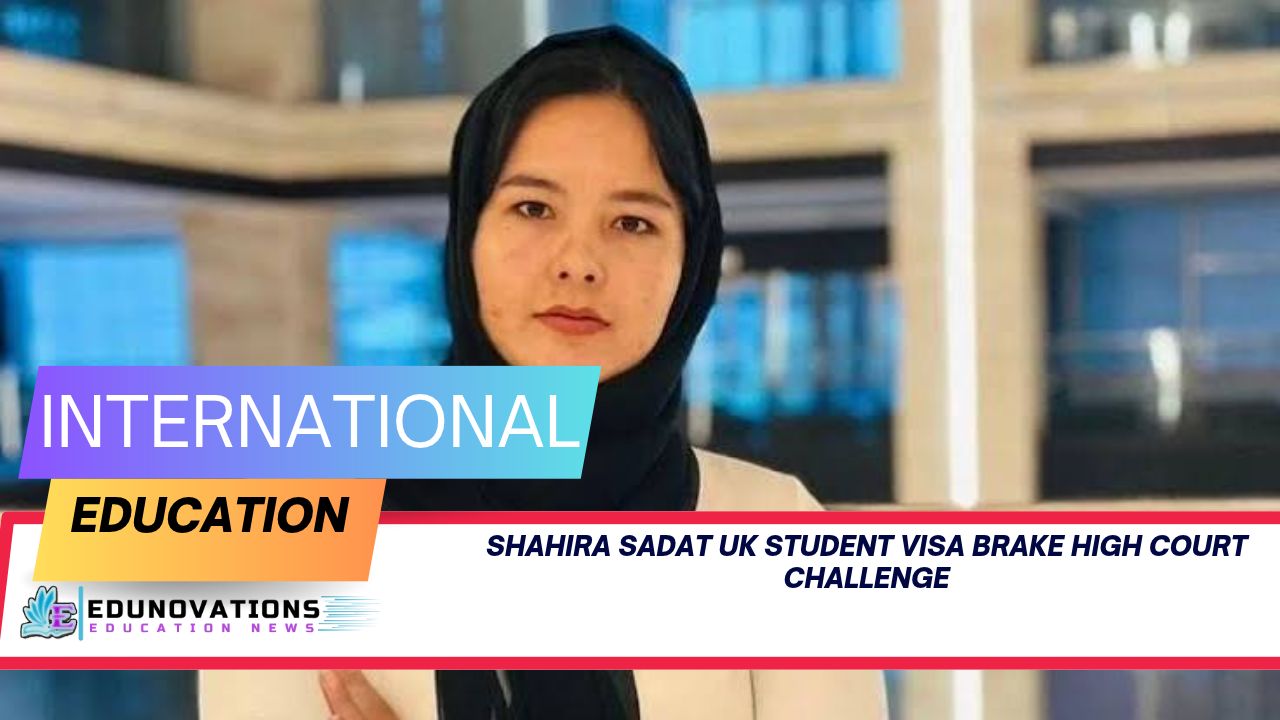
At the heart of the public-law challenge is Shahira Sadat, an Afghan software engineer whose plans to pursue postgraduate artificial intelligence studies in Britain were abruptly disrupted after the government rolled out its emergency visa suspension. The shahira sadat uk student visa brake high court litigation examined whether nationality-based visa bars introduced through immigration rule changes can withstand scrutiny under domestic administrative law and international human rights standards. Even as the courts addressed the legality of the measure, the broader human and policy implications continue to resonate among students, universities, human rights advocates, and policymakers worldwide.
Who Is Shahira Sadat and What Was at Stake?
Shahira Sadat is a software engineer from Afghanistan who sought to advance her technical expertise and career prospects through postgraduate study in the United Kingdom. Following the severe restrictions imposed on women’s education after the Taliban returned to power in Afghanistan in August 2021, pursuing higher education abroad became a critical avenue for many Afghan women seeking academic freedom and professional growth.
According to court records in the linked judicial review proceedings, Shahira Sadat secured offers to study for an MSc in Artificial Intelligence and Adaptive Systems at the University of Sussex and an MSc in Artificial Intelligence and Machine Learning at the University of Bradford, alongside an offer from Northeastern University London. Those postgraduate programs were originally slated to commence in the 2026/27 academic year. In addition to her university admissions, she pursued funding through the British government-backed Chevening scholarship program, which supports selected international candidates undertaking postgraduate degrees in the UK.
For a candidate building a career in artificial intelligence and software engineering, losing access to entry clearance at a pivotal stage represents more than an administrative setback. It interrupts specialized research training, delays professional advancement, and underscores how geopolitical developments and immigration enforcement policies directly shape individual trajectories.
Students and researchers tracking international policy updates and competitive academic preparation can explore structured study resources through NCERT Courses and stay informed on global developments via Current Affairs.
How the Student Visa Brake Was Introduced
The restriction challenged in the shahira sadat uk student visa brake high court case originated in the Statement of Changes in Immigration Rules (HC 1691), which was laid before Parliament on March 5, 2026, and took effect at 00:01 GMT on March 26, 2026. Under the statutory framework of Section 3(2) of the Immigration Act 1971, the Home Secretary holds authority to establish and amend Immigration Rules governing entry and stay, subject to parliamentary oversight.
Through Appendix Student paragraph ST 3.3, the rule change rendered nationals of Afghanistan, Cameroon, Myanmar, and Sudan ineligible for defined Student entry clearance when applying under those nationalities. Parallel measures also affected overseas Skilled Worker entry clearance under Appendix Skilled Worker paragraph SW 3.3 for Afghan nationals. Official guidance indicated that the government acted in response to concerns over visa abuse and a marked rise in asylum claims linked to student visa routes, aiming to ease pressure on the asylum system.
Key Operational Rules Under the Visa Brake
- Effective Date: Applications for affected Student entry clearance made from 00:01 GMT on March 26, 2026, fell under the restriction, whereas earlier applications remained governed by prior rules.
- Existing Permission: Visas already granted were not canceled by the rule change, and eligible individuals lawfully in the UK could still pursue permitted extensions or category changes.
- Nationality Over Location: Eligibility turned on the nationality under which an applicant applied rather than where they lived or submitted biometrics; applying from a third country such as Pakistan under Afghan nationality did not bypass the restriction.
- Dual Nationality: Applicants holding another nationality unaffected by the restriction could have an application assessed under the standard criteria tied to that second nationality, subject to documentary verification.
- University Offers and CAS: Holding a university offer or Confirmation of Acceptance for Studies (CAS) did not override paragraph ST 3.3 for affected out-of-country student entry-clearance applicants.
Inside the High Court Proceedings and Legal Arguments
Two linked judicial review claims—R (Sadat & others) v Secretary of State for the Home Department and R (Farah & others) v Secretary of State for the Home Department ([2026] EWHC 2157 (Admin))—brought the policy before the Administrative Court. Seven affected women served as claimants across the linked proceedings, including Afghan nationals and Sudanese nationals displaced by armed conflict. Following a rolled-up hearing held from July 27 to July 29, 2026, Mrs Justice Steyn DBE handed down judgment on August 12, 2026, dismissing both claims.
The claimants raised multiple public-law and human-rights arguments challenging the legality and fairness of the suspension:
- Rationality and Public Interest: Claimants argued the measure was irrational and failed to properly weigh its consequences, while the court noted that macro-political and predictive assessments regarding public interest and immigration control attract judicial restraint where subject to parliamentary oversight.
- Alternative Measures: Arguments surrounding conversion rates, visa abuse, and alternative policy options were examined against evidence of measures considered by the Home Office.
- Fettering of Discretion: The claimants contended that the Home Secretary improperly fettered discretion regarding potential grants of leave outside the rules (LOTR), though the court addressed how discretion operates and noted that any exercise of leave outside the rules would likely be rare.
- Discrimination and Impact on Women: The proceedings examined discrimination grounds and the argument regarding the situation of Afghan women, with the judgment concluding that the decision was not substantively irrational and that where an obligation to consider the position of Afghan women arose, it had been addressed.
While permission to apply for judicial review was granted on most grounds (excluding specific grounds noted in the judgment), both claims were ultimately dismissed. Crucially, the litigation did not quash or suspend paragraph ST 3.3, leaving the framework intact subject to ongoing government reviews.
Learners looking for structured revision materials, practice questions, and subject summaries can browse Notes, MCQ’s, and Videos.
Human Rights, International Law, and Policy Tensions
Beyond technical immigration mechanics, the dispute highlights a sharp tension between sovereign border management and international norms surrounding the right to education and non-discrimination. Legal commentators and human rights analysts have emphasized that even when domestic legislation permits nationality to be factored into immigration rules, governments still operate within broader public-law duties and international human rights obligations.
For Afghan women in particular, barriers to studying abroad carry acute symbolic and practical weight. When domestic higher education is severely restricted at home, international scholarships and university admissions offer vital lifelines for skills development, scientific research, and future leadership. Critics of blanket nationality bans warn that sweeping restrictions risk penalizing genuine students who meet academic standards and intend to study lawfully, rather than addressing systemic enforcement challenges through targeted mechanisms.
Conversely, government officials defending the measure have pointed to rising asylum claims among certain student cohorts and argued that swift, decisive action was necessary to protect the integrity of the immigration system and manage pressures on accommodation and public services. Home Secretary Shabana Mahmood framed the step as an emergency response to perceived abuse of visa routes and rising asylum claims. That clash of priorities—systemic control versus individual opportunity—remains central to contemporary debates over global student mobility.
Comparing Perspectives on the Visa Restriction
| Dimension | Government & Policy Rationale | Students, Scholars & Legal Critics |
| Primary Objective | Curb visa abuse, reduce asylum claims via study routes, and ease system pressure. | Preserve access to higher education, academic freedom, and non-discriminatory treatment. |
| Legal Mechanism | Immigration Rules changes (HC 1691 / ST 3.3) under statutory rule-making powers. | Public-law judicial review, proportionality, equality principles, and human rights norms. |
| Scope of Impact | Applies across affected nationalities regardless of application location or offer status. | Disrupts qualified applicants, scholarship contenders, and students from conflict zones. |
| Review & Duration | Framed as a temporary measure subject to periodic review without a fixed end date. | Raises concerns over prolonged uncertainty and long-term exclusion from global academia. |
Broader Context for International Students and Institutions
The shahira sadat uk student visa brake high court ruling also serves as a cautionary case study for universities, scholarship bodies, and prospective applicants navigating shifting international mobility rules. Admissions offices and scholarship administrators must coordinate closely with legal and compliance teams so applicants receive accurate, timely guidance when immigration rules change mid-cycle.
For prospective students planning academic pathways across borders, early awareness of immigration timelines, eligibility rules, and contingency planning is essential. Academic planners and students reviewing curriculum frameworks or downloadable study aids can check Syllabus, Downloads of Free NCERT PDFs, and NCERT Mind Maps. Educational institutions seeking digital infrastructure and web solutions can also reach out to Mart Ind Infotech.
Ultimately, the legal proceedings around Shahira Sadat and her fellow claimants show how a single immigration rule change can ripple across courts, universities, and individual lives. As reviews of the visa brake continue, observers will watch closely to see how governments balance border administration with commitments to international education and human rights.
Toppers Use Mind Maps to score more than 95%
-
NCERT Class 11th Commerce Mind Maps
Add to cartOriginal price was: ₹999.00.₹199.00Current price is: ₹199.00. -
NCERT Class 12th Chemistry Mind Maps
Add to cartOriginal price was: ₹199.00.₹75.00Current price is: ₹75.00. -
NCERT Class 12th Commerce Mind Maps
Add to cartOriginal price was: ₹999.00.₹199.00Current price is: ₹199.00. -
NCERT Class 12th Science Mind Maps
Add to cartOriginal price was: ₹999.00.₹199.00Current price is: ₹199.00. -
NCERT Mind Maps For Class 10th
Add to cartOriginal price was: ₹999.00.₹199.00Current price is: ₹199.00.





Purchase Today
Frequently Asked Questions (FAQs)
1. What was decided in the shahira sadat uk student visa brake high court case?
The UK High Court dismissed the linked judicial review claims brought by affected applicants, leaving the Student Visa Brake in place while confirming the lawfulness of the rule change under the reviewed public-law grounds.
2. Why did the afghan women uk study visa ban chevening scholarship issue draw international attention?
It highlighted how sudden nationality-based visa suspensions can block qualified Afghan women who had secured university admissions and sought government-backed Chevening funding after facing severe educational restrictions at home.
3. How did the sussex bradford msc deferred afghan students visa situation affect Shahira Sadat?
Shahira Sadat had received postgraduate artificial intelligence offers at the University of Sussex and the University of Bradford for the 2026/27 academic year, but the visa restriction prevented affected out-of-country student entry clearance under her Afghan nationality.
4. What did the sadat and farah 2026 uk student visa challenge argue before the court?
The linked claims challenged the Student Visa Brake on grounds including rationality, alternative measures, alleged fettering of discretion over leave outside the rules, and discrimination considerations.
5. How does the uk student visa brake right to education afghanistan debate intersect with British law?
While the Immigration Act 1971 permits nationality to be taken into account in Immigration Rules, legal debates continue over balancing border control and asylum pressures against right-to-education principles and human rights obligations.
6. Which countries were covered by the Student Visa Brake introduced in March 2026?
The rule change under HC 1691 applied to nationals of Afghanistan, Cameroon, Myanmar, and Sudan seeking defined Student entry clearance under those nationalities.
7. Does holding a valid university offer or CAS exempt an affected applicant from the visa brake?
No; under the operational rules and guidance analyzed following the judgment, holding a university offer or Confirmation of Acceptance for Studies does not override paragraph ST 3.3 for affected out-of-country student entry-clearance applications.
8. Does applying from a third country change how the Student Visa Brake applies to an Afghan national?
No; eligibility depends on the nationality under which the student entry-clearance application is made rather than the country where the applicant currently resides or submits the application.
9. Were existing visas canceled when the Student Visa Brake took effect?
No; permission already granted was not canceled by the rule change, and eligible individuals already lawfully in the UK could still apply for permitted extensions or category changes under applicable rules.
10. Is the Student Visa Brake permanent or subject to review?
The government has characterized the measure as temporary and subject to periodic review, though no fixed end date was announced at the time of its introduction.