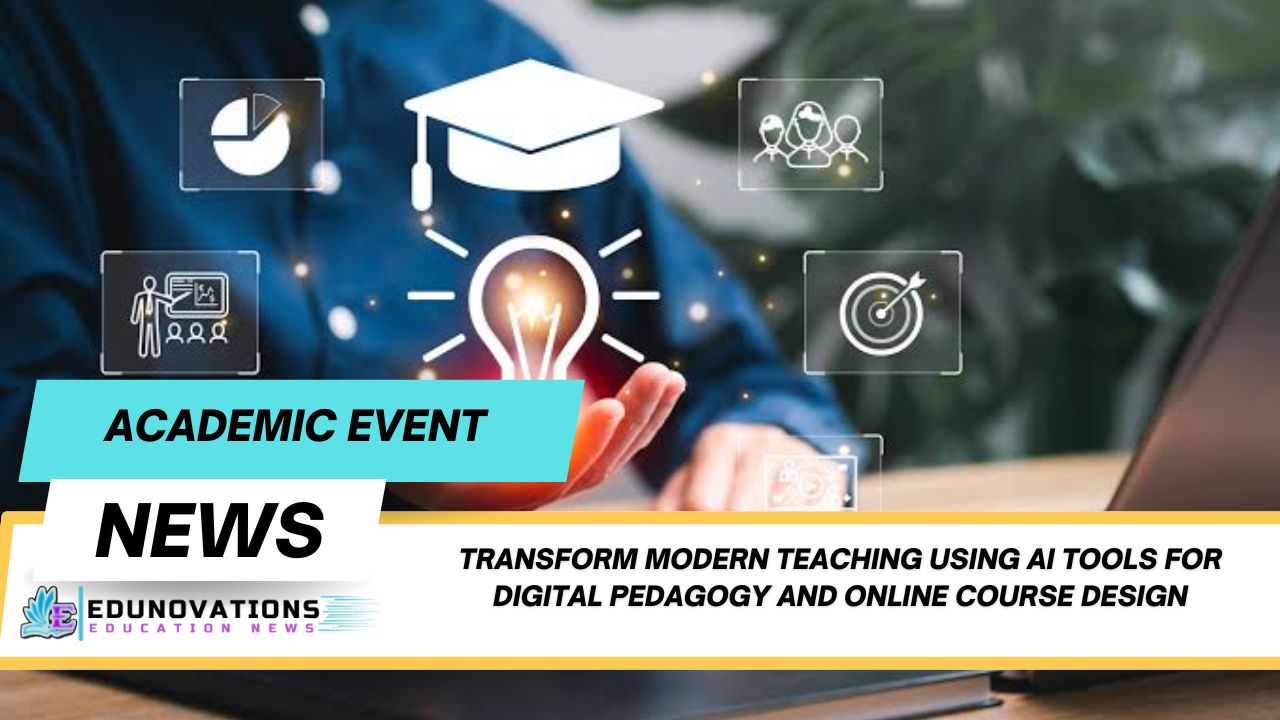
The landscape of education is undergoing a seismic shift. As artificial intelligence fundamentally reshapes how knowledge is created, delivered, and consumed, educators across the globe face
The landscape of education is undergoing a seismic shift. As artificial intelligence fundamentally reshapes how knowledge is created, delivered, and consumed, educators across the globe face an urgent mandate: rethink teaching methodologies for the digital age. Recently, premier institutional initiatives like the IIMBx Digital Learning Foundation’s “PRAVAH – Empower 2.0” faculty development programme highlighted this critical evolution. Bringing together top-tier academics, industry experts, and high-performing learners, the event emphasized that the future of learning relies heavily on adopting cutting-edge technologies.
For modern educators and institutions aiming to stay ahead, mastering AI tools for digital pedagogy and online course design is no longer optional—it is essential. Whether you are building online modules from scratch or upgrading traditional curricula, leveraging intelligent automation and sound pedagogical frameworks will define the next generation of academic excellence.
The Evolution of Modern Education in the Age of Artificial Intelligence
Artificial intelligence has permeated every facet of modern life, and education is no exception. While some fear that automation might replace human intellect, prominent academic leaders argue otherwise. During foundational discussions on digital learning, Prof. S. Sadagopan, Founder Director of IIIT Bangalore, observed that while AI is here to stay, it can never truly replace human ingenuity. “We are naturally intelligent people; we are soon to get tired of AI,” he noted, underscoring that technology must serve as an enabler rather than a replacement for critical thinking.
To thrive in this era, educational institutions must proactively incorporate AI tools for digital pedagogy and online course design into their daily operations. Modern classrooms—both physical and virtual—require a blend of empathetic human instruction and data-driven efficiency.
Bridging the Gap Between Technology and Academia
Integrating advanced systems into everyday teaching involves more than just utilizing software; it requires a complete mindset shift among educators. When professors learn AI tools for digital pedagogy and online course design, they unlock unprecedented capabilities to automate administrative friction, generate contextual quiz frameworks, and customize student learning paths.
- Enhanced Engagement: Dynamic multimedia tools keep digital learners focused.
- Scalable Customization: AI-driven assessments can adapt to a student’s unique learning pace.
- Reduced Friction: Instructors spend less time formatting content and more time mentoring.
For schools looking to upgrade their digital infrastructure to support these sophisticated teaching frameworks, partnering with tech solutions providers like Mart Ind Infotech can streamline the transition, ensuring seamless integration of learning management systems (LMS) and smart classrooms.
Practical Approaches: How to Design Engaging Online Courses with AI Assistance
Transitioning from a traditional classroom to a fully immersive virtual environment presents unique challenges. Instructors often struggle with structuring dense subject matter into digestible online modules. This is where mastering AI tools for digital pedagogy and online course design becomes a game-changer.
According to instructional design experts, creating high-impact digital courses requires a meticulous, multi-step workflow. Here is how modern educators can leverage technology to build engaging curricula:
- Audience Analysis & Mapping: Understand what learners actually want. Insights from top-performing learners across national platforms reveal a high demand for interactive elements, evidence-based pedagogy, and clear industry relevance.
- Architecture & Scripting: Use artificial intelligence assistants to outline modules, draft video scripts, and generate formative assessments.
- Production Workflows: Combine human subject-matter expertise with rapid digital production tools to transform raw notes into publish-ready online modules.
To support students who rely heavily on self-paced study materials alongside these digital courses, platforms offering comprehensive study resources—such as detailed Notes and conceptual Mind Maps—play a critical role in reinforcing core concepts.
Professional Development: A Faculty Development Program on Digital Learning Experiences
The rapid integration of generative AI has made continuous professional upskilling a non-negotiable requirement for teachers. A well-structured faculty development program on digital learning experiences acts as a catalyst, bridging the gap between theoretical knowledge and practical execution.
Workshops and hands-on training sessions—such as those explored in recent national academic conclaves featuring experts like Prof. Rahul De’ (former faculty of Information Systems, IIM Bangalore) and Prof. G. Shainesh (Chairperson, Digital Learning and faculty of Marketing)—dive deep into the real-world opportunities and limitations of generative AI. These sessions actively address critical concerns, including:
- Mitigating AI Misinformation: Identifying and correcting AI-generated inaccuracies and fabricated academic references.
- Establishing Ethical Boundaries: Formulating comprehensive policies at the institutional and programmatic levels to guide the responsible use of AI in assessments.
- Fostering Communities of Practice: Building collaborative networks where educators can share best practices in blended and online education.
For educators and competitive exam aspirants seeking structured preparation paths aligned with modern academic frameworks, accessing curated NCERT Courses and regular updates on Current Affairs ensures a well-rounded foundation.
Mastering the Technical Side: Best Practices for Interactive Online Course Architecture
Building an online course that retains high student completion rates requires deliberate architectural planning. Poorly structured digital content often leads to student drop-offs. Implementing best practices for interactive online course architecture ensures that every module is intentionally designed to promote active participation rather than passive viewing.
Key Architectural Pillars for Digital Success
- Bite-Sized Modules: Break long lectures into 10-to-15-minute video segments combined with interactive knowledge checks.
- Multimedia Integration: Blend text, audio, infographics, and scenario-based simulations to cater to diverse learning styles.
- Continuous Feedback Loops: Implement automated quizzes and peer-review assignments to maintain high engagement throughout the semester.
Students practicing for competitive examinations can similarly benefit from structured testing modules. Utilizing targeted MCQ’s and reviewing comprehensive exam Syllabus layouts helps learners track progress and identify knowledge gaps early. Furthermore, visual learners can leverage extensive video resources available via specialized Videos portals to clarify complex topics.
Ethical Boundaries: Navigating Generative AI Policies in Higher Education Teaching
While technology unlocks immense possibilities, the unmonitored use of advanced algorithms poses risks to academic integrity. Establishing clear generative AI policies in higher education teaching is vital to maintaining trust, originality, and rigorous evaluation standards.
Academic leaders emphasize that institutions must draw clear lines regarding where AI assistance is acceptable (e.g., brainstorming, outlining, or formatting) and where human intellect must take absolute precedence (e.g., original synthesis, critical analysis, and emotional intelligence in mentorship). By balancing technological innovation with strict academic guidelines, educators can harness AI tools for digital pedagogy and online course design safely and effectively.
For students and lifelong learners who want to build strong foundational knowledge using authentic academic textbooks, free reference materials and downloadable guides can be accessed directly through Downloads of Free NCERT PDFs.
Toppers Use Mind Maps to score more than 95%
NCERT Class 11th Commerce Mind Maps
Add to cartOriginal price was: ₹999.00.₹199.00Current price is: ₹199.00.NCERT Class 12th Chemistry Mind Maps
Add to cartOriginal price was: ₹199.00.₹75.00Current price is: ₹75.00.NCERT Class 12th Commerce Mind Maps
Add to cartOriginal price was: ₹999.00.₹199.00Current price is: ₹199.00.NCERT Class 12th Science Mind Maps
Add to cartOriginal price was: ₹999.00.₹199.00Current price is: ₹199.00.NCERT Mind Maps For Class 10th
Add to cartOriginal price was: ₹999.00.₹199.00Current price is: ₹199.00.



Purchase Today
Frequently Asked Questions (FAQs)
1. What are the best AI tools for digital pedagogy and online course design?
The best tools include AI-powered learning management systems, automated quiz generators, script-writing assistants, and interactive content authoring software that help educators structure engaging online modules efficiently.
2. How can instructors utilize AI tools for digital pedagogy and online course design without losing human touch?
Instructors can use AI to automate administrative tasks, content outlining, and basic assessments, freeing up more time for direct student mentorship, live discussions, and personalized feedback.
3. Why is a faculty development program on digital learning experiences important today?
These programs help educators adapt to rapidly changing technological landscapes, teaching them how to integrate AI safely, design interactive online content, and build engaging virtual classrooms.
4. What strategies help in learning how to design engaging online courses with AI assistance?
Key strategies include breaking content into bite-sized modules, incorporating interactive multimedia elements, leveraging AI for script and quiz creation, and aligning course structures with student feedback.
5. What are the best practices for interactive online course architecture?
Best practices involve keeping video modules short, integrating regular knowledge-check quizzes, utilizing scenario-based learning, and ensuring seamless navigation across different devices.
6. Why are generative AI policies in higher education teaching necessary?
Clear policies prevent academic dishonesty, minimize the spread of AI-generated misinformation, and define ethical boundaries for both students and faculty regarding tool utilization.
7. How does the integration of AI tools for digital pedagogy and online course design impact student retention?
By making courses more interactive, visually stimulating, and adaptive to individual learning paces, AI-driven course designs significantly reduce student drop-out rates.
8. Can small educational websites leverage AI tools for digital pedagogy and online course design to rank faster?
Yes, targeting hyper-specific long-tail keywords around AI-assisted education allows lower-authority websites to capture niche search traffic and build organic authority quickly.
9. What role do institutional frameworks play in adopting AI tools for digital pedagogy and online course design?
Institutional frameworks provide the necessary guidelines, ethical boundaries, and technical infrastructure required for safe, scaled, and standardized digital education rollouts.
10. How can educators stay updated on the latest trends in digital learning and AI tools for digital pedagogy and online course design?
Educators can participate in national faculty development programs, join professional teaching networks like SANGAM, and regularly follow academic journals and EdTech research publications.