Discover how the CBSE NCB drug awareness programme for schools 2025 is promoting a drug-free environment and empowering students nationwide.
CBSE NCB Drug Awareness Programme for Schools 2025: Pioneering Drug-Free Education
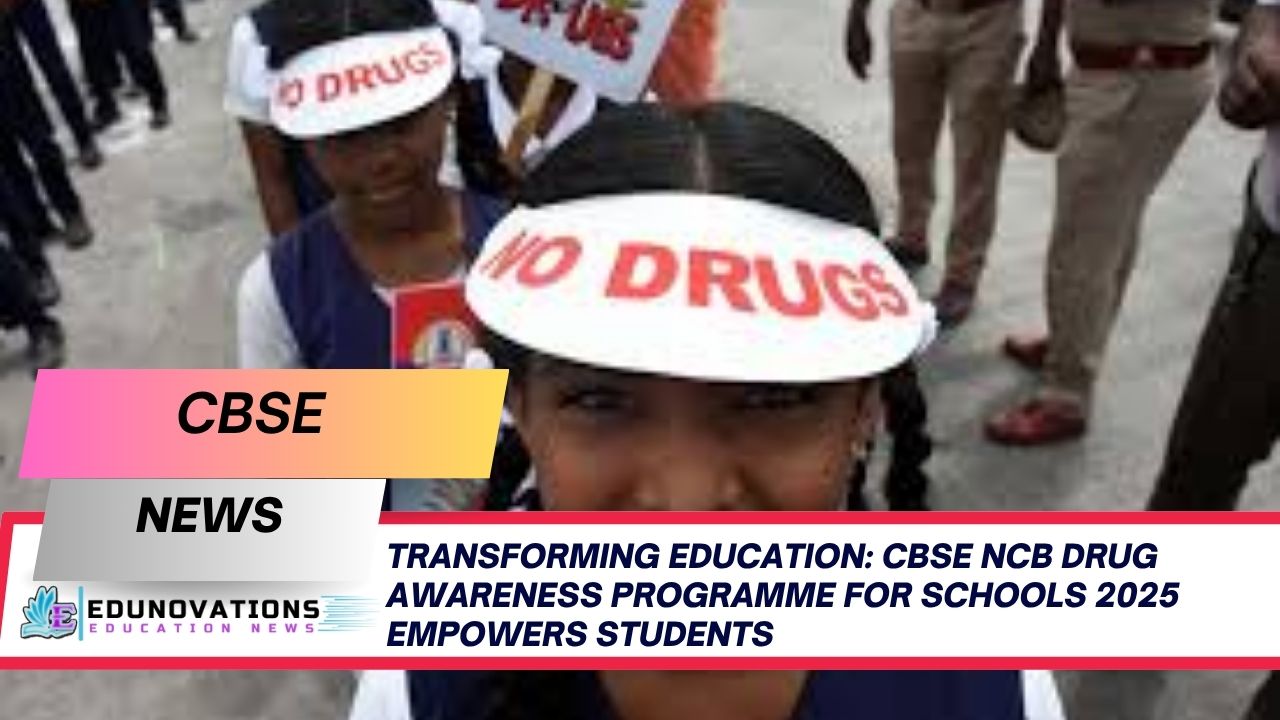
The Central Board of Secondary Education (CBSE) in collaboration with the Narcotics Control Bureau (NCB) has taken a significant step in promoting safe and drug-free learning spaces. The CBSE NCB drug awareness programme for schools 2025 was recently conducted at Sanskriti School, Chanakyapuri, New Delhi, reinforcing the importance of substance abuse prevention in educational institutions.
This landmark initiative, following the MoU signed on 3rd September 2025, exemplifies a combined effort to equip students and educators with the tools, knowledge, and guidance to foster a responsible and informed school environment.
Promoting Awareness Through Leadership
Mrs. Richa Sharma Agnihotri, Principal of Sanskriti School, highlighted the role of schools in creating awareness and developing informed, healthy youth. Her address emphasized that early intervention and education are crucial in preventing substance misuse among students.
Dr. Anees C., IRS, Deputy Director of NCB, reinforced the necessity of vigilance, collective responsibility, and community involvement in combating drug abuse. He urged schools to actively promote the NCB MANAS Helpline (1933) to offer support and guidance to students seeking help.
CBSE Initiatives Supporting Holistic Development
The CBSE has integrated several programs into its curriculum to ensure students’ mental health and well-being are prioritized. These include:
- Counseling Hub & Spoke Model – Facilitates counseling support across schools.
- Parenting Calendar – Guides parents in fostering positive mental health practices.
- Career Guidance Dashboard – Helps students make informed career choices.
- CBSE–AIIMS MATE Programme – Focuses on medical awareness and holistic development.
These initiatives, combined with the CBSE NCB drug awareness programme for schools 2025, reflect the board’s holistic approach towards nurturing empowered and responsible students.
Engaging Students Through Activities
The event at Sanskriti School saw the active participation of over 500 students and 25 teachers. A key highlight was the street play (Nukkad Natak) that delivered strong anti-drug messages, reinforcing slogans such as “Say No to Drugs, Yes to Life and Yes to Dreams.”
The presentation emphasized early intervention, rehabilitation, and de-addiction strategies, underlining the importance of a collaborative approach between schools, students, and law enforcement agencies.
Pledge for a Drug-Free Life
Students, teachers, and officials took a collective pledge to live drug-free lives, symbolizing a shared commitment to building vigilant, resilient, and informed citizens. This aligns with the national vision of a substance-free youth and highlights the role of schools as pillars in promoting safe environments.
Expert Insights and Statistics
According to Dr. Anees C., substance abuse among adolescents has become a pressing concern. Studies indicate that early intervention through awareness programmes can reduce adolescent drug use by up to 40%. CBSE’s structured approach, including the CBSE NCB drug awareness programme for schools 2025, ensures that both students and teachers receive proper guidance and preventive education.
Experts suggest that community involvement, peer education, and school-led initiatives are the most effective methods to prevent substance abuse. As Mrs. Richa Sharma Agnihotri notes, “Empowering students with knowledge and resilience is our best defense against the drug menace.”
How Schools Can Participate
Schools across India are encouraged to integrate substance abuse prevention strategies through workshops, awareness drives, and collaboration with local NCB offices. Tools like the CBSE–NCB MANAS Helpline provide 24/7 guidance for students and educators.
For educators seeking additional resources, internal links to NCERT courses, current affairs, notes, and MCQs can provide comprehensive support for curriculum integration.
External resources, such as Mart India Infotech, provide contact and guidance for schools looking to implement technology-driven awareness campaigns.
Benefits of a Drug-Free School Environment
- Improved Academic Performance: Studies link drug-free environments to higher student focus and achievement.
- Enhanced Mental Health: Reduced exposure to substance abuse contributes to emotional stability.
- Community Safety: Students trained in awareness programs often become advocates for drug prevention.
- Holistic Development: Combining mental, emotional, and social learning ensures well-rounded growth.
Conclusion
The CBSE NCB drug awareness programme for schools 2025 is more than a one-time event—it is a sustained effort to embed substance abuse prevention within India’s educational framework. By fostering collaboration, awareness, and active participation, the programme empowers schools to create drug-free, safe, and nurturing environments.
Toppers Use Mind Maps to score more than 95%
NCERT Class 11th Commerce Mind Maps
Add to cartOriginal price was: ₹999.00.₹199.00Current price is: ₹199.00.NCERT Class 12th Chemistry Mind Maps
Add to cartOriginal price was: ₹199.00.₹75.00Current price is: ₹75.00.NCERT Class 12th Commerce Mind Maps
Add to cartOriginal price was: ₹999.00.₹199.00Current price is: ₹199.00.NCERT Class 12th Science Mind Maps
Add to cartOriginal price was: ₹999.00.₹199.00Current price is: ₹199.00.NCERT Mind Maps For Class 10th
Add to cartOriginal price was: ₹999.00.₹199.00Current price is: ₹199.00.



Purchase Today
FAQs
- What is the CBSE NCB drug awareness programme for schools 2025?
It is a collaborative initiative by CBSE and NCB to promote drug-free school environments and educate students about substance abuse prevention. - Who can participate in the CBSE NCB drug awareness programme for schools 2025?
All CBSE-affiliated schools, teachers, and students are eligible to participate. - What strategies are used in the programme to prevent substance abuse?
Strategies include early intervention, rehabilitation guidance, awareness workshops, and school-led campaigns. - How does the NCB MANAS Helpline support students?
The helpline (1933) provides information, counseling, and guidance on drug abuse prevention and rehabilitation. - What role do teachers play in the programme?
Teachers act as facilitators, mentors, and advocates for drug-free initiatives in schools. - What activities are included in the CBSE NCB drug awareness programme for schools 2025?
Activities include presentations, street plays (Nukkad Natak), and pledge drives promoting drug-free lifestyles. - Why is a drug-free school environment important?
It improves academic performance, mental health, community safety, and holistic development. - How can schools access resources for the programme?
Schools can use internal links for NCERT courses, notes, and external guidance from authoritative sources like Mart India Infotech. - What is the significance of CBSE’s holistic initiatives in this programme?
Initiatives like the Counseling Hub & Spoke Model and Parenting Calendar support mental well-being and informed decision-making among students. - How does the programme align with national objectives?
It contributes to the national vision of creating vigilant, resilient, and informed young citizens, fostering safe and drug-free educational spaces.