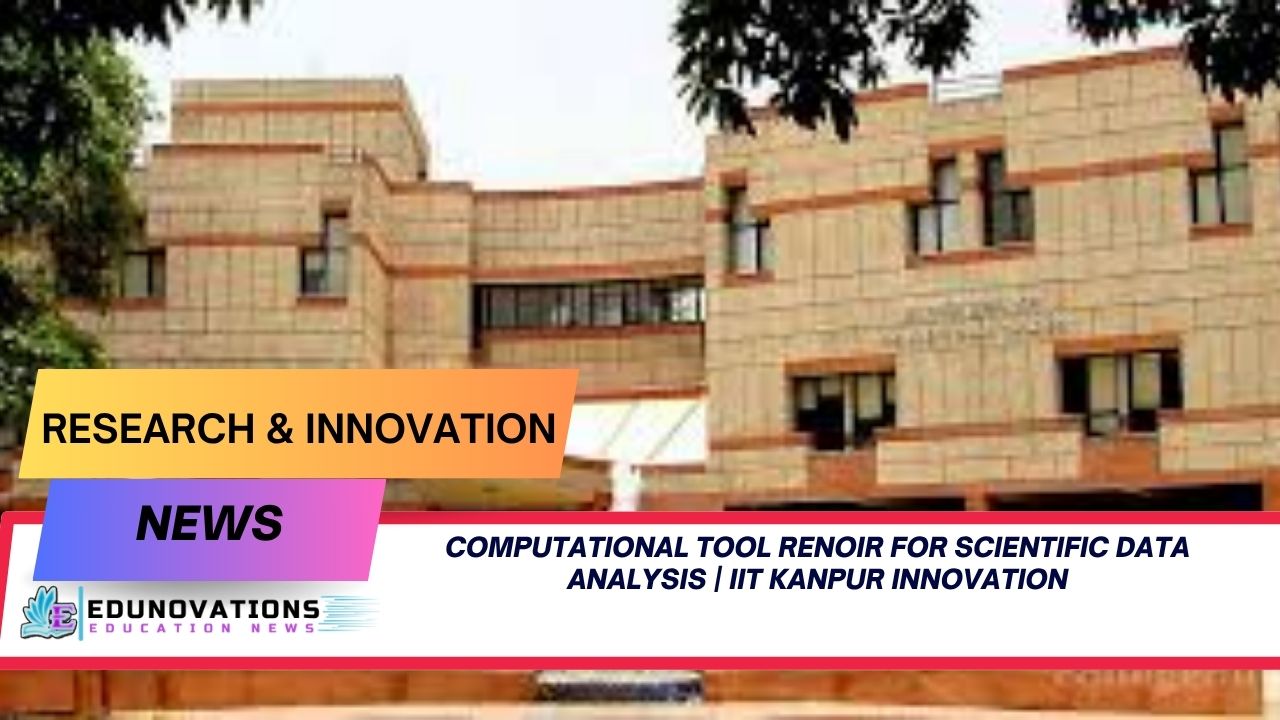
Discover how computational tool renoir for scientific data analysis developed at IIT Kanpur is advancing engineering simulations, AI-driven research, and high-performance computational studies in India.
India’s Scientific Computing Ecosystem Gets a Major Boost
India’s research ecosystem has received a significant technological advancement with the launch of Renoir, an innovative computational platform developed by the prestigious Indian Institute of Technology Kanpur. The newly introduced system is expected to accelerate scientific discoveries, improve engineering simulations, and strengthen India’s position in computational science and artificial intelligence-driven research.
The development has generated excitement among researchers, academicians, and technology experts because modern scientific studies increasingly depend on high-performance computing platforms capable of processing complex datasets and simulations. Experts believe the computational tool renoir for scientific data analysis could become an important step toward making advanced computational research more accessible to Indian institutions and laboratories.
The announcement also highlights India’s growing investment in indigenous scientific technologies that support innovation across engineering, materials science, healthcare, and industrial research.
Students preparing for competitive examinations and technology careers can also explore advanced educational resources through NCERT Courses and updated educational developments via Current Affairs Portal.
Why Computational Platforms Matter in Modern Research
Scientific research has evolved dramatically over the past decade. Traditional experimental methods are now being complemented by computational models capable of predicting outcomes, simulating environments, and analyzing large-scale datasets within minutes.
The computational tool renoir for scientific data analysis has emerged at a time when universities and industries worldwide are looking for efficient ways to accelerate discoveries without relying solely on expensive laboratory experimentation.
Modern computational tools are widely used in:
- Aerospace engineering
- Materials science
- Climate research
- Biotechnology
- Drug discovery
- Mechanical simulations
- Artificial intelligence
- Quantum research
- Semiconductor design
Experts suggest that India’s investment in advanced computational infrastructure could help researchers compete globally while reducing dependence on foreign technologies.
According to technology analysts, the demand for high-performance computational systems has risen sharply after the rapid growth of AI-powered applications and scientific simulations across industries.
IIT Kanpur’s Growing Leadership in Research Innovation
Over the years, Indian Institute of Technology Kanpur has established itself as one of India’s leading centers for scientific and engineering innovation. The institution has contributed to multiple breakthroughs in artificial intelligence, aerospace engineering, cybersecurity, robotics, and computational science.
The introduction of the renoir computational platform for engineering research reflects the institute’s broader vision of promoting interdisciplinary technological advancement.
Education experts note that IIT Kanpur’s strong collaboration between researchers, faculty members, and industry professionals has helped the institute remain at the forefront of innovation.
The institute has also focused on encouraging students to participate in advanced scientific projects through research-driven academic programs.
Students interested in engineering preparation materials can access detailed academic support through NCERT Notes Platform and practice resources at MCQ Learning Hub.
How the New Platform Could Change Scientific Computing
The newly developed system is expected to support complex calculations and simulations required in modern scientific studies. Researchers often deal with large datasets that require powerful computational infrastructure to process efficiently.
The computational tool renoir for scientific data analysis may help researchers by:
- Improving simulation accuracy
- Reducing computation time
- Supporting advanced modeling systems
- Enhancing interdisciplinary collaboration
- Streamlining scientific workflows
- Enabling AI-assisted research environments
Experts believe such systems can significantly reduce the time required for scientific discoveries. In areas like materials science or pharmaceutical research, simulations that once required weeks can now potentially be completed within hours.
This efficiency improvement could also help Indian institutions conduct more cost-effective research while increasing global competitiveness.
Global Demand for Advanced Scientific Computing Continues to Rise
The global scientific computing industry has experienced rapid expansion due to increasing demand for artificial intelligence, machine learning, and simulation-based engineering.
Industry reports estimate that the global high-performance computing market could surpass billions of dollars in valuation over the next few years. Countries such as the United States, China, Germany, and Japan have already invested heavily in research infrastructure.
India’s progress through initiatives like ai based computational research tool by iit kanpur demonstrates the country’s intention to strengthen its technological capabilities.
Technology policy analysts believe indigenous research platforms are essential for long-term scientific independence and innovation.
The development also aligns with India’s broader digital transformation strategy that encourages domestic innovation in emerging technologies.
Role of Artificial Intelligence in Scientific Discovery
Artificial intelligence has become an essential component of modern scientific analysis. AI systems can identify patterns, optimize simulations, and automate data interpretation at unprecedented speeds.
The ai based computational research tool by iit kanpur may eventually contribute to faster scientific experimentation and predictive analysis.
Researchers increasingly rely on AI-powered systems to:
- Predict molecular behavior
- Analyze climate patterns
- Improve medical diagnostics
- Optimize engineering systems
- Accelerate industrial design processes
Experts say integrating artificial intelligence with high-performance computing platforms could revolutionize multiple sectors in the coming decade.
Educational institutions are also rapidly incorporating AI and computational science into their academic programs to prepare future researchers and engineers.
Students can improve their preparation using video learning resources available at Educational Video Library.
Potential Benefits for Engineering and Industrial Sectors
The renoir simulation tool for advanced computational studies could provide valuable support to industries requiring accurate modeling and performance analysis.
Engineering firms often depend on computational simulations to reduce production costs and improve design efficiency. Advanced modeling systems can help organizations identify potential problems before manufacturing begins.
Industries likely to benefit include:
- Automotive manufacturing
- Aerospace engineering
- Electronics and semiconductor production
- Renewable energy systems
- Pharmaceutical research
- Civil engineering and infrastructure
- Defense technology development
Technology consultants believe computational simulation platforms are becoming essential tools for industrial competitiveness.
India’s manufacturing sector may particularly benefit from domestic access to advanced simulation technologies that reduce dependency on imported systems.
Academic Community Reacts Positively
Several education experts and technology professionals have welcomed the development of the computational tool renoir for scientific data analysis.
Researchers believe such platforms encourage innovation among students and early-career scientists by providing access to advanced computational resources.
Many experts also emphasize the importance of building indigenous scientific technologies to strengthen India’s academic ecosystem.
Senior faculty members across engineering institutions have repeatedly highlighted the need for increased investment in scientific infrastructure, especially in computational science and AI-based research systems.
The launch of Renoir is being viewed as a positive step toward achieving that objective.
Students searching for academic syllabi and structured preparation resources can visit NCERT Syllabus Resources.
Growing Importance of Computational Science in Education
Universities across the world are introducing computational science programs because industries increasingly demand professionals skilled in simulation technologies and data-driven research.
The iit kanpur renoir research software explained through academic discussions could inspire more students to pursue careers in computational engineering and scientific computing.
Educational experts suggest that future job markets will strongly favor candidates with expertise in:
- Computational modeling
- Machine learning
- Data analytics
- Scientific programming
- High-performance computing
- AI-assisted engineering systems
India’s growing technology sector may create significant employment opportunities for graduates trained in these domains.
Experts also emphasize the need for schools and colleges to modernize curricula to include emerging computational technologies.
Indigenous Innovation and India’s Technology Vision
India has increasingly focused on building indigenous technologies under various national innovation programs. Experts say domestic research tools strengthen technological independence and reduce external dependencies.
The renoir computational platform for engineering research represents a broader movement toward self-reliance in scientific innovation.
Technology policy specialists note that locally developed systems often address region-specific research challenges more effectively than imported technologies.
Additionally, indigenous platforms can help reduce operational costs for universities and laboratories with limited budgets.
Experts believe India’s research ecosystem will benefit significantly if more institutions invest in collaborative scientific software development.
Schools and educational institutions seeking digital outreach services can explore solutions offered by Mart Ind Infotech.
Challenges Facing Computational Research in India
Despite rapid progress, experts caution that India still faces several challenges in scaling advanced computational research.
Some key challenges include:
- Limited access to high-performance computing infrastructure
- Shortage of specialized computational scientists
- Funding limitations
- Need for interdisciplinary collaboration
- High maintenance costs for advanced systems
However, initiatives like computational tool renoir for scientific data analysis indicate growing awareness of these challenges and the need for long-term solutions.
Researchers believe public-private collaboration could further accelerate India’s progress in computational innovation.
Future Scope of Advanced Simulation Technologies
Experts predict that advanced simulation technologies will play a crucial role in future scientific and industrial developments.
The renoir simulation tool for advanced computational studies could eventually support applications in:
- Smart city planning
- Renewable energy optimization
- Personalized healthcare
- Climate resilience research
- Advanced robotics
- Space exploration technologies
Scientists increasingly rely on simulations because they allow faster experimentation while minimizing operational costs and risks.
As computational technologies continue evolving, educational institutions are expected to expand research collaborations with industries and government agencies.
Students preparing for advanced studies can also access free educational PDFs through Free NCERT PDF Downloads and mind mapping resources via NCERT Mind Maps.
India’s Position in the Global Research Landscape
India has steadily improved its reputation in global scientific research, particularly in engineering, information technology, and artificial intelligence.
The ai based computational research tool by iit kanpur reflects the country’s increasing emphasis on high-value research and advanced technology development.
Experts believe India’s demographic advantage, combined with growing educational infrastructure, could help the country become a major global innovation hub over the next decade.
International collaboration opportunities may also expand as Indian institutions develop advanced indigenous technologies capable of supporting global research projects.
Conclusion
The launch of Renoir by Indian Institute of Technology Kanpur marks an important milestone in India’s scientific and technological journey. As research becomes increasingly data-driven and simulation-oriented, platforms like Renoir could help accelerate discoveries, strengthen engineering capabilities, and support innovation across industries.
The computational tool renoir for scientific data analysis highlights the growing importance of indigenous technological development in shaping India’s future research ecosystem. Experts believe that continued investment in computational science, artificial intelligence, and engineering simulations will be critical for maintaining global competitiveness.
With rising demand for advanced scientific infrastructure, educational institutions, policymakers, and industries may increasingly collaborate to expand India’s computational capabilities in the years ahead.
Toppers Use Mind Maps to score more than 95%
NCERT Class 11th Commerce Mind Maps
Add to cartOriginal price was: ₹999.00.₹199.00Current price is: ₹199.00.NCERT Class 12th Chemistry Mind Maps
Add to cartOriginal price was: ₹199.00.₹75.00Current price is: ₹75.00.NCERT Class 12th Commerce Mind Maps
Add to cartOriginal price was: ₹999.00.₹199.00Current price is: ₹199.00.NCERT Class 12th Science Mind Maps
Add to cartOriginal price was: ₹999.00.₹199.00Current price is: ₹199.00.NCERT Mind Maps For Class 10th
Add to cartOriginal price was: ₹999.00.₹199.00Current price is: ₹199.00.





Purchase Today
FAQs
1. What is computational tool renoir for scientific data analysis?
It is an advanced computational platform developed at IIT Kanpur to support scientific simulations, engineering analysis, and research-driven computational studies.
2. Who developed the Renoir computational platform?
The platform was developed by researchers and experts at Indian Institute of Technology Kanpur.
3. How does iit kanpur renoir research software explained benefit researchers?
It helps researchers perform complex simulations, process scientific data efficiently, and accelerate computational studies.
4. What industries can benefit from renoir simulation tool for advanced computational studies?
Industries such as aerospace, automotive, healthcare, renewable energy, and semiconductor manufacturing may benefit.
5. Why is ai based computational research tool by iit kanpur important?
It demonstrates India’s progress in artificial intelligence-driven scientific innovation and computational technology development.
6. Can students use computational tool renoir for scientific data analysis?
The platform mainly supports advanced research, but students involved in scientific computing and engineering research may benefit indirectly.
7. What is the future scope of renoir computational platform for engineering research?
It could support applications in climate science, robotics, healthcare simulations, and smart infrastructure development.
8. Why are computational research tools becoming important globally?
Modern research requires rapid data processing, simulations, and predictive modeling, which computational systems enable efficiently.
9. How does India benefit from indigenous computational platforms?
Domestic platforms reduce technological dependence and strengthen India’s scientific research ecosystem.
10. What skills are important for careers in computational science?
Skills in programming, AI, machine learning, data analysis, and simulation technologies are increasingly valuable.