Master the gaurav singh neet topper preparation strategy. Learn how an Army Subedar Major’s son secured AIR 9 with 705 marks in a tougher NTA re-test.
Unstoppable Discipline: Army Subedar Major’s Son Secures All India Rank 9 in Tougher NEET Retest
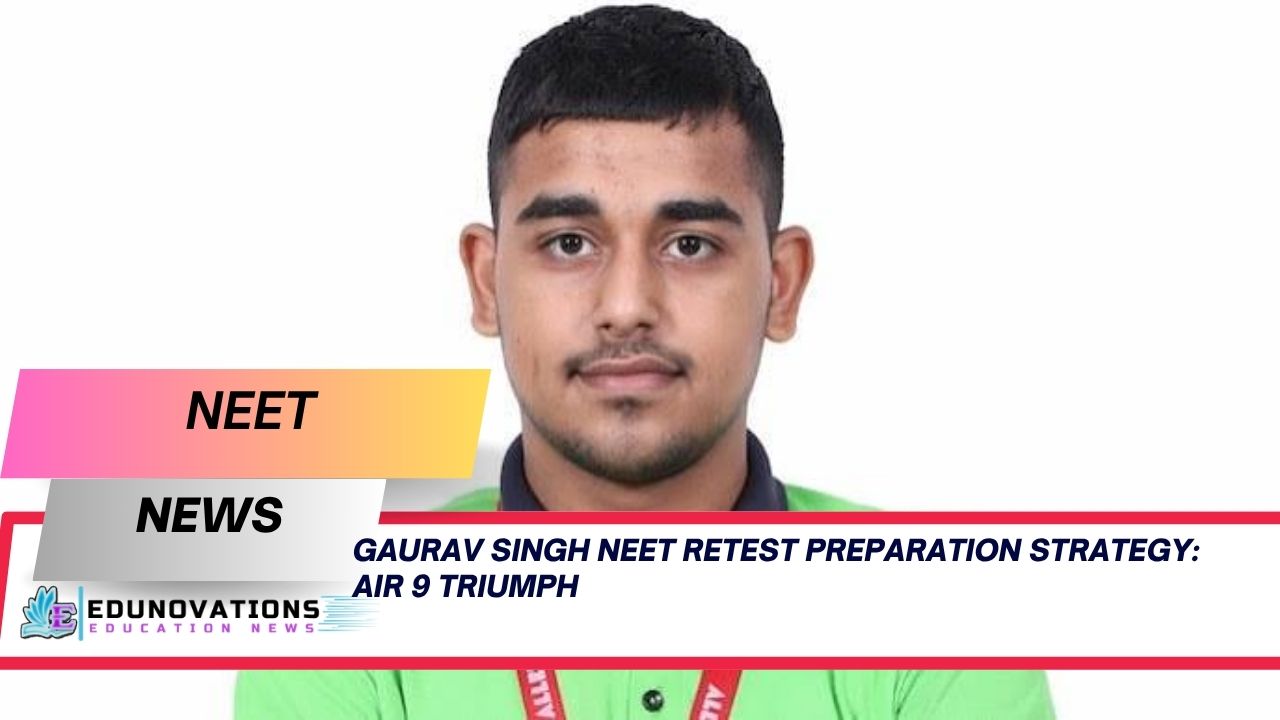
In an academic environment defined by high competition, sudden policy changes, and national scrutiny, true resilience sets elite performers apart. The National Testing Agency (NTA) recently declared the results of the National Eligibility cum Entrance Test (NEET-UG) re-examination, bringing relief and celebration to thousands of medical aspirants across India. Among the stellar achievements stands Gaurav Singh, the son of an Indian Army Subedar Major, who conquered an exceptionally tough question paper to secure All India Rank (AIR) 9 with a remarkable score of 705 out of 720.
Hailing from Gaduwas village in the Alwar district of Rajasthan, Gaurav proved that military-grade consistency, structured study schedules, and emotional stability can overcome extreme exam pressure. His ambition is clear: securing an MBBS seat at the prestigious All India Institute of Medical Sciences (AIIMS) Delhi. Understanding his inspiring trajectory requires analyzing the precise blueprint that enabled him to transition from classroom drills to top-tier national rankings.
From Alwar to Kota: The Foundation of Excellence
Gaurav’s journey toward medical excellence was neither accidental nor overnight. Coming from a family deeply rooted in national service and discipline, his academic path was guided by his father, Subedar Major Rajesh Kumar, and his mother, Seema Devi. However, his primary academic inspiration was closer to home—his elder sister, Anuja. Having prepared in Kota, Anuja successfully cracked the medical entrance exam and is currently pursuing her third-year MBBS at ESIC Government Medical College in Alwar.
Observing his sister’s relentless dedication planted the seed for Gaurav’s own aspirations. To ensure both children received an optimal study environment, Seema Devi relocated with them to Kota, Rajasthan—the heartland of India’s competitive examination coaching. Renting an apartment instead of opting for hostel accommodations created a stable, nurturing home environment where daily stress was mitigated by family support.
For seven years, Gaurav remained enrolled as a regular classroom student at ALLEN Career Institute in Kota. His academic record consistently reflected high capability, scoring 92% in Class 10 and 90% in Class 12 board examinations. However, competitive exams demand more than high scores in school; they require a deep understanding of core concepts, speed, and analytical precision. Students starting their competitive journeys can review comprehensive NCERT Courses to build strong foundational skills early.
Navigating the Re-Test Storm: Psychological Resilience under Pressure
The original NEET-UG exam presented its own set of challenges, but widespread reports of logistical discrepancies and paper leaks prompted authorities to schedule a national re-examination. For most candidates, the announcement of a re-test induced severe burnout, anxiety, and academic fatigue. Having already secured 705 marks in the first sitting, Gaurav faced the daunting task of repeating his peak performance on a completely fresh question paper.
Speaking on the re-examination, Gaurav noted that while the initial paper was comparatively easier, the secondary paper presented by the NTA was noticeably tougher, featuring deeper conceptual questions and complex analytical distribution across Physics, Chemistry, and Biology. Instead of losing momentum during the 40 to 45 days available between exams, Gaurav reorganized his daily schedule from day one.
His father, Subedar Major Rajesh Kumar, remarked on his son’s mental fortitude: “Discipline and fighting back uncertainties are in his DNA. When the re-exam was announced, he didn’t panic. He simply resumed his daily study routine with renewed focus.”
For candidates looking to stay informed about regulatory changes, policy shifts, and national exam announcements, accessing verified Current Affairs resources remains vital for comprehensive exam readiness.
Decoding the Core Preparation Framework
The cornerstone of Gaurav’s achievement lies in a systematic approach that prioritized quality over quantity. Rather than overburdening himself with dozens of reference books, he maintained absolute fidelity to primary materials.
1. Mastering the NCERT Textbooks
Gaurav emphasized that reading NCERT textbooks once or twice is insufficient for competitive exams. He systematically read, highlighted, and revised his Biology, Chemistry, and Physics textbooks multiple times. This approach ensured that even subtle, line-by-line assertions in Inorganic and Organic Chemistry were etched into his memory. Students preparing for similar competitive benchmarks can access curated study aids and Notes to streamline their textbook summaries.
2. High-Density Self-Study Routines
Outside of his standard classroom hours, Gaurav dedicated 7 to 8 hours daily strictly to self-study. Being a naturally morning-oriented person, he began his study blocks early in the day when mental clarity was at its peak. His daily breakdown balanced heavy numerical problem-solving in Physics with intensive memorization blocks for Organic and Inorganic Chemistry.
3. Rigorous Mock Tests and Systematic Error Analysis
Taking assessments seriously formed the core of his academic routine. However, Gaurav noted that the true key to progress is what happens after the exam concludes. Instead of merely checking his final score, he conducted thorough diagnostic reviews of every incorrect answer and unattempted question. Rectifying these underlying conceptual gaps prevented recurring errors in subsequent tests. Candidates aiming to test their knowledge under simulated conditions can practice with targeted MCQs to identify personal weak points.
Striking the Balance: Digital Discipline and Mental Wellbeing
In an age where digital distractions frequently derail student preparation, Gaurav demonstrated exceptional self-regulation. While he possessed an Android smartphone throughout his preparation in Kota, he strictly regulated its usage. He utilized digital devices purely for academic references, doubt resolution, and short educational video modules, avoiding social media rabbit holes completely. Aspirants seeking structured visual explanations can leverage dedicated platforms for educational Videos to master complex topics without unnecessary online distractions.
To avoid mental burnout during months of intense study, Gaurav incorporated short, refreshing physical activities into his daily life. An avid cricket enthusiast, he often played light recreational matches at home or with close peers rather than spending extended hours outdoors. This disciplined balance kept his mind active and receptive.
Detailed Comparison: Initial Exam vs. Tougher Re-Test Scenario
| Parameter | Initial Examination | NTA Re-Test Examination | Gaurav Singh’s Approach |
| Paper Difficulty | Moderately straightforward, direct textbook recall | Significantly tougher, high analytical depth | Shifted focus to core principle mastery and deeper numerical practice |
| National Atmosphere | Standard competitive pressure | High anxiety, uncertainty, and sudden timeline extensions | Treated the extra period as a dedicated revision window |
| Scoring Consistency | High raw score potential | Scaled difficulty, tough scoring conditions | Maintained an identical score of 705/720 through rigorous error reduction |
| Rank Outcome | Variable national distribution | Secured elite All India Rank (AIR) 9 | Validated his preparation methodology under tougher parameters |
Understanding full curriculum breakdowns is critical when preparing for high-stakes tests. Students can download complete examination guidelines and updated Syllabus documents to align their study tracking effectively.
Strategic Guidance for Future Aspirants
Gaurav’s journey offers clear, actionable strategies for students aiming for top ranks in competitive examinations:
- Embrace Active Recall: Avoid passive reading. Test your memory constantly using flashcards, chapter summaries, and practice problems.
- Maintain Micro-Notes: Condense large chapters into brief, highly visual revision sheets. You can easily access specialized NCERT Mind Maps to accelerate rapid revision before test days.
- Rely on Standard Textbooks: Supplement your primary reading with authorized, reliable learning materials. Candidates can utilize direct portals for Free NCERT PDFs to ensure their core reading remains aligned with official exam standards.
- Build Educational Support Infrastructure: Educational institutions, coaching centers, and schools looking to build robust digital platforms and portals can consult experts at Mart Ind Infotech for specialized web solutions.
By combining family support, clear guidance from experienced faculty, and an uncompromising self-study routine, Gaurav Singh transformed external challenges into a career-defining triumph. His journey serves as a powerful model for candidates across the nation, proving that absolute consistency and disciplined revision remain the ultimate path to success.
Toppers Use Mind Maps to score more than 95%
NCERT Class 11th Commerce Mind Maps
Add to cartOriginal price was: ₹999.00.₹199.00Current price is: ₹199.00.NCERT Class 12th Chemistry Mind Maps
Add to cartOriginal price was: ₹199.00.₹75.00Current price is: ₹75.00.NCERT Class 12th Commerce Mind Maps
Add to cartOriginal price was: ₹999.00.₹199.00Current price is: ₹199.00.NCERT Class 12th Science Mind Maps
Add to cartOriginal price was: ₹999.00.₹199.00Current price is: ₹199.00.NCERT Mind Maps For Class 10th
Add to cartOriginal price was: ₹999.00.₹199.00Current price is: ₹199.00.





Purchase Today
Frequently Asked Questions (FAQs)
1. What is the gaurav singh neet topper preparation strategy for securing top AIR?
The core strategy involved attending daily classroom lectures, studying NCERT textbooks repeatedly, dedicating 7 to 8 hours daily to self-study, and conducting rigorous post-test mistake analysis after every practice paper.
2. How did Gaurav Singh maintain consistency during the tougher NEET re-test?
Instead of panicking when the re-exam was announced, Gaurav immediately reinstated his strict morning study routine, focusing on active recall, doubt resolution, and thorough revision of weaker Chemistry topics.
3. How to crack neet retest using ncert books effectively?
To crack a competitive re-test using NCERT books, read every line carefully, solve all end-of-chapter exercises, memorize tables and diagrams, and combine reading with frequent practice mock tests.
4. What role did military discipline play in achieving AIR 9?
Raised by an Army Subedar Major, Gaurav applied operational discipline to his studies—maintaining fixed sleep schedules, eliminating digital distractions, and treating every mock exam like an actual test day.
5. How many hours self study needed for neet air 10 or top 10 ranks?
Top rankers like Gaurav Singh consistently dedicate around 7 to 8 hours daily to focused self-study, excluding their regular coaching or classroom schedule.
6. What was the army personnel son neet retest topper interview key takeaway?
The main takeaway was that consistency outweighs raw brilliance. Success comes from trusting classroom faculty, avoiding excessive study resources, and learning systematically from every mistake.
7. How did Gaurav Singh balance smartphone usage during Kota coaching?
Gaurav used an Android smartphone strictly for academic purposes and doubt clearance, completely avoiding social media platforms to maintain focus throughout his multi-year preparation.
8. What is the recommended allen kota revision schedule for neet rankers?
The typical revision schedule involves early morning self-study blocks, daytime classroom lectures, afternoon error diagnostic sessions, and evening revision cycles focusing on core textbook facts.
9. Why did Gaurav Singh target AIIMS Delhi for his MBBS degree?
AIIMS Delhi is India’s premier medical institution. Having secured All India Rank 9 with 705 marks, Gaurav earned the merit rank necessary to fulfill his dream of pursuing medicine there.
10. How can future medical aspirants prevent burnout during extended exam delays?
Aspirants can prevent burnout by incorporating light recreational activities (like informal sports), taking short structured breaks, maintaining open communication with family, and keeping study schedules predictable.