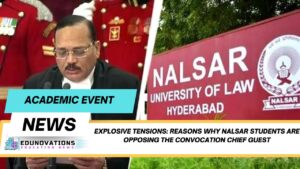
In an era where digital narratives dominate public discourse, the intersection of cinema and political influence has become a critical area of study.
In an era where digital narratives dominate public discourse, the intersection of cinema and political influence has become a critical area of study. Recent academic discussions, such as the faculty seminar conducted by Dr. Parashar Kulkarni, Associate Professor at the Centre for the Study of Social Inclusion (CSSI), have shed light on a profound shift in how authority is constructed in the 21st century. By examining the cinematic ventures of religious leaders, scholars are beginning to understand how popular culture legitimizes religious authority in India, offering a lens through which we can view the evolving relationship between spiritual influence and democratic institutions.
Understanding these dynamics is essential for students and researchers alike, especially when preparing for competitive examinations or academic research. For those deepening their knowledge of sociopolitical structures, resources such as NCERT Courses and Current Affairs provide the foundational context necessary to grasp these complex phenomena.
The Cinematic Construction of Authority
The phenomenon of religious leaders transitioning into the realm of popular culture is not merely a branding exercise; it is, as research suggests, a calculated method of political legitimation. When we analyze how popular culture legitimizes religious authority in India, we must look at the specific narrative structures employed. Films produced by religious figures often start by painting a grim picture of reality.
In these cinematic universes, democratic institutions are frequently portrayed as inefficient, corrupt, or entirely broken. By establishing a dystopia where the common man is abandoned by the political elite, the narrative sets the stage for the arrival of the “Superhero Saint.” This figure, often possessing mythical qualities, ascetic discipline, and a deep familial connection to their followers, serves as the singular solution to societal chaos.
The Role of the “Superhero Saint”
The characterization of the religious leader as a superhero is a powerful archetype. It allows the leader to transcend traditional political boundaries. Unlike elected officials who are held accountable by constitutional mandates, the “Superhero Saint” operates within a moral framework that is absolute.
As we explore how popular culture legitimizes religious authority in India, it becomes clear that these films successfully replace the concept of democratic participation with a vision of a “moral community.” In this utopia, the Guru—not the voter—is the arbiter of justice. For those tracking these trends, staying updated with high-quality Notes and MCQs can help solidify one’s understanding of how these political imaginaries take root.
Why This Matters for Modern Governance
The implications of this trend extend far beyond the silver screen. When popular culture is used to critique the failures of democratic governance, it creates a vacuum that religious authority is quick to fill. This process of legitimation is subtle but persistent.
- Democratic Accountability vs. Moral Authority: The discourse shifts from policy-based governance to a personality-driven moral community.
- Media and Influence: Social media and films amplify the leader’s reach, often bypassing traditional news channels.
- Sociological Impact: The normalization of this authority structure can significantly alter the expectations citizens have of their leadership.
For academic institutions and schools looking to modernize their digital presence to share such critical insights, partnering with experts like Mart Ind Infotech can provide the technological framework required to disseminate research effectively. Students interested in the deeper socio-political implications can also access Free NCERT PDFs to build a robust foundation in civic studies.
Academic Perspectives: A Deeper Look
Dr. Parashar Kulkarni’s work offers a rigorous analysis of this intersection. By viewing these cinematic narratives through the lens of political science, we gain a clearer picture of the challenges faced by modern secular democracies. It is not just about the films themselves; it is about the “political imaginary” they construct.
This is where the distinction between traditional political power and personalized religious authority becomes blurred. If you are preparing for exams where such analytical questions are common, practicing with Videos and Syllabus reviews can keep your preparation aligned with the latest academic discourse.
Comparative Analysis: The Guru as the Savior
The narrative arc of the “Superhero Saint” usually involves:
- Establishing Dystopia: Highlighting the corruption of elite classes.
- The Intervention: The Guru enters to restore order using extraordinary powers.
- The New Utopia: A community defined by devotion rather than civic engagement.
By observing how popular culture legitimizes religious authority in India, we realize that the allure of such narratives lies in their promise of simplicity in a complex political world. To visualize these complex connections, scholars often use NCERT Mind Maps to correlate historical concepts of authority with contemporary examples.
Challenges to Democratic Discourse
The rise of such figures in popular culture often parallels periods of perceived democratic decline. When institutions fail to deliver, the public may seek alternatives that offer immediate, albeit non-democratic, solutions. The research into how popular culture legitimizes religious authority in India highlights that this is a global phenomenon where religion mediates political life in ways that traditional sociology is only beginning to document.
While these themes are academic in nature, they are highly relevant for anyone pursuing careers in civil services or public policy. Understanding the mechanisms of authority is a key component of the Syllabus for many competitive exams.
Synthesizing the Findings: A New Paradigm
Ultimately, the study of how religious leaders utilize media highlights the adaptability of religious institutions. By effectively mimicking the tropes of action cinema, these leaders manage to bypass traditional skepticism and speak directly to the grievances of their followers.
As we look toward the future of governance and the influence of media, tracking these developments is crucial. Whether you are a student, an educator, or simply a concerned citizen, staying informed through verified Current Affairs is the best way to navigate the evolving relationship between faith and politics.
For schools and institutions aiming to keep their community updated on such pivotal research, leveraging a digital platform is essential. Working with firms like Mart Ind Infotech can ensure your research reaches the right audience.
Toppers Use Mind Maps to score more than 95%
NCERT Class 11th Commerce Mind Maps
Add to cartOriginal price was: ₹999.00.₹199.00Current price is: ₹199.00.NCERT Class 12th Chemistry Mind Maps
Add to cartOriginal price was: ₹199.00.₹75.00Current price is: ₹75.00.NCERT Class 12th Commerce Mind Maps
Add to cartOriginal price was: ₹999.00.₹199.00Current price is: ₹199.00.NCERT Class 12th Science Mind Maps
Add to cartOriginal price was: ₹999.00.₹199.00Current price is: ₹199.00.NCERT Mind Maps For Class 10th
Add to cartOriginal price was: ₹999.00.₹199.00Current price is: ₹199.00.



Purchase Today
Frequently Asked Questions (FAQs)
- How popular culture legitimizes religious authority in India through cinema? It does so by portraying religious leaders as “Superhero Saints” who restore order when democratic institutions are shown to be corrupt or ineffective.
- Why do researchers study the link between religious leaders and political power? It helps in understanding how political authority is constructed and sustained in modern societies, often outside of traditional democratic frameworks.
- What is the role of popular culture in modern religious politics? It acts as a medium to construct a “political imaginary” that positions religious leadership as a superior alternative to failing political systems.
- How can students analyze the impact of superhero narratives on democratic decline? By studying the narrative arcs of these films and comparing them with the actual exercise of religious authority in local communities.
- Is there a specific case study for Gurmeet Ram Rahim films and political ideology? Yes, academic researchers have analyzed his films to demonstrate how popular culture is used to build a moral community of devotees.
- How does popular culture influence public perception of religious authority? It simplifies complex political issues into a binary of “corrupt elite” vs. “righteous savior,” which can be very persuasive to an audience.
- What does the term “legitimation of religious authority” mean? It refers to the processes by which religious leaders gain and maintain the right to lead, often by gaining social and cultural acceptance through various media.
- Can we see democratic decline reflected in popular culture? Yes, many films reflect the anxieties of the public regarding the accountability of democratic institutions, which serves as a backdrop for the narrative of the “Superhero Saint.”
- Why is academic research important for understanding religious politics? It provides an evidence-based approach to understanding how religious institutions adapt to modern media, preventing reliance on speculation.
- Where can I find more resources on these sociological topics? You can explore Current Affairs and Notes to deepen your understanding of these complex intersections.