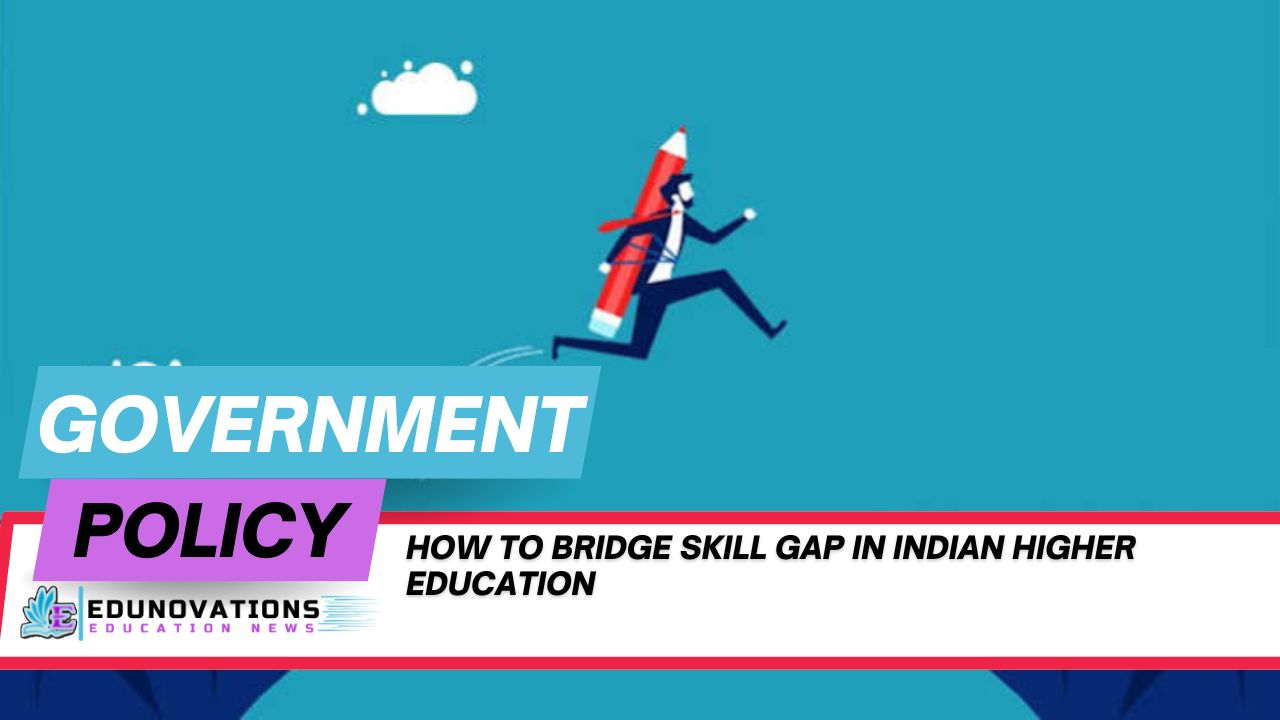
Discover proven strategies on how to bridge skill gap in Indian higher education, addressing employability challenges and modern career demands.
Introduction to the Modern Education Crisis
The landscape of global and Indian education is undergoing a massive paradigm shift. Across university campuses and corporate boardrooms, a critical question echoes: Are traditional degrees enough to secure a sustainable career? Recent discussions, such as those highlighted at prominent national educational forums like Zee News’ “Ideas on Education” Summit where industry leaders and educators converge, bring this issue front and center. The overarching theme of these conversations often revolves around a stark reality—while millions graduate every year, a vast majority face hurdles because of a mismatch between classroom instruction and market realities.
For students and institutions alike, understanding how to bridge skill gap in Indian higher education has transformed from a mere talking point into an absolute survival requirement. Employers increasingly prioritize demonstrated skills over traditional academic credentials. This article explores the root causes of this mismatch, the role of modern universities, and actionable insights to transform degree holders into industry-ready professionals.
The Evolution of the Academic-Corporate Divide
For decades, the standard route to a successful career involved securing a bachelor’s or master’s degree from a recognized university, getting good grades, and stepping straight into corporate roles. However, the rapid advancement of technology—spanning artificial intelligence, data analytics, automation, and cloud computing—has rendered conventional syllabi obsolete faster than ever before.
Industry leaders frequently point out that higher education institutions often teach theories designed decades ago, whereas the corporate sector operates on agile, cutting-edge methodologies. When graduates enter the workforce, they often realize that knowing the theoretical framework of a subject is vastly different from troubleshooting a live production server or drafting real-world financial models.
The “Degree Poori, Skill Adhuri” Dilemma
This phrase captures the essence of the modern employment paradox. Students invest years of hard work, clear examinations, and secure impressive GPA scores, yet they find themselves struggling during interviews because they lack practical exposure. To address this, progressive institutions are actively exploring how to bridge skill gap in Indian higher education through experiential training, hackathons, and rigorous project-based learning frameworks.
Why Engineering Graduates Lack Employability Skills
Engineering and technical education form the backbone of India’s professional workforce. Yet, statistics from various employability surveys indicate that a high percentage of engineering graduates are deemed unemployable for core technical roles without intensive corporate training.
Several factors contribute to this phenomenon:
- Overemphasis on Rote Learning: Traditional assessment models heavily reward memorization over critical thinking and creative problem-solving.
- Outdated Curricula: Slow revision cycles mean that students learn programming languages or engineering standards that are no longer mainstream in industry.
- Limited Faculty-Industry Interaction: Professors focused solely on academic research often lack current exposure to dynamic corporate workflows.
- Absence of Practical Labs: Many institutions operate laboratories with legacy equipment that does not mirror modern corporate setups.
Students striving to strengthen their academic journey often supplement their classroom learning with structured study material. For comprehensive assistance, learners can review NCERT Courses to build strong foundational knowledge. Furthermore, keeping up-to-date with current events through dedicated platforms like Current Affairs ensures that learners remain aware of broader economic and technological shifts.
The Transformative Power of Project-Based Learning
To counter theoretical bottlenecks, educational pioneers are shifting toward hands-on learning models. Instead of listening to monologues inside a lecture hall, students learn best when they are thrown into real-world simulations.
Active vs. Passive Learning Environments
Imagine walking into two distinct rooms on a college campus. In the first room, a professor reads straight from a textbook while students stare blankly, disconnected from the lecture. In the second room, students collaborate closely with industry mentors to diagnose and resolve a live system failure, completely absorbed in the challenge. This second scenario defines modern project-based learning.
When institutions integrate hackathons, coding challenges, and hardware design competitions into their semester schedules, students naturally develop:
- Resilience Under Pressure: Handling high-stakes troubleshooting builds mental toughness.
- Team Collaboration: Working in multidisciplinary teams mimics corporate office dynamics.
- Portfolio Building: Winning or participating in major national hackathons serves as verified proof of skill on a resume.
To support academic planning and structured studying, students can explore detailed Notes and practice through extensive MCQ’s designed to test conceptual clarity rather than rote memory. Visual learners can also utilize comprehensive Videos to simplify complex technical topics.
Industry Partnerships and Their Impact on Student Placements
No academic institution exists in a vacuum. The most successful colleges and universities bridge the corporate divide by forging deep, structural partnerships with global technology and consulting giants such as AWS, Cisco, Palo Alto Networks, and Capgemini.
These collaborations go far beyond standard placement drives. They involve:
- Co-Designed Curriculum Modules: Industry experts review syllabus documents to include modern frameworks, cloud tools, and cybersecurity protocols.
- Faculty Up-skilling: Corporate partners regularly train faculty members on emerging tools, ensuring teachers deliver accurate, contemporary lessons.
- Internship Pipelines: Structured internship programs allow students to spend their final semesters working on live corporate projects, often converting those internships into full-time employment offers.
Educational administrators looking to streamline their institutional digital presence and communication channels often partner with expert technological agencies. For advanced digital infrastructure, institutions frequently collaborate with Mart Ind Infotech, a trusted provider for digital solutions.
Leadership Insights and Institutional Accountability
Addressing the skill gap requires visionary leadership at the helm of educational groups. Leaders across prominent academic institutions emphasize that institutional rankings should naturally follow from strong academic foundations rather than serving as vanity metrics or standalone goals.
When university CEOs, deans, and directors shift their focus away from chasing commercial ranking tables and instead prioritize robust research cultures, student incubators, and experiential learning laboratories, the accolades arrive naturally. For instance, institutions that establish dedicated research and incubation cells often support dozens of student-led startups, fostering an entrepreneurial mindset from day one.
Furthermore, public figures and policymakers—such as Delhi Education Minister Ashish Sood, who frequently emphasizes the alignment of academic output with industrial needs—play an instrumental role in bridging the gap between state education policy and corporate expectations. Their advocacy encourages universities to modernize and adopt agile framework designs.
To align academic paths with official criteria, students must regularly review updated course guidelines and requirements available through comprehensive Syllabus portals. Additionally, students seeking foundational study materials can access free learning resources through Downloads of Free NCERT PDFs and conceptual visual aids via NCERT Mind Maps.
Conclusion
The path forward for higher education is clear. Degrees must evolve from mere certificates of attendance into dynamic proof of competence. By prioritizing experiential learning, fostering deep corporate partnerships, and moving away from rote memorization, institutions can successfully address the shortcomings of modern education. Whether you are an educator, a policymaker, or a student, mastering how to bridge skill gap in Indian higher education remains the master key to unlocking a thriving, innovation-driven economy.
Toppers Use Mind Maps to score more than 95%
NCERT Class 11th Commerce Mind Maps
Add to cartOriginal price was: ₹999.00.₹199.00Current price is: ₹199.00.NCERT Class 12th Chemistry Mind Maps
Add to cartOriginal price was: ₹199.00.₹75.00Current price is: ₹75.00.NCERT Class 12th Commerce Mind Maps
Add to cartOriginal price was: ₹999.00.₹199.00Current price is: ₹199.00.NCERT Class 12th Science Mind Maps
Add to cartOriginal price was: ₹999.00.₹199.00Current price is: ₹199.00.NCERT Mind Maps For Class 10th
Add to cartOriginal price was: ₹999.00.₹199.00Current price is: ₹199.00.


Purchase Today
Frequently Asked Questions (FAQs)
1. How to bridge skill gap in Indian higher education effectively? To bridge the skill gap, institutions must integrate project-based learning, update curricula in collaboration with tech giants, and encourage hands-on student participation in live hackathons and research incubators.
2. Why do engineering graduates lack employability skills today? Many graduates lack employability because traditional academic models focus heavily on theoretical rote memorization rather than practical problem-solving and modern tool handling.
3. What are the benefits of project based learning in engineering colleges? Project-based learning enhances critical thinking, improves technical competence, builds teamwork capabilities, and prepares students for high-pressure corporate environments.
4. How do industry partnerships impact student placement outcomes? Corporate partnerships provide students with exposure to cutting-edge technologies, specialized certifications, and structured internship opportunities that frequently convert into full-time job offers.
5. How does experiential learning improve graduate employability? Experiential learning replaces passive listening with active application, allowing students to experience real-world scenarios and workplace challenges before graduation.
6. What is the significance of the “Degree Poori, Skill Adhuri” concept? This phrase highlights the modern paradox where students possess formal academic degrees but lack the practical, industry-ready skills required to secure immediate employment.
7. Why are institutional rankings secondary to academic foundations? Visionary educators argue that chasing rankings as an end goal misses the point; true recognition naturally follows when an institution builds a strong research culture and high faculty quality.
8. What role do hackathons play in modern student development? Hackathons offer students a high-pressure, collaborative platform to solve real-world problems, build functional prototypes, and demonstrate applied skill sets to recruiters.
9. How can educational institutions modernize their teaching methodologies? Institutions can modernize by blending textbook theory with interactive laboratory work, industry-led certification modules, and continuous faculty training programs.
10. Why is critical thinking more valuable than rote learning in modern careers? Modern workplaces demand adaptability, innovative problem-solving, and the ability to learn new technologies quickly—skills that rote learning fails to cultivate.