The educational landscape is undergoing a tectonic shift. As artificial intelligence moves from the realm of science fiction into the daily reality of our students
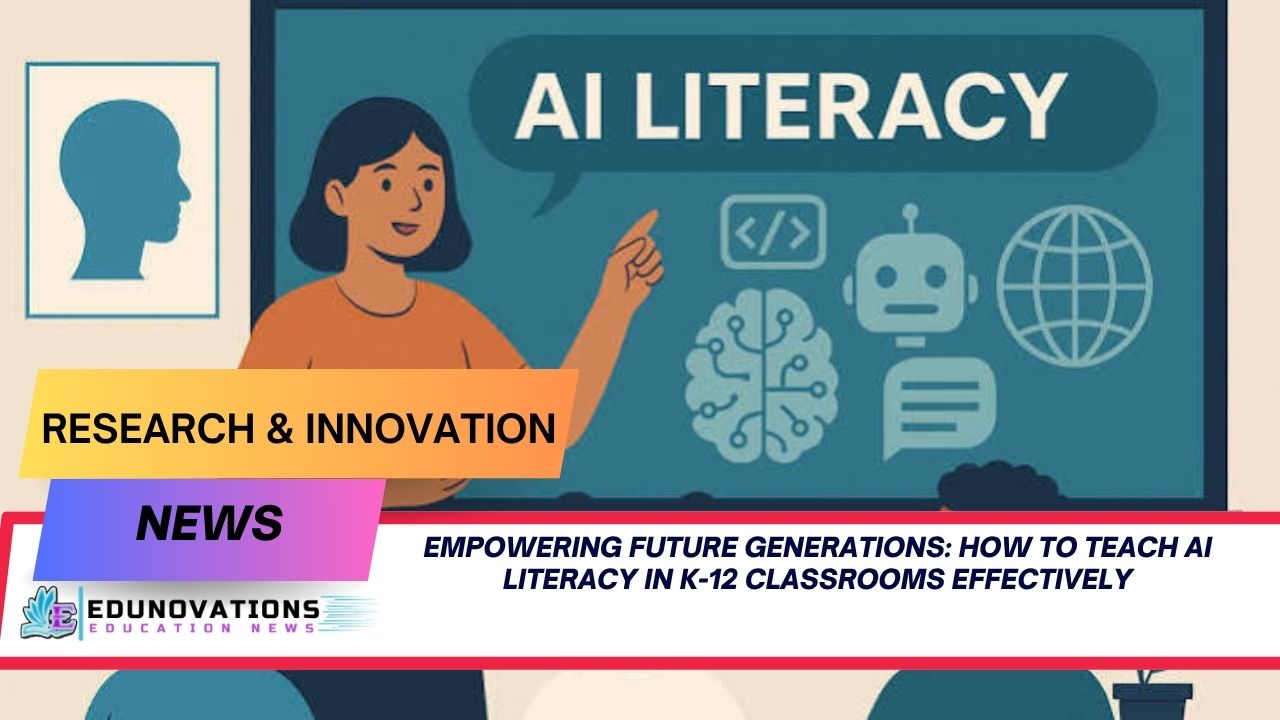
The educational landscape is undergoing a tectonic shift. As artificial intelligence moves from the realm of science fiction into the daily reality of our students, school districts are faced with a critical mandate: integrate this technology safely, ethically, and effectively. Across California, school districts are leading this charge, moving beyond mere experimentation to create structured, board-approved frameworks that prioritize long-term student success in an AI-driven world.
For educators and administrators, the question is no longer if we should introduce AI, but how. Providing a roadmap for success involves more than just selecting software; it requires a deep, pedagogical understanding of what AI literacy truly means.
The Mandate for Modern Education
California’s educational leaders are preparing for a future where AI is as ubiquitous as the calculator was in the 1980s. With legislation such as California’s AB 2876—which emphasizes the necessity of safe, ethical, and successful AI utilization—districts are now formalizing their digital citizenship curricula. This is not just about using generative tools to write essays; it is about cultivating a generation of critical thinkers who can evaluate the veracity of digital information, understand algorithmic bias, and leverage technology to bridge equity gaps.
As noted by William R. Watson, Chair of the College of Education AI and Data Science Working Group at Purdue University, “When used soundly and ethically, AI is a tool that helps teachers and students transform learning, making it personalized and focused on critical thinking and problem-solving.”
Why AI Literacy Matters Now
Recent data underscores the urgency of this transition. Studies show that AI-powered personalized learning can increase student engagement rates by up to 60% and improve learning efficiency by 57%. By providing students with the tools to navigate these systems, we aren’t just teaching them to use a tool; we are teaching them to master the cognitive processes required for the modern workforce.
For those looking to deepen their understanding of foundational academic concepts, exploring resources like NCERT Courses can help maintain a focus on core subjects even as new technologies are layered into the classroom.
Building a Strategy for the Classroom
Implementing a robust AI curriculum requires a collaborative approach. It involves stakeholder engagement—from caregivers and students to IT administrators—to ensure that the digital ecosystem of the school remains secure.
The Role of Technology in the Modern Classroom
Schools are increasingly utilizing platforms that assist teachers in refining their lessons and providing adaptive, immediate feedback to students. However, the technology must be matched by pedagogical expertise. Whether you are searching for Current Affairs to contextualize these shifts or looking for structured Notes on educational policy, the goal remains the same: to empower the educator to be a guide in the digital age.
If your institution is ready to modernize its infrastructure to support these initiatives, professional consultation through Mart Ind Infotech can provide the technical backbone required for secure, high-speed school networks.
Integrating AI with Core Curriculum
- Critical Analysis: Students should learn to identify when an AI has been used in a text and how to cross-reference AI-generated claims with trusted primary sources.
- Algorithmic Awareness: Understanding the “5 Big Ideas of AI” helps students see behind the curtain, demystifying how AI learns and why it makes certain suggestions.
- Human-Centered Design: Assignments should focus on creative problem-solving that AI cannot do—emphasizing empathy, high-level ethics, and original synthesis.
Bridging the Gap: Tools for Educators
Teachers often report that the sheer pace of innovation is overwhelming. To mitigate this, districts are turning toward structured resources that simplify implementation. When preparing your classroom strategy, consider leveraging MCQ’s for formative assessments or integrating Videos to visually demonstrate complex AI concepts to your students.
Furthermore, ensuring that students have access to foundational learning materials, such as Free NCERT PDFs, remains paramount. You can also utilize NCERT Mind Maps to help students visualize the relationship between traditional subjects and the new, AI-integrated digital reality.
The Future of Student Privacy
Perhaps the most significant concern for parents and educators alike is student data privacy. As districts roll out new tools, transparency is the only viable policy. This includes:
- Clear documentation of what data is collected.
- “Closed-loop” AI environments where student data is not used for model training.
- Regular parent workshops to explain the district’s “Digital Citizenship” curriculum.
Aligning your lesson plans with the state’s official Syllabus and educational standards is the first step in ensuring compliance and building trust with your school community.
Toppers Use Mind Maps to score more than 95%
NCERT Class 11th Commerce Mind Maps
Add to cartOriginal price was: ₹999.00.₹199.00Current price is: ₹199.00.NCERT Class 12th Chemistry Mind Maps
Add to cartOriginal price was: ₹199.00.₹75.00Current price is: ₹75.00.NCERT Class 12th Commerce Mind Maps
Add to cartOriginal price was: ₹999.00.₹199.00Current price is: ₹199.00.NCERT Class 12th Science Mind Maps
Add to cartOriginal price was: ₹999.00.₹199.00Current price is: ₹199.00.NCERT Mind Maps For Class 10th
Add to cartOriginal price was: ₹999.00.₹199.00Current price is: ₹199.00.

Purchase Today
Frequently Asked Questions
1. How to teach AI literacy in K-12 classrooms effectively? To teach AI literacy effectively, focus on inquiry-based learning, ethical debates, and hands-on exercises that show students both the potential and the limitations of generative tools.
2. Implementing responsible AI policies in California schools—where should we start? Start by forming an AI Advisory Team consisting of teachers, administrators, and tech staff to draft clear usage guidelines aligned with state AB 2876 mandates.
3. Best practices for student data privacy with AI tools? Prioritize tools that are COPPA compliant, utilize data anonymization, and ensure the district maintains ownership of student inputs rather than allowing vendors to train models on that data.
4. How to talk to children about generative AI at home? Focus on curiosity and skepticism. Encourage children to ask, “Why did the computer suggest this?” and discuss whether the AI might have made a mistake.
5. Integrating AI into digital citizenship curriculum for students—what does it look like? It involves teaching students how to identify deepfakes, understand algorithmic bias, and use AI as a creative partner rather than a shortcut for original thought.
6. Is AI replacing teachers in these California classrooms? No. Research consistently shows that AI is designed to handle repetitive tasks, freeing up teacher time for high-value human interaction and personalized mentorship.
7. Are there free resources to help teachers start with AI? Yes, many districts and educational platforms offer open-source guides on the “5 Big Ideas of AI” and lesson plan templates for integrating AI into math and science.
8. How can AI help students who struggle with traditional learning? AI-powered tools provide personalized scaffolds, such as text-to-speech, real-time feedback, and simplified explanations, helping students reach mastery at their own pace.
9. How do we ensure equity in AI education? Equity is achieved by ensuring that all students—regardless of their district’s budget—have access to both the hardware and the foundational digital literacy training required for the 21st century.
10. What is the biggest risk of AI in K-12 schools? The biggest risk is passive consumption. When students use AI to complete tasks without engaging in the learning process, they fail to develop essential critical thinking skills.