Discover how to verify authenticity of GI tagged crafts online using IIT Madras and HWA’s groundbreaking digital traceability solutions for Indian artisans.
In an unprecedented move toward technological innovation and rural economic empowerment, the Indian Institute of Technology Madras (IIT Madras) has partnered with the Human Welfare Association (HWA) to pioneer advanced digital authentication tools for India’s rich handicraft sector. This landmark initiative directly answers a long-standing question for global buyers, collectors, and policy experts: how to verify authenticity of GI tagged crafts online while securing the livelihoods of millions of traditional weavers and artisans.
Through a newly signed Memorandum of Understanding (MoU), IIT Madras and HWA will deploy cutting-edge digital verification systems, blockchain-backed documentation, and smart supply chain tracking. This initiative aims to eradicate counterfeit products, boost consumer confidence, and advance national socio-economic frameworks like Atmanirbhar Bharat (Self-Reliant India) and Viksit Bharat 2047.
The Growing Need for Digital Traceability in India’s Craft Sector
India’s traditional craft and handloom sectors represent the nation’s second-largest employment generator after agriculture, supporting over 200 million people directly and indirectly. From Kanchipuram silk sarees and Banarasi brocades to Pashmina shawls and Tanjore paintings, India boasts hundreds of Geographical Indication (GI) tags. A GI tag acts as an intellectual property right, certifying that a product possesses specific qualities, a legendary reputation, or distinct characteristics attributable strictly to its geographic origin.
Despite legal protections, the proliferation of machine-made replicas and counterfeit goods in domestic and international markets has severely undermined artisan incomes. Traditional craft clusters often lack the modern technological tools required to prove the origin of their creations.
When buyers seek information on how to verify authenticity of GI tagged crafts online, they encounter fragmented databases, inconsistent labeling, and a lack of unified digital verification tools. The collaboration between IIT Madras and HWA addresses this gap directly by establishing a decentralized, accessible, and tamper-proof verification ecosystem.
For students and competitive exam aspirants following national socio-economic initiatives, keeping up with these developments is essential. You can explore structured study materials and test updates via Edunovations Current Affairs and review comprehensive notes on Indian economy and geography on Edunovations Notes.
Key Stakeholders and Visionaries Behind the MoU
The collaboration brings together leading academic researchers, technological innovators, and veteran field activists. The MoU ceremony was conducted in the presence of eminent dignitaries whose contributions shape India’s scientific and social advancement.
Academic and Leadership Figures
- Prof. V. Kamakoti (Director, IIT Madras): Under his leadership, IIT Madras continues to bridge the gap between high-level technological research and grassroots societal applications. Prof. Kamakoti emphasized that technology must serve human development, aligning top-tier research with rural empowerment.
- Prof. Manu Santhanam (Dean of CSR, IIT Madras): Signed the MoU on behalf of the institute, highlighting how Corporate Social Responsibility funding can drive sustainable technology deployment across vulnerable craft communities.
- Prof. M. Manivannan (Department of Applied Mechanics and Biomedical Engineering, IIT Madras): Project Coordinator leading human-centric technological solutions. He stated:“Artisans form India’s second-largest population; empowering them with technology can drive transformative impact. At IIT Madras, we are committed to advancing this vision of a Viksit Bharat by the use of technology.”
- Prof. John Augustine (Department of Computer Science and Engineering, IIT Madras): Project Coordinator overseeing algorithm design, software architecture, and trust protocols. Explaining the fundamental goal of the digital platform, Prof. Augustine noted:“Buyers value authenticity but cannot verify it. Our goal is to build a shared trust infrastructure that lets anyone verify an artisan’s identity and a product’s origin, and thereby enable India to leapfrog on trust, and on the consumer engagement that follows from it.”
Field Leadership and Rural Empowerment
- Dr. Rajni Kant (General Secretary and Founder, Human Welfare Association): Popularly known as the “GI Man of India,” Dr. Kant has spent decades securing Geographical Indication registrations for dozens of traditional handicrafts, agricultural items, and regional products across North and North-East India. Commenting on the alliance, Dr. Rajni Kant remarked:“This project and its interventions will boost the Atmanirbhar Bharat (local-to-global) and Viksit Bharat campaigns at the international level. Millions of artisans, weavers, producers, farmers, and women will benefit in the long run once this project is scaled up nationally.”
Technological Pillars: How the Shared Trust Infrastructure Works
The initiative operates primarily through the newly established Artisan Empowerment Lab at IIT Madras. This specialized research unit focuses on developing scalable, affordable, and user-friendly digital tools designed specifically for low-resource environments.
+-----------------------------------------------------------------------+
|                   ARTISAN EMPOWERMENT LAB FRAMEWORK                   |
+-----------------------------------------------------------------------+
                                   |
       +---------------------------+---------------------------+
       |                                                       |
       v                                                       v
[ Physical Craft Creation ]                         [ Digital Onboarding ]
  - Artisan ID Verification                           - QR Code / Tag Generation
  - Geographic Origin Marking                         - Blockchain Registration
       |                                                       |
       +---------------------------+---------------------------+
                                   |
                                   v
                  [ Public Verification Platform ]
                    - Consumer Scan (QR / NFC)
                    - Complete Origin Traceability
                    - Fair Price & Ethical Assurance
1. Unique Digital Identity and QR Authentication
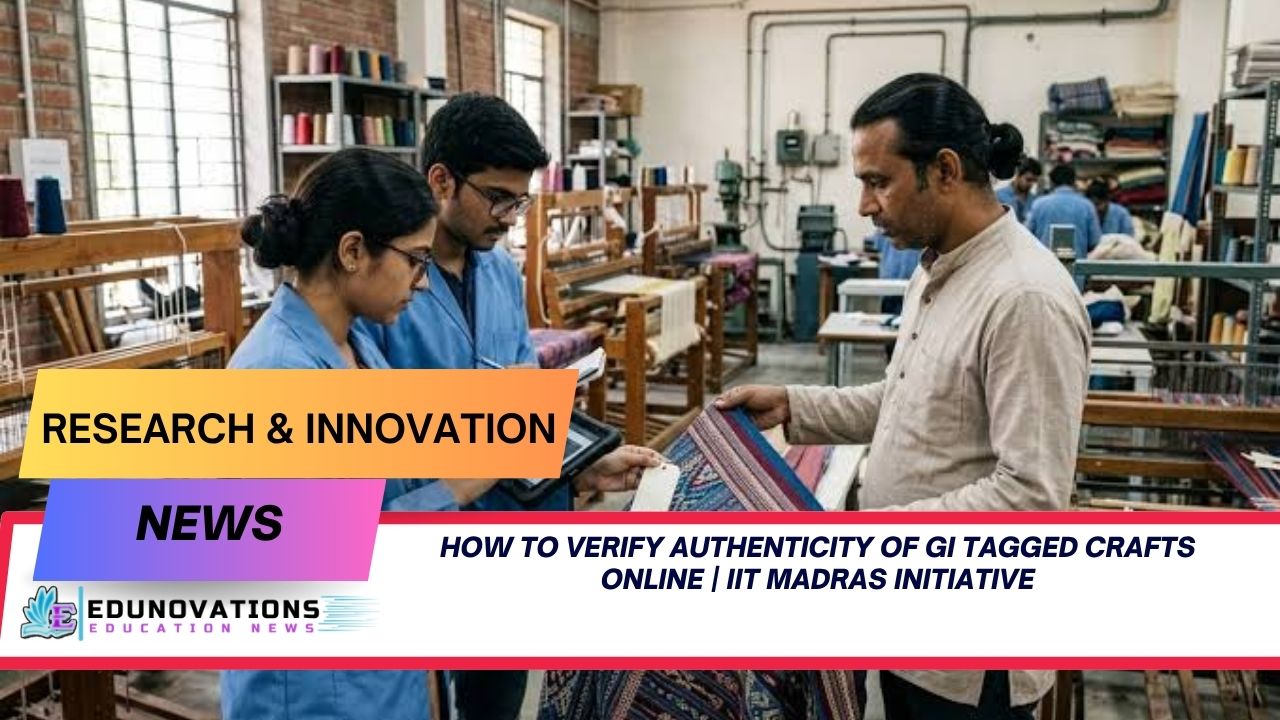
Every registered artisan or producer group receives a verified digital identity on a secure network. When an artisan completes a GI-tagged item, a unique tamper-evident tag—such as an encrypted QR code or NFC chip—is attached to the product. Consumers interested in learning how to verify authenticity of GI tagged crafts online can simply scan the tag using any standard smartphone to retrieve verified origin data instantly.
2. Immutable Origin Tracking
By integrating lightweight blockchain architecture, the digital record ensures that once a product’s origin is logged, the data cannot be altered or falsified. This provides end-to-end transparency across every stage of the supply chain, from raw material procurement to final retail sale.
3. Fair Value Distribution
Fake products flood markets with cheap imitations, depressing prices for original works. Digital authentication guarantees that consumers pay a premium for authentic items, with a direct percentage of profits returning directly to the original creators.
National Context: Aligning GI Protection with Atmanirbhar Bharat
Geographical Indications are recognized globally under the World Trade Organization’s TRIPS Agreement (Trade-Related Aspects of Intellectual Property Rights). In India, GI tags are governed by the Geographical Indications of Goods (Registration and Protection) Act, 1999.
Despite these legal provisions, legal enforcement alone cannot combat fast-moving e-commerce counterfeit networks. Bridging physical crafts with digital verification establishes a technical standard that protects national heritage and drives rural economic growth.
For educators, educational institutions, and administrative boards looking to build robust digital portals, integrating clean technology platforms is crucial. To construct high-performing institutional websites, contact Mart Ind Infotech for customized web solutions.
Comparison: Traditional GI Tagging vs. Digital Traceability
| Feature / Aspect | Traditional GI Tagging System | Digital Traceability System (IIT Madras & HWA) |
| Authentication Method | Paper certificates, generic hologram stickers | Encrypted QR codes, digital signatures, NFC chips |
| Consumer Verification | Manual physical lookup; difficult for retail buyers | Immediate smartphone scan via web or mobile app |
| Data Security | Susceptible to physical forgery and reproduction | Immutable ledger; tamper-evident digital record |
| Artisan Visibility | Limited; middleman controls buyer interaction | Direct digital profile showcasing artisan origin |
| Global Reach | Restricted to physical certification agencies | Accessible instantly anywhere in the world |
Academic and Competitive Examination Relevance
Understanding socio-economic policy, intellectual property laws, and rural technology integration is a core component of competitive examinations across India.
Key Concepts to Study:
- Intellectual Property Rights (IPR): Distinctions between Patents, Trademarks, Copyrights, and Geographical Indications.
- Rural Development Economics: The role of non-farm employment in stabilizing rural income and preventing urban distress migration.
- Emerging Tech in Governance: How IoT, QR tracking, and blockchain can streamline public welfare and trade compliance.
Students preparing for competitive examinations can streamline their preparation with structured online modules. Access specialized test materials and syllabus guides on Edunovations MCQ and Edunovations Syllabus.
For core conceptual clarity, review foundational textbooks through NCERT Courses, watch visual conceptual breakdowns on Edunovations Videos, download comprehensive study files via Free NCERT PDFs, and download visual revision maps from NCERT Mind Maps.
Step-by-Step Guide: How Consumers Verify GI Products Online
Understanding how to verify authenticity of GI tagged crafts online ensures you support original craft makers while receiving high-quality products.
Step 1: Locate the Verification Marker
Check the packaging or attached label of the artisan craft for a physical security seal containing a custom QR code or NFC tag.
Step 2: Scan with a Smartphone
Open your smartphone camera or any standard QR reader application and scan the code on the label.
Step 3: Review the Official Verification Portal
The scan directs you to the secure IIT Madras-HWA trust network. Ensure the domain is authenticated and verified.
Step 4: Validate Origin and Artisan Details
The portal displays detailed metadata, including:
- The artisan’s registered profile and location cluster.
- The specific GI registry number and date of production.
- Raw material sourcing certifications and quality markers.
Step 5: Complete the Purchase with Confidence
Confirming these digital markers ensures that your purchase supports traditional craft preservation and ethical commerce.
Long-Term Impact on Rural Economies and Global Trade
Scaling this digital verification ecosystem nationwide offers significant long-term economic benefits:
- Boosting Export Value: Foreign markets demand strict traceability metrics regarding ethical sourcing, labor conditions, and authenticity. Digital authentication prepares Indian handicrafts for frictionless international export.
- Empowering Female Artisans: A substantial portion of traditional handloom and handicraft workers are women operating from home. Direct digital connectivity ensures fair compensation without exploitation by intermediaries.
- Preserving Cultural Knowledge: Documenting regional manufacturing techniques creates a digital archive of ancient art forms, keeping them alive for future generations.
Frequently Asked Questions (FAQs)
1. What is the main objective of the IIT Madras and Human Welfare Association collaboration?
The main objective is to establish technology-enabled digital solutions for the authentication, traceability, and sustainable development of India’s Geographical Indication (GI) tagged crafts, helping buyers understand how to verify authenticity of GI tagged crafts online.
2. How can consumers learn how to verify authenticity of GI tagged crafts online?
Consumers can scan the unique QR codes or NFC tags attached to authentic GI products using a smartphone, which opens a secure platform showing the artisan’s identity, product origin, and official registration details.
3. What role does digital traceability play in artisan empowerment?
Digital traceability protects traditional artisans from market dilution caused by fake, factory-made products. It establishes direct trust between consumers and makers, enabling artisans to command fair prices for authentic goods.
4. Who is Dr. Rajni Kant and what is his connection to this initiative?
Dr. Rajni Kant is the Founder and General Secretary of the Human Welfare Association, widely known as the “GI Man of India.” He has secured dozens of GI tags across India and leads grassroots implementation for this collaboration.
5. What is the Artisan Empowerment Lab at IIT Madras?
The Artisan Empowerment Lab is a dedicated research facility at IIT Madras that develops scalable, user-friendly technological tools specifically designed to solve physical and digital challenges faced by artisans and GI producer groups.
6. How does digital traceability support Atmanirbhar Bharat and Viksit Bharat?
By connecting traditional knowledge systems with modern digital verification platforms, the initiative strengthens domestic production, promotes local-to-global exports, and drives sustainable economic growth in rural communities.
7. Are GI tags legally binding in India?
Yes, GI tags are intellectual property rights legally governed under the Geographical Indications of Goods (Registration and Protection) Act, 1999. The IIT Madras digital platform reinforces this legal framework with technical verification.
8. What types of products will be covered under this digital verification project?
The system covers GI-tagged products across various sectors, including handlooms, handicrafts, agricultural goods, and traditional food products produced by regional artisans, weavers, and farmer groups.
9. Can educational institutions build similar technology platforms for public initiatives?
Yes, educational institutions and non-profits often collaborate with specialized tech partners. Schools and organizations looking to develop customized web portals can consult experts like Mart Ind Infotech.
10. Where can students find more educational materials on Indian economics and IPR laws?
Students preparing for competitive examinations can access structured courses and revision notes on Edunovations Notes and practice questions on Edunovations MCQ.