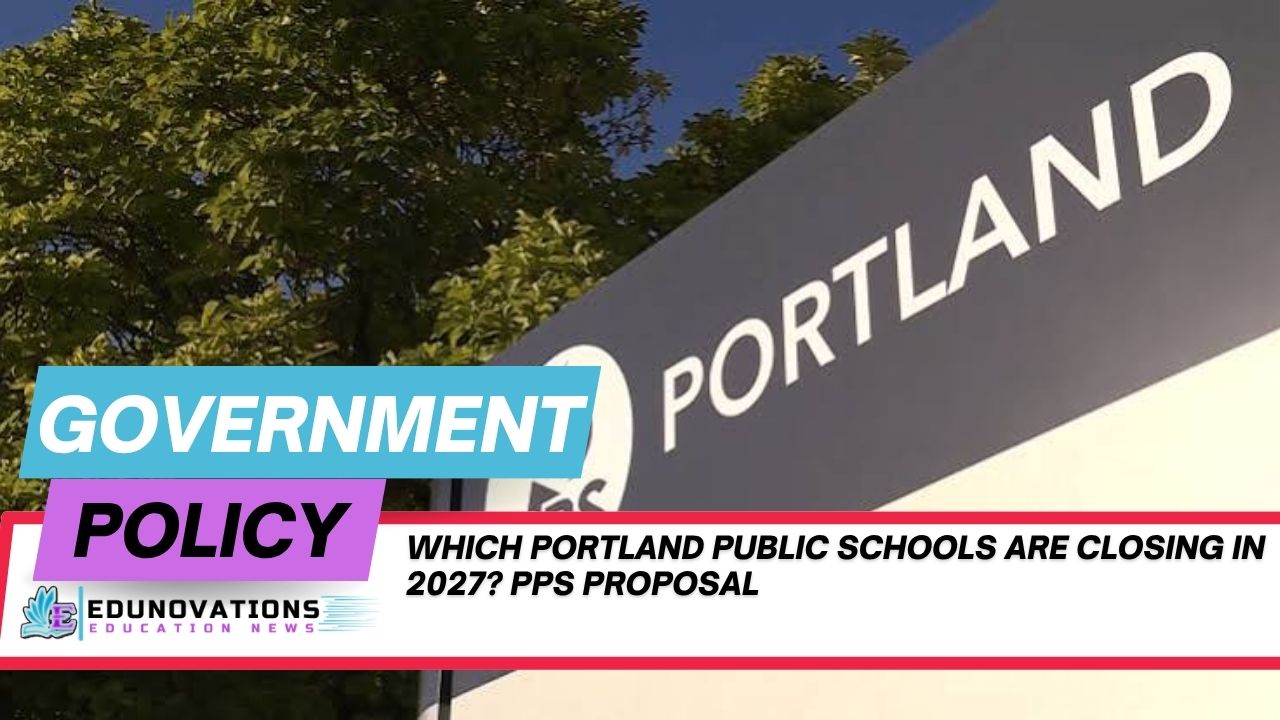
Wondering which Portland public schools are closing in 2027? Read our in-depth analysis of Superintendent Kimberlee Armstrong’s proposal, boundary changes, and public feedback options.
In a historic and highly controversial shift for Oregon’s largest educational district, Portland Public Schools (PPS) has officially unveiled a sweeping districtwide restructuring roadmap. Confronted by steep drop-offs in student numbers and looming budget shortfalls, administrative leadership has introduced a dramatic “rightsizing” strategy that could shutter up to 14 facilities across the city before the start of the 2027 academic year.
Parent groups, community advocates, and educators are scrambling to understand the full scope of the district’s newly released options. Families asking which portland public schools are closing in 2027 will find that the proposed consolidation goes far beyond shutting classroom doors. The plan reshapes neighborhood boundary maps, restructures K-8 models into traditional elementary schools, and alters specialized focus programs districtwide.
Crisis of Declining Enrollment Forces Strategic District Restructuring
The catalyst behind this administrative proposal stems from sustained demographical shifts across the Pacific Northwest. Portland Public Schools has lost more than 6,000 enrolled students since 2018. Official demographic forecasts indicate that the district could lose another 3,400 students over the next decade.
Operating under-capacity facilities places immense strain on operating capital. When student counts drop, school funding mechanisms contract proportionately, leaving many elementary campuses functioning at a fraction of their intended design capacity. District benchmarks mandate that elementary campuses retain approximately 360 students, while middle schools require 500 or more students to maintain consistent staffing levels, specialized courses, and support services.
Concurrently, PPS is navigating a projected $65 million budget deficit for the upcoming fiscal cycle. While district leaders emphasize that physical facility consolidations are intended as long-term educational adjustments rather than emergency financial fixes, reducing operational overhead across dozens of aging structures remains a critical administrative priority.
To stay updated on national education policies and structural trends, check out the comprehensive coverage available in our dedicated Current Affairs hub.
The Rightsizing Framework: Scenario A vs Scenario B Breakdown
Under the leadership of Superintendent Dr. Kimberlee Armstrong, the district has presented two primary action paths alongside a baseline option to make no changes. Both active proposals target severe operational imbalances, though they differ in total school consolidations and attendance boundary adjustments.
                          PORTLAND PUBLIC SCHOOLS PROPOSAL
                                         │
                 ┌───────────────────────┴───────────────────────┐
                 ▼                                               ▼
            SCENARIO A                                      SCENARIO B
      (14 Total Closures)                             (11 Total Closures)
   ┌───────────────────────────┐                   ┌───────────────────────────┐
   │ • 13 Elementary Schools   │                   │ • 10 Elementary Schools   │
   │ • 1 Sellwood Middle School│                   │ • 1 Sellwood Middle School│
   │ • 38 Boundary Changes     │                   │ • 34 Boundary Changes     │
   │ • Retains 6 Title I list  │                   │ • Spares 3 Elementaries   │
   └───────────────────────────┘                   └───────────────────────────┘
Key Differences Between the Proposed Scenarios
- Scenario A (14 School Closures): This comprehensive path proposes shuttering 13 elementary campuses alongside Sellwood Middle School. It incorporates 38 distinct boundary shifts to reassign thousands of affected students into neighboring facilities.
- Scenario B (11 School Closures): This option closes 10 elementary schools and Sellwood Middle School, sparing three elementary campuses—Lewis, Rose City Park, and Stephenson. Scenario B requires 34 boundary line adjustments.
- Scenario C (Status Quo): Represents the baseline option where no facilities close, though district planners warn this path would force ongoing, severe budget cuts to instructional staff and student programs.
Complete List of Affected Schools Across Both Options
Understanding which portland public schools are closing in 2027 requires examining the specific neighborhood buildings named across both plan variants:
- Beach Elementary School (Students reallocated to Chief Joseph and César Chávez Spanish Immersion)
- Buckman Arts Focus Elementary School (Students reallocated to Abernethy and Sunnyside)
- Creston Elementary School (Students reallocated to Atkinson and Glencoe)
- Irvington Elementary School (Students reallocated to Beverly Cleary and Beaumont Middle)
- James John Elementary School (Students reallocated to Sitton and César Chávez)
- Maplewood Elementary School (Students reallocated to Hayhurst and Rieke)
- Marysville Elementary School (Students reallocated to Arleta)
- Peninsula K-5 Elementary School (Students reallocated to Rosa Parks)
- Sabin Elementary School (Students reallocated to Dr. Martin Luther King Jr.)
- Woodmere Elementary School (Students reallocated to Whitman)
- Sellwood Middle School (Students reallocated to Hosford and Brentwood Middle)
- Lewis Elementary School (Proposed for closure under Scenario A only; students to Duniway)
- Rose City Park Elementary School (Proposed for closure under Scenario A only; students to Scott and Vestal)
- Stephenson Elementary School (Proposed for closure under Scenario A only; students to Markham and Capitol Hill)
Educational administrators seeking optimized operational software and web development tools for institutional expansion can explore solutions at Mart Ind Infotech.
Broad Educational Shifts: Grade Restructuring and Option Schools
The proposed transformation extends far beyond shuttering neighborhood buildings. Superintendent Armstrong’s vision involves systematically shifting Portland Public Schools away from the K-8 model, returning seven campuses to standard K-5 elementary structures while transferring middle school grades (6–8) to dedicated middle facilities.
+------------------------------------+------------------------------------+
| Current K-8 Campus Structure       | Reconfigured Middle School Pathway |
+------------------------------------+------------------------------------+
| Beverly Cleary (Grades 6–8)        | Reassigned to Beaumont Middle      |
| Laurelhurst (Grades 6–8)           | Reassigned to Mt. Tabor Middle     |
| Sunnyside (Grades 6–8)             | Reassigned to Hosford Middle       |
| Bridger Creative Science           | Reassigned to Neighborhood Middle  |
| César Chávez (Grades 6–8)          | Reassigned to George Middle        |
| Faubion (Grades 6–8)               | Reassigned to Ockley Green Middle  |
| Vernon (Grades 6–8)                | Reassigned to Harriet Tubman Middle|
+------------------------------------+------------------------------------+
Specialized focus option schools would also undergo substantial changes under this plan:
- Buckman Elementary: Recognized for its arts-integrated curriculum, Buckman stands as the sole focus option campus scheduled for complete closure.
- Sunnyside Environmental School: The campus will remain open, but its specialized environmental focus program will be discontinued as it transitions into a standard neighborhood K-5 building.
- Odyssey Program: The program will relocate into the Metropolitan Learning Center (MLC) building, while MLC’s high school program will shut down permanently.
Students, educators, and curriculum planners preparing for broader educational assessments can review detailed academic guides on our dedicated Syllabus page or test their mastery using structured MCQ Practice Sets.
Leadership Perspectives and Community Resistance
The news has sparked intense discussion among civic leaders, union officials, parents, and administrative staff. Public stakeholders have voiced significant concern over how quickly these structural realignments are progressing and how they will impact local families.
Superintendent Dr. Kimberlee Armstrong emphasized the necessity of taking decisive action to secure the district’s operational future:
“I figure it’ll go three ways. They will choose to accept my recommendation with no changes, accept my recommendation with maybe some changes, or choose to defer the conversation about our rightsizing work altogether. Our ultimate target is to stop spreading our district resources thin and build stable environments where every child gets access to robust support services.” — Dr. Kimberlee Armstrong, Superintendent of Portland Public Schools
Conversely, educators and labor leaders have urged district administration to slow down decision-making processes and conduct broader equity reviews. Alisha Chavez, President of the Portland Association of Teachers, released an official statement raising concerns over the speed of the proposal:
“Closing, consolidating, and transforming programs at over 25 schools is a dramatic change. Closing schools is not a plan, it’s a reaction. Our students deserve better, families deserve better, and educators deserve better. We ask that the district exhaust every available option before considering closing neighborhood schools.” — Alisha Chavez, President of the Portland Association of Teachers
Principals at affected facilities have begun reaching out directly to neighborhood families. Gary Gregoricka, Principal at Irvington Elementary School, urged calm in an official newsletter:
“If the district moves forward with these proposed changes, our administrative teams will work side-by-side with receiving school communities on a transition framework that fully supports all students, staff, and families through every step of this transition.”
Socioeconomic Impact and Title I Campus Analysis
A major point of contention surrounding the rightsizing plan centers on educational equity and historical neighborhood support. Out of the 10 core elementary campuses listed for closure under both Scenario A and Scenario B, six are designated Title I institutions—facilities that receive federal assistance to support higher percentages of students from low-income households.
Advocates point out that closing neighborhood hubs in historically under-resourced communities places disproportionate transportation and logistical burdens on working parents. When local schools shut down, walking pathways are disrupted, requiring young children to commute further to receiving campuses.
                     DISTRICT TITLE I IMPACT COMPARISON
  ┌──────────────────────────────────────────────────────────────────┐
  │ Core Consolidations (10 Schools)                                 │
  ├──────────────────────────────────────────────────────────────────┤
  │ █████████████████████████████████████ Title I Campuses (60%)     │
  │ ████████████████████                                            │
  │ Non-Title I Campuses (40%)                                       │
  └──────────────────────────────────────────────────────────────────┘
On the administrative side, district analysts contend that maintaining under-enrolled Title I schools ultimately deprives those same students of crucial on-site services. When enrollment drops too low at a specific building, funding for full-time reading specialists, mental health counselors, art instructors, and English language development staff is scaled back. Consolidating smaller student bodies into larger receiving facilities ensures these specialized resources can be fully funded and provided under one roof.
To examine instructional strategies that support diverse learning environments, explore our structured collection of NCERT Mind Maps and foundational learning materials available through our full catalog of NCERT Courses.
Community Action: How Parents and Citizens Can Engage
The Portland Public School Board is preparing to conduct extensive public outreach sessions throughout October and November before holding a formal vote on the consolidation proposal in December.
If you are a parent, educator, or resident seeking to participate in the rightsizing dialogue, the district has outlined multiple avenues for public engagement:
- District Town Halls: Attend scheduled listening sessions held across affected high school clusters to share direct testimony with school board members.
- Online Survey Portals: Submit direct feedback through the official PPS rightsizing portal, evaluating individual boundary adjustments and facility closures.
- School Board Public Comment: Register to speak during the open public comment period at upcoming formal school board meetings ahead of the final December decision.
- Community Advocacy Groups: Engage with local Parent-Teacher Associations (PTAs) and neighborhood coalitions to draft community-backed policy counter-proposals.
                          DISTRICT DECISION TIMELINE
  ┌──────────────┐     ┌──────────────┐     ┌──────────────┐     ┌──────────────┐
  │ OCTOBER 2026 │     │ NOV 2026     │     │ DEC 2026     │     │ FALL 2027    │
  │ Proposals    │ ──> │ Community    │ ──> │ School Board │ ──> │ Approved     │
  │ Released     │     │ Town Halls   │     │ Final Vote   │     │ Changes Take │
  └──────────────┘     └──────────────┘     └──────────────┘     │ Effect       │
                                                                 └──────────────┘
For downloadable educational materials, test preparation outlines, and self-study resources during academic transitions, explore our updated library of Notes, stream instructional modules on our Videos Portal, or obtain complete learning guides through Downloads of Free NCERT PDFs.
Toppers Use Mind Maps to score more than 95%
NCERT Class 11th Commerce Mind Maps
Add to cartOriginal price was: ₹999.00.₹199.00Current price is: ₹199.00.NCERT Class 12th Chemistry Mind Maps
Add to cartOriginal price was: ₹199.00.₹75.00Current price is: ₹75.00.NCERT Class 12th Commerce Mind Maps
Add to cartOriginal price was: ₹999.00.₹199.00Current price is: ₹199.00.NCERT Class 12th Science Mind Maps
Add to cartOriginal price was: ₹999.00.₹199.00Current price is: ₹199.00.NCERT Mind Maps For Class 10th
Add to cartOriginal price was: ₹999.00.₹199.00Current price is: ₹199.00.





Purchase Today
Frequently Asked Questions (FAQs)
1. Which portland public schools are closing in 2027 under the new proposal?
Under Scenario A, 14 campuses are scheduled for closure: Beach, Buckman, Creston, Irvington, James John, Lewis, Maplewood, Marysville, Peninsula, Rose City Park, Sabin, Stephenson, Woodmere elementary schools, and Sellwood Middle School. Scenario B spares Lewis, Rose City Park, and Stephenson while closing the remaining 11 schools.
2. Why is portland public schools closing elementary schools across the district?
Portland Public Schools is facing significant multi-year enrollment declines, having lost over 6,000 students since 2018, alongside a projected $65 million budget deficit. Consolidating facilities allows the district to pool resources, stabilize staffing, and ensure full academic offerings.
3. How will the pps scenario a vs scenario b school closure map affect boundary lines?
Scenario A introduces 38 attendance boundary modifications, while Scenario B incorporates 34 boundary shifts. These adjustments reassign student populations from closed buildings to nearby receiving schools, altering feeder pathways to middle and high schools.
4. How to give feedback on pps rightsizing proposal before the school board votes?
Parents and community members can submit online feedback forms through the official PPS website, participate in district town halls throughout October and November, or sign up for public comment at upcoming school board meetings prior to the final December vote.
5. What happens to neighborhoods when local schools close permanently?
When neighborhood campuses close, communities often see shifts in local traffic patterns, altered housing preferences for families with young children, and changes to local community centers. Receiving schools usually experience increased enrollment, expanding their programmatic offerings.
6. Will dual language immersion programs be cut under the consolidation plan?
No, PPS has confirmed that no dual language immersion programs will be eliminated. However, several immersion tracks will be relocated or consolidated into designated receiving facilities, such as César Chávez and Vestal.
7. Which focus option schools are slated for operational changes?
Buckman Elementary, an arts-focused school, is proposed for full closure. Sunnyside Environmental School will lose its specialized environmental program and transition into a standard neighborhood K-5, while the Odyssey Program will move to the Metropolitan Learning Center building.
8. What is happening to K-8 schools under Superintendent Kimberlee Armstrong’s plan?
The district intends to transition away from the K-8 educational structure. Seven K-8 campuses—including Beverly Cleary, Laurelhurst, Sunnyside, Bridger Creative Science, César Chávez, Faubion, and Vernon—will convert to traditional K-5 elementary schools, transferring middle school grades to dedicated middle schools.
9. When will the Portland School Board take a final vote on the closures?
The Portland Public School Board is scheduled to evaluate community input and take a decisive vote on the final rightsizing framework in December. If approved, approved boundary changes and school consolidations will take effect in fall 2027.
10. How will Title I students be supported during these administrative transitions?
Although six Title I schools are listed for closure under both plans, district administrators maintain that consolidating students into larger receiving campuses guarantees consistent access to full-time counselors, reading specialists, and dedicated academic support staff.