Road safety remains one of the most pressing socio-economic challenges confronting modern infrastructure development.
Introduction to the Collaborative Safety Initiative
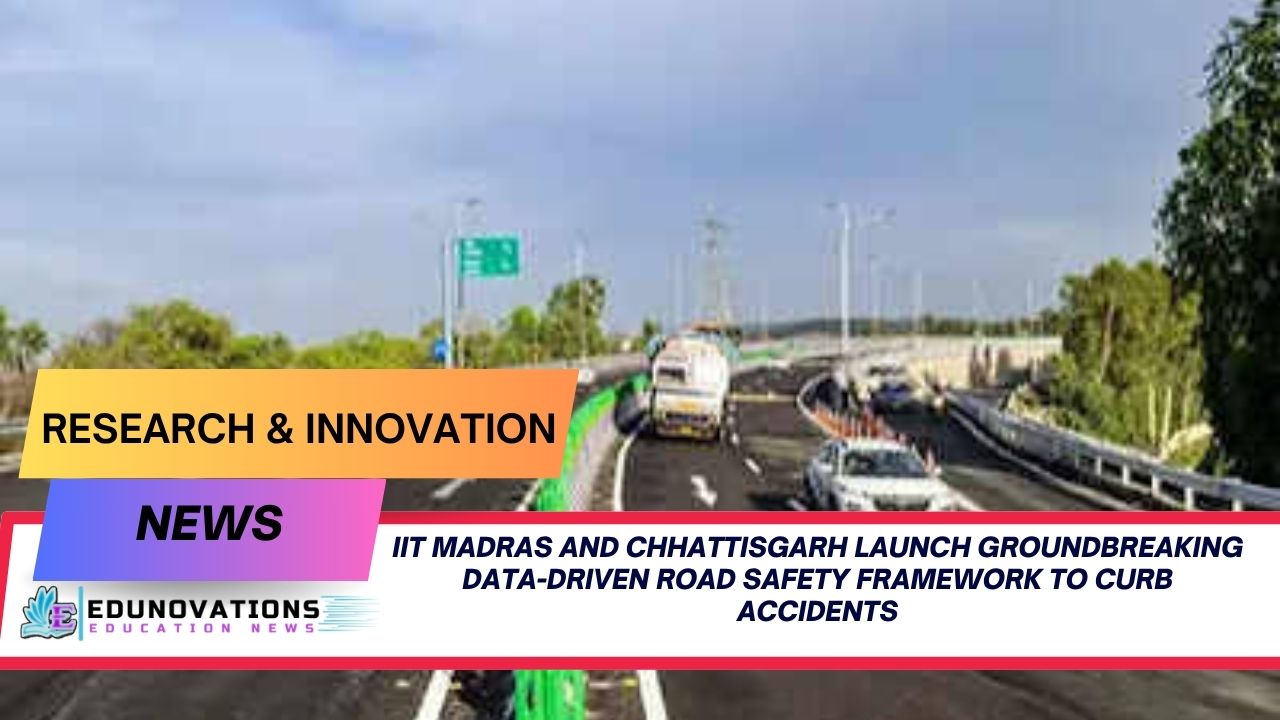
Road safety remains one of the most pressing socio-economic challenges confronting modern infrastructure development. Across the nation, thousands of precious lives are lost annually due to traffic collisions, unexpected road hazards, and structural design limitations. Addressing this complex issue requires moving away from reactive post-accident penalties toward proactive, scientific planning. In a monumental move to transform transit security, the premier institution has officially forged an alliance with regional authorities.
The IIT Madras DDHI road safety program features prominently in this new governance framework, acting as a blueprint for minimizing fatalities through intelligent data analytics. By combining academic research with ground-level administrative action, this partnership aims to reshape transportation networks, safeguard vulnerable road users, and implement localized solutions that protect local communities. Students and researchers tracking these developments can expand their learning via structured academic materials available through NCERT Courses and relevant resources on Notes.
Understanding the Scope of Data-Driven Hyperlocal Interventions
Traditional traffic management often relies on generalized assumptions or delayed responses implemented only after major mishaps occur. However, modern traffic engineering emphasizes granularity. Through the newly launched framework, experts intend to scrutinize root causes using digital platforms and localized incident logging.
Special emphasis is being directed toward data driven road safety interventions in tribal regions, where unique geographical terrains, mining vehicle movements, and poor illumination contribute to elevated mishap risks. Tribal and industrial belts often feature mixed traffic consisting of heavy industrial haulers, two-wheelers, and pedestrians sharing narrow corridors. By deploying smart mapping tools and localized metrics, authorities can pinpoint precise danger zones rather than applying a blanket policy across entire state sectors.
To stay updated with administrative policies, competitive exams, and national policy changes, aspirants can review daily updates on Current Affairs and practice core concepts using targeted MCQ’s. Furthermore, students preparing for governance modules can reference detailed topic breakdowns via Syllabus.
Expanding the CoERS Institutional Network
The overarching framework is spearheaded by the specialized institutional body dedicated to transit safety. The CoERS IIT Madras state partnerships road safety list has expanded significantly with this latest addition, reflecting a growing nationwide model for accident mitigation. Operating as an advanced think-tank under the aegis of the Ministry of Road Transport and Highways (MoRTH), the center integrates human factors engineering, vehicle safety assessments, and roadway infrastructure planning.
Prof. Venkatesh Balasubramanian, Head of the Centre of Excellence for Road Safety (CoERS) at IIT Madras, highlighted the significance of the partnership during the formal MoU exchange. He stated:
“Going to zero road deaths should be our aim. Talking about Road Safety alone is not enough — we all have a role to play. Our request to the general public is to step up and actively work towards reducing road crashes and fatalities.”
This institutional synergy connects academic excellence directly with regional administration, ensuring that state-level policy decisions are grounded in rigorous scientific evidence.
Regional Governance and Administrative Execution
The successful rollout of any safety blueprint depends heavily on active administrative leadership and inter-departmental coordination. The formal agreement was signed in Raipur by Prof. Venkatesh Balasubramanian and Shri S. Prakash, Secretary and Commissioner of the Transport Department, Government of Chhattisgarh. Under the political leadership of Shri Kedar Nath Kashyap, Hon’ble Minister of Transport, Government of Chhattisgarh, the administration has prioritized targeted district rollouts.
The Chhattisgarh government transport department road safety MoU outlines a phased implementation schedule across high-risk zones. The initial phase targets nine key priority districts—including Raipur, Raigarh, Surajpur, Balod, Baloda Bazar, Jashpur, Surguja, Mahasamund, and Janjgir. District officials spanning police, transport, and public works departments are undergoing rigorous training programs to manage local databases, track accident clusters using platforms like the ‘Sanjay’ portal, and execute rapid remedial measures.
For schools, educational institutions, and civic bodies seeking structured implementation modules or safety manuals, institutional partnerships can be explored via professional service providers such as Mart Ind Infotech for digital infrastructure support. Additional visual learning aids can also be accessed through educational Videos.
Implementing Low-Cost Engineering Solutions for Immediate Impact
One of the greatest bottlenecks in public infrastructure management is the prolonged approval cycle required for large-scale civil engineering projects. To overcome this hurdle, the newly introduced paradigm emphasizes agility and financial efficiency.
The deployment of low cost engineering interventions for road accident reduction allows district administrators to rectify dangerous black spots immediately without waiting for massive capital allocations. These modifications include:
- Tactical Pavement Markings: Installing high-visibility thermoplastic strips and reflective road studs along poorly lit corridors.
- Speed Moderation Geometry: Constructing scientifically designed rumble strips and gentle speed tables near rural intersections and school zones.
- Signage and Sightlines: Clearing obstructing foliage, installing warning signs ahead of sharp curves, and improving convex mirror placements at blind junctions.
- Pedestrian Refuge Islands: Creating safe crossing zones on wide arterial roads moving heavy mining traffic.
These structural tweaks are inexpensive, rapidly deployable, and highly effective at altering driver behavior naturally without requiring heavy police enforcement presence at every mile.
Expert Insights and Strategic Roadmap
Road traffic injuries place an immense burden on public health systems and family structures alike. Transport Minister Shri Kedar Nath Kashyap noted during the rollout workshop that every single road crash represents an irreparable loss to a family, reinforcing the administration’s resolve to construct a foolproof transit network.
By bridging the gap between academic research and practical governance, the collaboration creates a self-sustaining ecosystem. District officials are empowered to draft independent safety action plans tailored to their regional traffic composition. As these digital and structural methodologies mature across the priority districts, the framework is expected to scale statewide, serving as a replicable template for other states striving to achieve national zero-fatality milestones.
For students and lifelong learners wanting to compile comprehensive study material, supplementary revision tools and concept maps are readily available via Downloads of Free NCERT PDFs and NCERT Mind Maps.
Toppers Use Mind Maps to score more than 95%
NCERT Class 11th Commerce Mind Maps
Add to cartOriginal price was: ₹999.00.₹199.00Current price is: ₹199.00.NCERT Class 12th Chemistry Mind Maps
Add to cartOriginal price was: ₹199.00.₹75.00Current price is: ₹75.00.NCERT Class 12th Commerce Mind Maps
Add to cartOriginal price was: ₹999.00.₹199.00Current price is: ₹199.00.NCERT Class 12th Science Mind Maps
Add to cartOriginal price was: ₹999.00.₹199.00Current price is: ₹199.00.NCERT Mind Maps For Class 10th
Add to cartOriginal price was: ₹999.00.₹199.00Current price is: ₹199.00.





Purchase Today
Frequently Asked Questions
1. What is the primary objective of the IIT Madras and Chhattisgarh government partnership?
The partnership aims to launch data-driven road safety interventions to scientifically identify crash hotspots, reduce road accidents, and systematically cut fatalities across priority districts in the state.
2. Which academic entity from IIT Madras is spearheading this initiative?
The initiative is led by the Centre of Excellence for Road Safety (CoERS) at IIT Madras, under the direction of Prof. Venkatesh Balasubramanian.
3. What does the acronym DDHI stand for in this road safety program?
DDHI stands for Data-Driven Hyperlocal Interventions, a flagship national framework designed to tackle regional traffic hazards using localized data metrics.
4. Which districts are covered under the first phase of the Chhattisgarh road safety program?
The first phase covers nine priority districts: Raipur, Raigarh, Surajpur, Balod, Baloda Bazar, Jashpur, Surguja, Mahasamund, and Janjgir.
5. Why is special attention given to tribal and mining regions in Chhattisgarh?
Tribal and mining regions feature unique geographical terrains, heavy industrial vehicle movements, and distinct traffic patterns that demand customized engineering and safety protocols.
6. What role does the Ministry of Road Transport and Highways (MoRTH) play?
MoRTH funds and supports the overarching framework of CoERS at IIT Madras to establish evidence-based road safety practices and act as a central advisory think-tank.
7. How do low-cost engineering interventions help district administrators?
They enable local officials to implement rapid remedial measures—such as signage, road studs, and rumble strips—without waiting for long-term administrative approvals or massive funding.
8. Who signed the Memorandum of Understanding (MoU) on behalf of Chhattisgarh?
The MoU was signed by Shri S. Prakash, Secretary and Commissioner of the Transport Department, Government of Chhattisgarh, alongside Prof. Venkatesh Balasubramanian.
9. What digital platform is utilized to track black spots in the state?
Authorities utilize structured mapping tools, including the ‘Sanjay’ platform, to analyze crash data and identify emerging accident clusters proactively.
10. How can students and researchers access academic materials related to public governance and safety studies?
Students can utilize curated online platforms offering structured notes, current affairs updates, syllabi, and multi-format learning tools via dedicated educational portals.