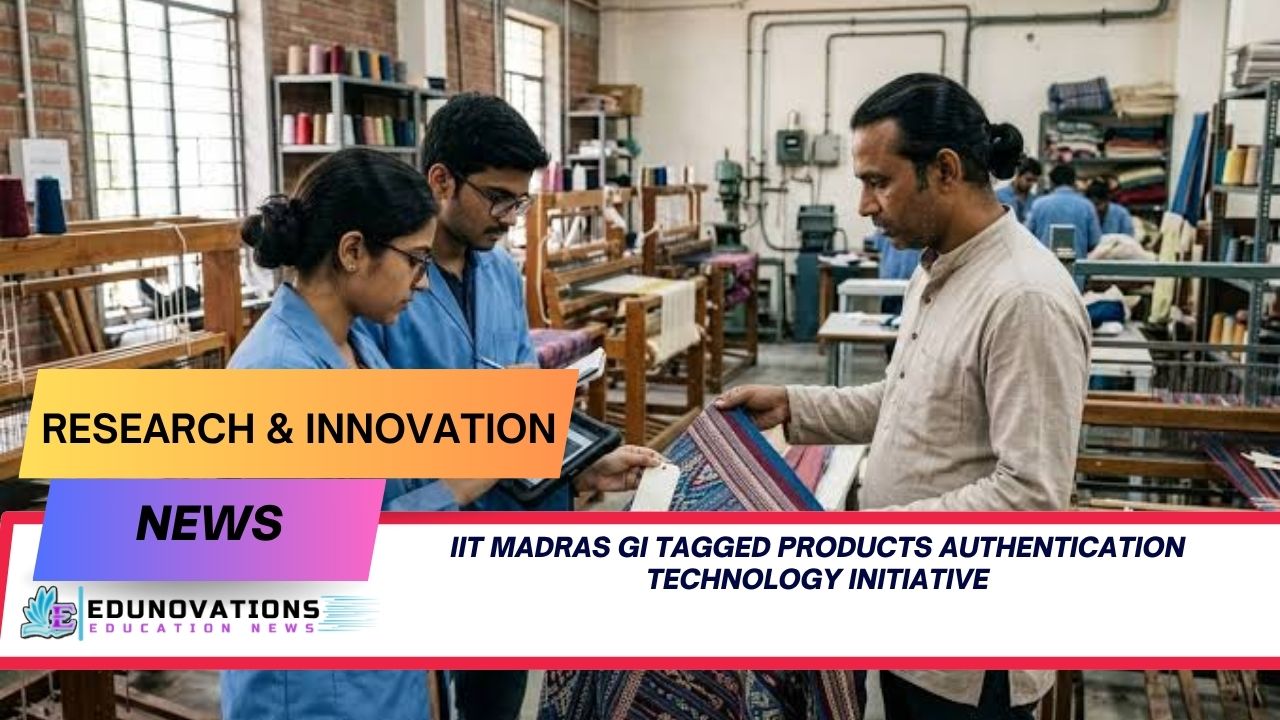
Discover how the IIT Madras GI tagged products authentication technology initiative empowers artisans through digital traceability and sustainable growth.
Empowering India’s Traditional Artisans Through Advanced Digital Innovation
India’s rich cultural tapestry has long been defined by its diverse traditional crafts, handlooms, and indigenous agricultural products. Across every corner of the nation, millions of local artisans preserve centuries-old knowledge passed down through generations. However, despite the exceptional artistry embedded in these creations, artisan communities frequently struggle with market access, imitation products, and verifying authentic provenance. To address these critical challenges head-on, a monumental collaborative step has been taken. The recent partnership centering on the IIT Madras GI tagged products authentication technology initiative promises to reshape the landscape of traditional craftsmanship, bringing unprecedented transparency and digital trust to India’s Geographical Indication (GI) ecosystem.
By combining cutting-edge institutional research with grassroots community engagement, this strategic alliance aims to safeguard authentic creators while simultaneously boosting consumer confidence in regional goods. As digital infrastructure expands into rural manufacturing sectors, technological intervention serves as a vital bridge connecting age-old traditions with modern global markets.
The Visionary Collaboration Behind the Initiative
The foundation of this transformative project rests upon a formal Memorandum of Understanding (MoU) signed between the Indian Institute of Technology Madras (IIT Madras) and the Human Welfare Association (HWA). Leadership from both institutions gathered to cement a shared commitment toward socio-economic upliftment. The agreement was signed by Dr. Rajni Kant, General Secretary of the Human Welfare Association, and Prof. Manu Santhanam, Dean (CSR) at IIT Madras. The signing ceremony took place under the esteemed guidance and presence of Prof. V. Kamakoti, Director of IIT Madras, alongside project coordinators Prof. M. Manivannan and Prof. John Augustine.
This institutional synergy brings together diverse talents. IIT Madras contributes its world-class engineering, biomedical, and computer science research capabilities, while the Human Welfare Association provides invaluable ground-level connections with weavers, craftsmen, and agricultural producer groups across the country. Through collaborative frameworks, the partnership seeks to deploy practical, scalable, and technology-driven solutions tailored specifically to the unique constraints of rural artisan clusters.
Bridging the Trust Deficit in Traditional Markets
In modern consumer markets, buyers increasingly value authenticity, ethical sourcing, and cultural heritage. Yet, verifying whether a hand-woven textile or an authentic regional handicraft is genuine remains a formidable obstacle for everyday shoppers. Counterfeit goods dilute artisan earnings and diminish consumer trust.
The core objective of the IIT Madras GI tagged products authentication technology initiative is to establish a robust, shared trust infrastructure. As highlighted by academic leadership involved in the project, modern buyers want assurance regarding a product’s true origin. By implementing digital verification tools, anyone will soon be able to trace an item directly back to its verified artisan creator and geographical source. This technological leap forward enables India to build consumer engagement rooted firmly in verifiable trust.
Furthermore, students and academic researchers studying digital transformation can explore foundational learning resources, such as structured NCERT Courses and comprehensive NCERT Mind Maps, to better understand how foundational science and technology intersect with social development.
Key Pillars of the Artisan Empowerment Framework
The collaborative initiative focuses on several core technical and operational pillars designed to maximize impact across rural producer communities:
- Digital Authentication Protocols: Implementing secure cryptographic or digital marker systems that prove an item possesses official Geographical Indication certification.
- Product Traceability Systems: Tracking the journey of raw materials through manufacturing and final distribution to guarantee authentic supply chains.
- Documentation & Digital Archiving: Creating comprehensive digital repositories for traditional knowledge, preserving techniques, and honoring cultural identities.
- Scalable Ecosystem Integration: Building models that can expand nationally to benefit weavers, farmers, and women-led micro-enterprises.
For educators and students tracking institutional developments, keeping up with daily updates via dedicated Current Affairs portals and reviewing curated Study Notes provides critical context on how national innovation policies support grassroots economic growth.
Expert Perspectives on Technology and Cultural Heritage
The urgency and potential scale of this project have drawn acclaim from leading academic and social authorities across India.
Prof. M. Manivannan from the Department of Applied Mechanics and Biomedical Engineering at IIT Madras emphasized the sheer scale of the population involved. He noted that artisans form India’s second-largest demographic sector. Equipping this massive workforce with advanced technological tools can generate transformative societal impact, directly aligning with national aspirations toward building a self-reliant and developed nation under the vision of a Viksit Bharat.
Complementing this perspective, Dr. Rajni Kant—widely recognized across India as the ‘GI Man of India’ and Founder of the Human Welfare Association—brought decades of grassroots experience into focus. Dr. Rajni Kant has spent years championing the legal and cultural protection of traditional handicrafts, securing numerous official GI tags for regional artisan communities. Reflecting on the new partnership, he stated that the initiative will powerfully accelerate both Atmanirbhar Bharat and Viksit Bharat campaigns internationally. Millions of artisans, weavers, farmers, and women stand to benefit as the framework scales nationwide.
To reinforce educational outreach surrounding technological advancements and regional development, institutions often require robust digital infrastructure. Organizations looking to modernize their online presence can explore professional web design solutions via Mart Ind Infotech, ensuring seamless digital communication.
Driving Socio-Economic Growth and Global Reach
Geographical Indication tags serve as vital legal identifiers confirming that a product originates from a specific geographic region and possesses qualities or a reputation attributable to that origin. However, holding a GI tag is only the first step; maintaining compliance, proving authenticity to international buyers, and managing transparent supply chains present ongoing administrative hurdles.
The IIT Madras GI tagged products authentication technology initiative directly tackles these commercial challenges by deploying scalable frameworks developed through specialized campus research facilities, including the Artisan Empowerment Lab. By simplifying the authentication process, rural producers gain direct access to premium domestic and international markets without falling victim to exploitative middle-chain intermediaries.
- Increased transparency ensures fair compensation for skilled labor.
- Digital traceability protects regional heritage against unauthorized international copycats.
- Sustainable livelihood opportunities encourage younger generations to continue traditional crafts.
For learners and academic aspirants preparing for competitive examinations or research careers, practicing targeted MCQ’s and reviewing specialized educational Videos helps build a comprehensive understanding of India’s evolving technological and socio-economic landscape. Furthermore, students needing supplementary reading materials can access Free NCERT PDFs to support their academic journey.
Overcoming Implementation Challenges in Rural Sectors
While the promise of digital authentication is vast, deploying advanced technical systems across rural artisan clusters requires careful navigation. Many traditional craftsmen operate with limited digital literacy or infrastructure access. Therefore, the collaboration between IIT Madras and the Human Welfare Association places heavy emphasis on user-friendly interface design and community-led training modules.
The development model integrates feedback directly from artisans, ensuring that technology serves the user rather than complicating daily craft production. By fostering cooperation among academic researchers, government bodies, industry partners, and social development organizations, the project creates an inclusive ecosystem where tradition and innovation coexist harmoniously.
Detailed academic curricula, exam updates, and institutional notifications can be explored further through official Syllabus portals, ensuring that students and researchers stay fully informed on national progress in science, technology, and arts.
Toppers Use Mind Maps to score more than 95%
-
NCERT Class 11th Commerce Mind Maps
Add to cartOriginal price was: ₹999.00.₹199.00Current price is: ₹199.00. -
NCERT Class 12th Chemistry Mind Maps
Add to cartOriginal price was: ₹199.00.₹75.00Current price is: ₹75.00. -
NCERT Class 12th Commerce Mind Maps
Add to cartOriginal price was: ₹999.00.₹199.00Current price is: ₹199.00. -
NCERT Class 12th Science Mind Maps
Add to cartOriginal price was: ₹999.00.₹199.00Current price is: ₹199.00. -
NCERT Mind Maps For Class 10th
Add to cartOriginal price was: ₹999.00.₹199.00Current price is: ₹199.00.




Purchase Today
Frequently Asked Questions (FAQs)
Q1: What is the primary objective of the IIT Madras GI tagged products authentication technology initiative? A1: The primary objective is to empower traditional Indian artisans by deploying technology-enabled solutions for the digital authentication, traceability, and sustainable development of GI-tagged crafts and agricultural products.
Q2: Which organizations signed the MoU for this artisan empowerment project? A2: The Memorandum of Understanding was signed between the Indian Institute of Technology Madras (IIT Madras) and the Human Welfare Association (HWA).
Q3: Who signed the agreement on behalf of the Human Welfare Association? A3: The agreement was signed by Dr. Rajni Kant, General Secretary of the Human Welfare Association and widely known as the ‘GI Man of India’.
Q4: Who signed and witnessed the partnership from IIT Madras? A4: The MoU was signed by Prof. Manu Santhanam, Dean (CSR), in the presence of Prof. V. Kamakoti, Director of IIT Madras, along with project coordinators Prof. M. Manivannan and Prof. John Augustine.
Q5: Which IIT Madras laboratory is supporting this technical initiative? A5: The initiative is supported by the Artisan Empowerment Lab at IIT Madras, which focuses on developing innovative and scalable technological approaches for the GI ecosystem.
Q6: How does the IIT Madras GI tagged products authentication technology initiative help consumers? A6: It builds a shared trust infrastructure that allows buyers to easily verify an artisan’s identity and a product’s geographic origin, thereby enhancing consumer confidence and eliminating counterfeit purchases.
Q7: How does this project support national campaigns? A7: The project directly supports the Atmanirbhar Bharat (local-to-global) and Viksit Bharat campaigns by scaling traditional artisan capabilities to international standards.
Q8: What role do Geographical Indication (GI) tags play in this initiative? A8: GI tags protect the cultural identity and traditional knowledge of regional products, while the new technology initiative helps authenticate and trace these tagged items throughout their commercial journey.
Q9: Why are artisans considered vital to India’s economy in this context? A9: Artisans represent India’s second-largest population demographic, making technological empowerment a powerful driver of transformative socio-economic impact and inclusive growth.
Q10: What stakeholders are brought together through this collaborative MoU? A10: The collaboration unites researchers, artisans, farmers, producer communities, industry partners, government bodies, and social-development organizations to foster sustainable growth in India’s craft heritage.