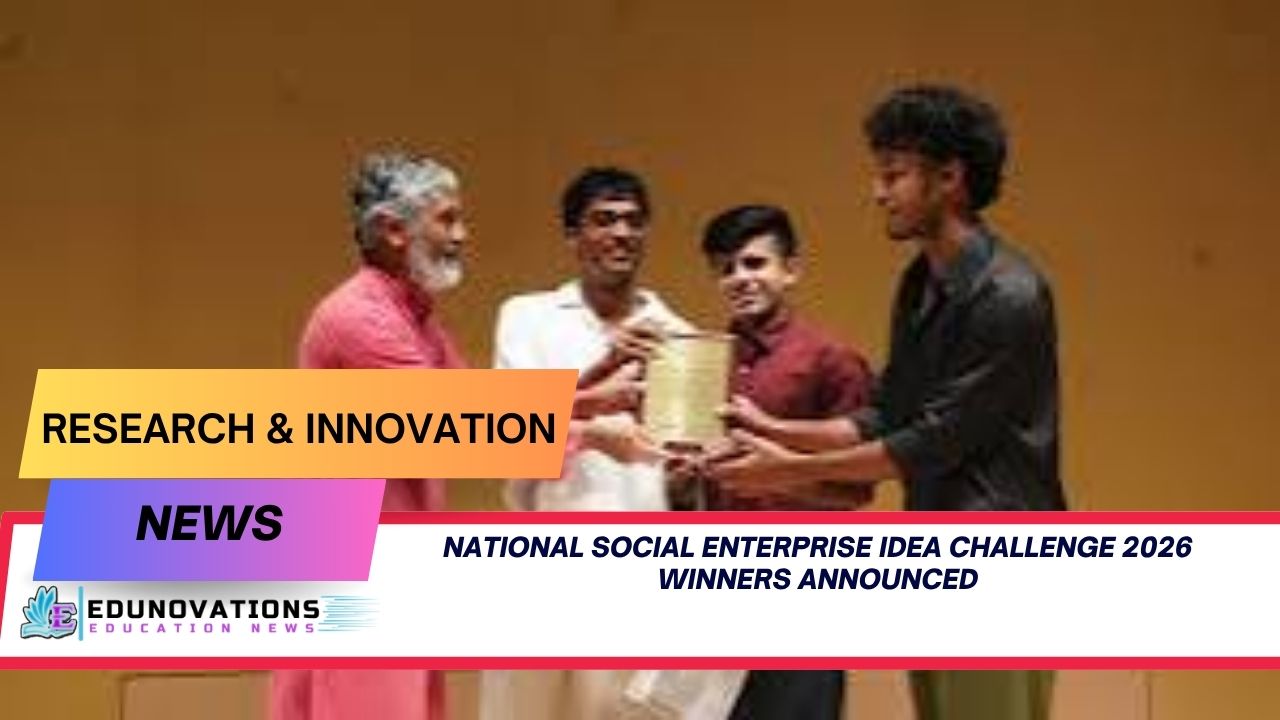
Discover the National Social Enterprise Idea Challenge 2026 winners as Azim Premji University marks a decade of fostering groundbreaking student innovations.
The landscape of Indian higher education is undergoing a profound paradigm shift. Beyond traditional academic rigour and standard examination formats, contemporary universities increasingly emphasize practical problem-solving, social responsibility, and grassroots entrepreneurship. A prime example of this transformative movement is unfolding in the tech capital of the country, where academic excellence meets social impact. The National Social Enterprise Idea Challenge 2026 winners have officially captured the national spotlight, marking a monumental milestone as the flagship initiative celebrates its tenth successful year.
Organized by the Social Enterprise Cell of Azim Premji University in Bengaluru, this milestone edition brings together the brightest young minds from premier institutes across India. As the competition marks its tenth anniversary, it serves as an extraordinary testament to the power of student-led innovation in tackling critical socio-economic and environmental bottlenecks. For students preparing for competitive examinations or exploring higher educational pathways through structured Notes, observing how academic theory translates into real-world enterprise provides invaluable practical insight.
A Decade of Fostering Grassroots Change
Launched in 2016, the National Social Enterprise Idea Challenge was conceived with a singular, visionary objective: to provide a robust platform for college and university students to explore social entrepreneurship, refine their concepts through professional mentorship, and present their blueprints in a competitive yet supportive setting. Over the past ten years, the initiative has evolved from a modest regional contest into a premier national platform that attracts groundbreaking submissions from all corners of the country.
This year’s edition, hosted at the sprawling Bengaluru campus, witnessed an unprecedented surge in participation. Out of hundreds of applicants, ten elite student teams were shortlisted for the final round. These finalists represent a diverse cross-section of India’s top-tier academic institutions, including the Indian Institutes of Technology (IITs) from Kharagpur, Madras, and Guwahati, the Indian Institutes of Management (IIMs) such as IIM Kashipur, the SRM Institute of Science and Technology, the Shri Ram College of Commerce (SRCC), and host institution Azim Premji University.
Dr. Anurag Behar, Vice-Chancellor of Azim Premji University, highlighted the evolving role of higher education in addressing societal challenges during the inaugural address. Reflecting on the ten-year journey of the initiative, Dr. Behar remarked:
“Higher education institutions must transcend conventional classroom boundaries. When young minds are equipped with empathy, rigorous analytical tools, and institutional backing, they do not merely find jobs—they create sustainable solutions that uplift entire communities. The resilience and ingenuity displayed by these young innovators over the past decade reaffirm our core belief that grassroots change is best driven by the youth of our nation.”
Spotlight on Shortlisted Innovations and Technological Frontiers
The breadth of ideas presented by the ten shortlisted teams is both staggering and deeply inspiring. Moving far beyond abstract theoretical models, these young innovators have engineered deployable technological and social frameworks designed to tackle urgent domestic challenges. Students can further contextualize these technological trends by reviewing comprehensive Syllabus structures or exploring curated Videos on contemporary socio-economic developments.
Key innovations featured at the 10th edition include:
- CipherGuard: An advanced, AI-powered platform engineered specifically to safeguard children from emerging online risks and digital vulnerabilities.
- GramGenius: A dedicated mentorship and identification framework designed to unearth and nurture young grassroots innovators across rural India.
- GreenPath: A streamlined digital platform optimizing decentralized rural waste management and promoting circular economy practices.
- JalRakshak: A smart infrastructural monitoring tool utilizing integrated sensors and artificial intelligence to detect underground pipeline leaks and conserve water resources.
- JivaScope: An AI-enabled digital stethoscope meticulously designed to assist frontline healthcare workers in efficiently screening rural populations for underlying health conditions.
- Sehat Saheli Network: A community-driven initiative that trains rural women to act as localized health coaches and wellness advocates.
- SuoMoto: An advanced accessibility platform created to empower visually impaired individuals and persons with diverse disabilities.
- URAPPU: A dedicated welfare-access platform helping construction workers seamlessly navigate and secure government entitlements.
- Stitch Zero: An eco-conscious enterprise turning textile and fashion industry waste into sustainable material for commercial mannequins.
- Youth for Change India: A dynamic student-led platform connecting impassioned youth directly with grassroots non-profit organizations and local communities.
For educators and school administrators seeking to integrate modern project-based learning methodologies into their curricula, partnering with specialized ed-tech solution providers such as Mart Ind Infotech offers robust administrative and digital infrastructure support.
Mentorship, Networking, and Capital Support
A defining feature that separates this competition from traditional academic paper presentations is its intense focus on mentorship and incubation. Reaching the final round is merely the beginning of an intensive developmental journey. Shortlisted student entrepreneurs receive rigorous guidance from industry veterans, social sector leaders, and venture capitalists who specialize in scaling social enterprises.
The two-day event in Bengaluru transcends a conventional pitch competition. It features comprehensive panel discussions, cultural performances, and approximately forty-five enterprise stalls showcasing established social enterprises alongside emerging small and medium enterprises (SMEs). This vibrant ecosystem allows student founders to network with investors, understand regulatory frameworks, and secure vital pilot testing opportunities.
To provide immediate financial momentum, the winning teams are awarded substantial seed grants totaling INR 2 lakh. This non-dilutive capital enables early-stage founders to transition their prototypes into functional pilot programs within rural or semi-urban communities. Aspiring scholars eager to test their analytical comprehension of such economic frameworks can engage with specialized MCQ’s designed to reinforce core concepts of public policy and enterprise economics.
Expert Perspectives on Social Entrepreneurship in India
As social entrepreneurship gains institutional momentum, economic experts and policy analysts have increasingly underscored its necessity in achieving sustainable development goals. Dr. Radhika Ramachandran, a prominent economist and public policy researcher specializing in grassroots development, noted the growing significance of youth-led enterprise:
“India’s demographic dividend is our greatest asset, but its true power is unlocked only when channeled toward problem-solving. Initiatives that provide seed capital and structured mentorship bridge the notorious ‘valley of death’ that early-stage social startups frequently encounter. When students from diverse disciplines—ranging from engineering to commerce—collaborate on healthcare and environmental resilience, they create models that government agencies and corporations can subsequently scale for national benefit.”
Furthermore, students and researchers investigating public administration and development economics can access a wide array of foundational resources, including structured NCERT Courses and comprehensive analytical repositories available for Current Affairs. For those pursuing deeper academic research, free study materials and downloadable resources can be accessed via the Downloads of Free NCERT PDFs portal, complemented by visual learning aids through NCERT Mind Maps.
Toppers Use Mind Maps to score more than 95%
NCERT Class 11th Commerce Mind Maps
Add to cartOriginal price was: ₹999.00.₹199.00Current price is: ₹199.00.NCERT Class 12th Chemistry Mind Maps
Add to cartOriginal price was: ₹199.00.₹75.00Current price is: ₹75.00.NCERT Class 12th Commerce Mind Maps
Add to cartOriginal price was: ₹999.00.₹199.00Current price is: ₹199.00.NCERT Class 12th Science Mind Maps
Add to cartOriginal price was: ₹999.00.₹199.00Current price is: ₹199.00.NCERT Mind Maps For Class 10th
Add to cartOriginal price was: ₹999.00.₹199.00Current price is: ₹199.00.





Purchase Today
Frequently Asked Questions
- What is the National Social Enterprise Idea Challenge? It is a flagship annual competition launched in 2016 by Azim Premji University to encourage college and university students across India to develop innovative solutions for social and environmental challenges.
- Who were the National Social Enterprise Idea Challenge 2026 winners? The 2026 edition featured ten shortlisted finalist teams from premier institutions like IIT Kharagpur, IIT Madras, IIT Guwahati, IIM Kashipur, SRCC, and Azim Premji University presenting cutting-edge social innovations.
- What is the primary objective of Azim Premji University’s Social Enterprise Cell? The cell aims to foster social entrepreneurship among youth by providing a structured platform for ideation, professional mentorship, networking, and seed funding.
- What types of problems do the participating student startups address? The student teams focus on diverse socio-environmental domains, including accessible healthcare, rural waste management, child digital safety, welfare access for construction workers, and sustainable fashion solutions.
- What financial support do the winning teams receive? Winning teams in the final round are awarded substantial seed grants worth INR 2 lakh to help develop and pilot their social enterprise models.
- Which notable institutions participated in the 10th edition of the challenge? Participants hailed from prominent institutions including IIT Madras, IIT Kharagpur, IIT Guwahati, IIM Kashipur, SRM Institute of Science and Technology, and Shri Ram College of Commerce.
- How can students prepare for academic competitions focused on social entrepreneurship? Students can leverage structured study materials, current affairs analysis, and foundational educational courses to build a strong understanding of socio-economic policy and business strategy.
- What role does mentorship play in this social enterprise challenge? Shortlisted students receive rigorous, hands-on guidance from industry veterans, social sector experts, and institutional leaders to refine their prototypes and business models.
- Where is the final round of the National Social Enterprise Idea Challenge hosted? The flagship event is hosted annually at the Azim Premji University campus located in Bengaluru, Karnataka.
- How does social entrepreneurship contribute to India’s development? It empowers young innovators to create sustainable, scalable enterprises that directly address critical gaps in healthcare, education, environmental conservation, and rural livelihoods.