Explore key insights from the panel discussion humanities and social sciences in contemporary India, featuring academic perspectives, debates, and expert analysis.
Powerful Insights from the Panel Discussion Humanities and Social Sciences in Contemporary India
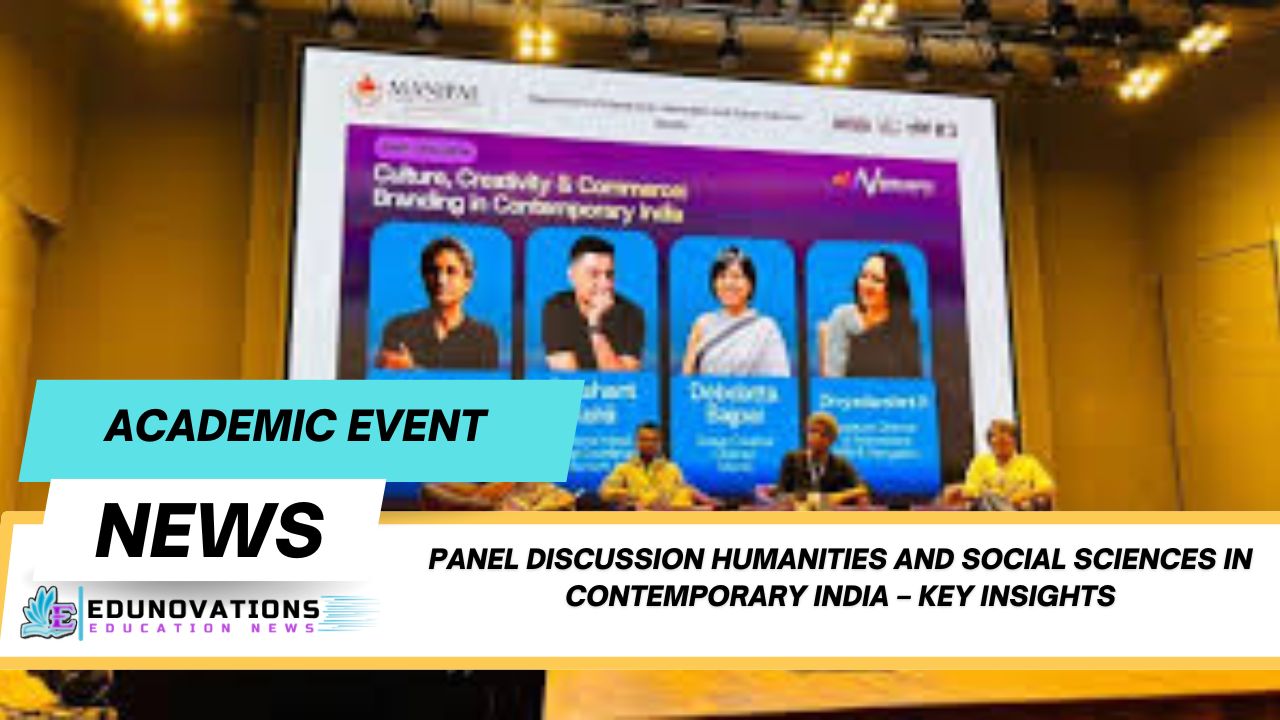
The panel discussion humanities and social sciences in contemporary India recently brought together leading scholars, public intellectuals, and policy thinkers to examine the evolving role of liberal education in shaping India’s democratic and cultural landscape. Hosted by the prestigious National Law School of India University (NLSIU), the event highlighted the urgency of re-centering humanities and social sciences within academic and policy conversations.
Held at the iconic India International Centre in New Delhi, the gathering served as a powerful platform to deliberate on how disciplines such as history, sociology, political science, philosophy, and literature remain essential to understanding India’s complex present and shaping its future.
This article offers a comprehensive, SEO-optimized and analytical account of the panel discussion humanities and social sciences in contemporary India, incorporating expert insights, institutional perspectives, and broader academic context.
Setting the Context: Why Humanities and Social Sciences Matter Today
India’s higher education ecosystem is undergoing rapid transformation under the framework of the National Education Policy 2020. While STEM education continues to receive attention for innovation and economic growth, scholars at the event emphasized that democratic resilience, social justice, and inclusive governance depend heavily on humanities and social sciences.
The panel discussion humanities and social sciences in contemporary India underscored that:
- Public policy cannot function effectively without sociological and historical insight.
- Legal systems rely deeply on philosophical and ethical reasoning.
- Media literacy and civic awareness are rooted in humanities education.
- Social sciences help interpret data within cultural and political frameworks.
India’s Gross Enrolment Ratio (GER) in higher education has steadily improved, yet humanities enrolment faces perception challenges due to employability myths. The event addressed these concerns by presenting data and institutional experiences demonstrating that graduates from humanities and social sciences excel in civil services, academia, journalism, public policy, and law.
For students preparing for competitive examinations, resources such as NCERT-based learning materials and structured courses play a critical role. Platforms offering NCERT Courses, Current Affairs updates, and structured Syllabus guidance are increasingly helping aspirants bridge conceptual clarity with application.
Academic Debate and Contemporary Relevance
One of the most compelling aspects of the panel discussion humanities and social sciences in contemporary India was the nuanced debate on the relationship between academic inquiry and public life.
Panelists explored how:
- Historical narratives influence political discourse.
- Economic policies require social context for equitable outcomes.
- Anthropological research informs rural development strategies.
- Legal reforms depend on sociological research.
The event reflected on the legacy of Indian intellectual traditions—from ancient philosophical schools to post-independence constitutional debates. The Indian Constitution itself, drafted under the leadership of B. R. Ambedkar, is a testament to the interplay between law, social theory, and moral philosophy.
Scholars argued that marginalizing humanities education risks weakening democratic institutions. In this regard, the panel discussion humanities and social sciences in contemporary India served as both an academic reflection and a policy-oriented intervention.
The Institutional Role of NLSIU
The hosting institution, National Law School of India University, has historically integrated interdisciplinary approaches within legal education. Its curriculum combines constitutional law, sociology, economics, and political science—demonstrating how humanities remain integral even in professional programs.
During the panel discussion humanities and social sciences in contemporary India, speakers emphasized:
- Interdisciplinary pedagogy.
- Research-driven teaching models.
- Collaborative scholarship across institutions.
- International academic partnerships.
The discussion highlighted how law schools and universities can act as bridges between theory and policy.
Students accessing supplementary materials such as Notes, MCQs, and Videos often deepen their conceptual grasp of social sciences—particularly when preparing for examinations like UPSC, state PSCs, and university entrance tests.
The Delhi Dialogue: Public Intellectualism in Action
The choice of the India International Centre as the venue was symbolic. Known for hosting public intellectual forums, the Centre provided an ideal space for scholarly engagement beyond classroom boundaries.
The panel discussion humanities and social sciences in contemporary India demonstrated how academic conversations must enter public spaces. Scholars addressed pressing issues such as:
- Freedom of expression in academia.
- Curriculum reform and ideological debates.
- The global ranking pressures on Indian universities.
- Funding disparities between STEM and humanities disciplines.
Experts cited UNESCO data indicating that countries investing in social sciences experience stronger civic participation and policy innovation. India, with its diverse linguistic and cultural fabric, requires contextual scholarship more than ever.
Humanities in the Age of Artificial Intelligence
An emerging theme during the panel discussion humanities and social sciences in contemporary India was the intersection of humanities and technology. Artificial Intelligence, data analytics, and digital governance systems raise ethical questions that demand philosophical and sociological examination.
Speakers pointed out:
- AI bias requires ethical oversight.
- Data privacy laws need philosophical grounding.
- Digital misinformation demands media literacy education.
- Tech innovation benefits from historical awareness.
The dialogue reinforced that technology without ethical frameworks risks societal harm.
Expert Perspectives and Broader Reflections
While the event focused on academic inquiry, panelists also referenced comments from global thinkers. Historian Yuval Noah Harari has repeatedly argued that humanities education fosters critical thinking in a rapidly automated world. Similarly, Indian economist Amartya Sen has emphasized the centrality of public reasoning in democratic societies.
The panel discussion humanities and social sciences in contemporary India echoed these global perspectives, asserting that economic growth alone cannot define progress. Social well-being, gender equity, environmental sustainability, and participatory governance require humanities-based frameworks.
Education Reform and Policy Implications
Under the National Education Policy 2020, multidisciplinary education has become a national priority. The panel discussion humanities and social sciences in contemporary India evaluated how effectively institutions are implementing these reforms.
Key takeaways included:
- Integration of liberal arts within technical universities.
- Encouraging research publications in social sciences.
- Expanding scholarships for humanities scholars.
- Promoting community engagement projects.
Institutions seeking digital outreach and structured educational platforms often rely on professional technology solutions. Organizations like Mart Ind Infotech assist schools and academic bodies in building credible online presences.
Student Engagement and Academic Preparedness
For aspirants and university students, the themes from the panel discussion humanities and social sciences in contemporary India directly impact preparation strategies. Understanding constitutional history, sociological theories, and policy frameworks strengthens performance in competitive examinations.
Students can benefit from:
- Structured Current Affairs portals.
- Comprehensive Syllabus breakdowns.
- Downloadable NCERT PDFs.
- Conceptual Mind Maps.
- Topic-wise MCQs.
The relevance of humanities extends beyond academic degrees—it forms the foundation for informed citizenship.
Research, Funding, and the Way Forward
Another focal point of the panel discussion humanities and social sciences in contemporary India was research funding disparities. STEM fields often attract corporate sponsorship, while humanities research depends heavily on public funding.
Panelists proposed:
- Dedicated humanities research grants.
- Public-private partnerships for social research.
- Community-based participatory research models.
- International collaborations.
They argued that investing in humanities research enhances policymaking efficiency and social harmony.
Cultural Identity and Democratic Values
India’s pluralistic identity requires constant negotiation and understanding. The panel discussion humanities and social sciences in contemporary India highlighted how literature, philosophy, and history preserve collective memory and cultural dialogue.
In times of polarization, humanities scholarship offers tools for dialogue rather than division. The panel emphasized that inclusive education strengthens national integration.
Conclusion: Reimagining India’s Academic Future
The panel discussion humanities and social sciences in contemporary India was more than an academic gathering—it was a powerful reminder of the intellectual foundations sustaining India’s democracy. By reaffirming the value of humanities and social sciences, scholars called for balanced educational investment, interdisciplinary learning, and public engagement.
As India moves toward becoming a global knowledge economy, it must ensure that economic growth is accompanied by ethical reasoning, historical awareness, and social empathy. The insights from the panel discussion humanities and social sciences in contemporary India offer a roadmap for institutions, policymakers, and students alike.
Toppers Use Mind Maps to score more than 95%
NCERT Class 11th Commerce Mind Maps
Add to cartOriginal price was: ₹999.00.₹199.00Current price is: ₹199.00.NCERT Class 12th Chemistry Mind Maps
Add to cartOriginal price was: ₹199.00.₹75.00Current price is: ₹75.00.NCERT Class 12th Commerce Mind Maps
Add to cartOriginal price was: ₹999.00.₹199.00Current price is: ₹199.00.NCERT Class 12th Science Mind Maps
Add to cartOriginal price was: ₹999.00.₹199.00Current price is: ₹199.00.NCERT Mind Maps For Class 10th
Add to cartOriginal price was: ₹999.00.₹199.00Current price is: ₹199.00.




Purchase Today
Frequently Asked Questions (FAQs)
1. What was the main objective of the panel discussion humanities and social sciences in contemporary India?
The event aimed to analyze the role of humanities in shaping democratic and policy discourse in modern India.
2. Where was the event hosted?
It was organized by the National Law School of India University and held at the India International Centre in New Delhi.
3. How does the panel discussion humanities and social sciences in contemporary India relate to NEP 2020?
It evaluated how multidisciplinary reforms under NEP 2020 are being implemented in higher education.
4. Why are humanities important in contemporary India?
They foster critical thinking, ethical reasoning, and civic engagement.
5. Did the panel address technology and AI?
Yes, it discussed ethical implications of AI and digital governance.
6. How can students benefit from insights shared in the panel discussion humanities and social sciences in contemporary India?
Students preparing for competitive exams can strengthen conceptual clarity in social sciences.
7. What policy implications emerged from the discussion?
Calls for balanced funding, interdisciplinary research, and curriculum reform.
8. Are humanities degrees employable in India?
Yes, graduates work in civil services, law, media, academia, and policy think tanks.
9. How does the panel discussion humanities and social sciences in contemporary India impact public policy?
It reinforces the importance of sociological and historical perspectives in governance.
10. What future directions were suggested?
Increased research funding, global collaborations, and public intellectual engagement.