The atmosphere surrounding academic testing in India has once again reached a boiling point. Aspirants preparing for lectureship and junior research fellowships find themselves stranded in uncertainty as the National Testing Agency
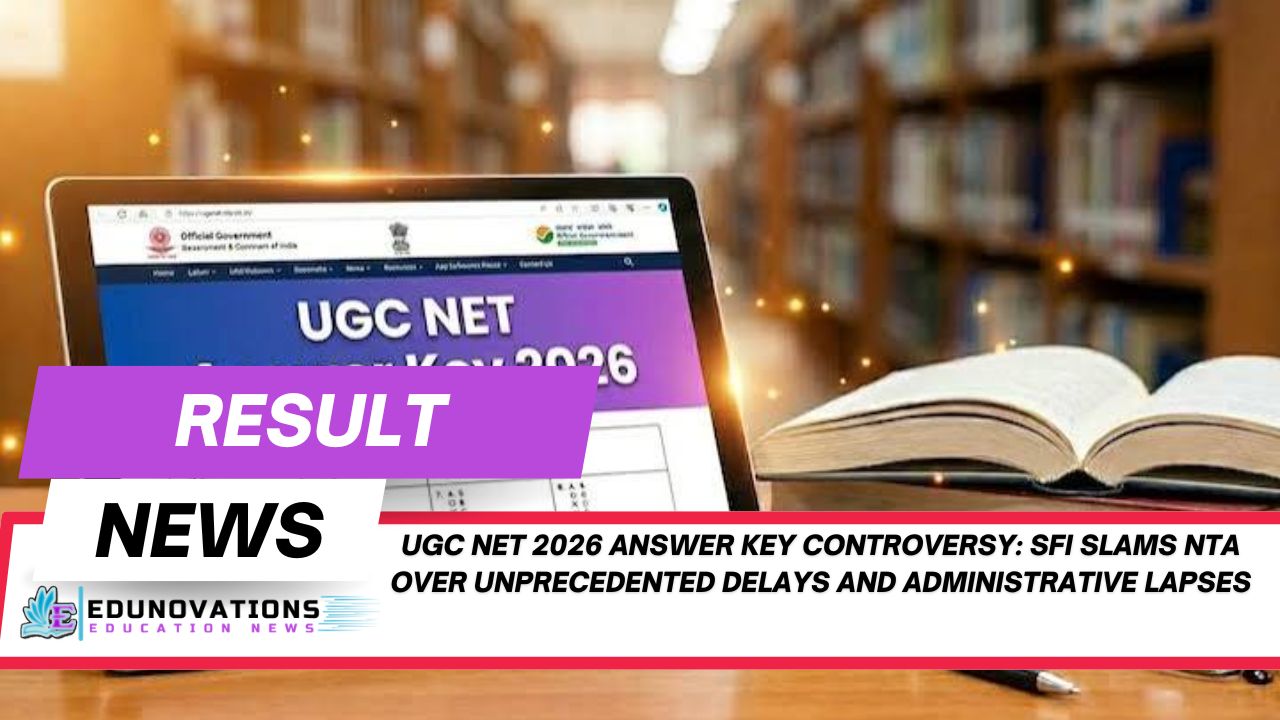
The atmosphere surrounding academic testing in India has once again reached a boiling point. Aspirants preparing for lectureship and junior research fellowships find themselves stranded in uncertainty as the National Testing Agency (NTA) faces fierce backlash. The focal point of this growing agitation is the alarming and prolonged delay in releasing the ugc net 2026 answer key. While thousands of candidates wait anxiously to evaluate their performance, student bodies have stepped up to question the governing framework, calling out what they describe as systemic negligence.
Among the foremost voices raising concerns is the Students’ Federation of India (SFI), which has launched sharp criticisms against the testing agency’s administrative approach. With tensions mounting across university campuses nationwide, the delay has transformed from a routine scheduling glitch into a major discourse concerning accountability, transparency, and the future of higher education policy in India.
Understanding the Background of the UGC NET June 2026 Examination
The University Grants Commission National Eligibility Test (UGC NET) is one of India’s most prestigious and fiercely contested examinations. Conducted to determine eligibility for Assistant Professorships and Junior Research Fellowships (JRF) in universities and colleges across the nation, it serves as the gateway for thousands of bright academic minds aiming for careers in research and higher education.
For the June session, the examination was conducted nationwide across multiple phases. While the core dates spanned from late June, supplementary challenges and regional adjustments—including re-examinations for specific postponed centers—pushed the final testing phase into early July. Typically, historical trends indicate that the NTA releases provisional evaluation documents, question papers, and recorded candidate responses within seven to eight days following the culmination of exams.
However, as days transformed into weeks, crossing the crucial ten-to-eleven-day threshold without any concrete notification, anxiety transitioned into absolute frustration. For candidates navigating the pressures of higher academics, having access to structured study materials like our comprehensive NCERT Courses forms the bedrock of their foundation, but the administrative limbo surrounding evaluation metrics completely disrupts their academic momentum.
SFI Slams NTA: Administrative Incompetence or Systemic Flaw?
The mounting delay pushed student organizations to the forefront of resistance. The Students’ Federation of India (SFI) did not mince words when addressing the situation, officially condemning the testing body. Prominent student leaders and union representatives stated that the ongoing ambiguity surrounding evaluation schedules is a textbook manifestation of administrative incompetence.
“The persistent delays, lack of proactive communication, and continuous disregard for academic calendars highlight a deep-seated rot within national testing frameworks. Students spend months preparing under intense pressure, only to be met with bureaucratic silence,” noted a central executive member of the SFI during a campus address.
This aggressive stance builds upon historical friction between student unions and testing administrators. Past protests, such as those witnessed during earlier examination rows where hundreds of students took to the streets of New Delhi, mirror the current dissatisfaction. Prominent leaders have frequently argued that systemic failures do more than just delay results—they cause a profound psychological toll on young aspirants who find themselves trapped in a prolonged loop of uncertainty.
To support systematic preparation during such volatile phases, aspirants often turn to specialized portals for structured guidance. Utilizing resources like daily Current Affairs helps students stay informed on policy shifts, while detailed academic Notes assist in maintaining uninterrupted study cycles regardless of external delays.
The Ripple Effect on PhD Admissions and Higher Education Timelines
The ramifications of a delayed evaluation window extend far beyond a simple numbers game. Admissions into premier central and state universities for Doctor of Philosophy (PhD) programs heavily rely on UGC NET scores. With universities syncing their academic sessions with national testing milestones, any deviation in the release timeline triggers a cascading effect.
- Compressed Objection Windows: A delayed provisional key means the objection-handling window will inevitably be compressed, giving candidates minimal time to challenge discrepancies.
- Delayed Final Results: Consequently, the final result compilation gets pushed back, leaving successful candidates scrambling to meet institutional PhD interview deadlines.
- Staggered December Session Planning: The delay casts a dark shadow over the upcoming December cycle, compressing preparation periods and creating logistical hurdles for both the NTA and the aspirant community.
Educationists and institutional analysts have repeatedly pointed out that maintaining a predictable calendar is vital. When structural lapses occur, students lose valuable months that could otherwise be utilized toward advanced research or professional deployment. For rigorous self-evaluation, candidates frequently practice using targeted MCQ’s and reference conceptual frameworks via structured Syllabus trackers to ensure they remain ahead of the curve.
Expert Insights and Governance Challenges
Industry experts analyzing structural examination reforms suggest that outsourcing and centralized testing bodies face an acute crisis of scale. Educational analysts note that while digital transformation was intended to streamline processes, it has frequently resulted in opaque communication channels between the evaluating authority and the test-takers.
Governance experts often draw comparisons with administrative models seen in global academic sectors. In a commentary on institutional transparency, noted education policy analyst Dr. Ramesh Menon remarked:
“When regulatory bodies fail to maintain predictable timelines for high-stakes tests, it erodes trust at the grassroots level. Transparency is not merely about publishing a PDF online; it involves proactive communication, empathetic responsiveness, and strict adherence to announced schedules to protect the mental health of millions of youth.”
This perspective resonates strongly with the ground reality of Indian aspirants, many of whom sacrifice lucrative job opportunities or exhaust personal savings to dedicate years to competitive exam preparation. For visual learners seeking alternative revision techniques during stressful waiting periods, exploring interactive tools such as NCERT Mind Maps can offer structured relief. Furthermore, candidates looking for physical study resources can download reference assets directly through portals offering Free NCERT PDFs.
Technology, Accountability, and School-Level Infrastructure
While higher education tests capture major headlines, experts argue that the roots of evaluation vulnerabilities stretch back to foundational schooling layers. Ensuring robust digital literacy, secure network architecture, and transparent data management requires systemic technological upgrades across educational institutions.
To bridge this digital gap, specialized technology partners like Mart Ind Infotech play a critical role in empowering schools and educational centers with secure, modern digital infrastructure. By integrating robust enterprise software and seamless database management solutions, institutional bodies can minimize administrative bottlenecks right from the formative years of student evaluation.
As the pressure mounts on the National Testing Agency, academic circles await an immediate resolution. Whether the agency will expedite the evaluation process or bow to mounting pressure from student unions remains to be seen. For now, aspirants are advised to keep a close watch on official portals while utilizing digital Videos to keep their academic spirits alive.
Toppers Use Mind Maps to score more than 95%
NCERT Class 11th Commerce Mind Maps
Add to cartOriginal price was: ₹999.00.₹199.00Current price is: ₹199.00.NCERT Class 12th Chemistry Mind Maps
Add to cartOriginal price was: ₹199.00.₹75.00Current price is: ₹75.00.NCERT Class 12th Commerce Mind Maps
Add to cartOriginal price was: ₹999.00.₹199.00Current price is: ₹199.00.NCERT Class 12th Science Mind Maps
Add to cartOriginal price was: ₹999.00.₹199.00Current price is: ₹199.00.NCERT Mind Maps For Class 10th
Add to cartOriginal price was: ₹999.00.₹199.00Current price is: ₹199.00.





Purchase Today
Frequently Asked Questions
1. What is the primary reason behind the current protest by student bodies like SFI?
Student organizations like the SFI are protesting against the severe administrative delays in releasing the evaluation metrics, calling it a classic example of NTA’s administrative inefficiency.
2. When was the UGC NET June session exam conducted?
The exam was conducted nationwide between June 22 and June 30, with a subsequent re-examination for specific postponed centers held on July 5.
3. Where can candidates download their evaluation sheets once released?
Aspirants can access their documents directly through the official portals at ugcnet.nta.ac.in or ugcnet.nta.nic.in.
4. How does the delayed timeline affect university admissions?
The delay compresses subsequent schedules, heavily disrupting admissions for PhD programs and academic fellowship programs across universities.
5. What credentials are required to access candidate responses online?
Candidates need their application number and date of birth or password to log into the official portal.
6. Can candidates raise objections against the provisional evaluation metrics?
Yes, the NTA provides an objection window where candidates can challenge discrepancies by paying a prescribed fee per question along with valid academic proofs.
7. How does this delay impact the upcoming December cycle?
A delayed June cycle pushes back the entire examination calendar, leaving minimal preparation time for aspirants aiming for the December session.
8. What role do student unions play during these delays?
Student unions act as collective pressure groups, demanding accountability, transparent timelines, and structural reforms within national testing agencies.
9. Are there alternative resources for candidates during this waiting period?
Candidates utilize curated notes, mock test platforms, and syllabus trackers to keep their preparation sharp without losing momentum.
10. How can educational institutions improve examination infrastructure?
By partnering with specialized IT infrastructure providers to build secure, transparent, and efficient digital evaluation systems.