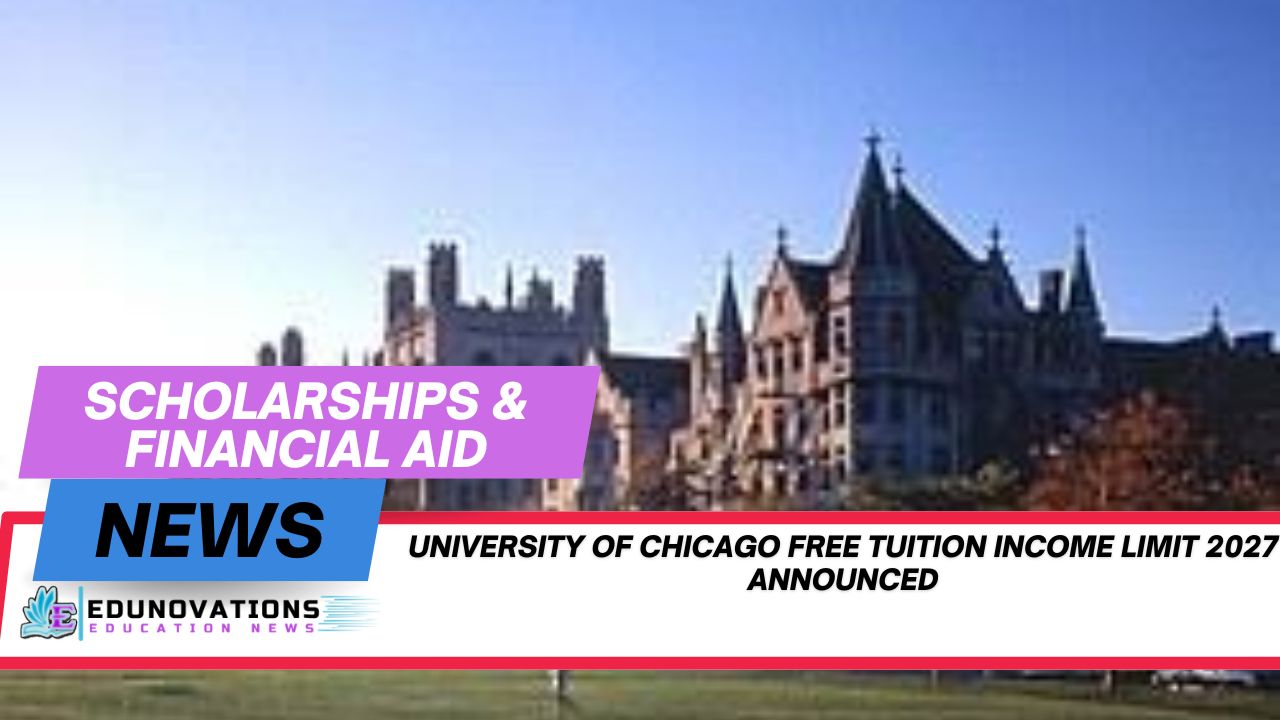
university of chicago free tuition income limit 2027 policy expands financial aid for middle-class families earning under $250,000 annually. Know eligibility, benefits, and student impact.
The rising cost of higher education in the United States has become one of the biggest concerns for students and parents over the last decade. Against this backdrop, the latest announcement from University of Chicago has generated widespread attention among families seeking affordable access to elite education. The institution has revealed a major expansion in its undergraduate financial aid program, offering free tuition opportunities for students from families earning below $250,000 annually.
The announcement has quickly become a trending topic across education circles because it signals a significant shift in how top universities are responding to growing concerns about affordability, student debt, and educational accessibility.
Education experts believe the decision could encourage other elite universities to introduce similar initiatives in the coming years. The policy particularly benefits middle-class families who often earn too much to qualify for traditional aid but still struggle with the high cost of private university tuition.
According to reports, the enhanced aid package is expected to take effect for future undergraduate admissions cycles and could reshape conversations around financial aid policies nationwide.
Students looking for updated educational resources can also explore NCERT Courses and access study materials through NCERT Notes.
A Landmark Shift in Higher Education Affordability
The newly announced policy marks one of the most generous financial aid expansions among elite private universities in the United States. Under the revised structure, many students from households earning less than $250,000 annually may qualify for tuition-free education.
This move comes at a time when student debt in America continues to exceed trillions of dollars. Rising tuition fees have forced many students to reconsider attending prestigious institutions despite strong academic credentials.
The university administration emphasized that the program aims to remove financial barriers and create broader access for talented students from diverse economic backgrounds.
Higher education analysts say the policy demonstrates a growing recognition that middle-income families are increasingly burdened by educational expenses. In many cases, these households do not receive sufficient financial support despite facing substantial tuition costs.
The development surrounding the university of chicago free tuition income limit 2027 policy is also likely to influence admissions patterns, as more applicants may now consider applying to elite universities previously viewed as financially inaccessible.
For students preparing for competitive exams and academic planning, Current Affairs Resources and MCQ Practice Platform can provide useful guidance.
Why Middle-Class Families Are Paying Attention
For years, financial aid conversations primarily focused on low-income households. However, middle-income families have increasingly argued that they face serious affordability challenges as tuition costs continue to rise faster than inflation.
The updated financial aid model addresses this concern directly. Families earning below the newly announced threshold may now experience significantly reduced financial pressure.
Experts note that tuition at private universities can often exceed $60,000 annually before accommodation and living expenses are included. Even financially stable households may struggle to manage such costs for multiple children.
Because of this, the university of chicago free tuition income limit 2027 initiative is being viewed as a transformative policy that could redefine affordability standards in American higher education.
Education consultant Mark Kantrowitz, widely recognized for his expertise in student financial aid, has previously argued that middle-class families are increasingly “caught in the financial aid squeeze.” His observations align with the broader national discussion on tuition affordability and student borrowing.
The policy may also help reduce long-term debt burdens among graduates, allowing students to pursue careers based on passion and skill rather than repayment obligations.
Expanding Access Beyond Traditional Aid Models
The new financial support framework reflects a broader transformation in university admissions strategies. Elite institutions are increasingly competing to attract talented students from all socioeconomic backgrounds.
Several leading universities have already expanded no-loan policies or increased grant-based aid. However, the scale of the latest initiative has attracted particular attention because of the relatively high income threshold.
Observers believe this policy sends a strong message that academic opportunity should not depend entirely on household wealth.
The expanded structure connected to the university of chicago free tuition income limit 2027 announcement may also encourage first-generation college applicants to apply with greater confidence.
In recent years, many students avoided applying to prestigious universities because they assumed tuition costs would be unaffordable. Financial aid experts frequently note that misconceptions about affordability discourage qualified applicants from even considering elite institutions.
The latest initiative could help change that perception significantly.
Students can also improve academic preparation through NCERT Video Lessons and explore detailed curriculum support via NCERT Syllabus Resources.
Impact on National Higher Education Trends
The American higher education system has undergone major changes since the COVID-19 pandemic. Universities are now facing increased scrutiny regarding tuition pricing, student outcomes, and financial accessibility.
Many policymakers and education advocates have argued that rising costs threaten equal educational opportunity.
Against this backdrop, the university of chicago free tuition income limit 2027 development could become an important benchmark for future institutional reforms.
Analysts believe the announcement may create competitive pressure on peer institutions to strengthen their own aid packages. Universities increasingly recognize that affordability has become a major factor influencing student enrollment decisions.
Research also shows that financial stress can negatively impact academic performance, mental health, and graduation rates. Reducing tuition burdens may therefore improve both student wellbeing and educational outcomes.
The latest initiative also aligns with broader efforts across the United States to address student debt concerns. According to education studies, many graduates delay home ownership, entrepreneurship, and family planning because of large education loans.
Reducing undergraduate borrowing could produce positive economic effects extending beyond the education sector itself.
Student Reactions and Public Response
The announcement has generated widespread discussion across social media and academic communities.
Many students praised the decision as a step toward greater educational fairness. Parents also welcomed the expanded aid threshold, arguing that middle-income households often receive insufficient financial assistance despite facing high living costs.
Several education policy experts described the decision as an example of how universities can use endowment resources to expand opportunity.
The university of chicago free tuition income limit 2027 policy has also been discussed by college counselors advising high school students on application strategies.
Counselors say affordability transparency is increasingly important because families are carefully evaluating the return on investment associated with higher education.
Some analysts believe more universities may gradually move toward higher grant-based aid models to remain competitive in student recruitment.
Broader Economic and Social Implications
Affordable access to higher education has long been linked to economic mobility in the United States. Experts argue that reducing tuition barriers can help talented students pursue advanced education regardless of financial background.
The latest initiative may therefore contribute to broader social mobility goals.
The policy connected to the university of chicago free tuition income limit 2027 announcement could especially benefit students from urban and suburban middle-income households where living costs are already high.
Economists note that inflation, housing costs, healthcare expenses, and childcare obligations have placed additional financial strain on families in recent years. Even households earning relatively high incomes may still face difficulty financing elite university education.
This context helps explain why the policy announcement has resonated nationally.
In addition, reducing educational debt may strengthen workforce flexibility by allowing graduates to enter research, public service, education, or entrepreneurship without immediate loan repayment pressure.
Admissions Competitiveness May Increase
One likely outcome of the announcement is increased competition for admission.
As awareness grows around the university of chicago free tuition income limit 2027 policy, application numbers may rise substantially in future admissions cycles.
Elite universities already maintain highly selective admissions processes. Increased affordability may encourage a broader and more diverse applicant pool.
Admissions experts say universities implementing strong financial aid policies often experience surges in applications because students perceive them as both academically prestigious and financially attainable.
This trend has already been observed at several institutions that expanded no-loan financial aid models over the past decade.
Students preparing for competitive admissions can download study materials through Free NCERT PDF Downloads and access educational mind maps from NCERT Mind Maps.
The Growing Debate Around Tuition Costs
The broader debate surrounding higher education costs remains highly active across the United States.
Critics of traditional tuition models argue that universities must do more to justify rising expenses. Others believe elite institutions with large endowments have a responsibility to expand access for qualified students.
The university of chicago free tuition income limit 2027 initiative enters this debate at a time when policymakers are examining the long-term sustainability of current financing systems.
Supporters say the new approach demonstrates how universities can use institutional resources strategically to reduce inequality.
At the same time, some experts caution that affordability improvements must also be accompanied by transparency regarding housing, meal plans, and additional educational expenses.
Nevertheless, the announcement is widely viewed as a major positive development in the ongoing effort to make higher education more accessible.
Technology, Outreach, and Educational Access
Modern universities are increasingly relying on digital outreach and technology-driven admissions strategies to reach prospective students.
Educational consultants say that better communication about financial aid can significantly influence application behavior.
Organizations such as Mart Ind Infotech continue supporting schools and educational institutions with digital communication and outreach solutions that help connect students with important academic opportunities.
Experts believe improved financial transparency combined with digital accessibility can help students make better-informed decisions regarding college applications.
The national attention generated by the university of chicago free tuition income limit 2027 policy may also encourage more discussions about educational equity and institutional responsibility.
What Students Should Consider Before Applying
While the expanded financial aid policy has created excitement, experts advise students to carefully review all eligibility requirements before applying.
Important factors may include:
- Household income documentation
- Academic eligibility criteria
- Residency considerations
- Additional living expenses
- Scholarship coordination
- Application deadlines
Students should also compare aid packages across multiple institutions to understand the complete financial picture.
Financial aid specialists recommend completing all required forms accurately and early to maximize available support opportunities.
The latest initiative demonstrates how rapidly the financial aid landscape can evolve in response to economic conditions and public demand.
A Defining Moment for Elite Universities
The decision by the University of Chicago may represent more than just a financial aid expansion. Many observers believe it reflects a deeper transformation in how elite institutions define accessibility and public responsibility.
The university of chicago free tuition income limit 2027 announcement arrives during a period of intense national discussion regarding affordability, educational equity, and economic opportunity.
As universities compete for talented students while facing growing scrutiny over tuition pricing, policies like this may become increasingly common.
Whether other elite institutions adopt similar measures remains to be seen. However, the announcement has already sparked significant discussion across the education sector and among families nationwide.
For thousands of prospective students, the development offers renewed hope that world-class education may become more financially accessible in the years ahead.
Toppers Use Mind Maps to score more than 95%
NCERT Class 11th Commerce Mind Maps
Add to cartOriginal price was: ₹999.00.₹199.00Current price is: ₹199.00.NCERT Class 12th Chemistry Mind Maps
Add to cartOriginal price was: ₹199.00.₹75.00Current price is: ₹75.00.NCERT Class 12th Commerce Mind Maps
Add to cartOriginal price was: ₹999.00.₹199.00Current price is: ₹199.00.NCERT Class 12th Science Mind Maps
Add to cartOriginal price was: ₹999.00.₹199.00Current price is: ₹199.00.NCERT Mind Maps For Class 10th
Add to cartOriginal price was: ₹999.00.₹199.00Current price is: ₹199.00.




Purchase Today
FAQs
1. What is the university of chicago free tuition income limit 2027 policy?
The policy expands undergraduate financial aid and offers tuition-free opportunities for eligible families earning below $250,000 annually.
2. Who can benefit from the uchicago free college program for middle class families?
Middle-class students whose household income falls within the university’s eligibility range may qualify for expanded aid benefits.
3. How does the university of chicago tuition free policy for $250000 income work?
Eligible students may receive grant-based aid covering tuition costs depending on financial circumstances and admissions status.
4. Is the how to get free tuition at university of chicago 2027 process competitive?
Yes, admission to the university remains highly selective despite the expanded financial aid initiative.
5. What is included in the uchicago financial aid expansion for undergraduate students?
The program primarily focuses on tuition assistance, though additional aid packages may vary depending on student needs.
6. Will the new tuition policy reduce student loan dependency?
Education experts believe the initiative could significantly reduce borrowing requirements for many students.
7. Why is the University of Chicago expanding financial aid now?
The decision reflects growing national concerns regarding college affordability and middle-class financial pressure.
8. Can international students apply under the new financial aid system?
Students should review official university guidelines because eligibility requirements may differ for international applicants.
9. Could other universities introduce similar tuition-free programs?
Analysts believe the announcement may encourage peer institutions to strengthen their own financial aid policies.
10. Why is the university of chicago free tuition income limit 2027 policy important nationally?
The initiative may influence future discussions on educational affordability, accessibility, and student debt reform across the United States.