Higher education in India is undergoing a massive paradigm shift. With modern policy frameworks pushing for character-building and holistic development
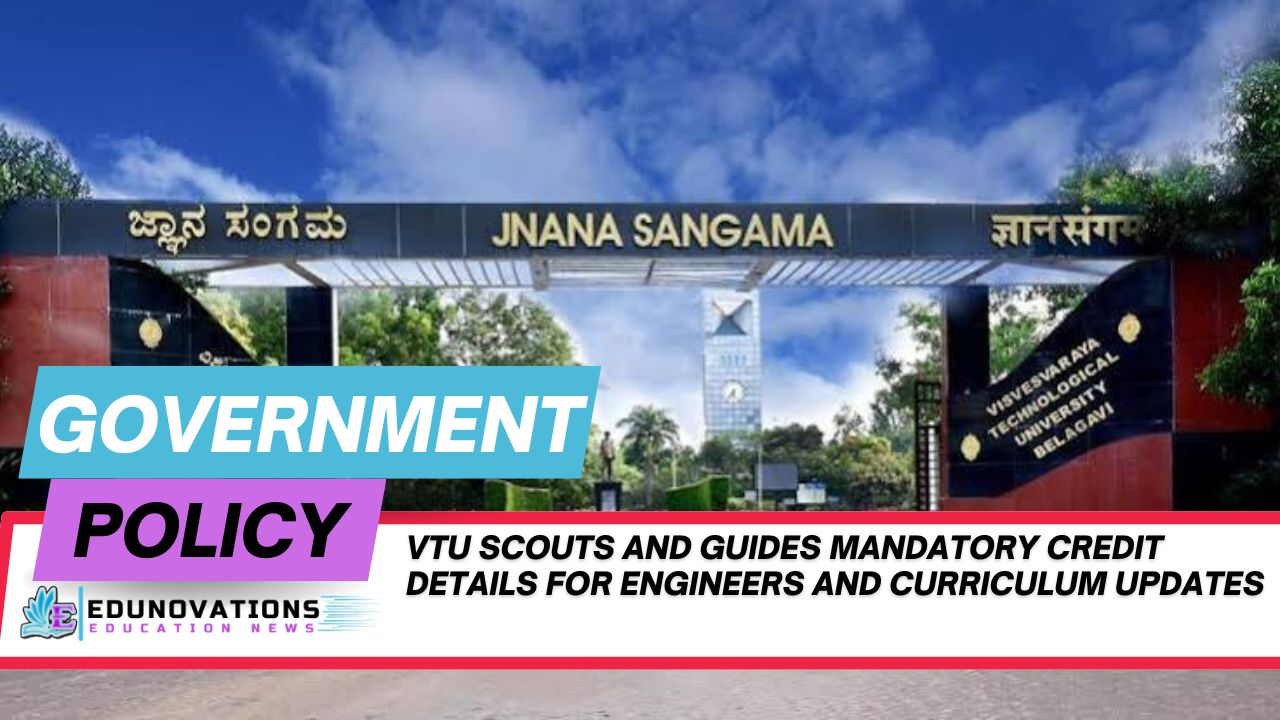
Higher education in India is undergoing a massive paradigm shift. With modern policy frameworks pushing for character-building and holistic development alongside technical mastery, technical universities are adapting swiftly. In a major development, Visvesvaraya Technological University (VTU) has officially announced a structural transformation in its curriculum. For students navigating their engineering paths, understanding the VTU Scouts and Guides mandatory credit details for engineers is essential to plan academic workloads and graduation requirements effectively.
According to updates originating from premier reports like The Hindu, this decision integrates character-building programs directly into technical degree frameworks. As universities look to balance rigorous engineering theory with practical life skills, this article breaks down everything students, educators, and academic planners need to know.
Understanding the New Curricular Mandate
For years, technical education has heavily concentrated on core engineering subjects, coding languages, algorithms, and applied sciences. However, modern industry standards demand much more than technical acumen. Employers increasingly seek graduates equipped with emotional intelligence, leadership capabilities, teamwork skills, and social responsibility.
Recognizing this gap, academic administrators and policy think tanks have advocated for holistic credits. Engineering students traditionally accumulate academic credits for core subjects, electives, and mandatory internships. Under the latest updates surrounding the VTU Scouts and Guides mandatory credit details for engineers, technical institutions under the university umbrella are required to allocate dedicated credit points to movement-based training.
How the Credit Distribution Works
- Skill Development Pool: Engineering students typically complete a set of specified credit points dedicated to skill development, distinct from standard core academic credits.
- The Allocation: Out of this specific pool, one credit point is now carved out specifically for participation in the Scouts and Guides movement.
- Academic Applicability: Failing to fulfill or engage with the requirements tied to the VTU Scouts and Guides mandatory credit details for engineers could pose hurdles in clearing overall semester credit benchmarks.
Students who want to explore broader academic roadmaps, structural blueprints, and detailed breakdowns can check out the official Syllabus portal for structured guidelines. Furthermore, those prepping for competitive exams or parallel university tests can utilize online resources like Notes and comprehensive MCQ’s to stay ahead of the academic curve.
The Policy Background: NEP 2020 and State Frameworks
The roots of this institutional change extend back to broader policy implementations. The National Education Policy (NEP) 2020 strongly advocated for multidisciplinary education, vocational integration, and community-centric learning models in higher education institutions.
While initial policy drafts recommended widespread adoption across higher educational institutions, implementation varied across states. Academic stakeholders note that the push for incorporating these programs into technical education comes after extensive discussions involving state educational bodies, university vice-chancellors, and youth welfare organizations.
The Role of Rangers and Rovers in Higher Education
Within the movement, the senior wing meant for college-going youth aged 16 to 25 is formally classified into Rovers (for male students) and Rangers (for young women). These programs are structured to foster:
- Self-Development: Enhancing individual resilience, discipline, and personal confidence.
- Leadership Training: Teaching young adults how to manage teams, resolve conflicts, and spearhead community initiatives.
- Outdoor Adventure & Survival Skills: Building physical stamina, problem-solving under stress, and environmental consciousness.
Educational institutions aiming to streamline their digital administrative infrastructure for managing these new student cohorts often partner with specialized digital partners such as Mart Ind Infotech for tech-driven operational support.
Expert Perspectives and Leadership Insights
Major curricular transformations require visionary backing from key institutional heads and leaders. P.G.R. Sindhia, former Minister and State Chief Commissioner of Bharat Scouts and Guides, played a pivotal role in lobbying for this institutional integration.
Sharing his perspective during regional academic conferences, Mr. Sindhia emphasized that character-building remains the cornerstone of professional success. “Bharat Scouts and Guides is a character-building organisation. Those who join will develop a true spirit of service and dedication,” Mr. Sindhia noted, highlighting that higher education must look beyond technical formulas to cultivate empathetic human beings. He further advocated that such initiatives should ideally extend across Arts, Science, Engineering, and Medical domains, transforming campuses into hubs of social leadership.
To align your daily preparation with broader educational updates, keeping track of regular developments via dedicated portals like Current Affairs is highly recommended. Students can also access specialized Videos to better visualize these academic transitions.
Addressing Implementation Challenges
While the inclusion of character-building credits is celebrated broadly, academic administrators face structural hurdles, most notably the shortage of certified trainers and instructors across affiliated colleges.
To resolve this bottleneck, university leadership has proposed specialized certificate courses designed to train faculty members. Under this proposal, universities can offer orientation programs to upskill professors, enabling them to act as certified guides without imposing heavy financial burdens on institutional budgets.
For students looking to build broader foundational knowledge outside their technical syllabi, exploring structured study materials via NCERT Courses or downloading free reference texts from Free NCERT PDFs can provide a well-rounded academic foundation. Additionally, visual learners can utilize NCERT Mind Maps to map out complex concepts quickly.
Conclusion
The integration of community-focused skill modules into technical degree paths marks an evolution in modern Indian higher education. By carefully studying the VTU Scouts and Guides mandatory credit details for engineers, students can seamlessly balance their technical education with holistic personal growth. As universities fine-tune teacher training programs and credit allocations, engineering campuses are set to produce not just skilled coders and builders, but socially responsible leaders equipped for tomorrow’s challenges.
Toppers Use Mind Maps to score more than 95%
NCERT Class 11th Commerce Mind Maps
Add to cartOriginal price was: ₹999.00.₹199.00Current price is: ₹199.00.NCERT Class 12th Chemistry Mind Maps
Add to cartOriginal price was: ₹199.00.₹75.00Current price is: ₹75.00.NCERT Class 12th Commerce Mind Maps
Add to cartOriginal price was: ₹999.00.₹199.00Current price is: ₹199.00.NCERT Class 12th Science Mind Maps
Add to cartOriginal price was: ₹999.00.₹199.00Current price is: ₹199.00.NCERT Mind Maps For Class 10th
Add to cartOriginal price was: ₹999.00.₹199.00Current price is: ₹199.00.



Purchase Today
Frequently Asked Questions (FAQs)
1. What are the core VTU Scouts and Guides mandatory credit details for engineers?
Under the updated guidelines, engineering students must allocate one credit point from their skill development pool toward completing the Scouts and Guides (Rangers and Rovers) course requirements.
2. Is the Scouts and Guides course compulsory for all VTU-affiliated colleges?
Yes, the university has decided to implement this course across all its affiliated technical institutions starting from the current academic year.
3. How does this course affect total engineering credits?
Engineering students have a dedicated pool of credit points assigned for skill development apart from core academic credits, and one of these credits is now explicitly reserved for this program.
4. Who are Rangers and Rovers in higher education?
Rangers and Rovers form the senior wing of the Bharat Scouts and Guides movement, specifically tailored for youth and college students aged 16 to 25 (Rovers for men, Rangers for women).
5. Why was this course introduced into technical education?
The initiative aligns with policy goals to emphasize character-building, leadership, emotional intelligence, and community service alongside technical instruction.
6. Are there exams or practical tests associated with this 1-credit course?
Yes, students are evaluated based on their participation, practical outdoor training sessions, leadership activities, and institutional attendance records.
7. How are colleges addressing the lack of trained instructors?
University officials have proposed specialized faculty training programs and certificate courses to prepare professors to act as certified instructors across affiliated campuses.
8. Does missing this credit impact graduation eligibility?
Since it forms a mandatory component of the skill development credit pool, fulfilling it is necessary to clear overall semester credit requirements for graduation.
9. Which policy framework originally proposed this integration?
The National Education Policy (NEP) 2020 originally recommended the mandatory introduction of Scouts and Guides elements within higher education frameworks.
10. Can female engineering students participate in this program?
Absolutely. Female students participate through the “Rangers” wing, which focuses on self-development, leadership, adventure, and community welfare.