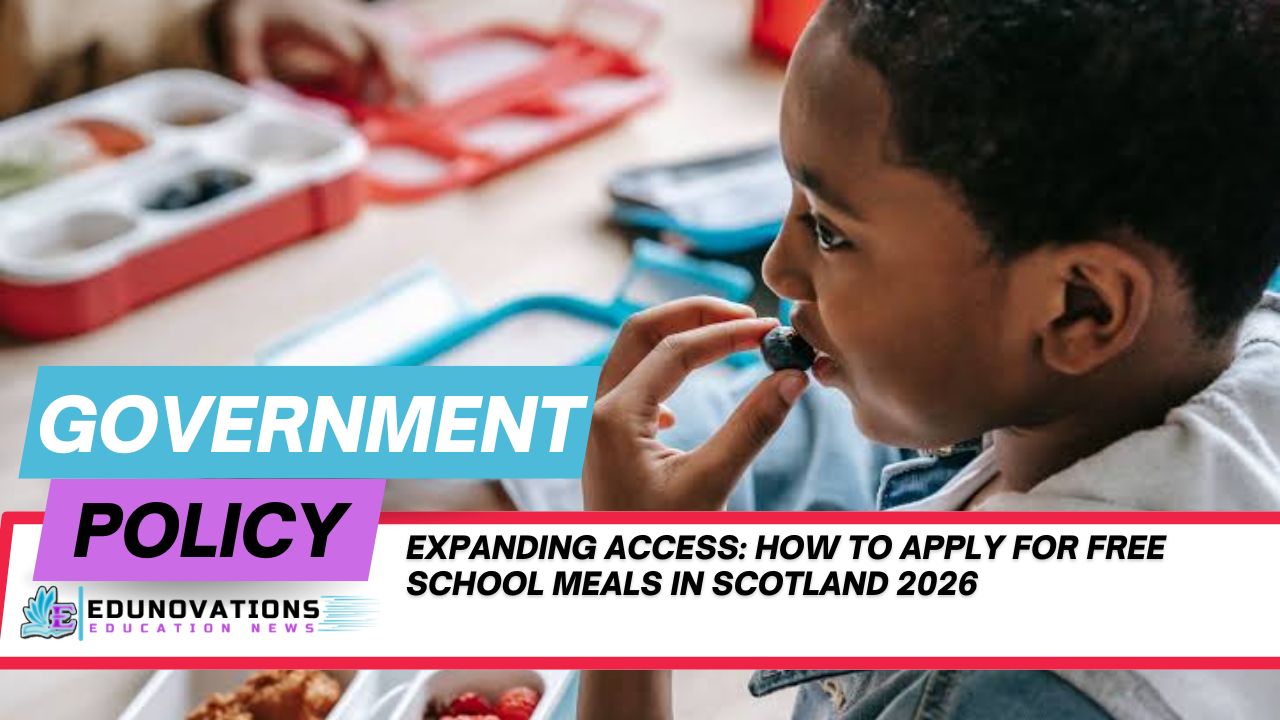
In an ongoing effort to tackle the cost-of-living crisis and eliminate child poverty, the Scottish Government has continued its commitment to nutritional support in education.
In an ongoing effort to tackle the cost-of-living crisis and eliminate child poverty, the Scottish Government has continued its commitment to nutritional support in education. For many families across the nation, navigating the changing landscape of school meal provision can feel daunting. With recent policy updates, it is essential for parents and guardians to understand exactly where they stand regarding their children’s access to healthy, daily meals.
This guide provides a comprehensive breakdown of the current system, ensuring you have the information needed to secure the support your family is entitled to. Whether you are a parent of a primary school child or an older student, clarity on eligibility is the first step toward reducing household expenses.
Understanding the Current Landscape of School Meals
The Scottish education system remains a leader in the UK regarding universal provision. Currently, the policy ensures that all children in Primary 1 through Primary 5, as well as those attending council-run special education schools, receive universal free school lunches. This initiative is designed to remove the stigma often associated with means-testing and to ensure that no child starts their school day on an empty stomach.
First Minister John Swinney has frequently emphasized the government’s focus on delivering priorities that resonate with the people of Scotland. By investing in early-day nutrition—including the expansion of breakfast clubs—the administration aims to improve student concentration, attendance, and overall wellbeing. As Mr. Swinney has noted, “My government is focused on delivering the priorities of the people of Scotland and through our budget, we are acting to provide help with the cost of living and doing all we can to eradicate child poverty.”
For families looking for administrative support for their schools, resources such as Mart Ind Infotech offer expert guidance on infrastructure and digital integration, which is crucial for modern schools managing these expanded programs.
Navigating Eligibility for Older Pupils
While the universal offer covers the first five years of primary school, the criteria for Primary 6 (P6) and Primary 7 (P7) pupils rely on specific household income and benefit thresholds. This is where many parents find themselves needing clarification.
If your child is in P6 or P7, they are typically eligible if your household is in receipt of:
- Universal Credit, provided your monthly earnings are within the specified threshold.
- The Scottish Child Payment.
- Asylum seeker support.
It is vital to check your status regularly, as changes in employment or benefit updates can impact your eligibility. For students preparing for exams or needing academic support during these formative years, exploring NCERT Courses can be a great way to stay ahead of the curriculum.
The Application Process: A Step-by-Step Approach
Many parents mistakenly believe that because their child is in P1–P5, they do not need to interact with the system. However, even if your child is automatically enrolled in the universal program, it is often advisable to register your details with your local council. This ensures that you are flagged for other forms of support, such as school clothing grants or holiday food payments.
If you are a parent asking how to apply for free school meals in Scotland 2026, the process begins with your local council’s website. Most local authorities have transitioned to streamlined, digital application portals. You will typically need:
- Your National Insurance number.
- Proof of your current benefit entitlement (such as a recent Universal Credit statement).
- Details of the school your child attends.
For those requiring help with official documentation or navigating complex government websites, brushing up on Current Affairs related to social policy can help you stay informed about new grants and updates.
Overcoming Barriers: What to Do If You Are Waiting
One of the most frequent challenges parents face occurs when transitioning into a new job or waiting for a first Universal Credit payment. There is often a “waiting period” where you may feel caught in limbo.
Some local authorities possess the discretionary power to grant temporary access to school meals if you are experiencing financial hardship, even if you are waiting for your first benefit payment. It is highly recommended that you contact your local council’s education department directly rather than waiting for an automated system to catch up.
If you are struggling to keep track of your child’s educational requirements, utilizing Notes or MCQ’s for study support can help keep your child’s learning on track while you handle the administrative side of school life.
Why Nutritional Support Matters
The goal of these programs goes beyond simple food provision. Research consistently demonstrates that well-nourished children show higher levels of cognitive function and engagement. When families are relieved of the financial burden of the daily school lunch, the “cost-of-living” pressure is eased significantly.
For parents managing multiple children, the cumulative savings can be substantial—often hundreds of pounds per child, per year. For additional resources to assist with your child’s learning journey, you can download Free NCERT PDFs to supplement their classroom studies.
Toppers Use Mind Maps to score more than 95%
NCERT Class 11th Commerce Mind Maps
Add to cartOriginal price was: ₹999.00.₹199.00Current price is: ₹199.00.NCERT Class 12th Chemistry Mind Maps
Add to cartOriginal price was: ₹199.00.₹75.00Current price is: ₹75.00.NCERT Class 12th Commerce Mind Maps
Add to cartOriginal price was: ₹999.00.₹199.00Current price is: ₹199.00.NCERT Class 12th Science Mind Maps
Add to cartOriginal price was: ₹999.00.₹199.00Current price is: ₹199.00.NCERT Mind Maps For Class 10th
Add to cartOriginal price was: ₹999.00.₹199.00Current price is: ₹199.00.




Purchase Today
Frequently Asked Questions
1. How to apply for free school meals in Scotland 2026? You should visit your local council’s official website and use their dedicated application portal, which requires proof of benefits like Universal Credit.
2. Am I eligible for free school meals in Scotland P6 P7? Eligibility for P6 and P7 depends on your receipt of specific benefits like the Scottish Child Payment or Universal Credit within specific earnings limits.
3. Income limit for Scottish free school meals 2026/27? The thresholds are linked to benefit eligibility. Generally, those receiving Universal Credit with monthly earnings at or below £850 are prioritized.
4. Get school meals help if I am waiting for Universal Credit? Yes, contact your local council’s education team. Many have discretionary powers to assist during the period between submitting a claim and receiving the first payment.
5. Do P1 to P5 pupils in Scotland still need to apply? While meals are universal, it is highly recommended that you register your family with your local council to ensure you receive notifications for other related benefits.
6. Does the Scottish government provide help for school holidays? Yes, many councils offer “holiday food payments” or vouchers for families who are registered as eligible for free school meals.
7. Can I get help if I have No Recourse to Public Funds? In certain instances, local authorities can provide support for families with No Recourse to Public Funds if they meet specific low-income criteria.
8. Are breakfast clubs free for all pupils? The Scottish Government is currently expanding a national breakfast club program, with full universal rollout planned for all primary schools by August 2027.
9. Where can I find more educational resources for my child? For supplementary learning, including Videos and Syllabus breakdowns, visit Edunovations.
10. How can I stay updated on school meal policy changes? Regularly checking the official ‘mygov.scot’ portal and local authority newsletters is the most reliable way to stay informed on policy shifts.