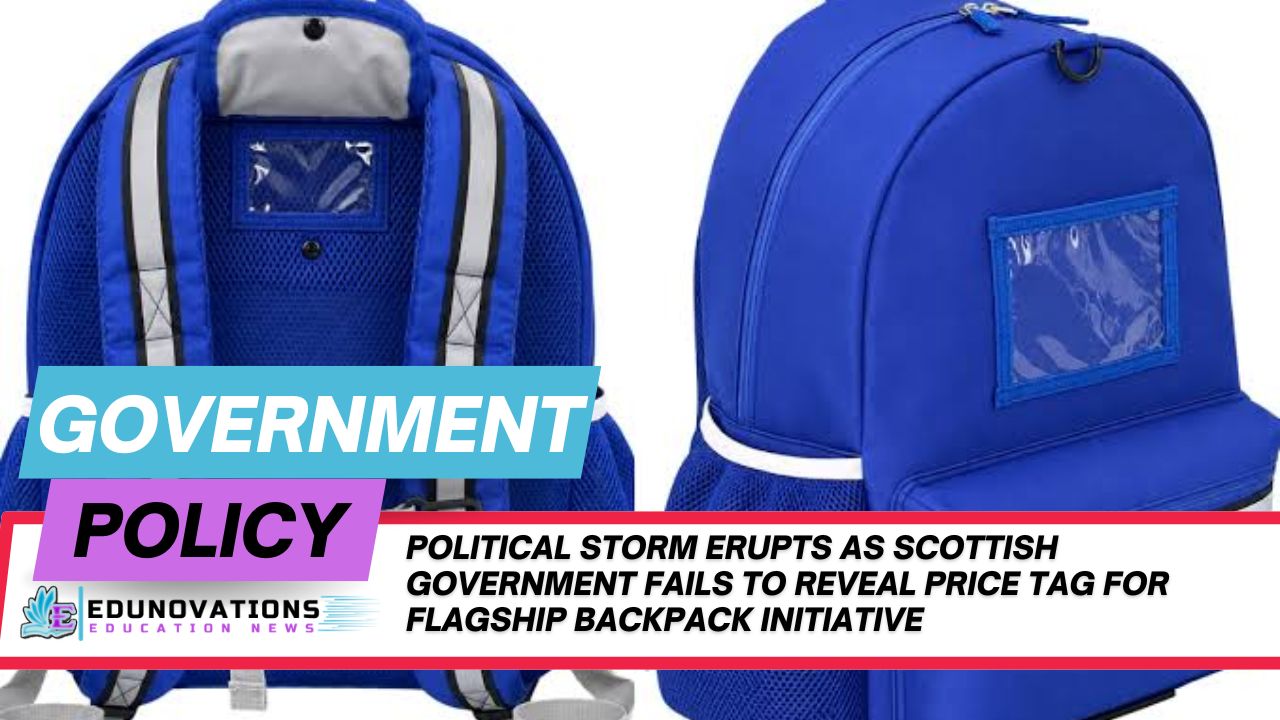
The political landscape in Scotland has been thrown into turmoil following revelations that a high-profile government commitment remains entirely uncosted.
The political landscape in Scotland has been thrown into turmoil following revelations that a high-profile government commitment remains entirely uncosted. Critics, educational experts, and opposition parties have launched a fierce reaction against the administration led by First Minister John Swinney, condemning the lack of financial transparency surrounding a major public pledge. As families across the country navigate educational milestones, the controversy highlights wider concerns regarding economic accountability, public resource management, and the practical implementation of government manifestos. For students and educators seeking structured support, specialized resources such as comprehensive NCERT Courses and up-to-date Current Affairs analysis often provide valuable educational frameworks, yet policymakers appear focused on physical distribution logistics rather than core classroom standards.
Understanding the Background of the Policy
The initiative in question stems from a prominent manifesto commitment designed to support children entering Primary 1. Modelled explicitly after the celebrated Baby Box introduced under former First Minister Nicola Sturgeon, the plan aims to distribute nearly 50,000 backpacks to children starting school. Proponents argue that the initiative will ease household financial pressures during a pivotal developmental phase. According to official government statements, each backpack is intended to include standard school items such as a pencil case, stationery, a water bottle, and dedicated learning resources intended to encourage reading, writing, and mathematics practice at home.
Despite these well-intentioned objectives, the absence of a verified financial breakdown has overshadowed the rollout. During various policy announcements, First Minister John Swinney emphasized that the backpacks would serve as an essential tool to ensure every child starts school on an equal footing. However, administration officials have repeatedly confirmed that exact figures regarding manufacturing, distribution, and overall operational expenses remain undisclosed while procurement processes are underway. This lack of upfront clarity has provided fertile ground for intense political scrutiny.
Political Backlash and Opposition Response
Opposition figures have been quick to pounce on the administrative silence, labelling the initiative as an ill-conceived distraction from deeper systemic challenges within the Scottish education system. Katherine Sangster, Scottish Labour’s education spokesperson, did not mince words when addressing the announcement, stating:
“Scotland’s schools are in desperate need of support from their government and instead the SNP have chosen to prioritise a gimmick they can’t even deliver.”
Labour representatives further pointed out that the administration has a historical track record of unfulfilled or delayed educational pledges, referencing past unmaterialized promises regarding digital devices and expanded meal provisions. For learners preparing for examinations or looking for guidance, structured study aids like dedicated Notes and practice MCQ’s remain far more pressing priorities for classroom success than promotional merchandise.
Similarly, Duncan Dunlop MSP, the Scottish Liberal Democrat education and young person spokesperson, condemned the policy as a wasteful allocation of taxpayer funds. He argued that public money should be directed toward strengthening classroom assistance, improving school safety, and tackling falling educational standards rather than distributing standardized freebies. Angela Ross MSP, representing Reform UK on education matters, echoed these sentiments, accusing ministers of chasing headlines rather than managing public finances responsibly.
Government Defense and Ministerial Clarification
In response to the growing storm, Cabinet Secretary for Education, Culture, and Gaelic Màiri McAllan defended the administration’s stance during a public engagement visit to a North Lanarkshire community centre. Ms. McAllan, a key senior minister within the devolved administration, stressed that the initiative represents a vital investment in early childhood welfare and child poverty reduction.
Addressing concerns about quality and manufacturing standards, Ms. McAllan assured the public that the prototypes had undergone rigorous testing. She noted that the backpacks feature durable, lightweight recycled materials, reflective safety piping, and ergonomic adjustments to ensure they remain safe and comfortable for young children. When pressed on the financial specifics, the Education Secretary maintained that a comprehensive update regarding total expenditure and budgetary allocation will be formally published immediately following the finalization of the commercial procurement phase.
For institutions looking to streamline their administrative communication or build robust digital infrastructure to handle public inquiries, partnering with specialized technology providers like Mart Ind Infotech offers valuable enterprise solutions. Furthermore, students and educators requiring multimedia learning assets can explore digital Videos, detailed academic Syllabus trackers, downloadable Free NCERT PDFs, and interactive NCERT Mind Maps to enhance their day-to-day academic routines.
Broader Implications for Public Spending and Governance
The core debate transcends simple stationery distribution; it touches upon the fundamental expectations of fiscal responsibility in public administration. Taxpayers and watchdog organizations frequently demand precise cost-benefit analyses before public funds are committed to large-scale distribution programs. When governing bodies launch high-visibility campaigns without attaching a definitive price tag, it invites accusations of short-term political posturing.
As the procurement process continues behind closed doors, economists and policy analysts emphasize that transparency must remain a cornerstone of public administration. Whether the upcoming backpacks ultimately deliver the intended psychological and financial relief to families or remain a point of contention in parliamentary debates will largely depend on the final audited figures released by the administration. Until those figures come to light, the policy will continue to serve as a textbook example of the friction between ambitious social welfare messaging and strict budgetary accountability.
Toppers Use Mind Maps to score more than 95%
NCERT Class 11th Commerce Mind Maps
Add to cartOriginal price was: ₹999.00.₹199.00Current price is: ₹199.00.NCERT Class 12th Chemistry Mind Maps
Add to cartOriginal price was: ₹199.00.₹75.00Current price is: ₹75.00.NCERT Class 12th Commerce Mind Maps
Add to cartOriginal price was: ₹999.00.₹199.00Current price is: ₹199.00.NCERT Class 12th Science Mind Maps
Add to cartOriginal price was: ₹999.00.₹199.00Current price is: ₹199.00.NCERT Mind Maps For Class 10th
Add to cartOriginal price was: ₹999.00.₹199.00Current price is: ₹199.00.




Purchase Today
Frequently Asked Questions
1. How much will the snp free school bags scheme cost taxpayers?
Exact financial details remain unavailable because administration officials have stated that total costs will only be confirmed once the formal commercial procurement process is fully concluded.
2. Who is eligible to receive the school backpacks under this policy?
The initiative is intended to reach nearly 50,000 children entering Primary 1 across Scotland, providing them with starter packs ahead of their first school term.
3. What items are included inside the proposed school bags?
Official descriptions indicate that the backpacks will contain standard starter items such as a pencil case, stationery, a water bottle, and dedicated literacy and numeracy learning resources.
4. Who made the initial announcement regarding the backpack policy?
First Minister John Swinney championed the initiative as a key manifesto commitment, drawing conceptual inspiration from the previously established Baby Box program.
5. What have opposition parties said about the initiative?
Opposition spokespersons from Labour, the Liberal Democrats, and Reform UK have criticized the policy as an uncosted gimmick and a misuse of public funds amidst wider educational challenges.
6. How has the Scottish Government defended the initiative?
Cabinet Secretary for Education, Culture, and Gaelic Màiri McAllan defended the project as an essential anti-poverty measure designed to ensure all children begin their education on an equal footing.
7. Are the backpacks manufactured to safety and environmental standards?
According to ministerial statements, the bags are constructed from lightweight, recycled materials featuring reflective safety piping and ergonomic testing for children.
8. When is the rollout scheduled to take place?
The distribution plan is aligned with upcoming academic intake milestones, with preliminary preparations and design consultations currently underway.
9. Why are critics concerned about the lack of financial figures?
Critics argue that committing to large-scale public distribution without upfront cost disclosures demonstrates a lack of fiscal discipline and transparency with taxpayer money.
10. Where can families find official updates regarding education policies?
Interested individuals can monitor official Scottish Government portals or consult parliamentary updates for verified announcements regarding public scheme implementations.