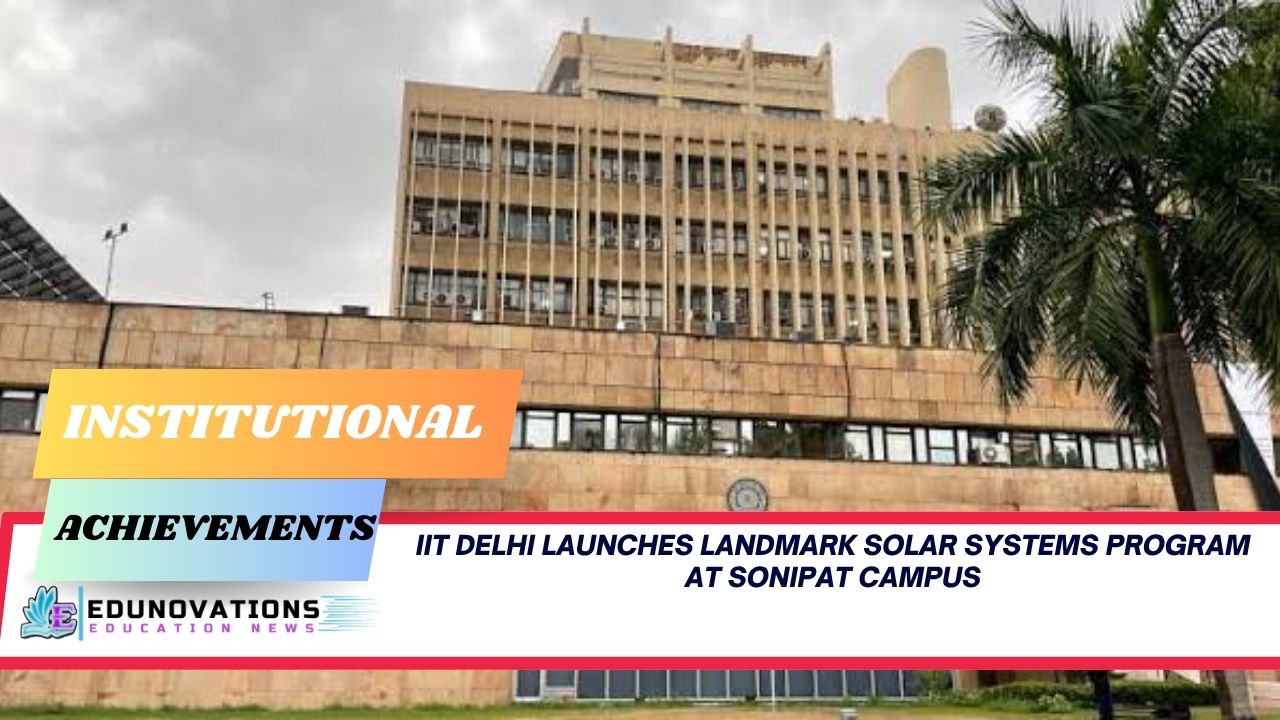
Explore how the best pg diploma in solar energy management in india launched by IIT Delhi is shaping global clean energy leadership and technical expertise.
The collaboration between IIT Delhi and the International Solar Alliance relies on a strategic Framework for Action (FFA) established earlier in the year. The primary objective is to scale human resource development, fast-track capacity building, and transfer operational knowledge across ISA member states—particularly across developing countries where solar deployment requires specialized local expertise.
For students and competitive exam aspirants looking to keep pace with evolving international treaties, environmental policies, and global alliances, reviewing updated Current Affairs provides valuable background context on clean energy geopolitical agreements.
Leadership Vision and Strategic Impact
Key academic leaders behind the program have emphasized the broader structural impact this diploma will have on global green infrastructure.
Prof. Ramesh Narayanan, Head of the Department of Energy Science and Engineering (DESE) at IIT Delhi, highlighted the global scope during the opening ceremony:
“With this initiative, IIT Delhi has moved to the global forefront of energy education and management. The programme will train international participants from over 120 ISA countries as trainers in Solar Technology and Application Resource Centres (STAR-C) in ISA member countries.”
Prof. Narayanan, a distinguished plasma physics expert and former researcher at the Saha Institute of Nuclear Physics and the Institute for Plasma Research, brings extensive expertise in energy science and experimental research to the leadership of DESE.
Prof. Somnath Baidya Roy, Professor-in-Charge of the IIT Delhi Sonipat Campus and Dean of Planning, reflected on the institutional significance of expanding physical classes:
“This is a milestone as the first teaching programme with physical classes at the Sonipat campus of the Institute. We are planning more such programmes in the coming years.”
Prof. Baidya Roy, who holds the Rockefeller Foundation Climate Science and Technology Chair position and earned his Ph.D. from Rutgers University, previously served at Princeton University and the University of Illinois before joining IIT Delhi. His work in atmospheric dynamics and renewable energy meteorology underpins the strategic research direction of the Sonipat campus.
The Role of STAR-C and Global Green Jobs
A core objective of this academic partnership is bolstering the operational mandate of Solar Technology Application Resource Centres (STAR-C). Established under the umbrella of the International Solar Alliance, STAR-C initiatives are designed to create robust, self-sustaining solar ecosystems across member nations.
Upon completing their coursework in Sonipat and their practical internship in Europe, participating fellows will return to their respective home countries as certified master trainers. These specialists will then lead local STAR-C facilities, training domestic engineers, technicians, and policy architects.
Economic and Environmental Impacts of STAR-C
- Accelerated Solar Deployment: Removing local technical bottlenecks by providing on-ground expertise for microgrid and utility-scale installations.
- Institutional Capability: Establishing standardized testing laboratories, quality control mechanisms, and local certification frameworks.
- Green Job Creation: Training domestic workforces to manage ongoing operation and maintenance (O&M), reducing reliance on foreign technical contractors.
- Sustainable Economic Growth: Enabling energy independence while meeting targets set under the Paris Agreement and national climate pledges.
Aspirants who wish to grasp the foundational physics and geographical factors governing solar irradiance can download structured educational materials from Free NCERT PDFs to complement their technical reading.
Technical Specifications & Program Comparison
To understand how this advanced qualification compares to standard engineering degrees and executive certificates in the renewable energy sector, review the structural matrix below:
| Feature Dimension | Traditional Renewable Energy M.Tech | Standard Executive Certificate | IIT Delhi PG Diploma (Sonipat) |
| Primary Focus | General Engineering Theory | High-Level Management Overview | Solar Systems & Global Management |
| Delivery Mode | Campus Classroom | Distance/Online | Hands-On / Physical Extension |
| International Footprint | Local / Domestic | Variable | 120+ ISA Member Nations |
| Practical Training | University Labs | Project Work | 1-Month European Field Internship |
| Sponsorship Model | Self-Funded / Gate Stipend | Corporate / Self-Funded | Multi-Lateral (UNIDO / ISA) |
| Career Endpoint | Domestic R&D / Tech Roles | General Corporate Advisory | STAR-C Master Trainer / Green Leader |
Expanding Educational Infrastructure in India
The launch at the Sonipat campus represents a shift toward specialized, multi-disciplinary satellite campuses across premier Indian academic institutions. By decoupling specialized research programs from overcrowded central urban campuses, institutions like IIT Delhi can build customized laboratories, pilot power plants, and residential facilities tailored to international researchers.
For candidates preparing for entrance examinations or seeking comprehensive study materials on environmental science and engineering, accessing updated Notes provides curated insights across core subjects.
To assess your understanding of energy systems, physics concepts, and current environmental regulations, practicing topic-wise MCQs offers an effective route for self-assessment.
Aligning with India’s Panchamrit & Global Net-Zero Goals
This educational initiative directly aligns with India’s ambitious Panchamrit climate action commitments presented at global climate summits, which include achieving 500 GW of non-fossil energy capacity and meeting 50% of energy requirements from renewable sources.
                              INDIA'S RENEWABLE TARGETS

  [500 GW Non-Fossil Capacity]  <--->  [50% Energy From Renewables]  <--->  [Net-Zero By 2070]
By educating international scholars, India is stepping forward as a leader for the Global South, aiding developing countries in building clean energy infrastructure without inheriting high technology licensing costs. Educational institutions seeking to upgrade their digital platforms or build robust online portals can consult Mart Ind Infotech for specialized web architecture services.
Students reviewing entrance criteria, curriculum frameworks, and academic roadmaps for higher education in technology and science can access detailed information through the official Syllabus portal.
Visual learners exploring complex environmental topics, climate change mechanisms, and energy conversion processes can also utilize intuitive NCERT Mind Maps for quick revision, or watch explanatory lecture series on Videos.
Toppers Use Mind Maps to score more than 95%
NCERT Class 11th Commerce Mind Maps
Add to cartOriginal price was: ₹999.00.₹199.00Current price is: ₹199.00.NCERT Class 12th Chemistry Mind Maps
Add to cartOriginal price was: ₹199.00.₹75.00Current price is: ₹75.00.NCERT Class 12th Commerce Mind Maps
Add to cartOriginal price was: ₹999.00.₹199.00Current price is: ₹199.00.NCERT Class 12th Science Mind Maps
Add to cartOriginal price was: ₹999.00.₹199.00Current price is: ₹199.00.NCERT Mind Maps For Class 10th
Add to cartOriginal price was: ₹999.00.₹199.00Current price is: ₹199.00.


Purchase Today
Frequently Asked Questions (FAQs)
What makes the best pg diploma in solar energy management in india unique?
This diploma program uniquely combines rigorous academic coursework at IIT Delhi with an international practical exposure module, including a one-month internship in Europe sponsored by international bodies like UNIDO and ISA.
What are the main solar systems management PG diploma eligibility and duration requirements?
The program runs for one full year, comprising 11 months of intensive physical classes and laboratory training at the IIT Delhi Sonipat campus, followed by a one-month practical internship in Europe. Candidates typically require an engineering or advanced science background nominated via ISA frameworks.
How does the international solar alliance STAR-C training program details structure impact green careers?
The program equips fellows to become master trainers in their home countries, establishing and operating STAR-C centers that drive local solar deployment, infrastructure testing, and technical workforce training.
Why are top hands on solar technology courses for green jobs becoming essential globally?
As the global economy shifts toward net-zero targets, industries require engineers who possess both hands-on technical skills in solar grid integration and management expertise in energy economics.
How to apply for UNIDO funded solar energy programs at IIT Delhi?
Applications and nominations for UNIDO-sponsored international fellowships are processed through the International Solar Alliance (ISA) framework in coordination with participating member state governments and IIT Delhi’s Department of Energy Science and Engineering.
Where is the new academic campus of IIT Delhi located for clean energy programs?
The physical campus running this specialized diploma is located in Sonipat, Haryana, serving as a hub for advanced research, international fellowships, and specialized technical diplomas.
Which departments at IIT Delhi run the solar diploma program?
The program is managed and executed by the Department of Energy Science and Engineering (DESE) at IIT Delhi, under the leadership of expert faculty in plasma, solar, and atmospheric sciences.
What international organizations are collaborating with IIT Delhi for this solar diploma?
Key international partners include the International Solar Alliance (ISA), France’s Institut National de l’Energie Solaire (INES), and the United Nations Industrial Development Organisation (UNIDO).
Does the solar management program include practical international exposure?
Yes, fellows who successfully complete the coursework at the Sonipat campus participate in a one-month applied internship in Europe focusing on deployed solar technologies.
How does this program support developing countries in renewable energy expansion?
By training fellows from over 120 ISA member countries, the initiative transfers critical technical knowledge, enables domestic green job creation, and reduces reliance on external technical consultants.