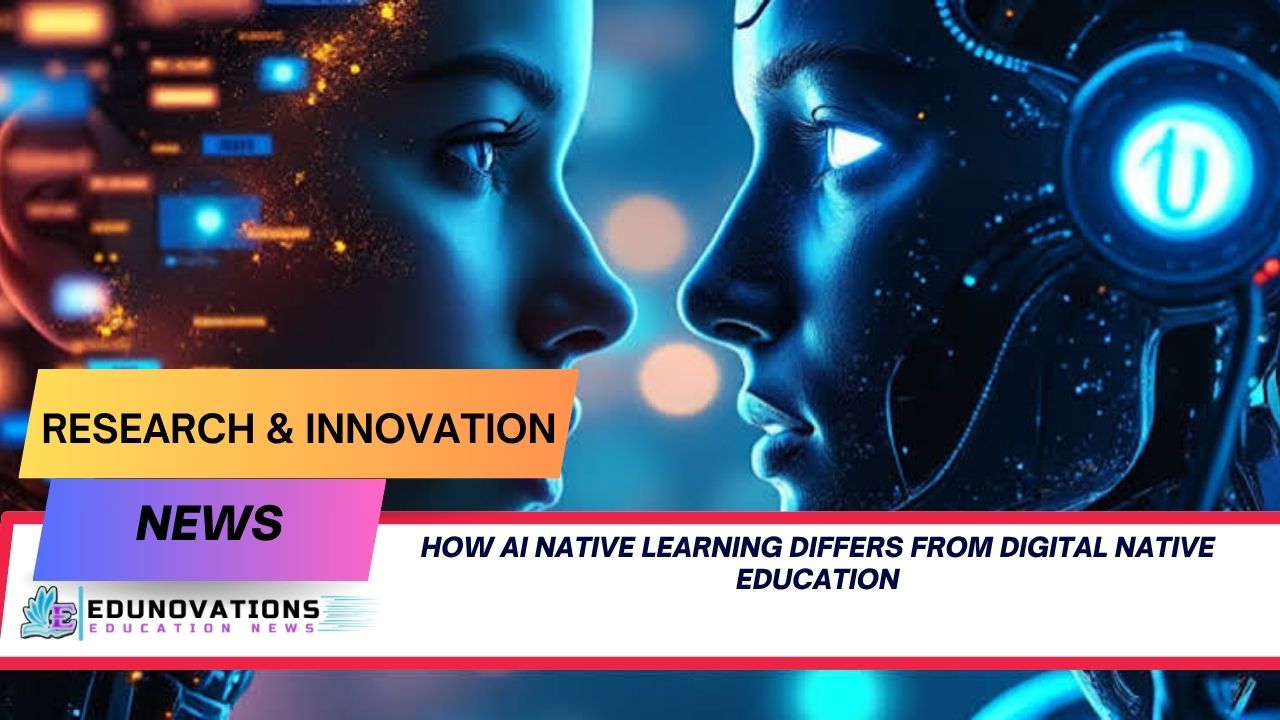
IIIT Hyderabad launches CETLS to uncover how AI native learning differs from digital native education, pioneering cognitive growth and slow learning models.
The International Institute of Information Technology Hyderabad (IIIT Hyderabad) officially inaugurated its groundbreaking interdisciplinary research hub, the Center for Educational Technology and Learning Sciences (CETLS). Unveiled on Teachers’ Day, the strategic initiative marks a profound shift in academic research—transitioning from merely utilizing technology for quick answers to re-engineering how human beings acquire deep knowledge alongside artificial intelligence.
The launch event was graced by eminent academic and technology leaders, including Sri R. Chandrashekhar, Former President of NASSCOM, Sri C. Srinivasa Raju, Chairman of iLabs Group, Prof. Sandeep Shukla, Director of IIIT Hyderabad, Prof. U. Deva Priyakumar, Dean of R&D, and the center’s founding faculty members Prof. Vasudeva Varma and Dr. Praveen Garimella. Joining virtually to deliver a keynote vision, Turing Award laureate Prof. Raj Reddy—Chief Mentor of CETLS, Founding Chair of IIIT Hyderabad, and University Professor at Carnegie Mellon University—emphasized that as automation simplifies information retrieval, educational systems must intentionally cultivate human creativity, original problem-solving, and intellectual resilience.
The Evolution of Pedagogy: Moving Beyond Information Retrieval
For decades, digital tools served as passive repositories and distribution channels. The modern educational system has steadily removed administrative and operational friction. Search engines replaced library stacks, instructional videos supplemented textbooks, and basic software automated repetitive exercises. However, the rapid emergence of generative artificial intelligence has fundamentally altered this relationship.
Prof. Vasudeva Varma, Head of CETLS, highlighted that educational institutions stand at a critical crossroads. When generative models immediately provide completed solutions, essays, and computer code, student engagement runs the risk of becoming superficial. To build resilient educational frameworks, educators and technologists must examine how AI native learning differs from digital native education in practice.
+-------------------------------------------------------------------------------+
|                      THE EVOLUTION OF PEDAGOGICAL PARADIGMS                   |
+-------------------------------------------------------------------------------+
|                                                                               |
|  1. DIGITAL IMMIGRANTS / EARLY ADOPTERS                                       |
|     • Transitioned from physical media to static digital repositories.        |
|     • Search engines streamlined information retrieval speed.                 |
|                                                                               |
|  2. DIGITAL NATIVE EDUCATION                                                  |
|     • Raised with widespread internet connectivity and multimedia screens.     |
|     • Consumed digitized information passively or semi-interactively.          |
|     • Primary skill: Navigating digital databases efficiently.                |
|                                                                               |
|  3. AI NATIVE LEARNING (CETLS Paradigm)                                       |
|     • Born into an environment dominated by conversational, generative AI.    |
|     • AI acts as an active, cognitive co-processor rather than a static engine.|
|     • Core focus: Preserving "Slow Learning" and original critical thinking.  |
|                                                                               |
+-------------------------------------------------------------------------------+
Digital native education focused on enabling students to find, curate, and digest existing digital information efficiently. In contrast, AI native learning places students in an environment where machine intelligence actively generates solutions instantly. If students rely on automated engines to skip the cognitive struggle required to master complex concepts, true learning is compromised. CETLS was established specifically to counteract this risk, developing pedagogical frameworks where artificial intelligence acts as an active co-processor that prompts, questions, and guides students rather than merely outputting pre-packaged answers.
Students seeking structured academic grounding can prepare for foundational conceptual mastery through complete NCERT Courses to build rigorous analytical thinking skills.
Understanding How AI Native Learning Differs From Digital Native Education
To appreciate the core objective of CETLS, one must analyze how AI native learning differs from digital native education in cognitive development and software architecture.
+-------------------------------------------------------------------------------+
|             DIGITAL NATIVE EDUCATION  vs.  AI NATIVE LEARNING                 |
+-------------------------------------------------------------------------------+
| Metric               | Digital Native Education    | AI Native Learning       |
+----------------------+-----------------------------+--------------------------+
| Interaction Mode     | Search, Read, Watch         | Dialogue, Co-Creation    |
| Primary Interface    | Static Web / Hyperlinks     | Dynamic Generative Models|
| Student Role         | Consumer of Data            | Evaluator & Refiner      |
| Pedagogical Risk     | Passive Consumption         | Cognitive Atrophy        |
| Targeted Skillset    | Information Retrieval       | Metacognition & Synthesis|
+----------------------+-----------------------------+--------------------------+
While digital native education treats software as an information delivery vehicle, AI native frameworks treat algorithms as interactive cognitive partners. In a traditional digital classroom, a student searches for historical facts or mathematical formulas on a web page. In an AI-native setting, the learner dialogues directly with an adaptive agent.
If the technology is configured poorly, the student delegates all intellectual labor to the software. CETLS seeks to pioneer learning science models that enforce productive struggle, ensuring that human intellectual friction remains a core component of the learning journey.
The Case for “Slow Learning” in a Fast-Paced Tech Era
A central cornerstone of the CETLS research philosophy is what Prof. Vasudeva Varma terms “slow learning.” In modern computer science and software development, productivity metrics often reward rapid code generation and quick task completion. However, rapid execution can inadvertently bypass deep comprehension.
Dr. Praveen Garimella, Associate Professor of Practice at CETLS, explained that the center aims to address a critical question: When intelligent software can supply answers instantly, how do educational institutions ensure that human beings retain the ability to generate original ideas?
                 THE CETLS "SLOW LEARNING" TRIAD

                    [ Productive Friction ]
                             /  \
                            /    \
                           /      \
                          /        \
   [ Active Problem Solving ] ------ [ Metacognitive Reflection ]
When an engineering student utilizes AI to write code, true mastery occurs only when the student tests, debugs, deploys, and refines that code independently. CETLS designs cognitive scaffolding mechanisms that encourage students to question assumptions, evaluate output accuracy, and struggle productively with abstract concepts.
For students preparing for competitive examinations or foundational skill-building, keeping up with continuous developments via Current Affairs and downloading subject-specific Notes provides the structured grounding needed to practice rigorous analytical evaluation.
The Four Research Verticals of CETLS
To apply its cognitive science frameworks systematically across diverse demographic segments, IIIT Hyderabad has structured CETLS around four dedicated research verticals:
+-------------------------------------------------------------------------------+
|                         CETLS FOUR RESEARCH VERTICALS                         |
+-------------------------------------------------------------------------------+
|                                                                               |
|  [ Vertical 1: K-12 School Education ]                                       |
|  • Focus: Early computational thinking and foundational cognitive habits.     |
|                                                                               |
|  [ Vertical 2: Higher Education ]                                             |
|  • Focus: AI-integrated engineering, deep domain mastery, and original research.|
|                                                                               |
|  [ Vertical 3: Executive Education & Upskilling ]                             |
|  • Focus: Industry alignment, workforce adaptation, and rapid reskilling.    |
|                                                                               |
|  [ Vertical 4: Third-Age Learning ]                                           |
|  • Focus: Cognitive maintenance, mental agility, and lifelong learning.      |
|                                                                               |
+-------------------------------------------------------------------------------+
1. K-12 School Education
Early childhood and secondary education represent the foundational phase where cognitive habits are established. CETLS conducts live research in real-world classrooms to explore how to build active learning frameworks using generative ai that stimulate curiosity rather than encouraging passive reliance on automated tools. By partnering with school networks, researchers assess how interactive software can encourage young students to solve open-ended scientific and mathematical problems.
2. Higher Education
At the university level, CETLS collaborates closely with IIIT Hyderabad’s Division of Flexible Learning and the Master of Science in Information Technology (MSIT) program. Research in this vertical focuses on integrating intelligent co-pilots into complex technical curricula. The goal is to elevate students from routine syntax execution to high-level system architecture and algorithmic design.
3. Executive Education and Upskilling
As industry requirements continuously evolve, working professionals must frequently acquire new technical competencies. CETLS develops specialized enterprise platforms that evaluate role of generative ai in reducing friction in higher education and continuous professional training. By eliminating unnecessary administrative overhead while preserving rigorous skill evaluation, these systems help professionals acquire up-to-date domain expertise efficiently.
4. Third-Age Learning (Senior Citizens)
Perhaps the most unique dimension of the CETLS mandate is its focused research into third-age learning—specifically targeting retirees and senior citizens. Extended physical longevity must be accompanied by sustained cognitive vitality. Prof. Vasudeva Varma noted that as public spaces and traditional community learning nodes become less accessible, technology must fill the gap.
CETLS investigates generative ai tools for third age learning and lifelong education to keep older adults mentally active, socially connected, and intellectually stimulated. Research demonstrates that continuous intellectual engagement plays a vital role in preventing cognitive decline in seniors through online learning.
Expert Perspectives and Leadership Insights
During the launch symposium, institutional leaders and international advisers shared key insights regarding the transformation of educational technology:
“Technology has made information access ubiquitous and immediate. The paramount challenge of our era is ensuring that instant information access translates into genuine human understanding. CETLS is designed as a living laboratory to pioneer methods where AI elevates human cognitive capability rather than displacing it.”
— Prof. Vasudeva Varma, Head of CETLS, IIIT Hyderabad
“When machines can provide immediate answers to standard questions, we must re-examine what we ask human learners to do. Schools and universities must focus on nurturing original thinkers and innovators who can solve unstructured, complex problems.”
— Dr. Praveen Garimella, Associate Professor of Practice, CETLS
Commenting on the structural evolution of higher education assessment, Prof. Sandeep Shukla, Director of IIIT Hyderabad, stated:
“Artificial intelligence is fundamentally reshaping how students acquire concepts and how academic faculties evaluate learning outcomes. Traditional examination models based on rote memorization are obsolete. CETLS will provide the empirical research necessary to design robust, AI-resilient evaluation frameworks.”
The advisory council for CETLS brings together global authorities in cognitive science and computer science, including Prof. Ashok K. Goel (Georgia Institute of Technology), Prof. Ryan S. Baker (University of Pennsylvania), and Prof. Derek Lomas (TU Delft). Over the next three to four years, the center plans to expand its core faculty from its founding members to a interdisciplinary team of ten full-time researchers.
Strategic Pedagogical Integration for Modern Learners
To put these educational models into practice, educational institutions and individual learners must adopt structured evaluation methods. Combining generative technology with rigorous self-testing ensures that core knowledge remains firmly embedded in long-term memory.
+-------------------------------------------------------------------------------+
|                       RECOMMENDED LEARNING WORKFLOW                           |
+-------------------------------------------------------------------------------+
|                                                                               |
|  Step 1: Conceptual Study                                                     |
|  • Engage with primary source material and core literature.                   |
|                                                                               |
|  Step 2: AI-Assisted Socratic Dialogue                                        |
|  • Use AI tools to debate assumptions and test edge cases.                    |
|                                                                               |
|  Step 3: Self-Assessment & Retrieval Practice                                 |
|  • Solve practice problems and complete objective evaluations.                |
|                                                                               |
|  Step 4: Synthesis & Mind Mapping                                             |
|  • Map interconnections across subject domains visually.                      |
|                                                                               |
+-------------------------------------------------------------------------------+
- Structured Self-Evaluation: After studying complex theoretical subjects, learners should validate their understanding through objective testing. Engaging with targeted MCQ’s helps reinforce conceptual retention and identify learning gaps.
- Visual Knowledge Mapping: Dynamic visual tools clarify relationships across complex topics. Utilizing comprehensive NCERT Mind Maps allows students to organize information hierarchically, ensuring clear cognitive recall.
- Multi-Modal Learning: Combining textual study with visual explanations deepens retention. Integrating educational video lectures available via Videos provides multi-sensory reinforcement of difficult subjects.
- Curriculum Alignment: Learners preparing for competitive state or national assessments must align their study schedules with official guidelines. Reviewing the updated Syllabus ensures efficient, targeted preparation.
- Primary Document Access: Direct interaction with authoritative source material is essential for deep learning. Accessing authentic textbook repositories through Downloads of Free NCERT PDFs provides the primary foundational text required before applying AI study tools.
Furthermore, educational institutions seeking custom digital infrastructure or web platforms can consult experienced technology integration partners like Mart Ind Infotech for specialized development services.
The Future Horizon: AI Native Education and Cognitive Longevity
The inauguration of CETLS at IIIT Hyderabad represents a major milestone in Indian higher education research. By bridging the gap between advanced artificial intelligence and cognitive learning sciences, the center provides a sustainable roadmap for educational technology globally.
As automated systems become increasingly sophisticated, the primary objective of education shifts from teaching students how to find answers to teaching them how to formulate meaningful questions, evaluate complex claims, and engage in lifelong intellectual growth. Through its four research verticals, CETLS ensures that technology serves as a powerful catalyst for human empowerment across every stage of life.
Toppers Use Mind Maps to score more than 95%
NCERT Class 11th Commerce Mind Maps
Add to cartOriginal price was: ₹999.00.₹199.00Current price is: ₹199.00.NCERT Class 12th Chemistry Mind Maps
Add to cartOriginal price was: ₹199.00.₹75.00Current price is: ₹75.00.NCERT Class 12th Commerce Mind Maps
Add to cartOriginal price was: ₹999.00.₹199.00Current price is: ₹199.00.NCERT Class 12th Science Mind Maps
Add to cartOriginal price was: ₹999.00.₹199.00Current price is: ₹199.00.NCERT Mind Maps For Class 10th
Add to cartOriginal price was: ₹999.00.₹199.00Current price is: ₹199.00.


Purchase Today
Frequently Asked Questions (FAQs)
1. How AI native learning differs from digital native education in modern classrooms?
Digital native education focuses primarily on using digital screens and search engines to retrieve static information efficiently. In contrast, AI native learning involves direct interaction with dynamic, generative tools that act as active cognitive co-processors, requiring students to evaluate, refine, and critically analyze machine-generated output.
2. Why is IIIT Hyderabad establishing CETLS at this time?
IIIT Hyderabad launched the Center for Educational Technology and Learning Sciences (CETLS) to conduct interdisciplinary research into how human learning can be enhanced—rather than trivialized—by artificial intelligence, focusing on cognitive development across school, university, enterprise, and senior education.
3. What role does generative AI play in reducing friction in higher education?
Generative AI reduces administrative friction by automating routine queries, providing personalized tutoring scaffolding, and streamlining feedback loops. This allows higher education faculty and students to focus on deep conceptual understanding, advanced research, and complex problem-solving.
4. How to build active learning frameworks using generative AI effectively?
Building active learning frameworks with generative AI requires designing systems that use Socratic questioning, real-world simulations, and interactive coding environments. Rather than giving students immediate final answers, the software prompts learners to test hypotheses, identify errors, and arrive at solutions through productive struggle.
5. How can generative AI tools for third age learning and lifelong education help senior citizens?
Generative AI tools for third age learning offer personalized, adaptive, and accessible educational experiences tailored to senior citizens. These tools provide intellectual stimulation, foster social connection, and encourage continuous skill acquisition without the constraints of traditional classroom settings.
6. What are the key benefits of preventing cognitive decline in seniors through online learning?
Engaging in structured online learning stimulates neural plasticity, improves memory retention, and enhances mental agility in older adults. Continuous cognitive challenges provided by interactive learning tools serve as a strong protective factor against age-related cognitive decline.
7. Who leads the research initiatives at CETLS IIIT Hyderabad?
CETLS is led by founding faculty members Prof. Vasudeva Varma and Dr. Praveen Garimella, with strategic mentorship from Turing Award winner Prof. Raj Reddy and active leadership support from IIIT Hyderabad Director Prof. Sandeep Shukla.
8. What are the four core research verticals of CETLS?
The four verticals of CETLS are: K-12 School Education, Higher Education, Executive Education and Upskilling, and Third-Age Learning for senior citizens.
9. What is the concept of “slow learning” championed by CETLS?
“Slow learning” is a pedagogical approach that emphasizes deliberate practice, deep conceptual struggle, and metacognitive reflection. It ensures that quick automated outputs do not replace the cognitive effort required to master complex subjects deeply.
10. How can educators integrate AI co-pilots without encouraging academic plagiarism?
Educators can integrate AI co-pilots by shifting assessment methods away from static essay writing toward process-oriented evaluations, oral defenses, live problem-solving demonstrations, and critical peer reviews of AI-generated work.