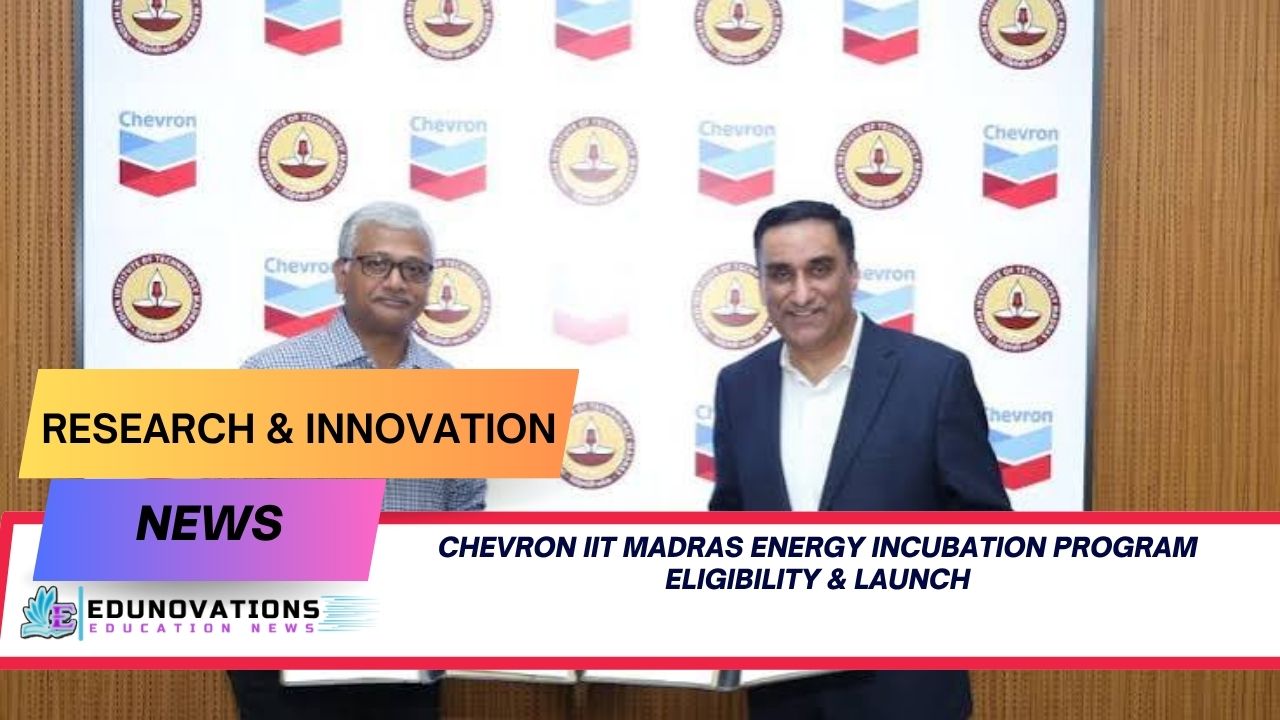
Explore the chevron iit madras energy incubation program eligibility guidelines, non-dilutive grant funding structures, and application steps for deep-tech energy startups.
The global energy transition requires rapid technological innovation, robust research capabilities, and scalable commercial pathways. Addressing these imperatives, Chevron ENGINE (Engineering and Innovation Excellence Center) has joined forces with the Indian Institute of Technology Madras (IIT Madras) to roll out a specialized energy technology incubation initiative.
This strategic corporate-academic partnership is designed to identify, fund, and nurture early-stage technology founders, academic researchers, and student innovators across India. By combining global corporate engineering prowess with India’s premier scientific ecosystem, the initiative bridges the historical gap between lab-scale proof-of-concept testing and commercial market readiness.
┌────────────────────────────────────────────────────────────────────────┐
│              CHEVRON ENGINE & IIT MADRAS ENERGY INCUBATION              │
└────────────────────────────────────────────────────────────────────────┘
                                    │
          ┌─────────────────────────┴─────────────────────────┐
          ▼                                                   ▼
┌──────────────────┐                                ┌──────────────────┐
│  PRE-INCUBATION  │                                │    INCUBATION    │
│  • 5 Teams       │                                │  • 3 Teams       │
│  • ₹25 Lakh Pool │                                │  • ₹45 Lakh Pool │
└──────────────────┘                                └──────────────────┘
          │                                                   │
          └─────────────────────────┬─────────────────────────┘
                                    ▼
┌────────────────────────────────────────────────────────────────────────┐
│       FOUR FOCUS AREAS: Tech-Led Energy | Energy Infrastructure         │
│               Carbon Utilization | Circular Economy                    │
└────────────────────────────────────────────────────────────────────────┘
Understanding chevron iit madras energy incubation program eligibility parameters is essential for founders aiming to secure non-dilutive grant capital, corporate mentorship, and laboratory facilities. The program provides up to ₹70 Lakhs in non-dilutive grant funding distributed across two distinct execution tracks, establishing a clear path for young deep-tech ventures.
Strategic Significance of the Corporate-Academic Partnership
Bridging academic research and real-world industrial application remains a central challenge in clean energy innovation. Developing hardware-centric energy solutions, novel battery chemistries, grid-scale management tools, and carbon conversion technologies demands substantial capital expenditure and validation cycles.
   [ Academic Research at IIT Madras ]
                 │
                 ▼  (Lab Validation & IP Creation)
   [ Chevron ENGINE Technical Mentorship ]
                 │
                 ▼  (Industrial Testing & Scalability)
   [ Structured Incubation & Pilot Deployment ]
                 │
                 ▼  (Market-Ready Energy Solutions)
Through this framework, Chevron ENGINE contributes engineering oversight, global domain expertise, employee volunteering, and industrial validation. Concurrently, IIT Madras provides access to world-class laboratory infrastructure, faculty guidance, and incubation support within its School of Innovation & Entrepreneurship.
Highlighting the long-term vision of the partnership, Dr. Akshay Sahni, Country Head of Chevron India, noted:
“By combining technical mentorship, entrepreneurial support, and applied industry perspective, we hope to help build future-ready talent and advance ideas that can contribute to affordable, reliable, and ever-cleaner energy.”
Students and academic teams preparing for corporate-backed incubation programs can strengthen their technical foundations by exploring structured academic resources, including comprehensive NCERT Courses and foundational subject materials.
Funding Structures and Two-Tier Incubation Tracks
The program features a two-tiered, non-dilutive funding framework tailored to match varying stages of technological maturity. By offering non-equity grant capital, the initiative protects founder equity while supplying the runway needed to achieve commercial milestones.
┌────────────────────────────────────────────────────────────────────────────────┐
│                    INCUBATION TRACK & GRANT ALLOCATION                         │
├──────────────────────┬─────────────┬─────────────────┬─────────────────────────┤
│ Program Tier         │ Target Teams│ Total Funding   │ Key Objective           │
├──────────────────────┼─────────────┼─────────────────┼─────────────────────────┤
│ Pre-Incubation Track │ 5 Teams     │ ₹25,00,000      │ Prototype & Business    │
│                      │             │ (₹5 Lakh/team)  │ Model Validation        │
├──────────────────────┼─────────────┼─────────────────┼─────────────────────────┤
│ Incubation Track     │ 3 Teams     │ ₹45,00,000      │ Scaled Prototyping,     │
│                      │             │ (₹15 Lakh/team) │ Field Pilots & Market   │
├──────────────────────┼─────────────┼─────────────────┼─────────────────────────┤
│ Total Grant Pool     │ 8 Teams     │ ₹70,00,000      │ Non-Dilutive Capital    │
└──────────────────────┴─────────────┴─────────────────┴─────────────────────────┘
The structured allocation ensures that early-stage teams receive rapid validation capital, while mature ventures obtain substantial capital to run pilot operations.
Core Focus Areas for Applicants
Applicants must align their core technological value proposition with one or more of four predefined thematic pillars:
                     ┌────────────────────────────────────────┐
                     │          CORE FOCUS PILLARS            │
                     └──────────────────┬─────────────────────┘
                                        │
     ┌──────────────────┬───────────────┴───────────────┬──────────────────┐
     ▼                  ▼                               ▼                  ▼
┌──────────┐      ┌───────────┐                   ┌───────────┐      ┌───────────┐
│ Tech-Led │      │ Energy    │                   │ Carbon    │      │ Circular  │
│ Energy   │      │ Infra     │                   │ Use       │      │ Economy   │
└──────────┘      └───────────┘                   └───────────┘      └───────────┘
- Technology-Led Energy Solutions: AI-driven grid automation, Internet of Things (IoT) monitoring systems, advanced battery energy storage systems (BESS), smart energy controls, and power electronics platforms.
- Energy Infrastructure Solutions: Distributed generation, microgrid architecture, decentralized power storage, and electrification frameworks designed to improve reliability in climate-vulnerable communities.
- Carbon Utilization Interventions: Novel biological, chemical, or catalytic systems that capture, sequester, or convert carbon dioxide ($CO_2$) and industrial waste streams into scalable fuels and materials.
- Circular Economy & Resource Efficiency: Resource recovery platforms, waste-to-value systems, industrial water treatment innovations, and repairable hardware architectures that reduce material consumption.
Founders looking to track clean technology frameworks and government energy policies can review daily updates on Current Affairs to align their proposals with national priorities.
Chevron IIT Madras Energy Incubation Program Eligibility
Understanding chevron iit madras energy incubation program eligibility is critical for early-stage applicant teams evaluating entry requirements. The program uses open criteria to engage talent across India’s innovation ecosystem.
General Applicant Criteria
- Applicant Profile: Open to individual inventors, multidisciplinary student teams, academic researchers, faculty members, and registered early-stage deep-tech startups across India.
- Geographic Scope: Teams can be based anywhere in India, provided their solution yields direct social, environmental, or economic benefits within the country.
- Technology Readiness: Accepts concepts ranging from early proof-of-concept (PoC) and functional lab prototypes up to early operational field pilots.
- Thematic Alignment: Projects must address at least one of the four core thematic pillars: tech-led solutions, infrastructure, carbon utilization, or circular economy.
Track-Specific Requirements
                       ┌────────────────────────────────┐
                       │    ELIGIBILITY EVALUATION      │
                       └───────────────┬────────────────┘
                                       │
                ┌──────────────────────┴──────────────────────┐
                ▼                                             ▼
     ┌─────────────────────┐                       ┌─────────────────────┐
     │   PRE-INCUBATION    │                       │     INCUBATION      │
     ├─────────────────────┤                       ├─────────────────────┤
     │ • Concept/Lab Level │                       │ • Field Pilot Ready │
     │ • Proof of Concept  │                       │ • Clear IP Strategy │
     │ • Non-Registered or │                       │ • Registered Entity │
     │   Early Startup     │                       │   or Formal Team    │
     └─────────────────────┘                       └─────────────────────┘
- Pre-Incubation Track: Targeted at early-stage teams validating core scientific concepts or bench-scale prototypes. Applicants need a clear hypothesis, initial experimental data, and a plan for laboratory validation.
- Incubation Track: Targeted at advanced ventures with validated prototypes seeking field testing, commercial business model validation, and supply chain scaling. Teams should demonstrate clear intellectual property (IP) potential and initial regulatory strategy.
Founders and engineering candidates preparing research dossiers can refer to curated educational resources via structured subject Notes to align technical documentation with academic standards.
How to Apply for Chevron Engine Tech Pioneer Grant
Applicants targeting non-dilutive funding should follow a structured approach to complete the application process.
┌────────────────────────────────────────────────────────────────────────┐
│                       STAGED SELECTION PROCESS                         │
└────────────────────────────────────────────────────────────────────────┘
                                    │
  [Step 1: Portal Registration] ──► Open profile & upload pitch deck
                                    │
  [Step 2: Technical Screening] ──► Joint review by IITM & Chevron panel
                                    │
  [Step 3: Pitch Presentation]  ──► Live evaluation of bench-scale prototype
                                    │
  [Step 4: Due Diligence]       ──► Verification of IP, claims & readiness
                                    │
  [Step 5: Tranche Onboarding]  ──► Milestone setting & grant release
Application Step-by-Step Breakdown
- Online Dossier Submission: Register through the official incubation portal and submit a pitch deck outlining the core technological innovation, target audience, and problem statement.
- Technical & Commercial Screening: Applications undergo preliminary reviews by a joint committee composed of IIT Madras faculty experts and Chevron ENGINE technical leaders.
- Pitches to Jury Panel: Shortlisted applicants present live technology demonstrations or pitch decks to evaluate technical feasibility and team capabilities.
- Milestone Baseline & Due Diligence: Selected finalists undergo background verification, establish technical benchmark milestones, and finalize intellectual property frameworks.
- Grant Onboarding & Mentorship Alignment: Onboarded ventures receive initial grant tranches and are paired with assigned Chevron ENGINE technical mentors.
To build analytical readiness for competitive screening tests and technical interviews, founders and students can practice self-assessment exercises using organized MCQ’s.
Five-Stage Incubation Framework
Once selected, ventures enter a five-stage incubation model designed to turn high-risk scientific research into commercial ventures:
┌────────────────────────────────────────────────────────────────────────┐
│                   FIVE-STAGE INCUBATION PATHWAY                        │
├─────────┬──────────────────────────┬───────────────────────────────────┤
│ Stage   │ Name                     │ Core Activities                   │
├─────────┼──────────────────────────┼───────────────────────────────────┤
│ Stage 1 │ Prototype Validation     │ Pressure-testing bench concepts,  │
│         │                          │ lab stress tests & validation│
├─────────┼──────────────────────────┼───────────────────────────────────┤
│ Stage 2 │ Business Model           │ Unit economics, customer discovery│
│         │ Validation               │ & regulatory compliance     │
├─────────┼──────────────────────────┼───────────────────────────────────┤
│ Stage 3 │ Structured Incubation    │ Workspace access, advanced labs & │
│         │                          │ IITM advisory networks          │
├─────────┼──────────────────────────┼───────────────────────────────────┤
│ Stage 4 │ Grant & Mentorship       │ Milestone grant disbursements &   │
│         │ Execution                │ Chevron engineering reviews │
├─────────┼──────────────────────────┼───────────────────────────────────┤
│ Stage 5 │ Market Readiness & Pilot │ Field pilot deployment, enterprise│
│         │                          │ procurement & investor pitches│
└─────────┴──────────────────────────┴───────────────────────────────────┘
This multi-stage structure ensures that teams address technical vulnerabilities before entering commercial environments.
Clean Energy Startup Incubation Programs in India 2026
The rollout of the Chevron ENGINE and IIT Madras initiative reflects broader growth across clean energy startup incubation programs in india 2026. India’s commitment to achieving net-zero carbon emissions by 2070 has spurred increased corporate and institutional backing for deep-tech incubators.
┌────────────────────────────────────────────────────────────────────────┐
│               CLEAN ENERGY INCUBATION LANDSCAPE 2026                   │
└────────────────────────────────────────────────────────────────────────┘
                                    │
         ┌──────────────────────────┼──────────────────────────┐
         ▼                          ▼                          ▼
┌──────────────────┐       ┌──────────────────┐       ┌──────────────────┐
│ Capital Models   │       │ Technical Infra  │       │ Scaling Networks │
│ • Non-dilutive   │       │ • Advanced labs  │       │ • Enterprise     │
│   grants         │       │ • Testing beds   │       │   procurement    │
│ • Corporate VCs  │       │ • Field pilots   │       │ • Global markets │
└──────────────────┘       └──────────────────┘       └──────────────────┘
Key trends defining the 2026 clean-tech ecosystem include:
- Rise of Non-Dilutive Corporate Grants: Corporate Social Responsibility (CSR) and R&D funds increasingly supply initial capital, allowing founders to scale without diluting equity.
- Industry-Academia Integration: Premier institutions like IITs, NITs, and IISc serve as operational bases, pairing research infrastructure with corporate market access.
- Focus on Decarbonization & Circularity: Investment focus has expanded beyond solar software into hard-tech domains, including carbon capture, green hydrogen, power electronics, and battery chemistry recycling.
Founders and academic institutions seeking to digitize educational infrastructure or deploy custom portal software can consult external integration partners like Mart Ind Infotech for specialized web architectures.
Real-World Prototyping Capabilities at IIT Madras
A major advantage for selected startups is direct access to specialized research centers and testing equipment across the IIT Madras campus.
┌────────────────────────────────────────────────────────────────────────┐
│                   IIT MADRAS LAB TESTING CAPABILITIES                  │
├───────────────────────────────┬────────────────────────────────────────┤
│ Laboratory / Facility         │ Specialized Hardware & Testing Tools   │
├───────────────────────────────┼────────────────────────────────────────┤
│ Chemical Engineering Labs     │ Microgrid testbeds, green hydrogen     │
│                               │ synthesis & power electronics setup│
├───────────────────────────────┼────────────────────────────────────────┤
│ Energy Storage Research Hubs  │ Redox flow battery evaluation, 24-cell │
│                               │ stack testing & safety testing   │
├───────────────────────────────┼────────────────────────────────────────┤
│ Micro-Mobility & EV Testing   │ Solar electric vehicle benchmarking,   │
│ Facilities                    │ motor drive testing & thermal setups│
└───────────────────────────────┴────────────────────────────────────────┘
Access to specialized hardware reduces development cycles and capital expenditure for early-stage teams.
Innovators seeking structured video walkthroughs on deep-tech concepts, power electronics, and energy systems can explore specialized educational content via online Videos.
Mentorship Ecosystem and Technical Expertise
Beyond capital, access to experienced engineering teams from Chevron ENGINE serves as a key accelerator for early-stage ventures.
                               ┌───────────────────────────┐
                               │ CHEVRON ENGINE MENTORSHIP │
                               └─────────────┬─────────────┘
                                             │
             ┌───────────────────────────────┼───────────────────────────────┐
             ▼                               ▼                               ▼
┌─────────────────────────┐     ┌─────────────────────────┐     ┌─────────────────────────┐
│   Engineering Design    │     │ Scale-Up & Safety       │     │ Commercialization       │
│ • System architecture   │     │ • Industrial safety     │     │ • Procurement pathways  │
│ • Hardware selection    │     │ • Regulatory compliance │     │ • Global deployment     │
└─────────────────────────┘     └─────────────────────────┘     └─────────────────────────┘
The advisory framework covers three main operational domains:
- Engineering Design Optimization: Guidance on component selection, system architecture, safety margins, and manufacturability.
- Industrial Safety & Standards: Training on safety protocols, regulatory compliance, and field testing standards required for industrial deployment.
- Commercialization & Market Pathways: Strategic advice on user segment identification, unit economics, supply chain partnerships, and corporate procurement.
Academic researchers seeking to align technical studies with competitive exam frameworks can access structured resources through official academic Syllabus repositories.
Chevron ENGINE IIT Madras Mentorship Focus Areas
Understanding chevron engine iit madras mentorship focus areas helps applicant teams tailor technical proposals to match advisor expertise.
┌────────────────────────────────────────────────────────────────────────┐
│                   DETAILED MENTORSHIP DOMAIN MATRIX                    │
├───────────────────────────────┬────────────────────────────────────────┤
│ Tech Domain                   │ Engineering & Mentorship Focus         │
├───────────────────────────────┼────────────────────────────────────────┤
│ Advanced Energy Storage       │ Vanadium redox flow systems, thermal   │
│                               │ management, safety & battery controls│
├───────────────────────────────┼────────────────────────────────────────┤
│ Circular Economy & Recycling  │ Industrial waste-to-value, material    │
│                               │ recovery & catalytic conversion  │
├───────────────────────────────┼────────────────────────────────────────┤
│ Digital Energy Platforms      │ AI predictive analytics, smart grid    │
│                               │ controllers & IoT monitoring    │
├───────────────────────────────┼────────────────────────────────────────┤
│ Carbon Conversion             │ Carbon capture systems, catalytic      │
│                               │ conversion & biological processing│
└───────────────────────────────┴────────────────────────────────────────┘
Aligning proposals with these focus areas ensures selected teams receive tailored technical guidance throughout the incubation lifecycle.
To download downloadable research articles, reference sheets, and academic materials, founders and students can access Free NCERT PDFs for off-line reference.
Strategic Roadmap for Applicants
To maximize evaluation scores during technical reviews, applicant teams should execute a phased preparation roadmap:
┌────────────────────────────────────────────────────────────────────────┐
│                     APPLICANT PREPARATION ROADMAP                      │
└────────────────────────────────────────────────────────────────────────┘
                                    │
  [Month 1: Technical Benchmarking] ──► Compile lab data & test metrics
                                    │
  [Month 2: Proposal Alignment]     ──► Map tech to target thematic focus
                                    │
  [Month 3: Submission & Pitch]     ──► Submit deck & present to jury
- Conduct Technical Benchmarking: Gather quantitative lab data, efficiency metrics, and material specs to establish clear performance indicators.
- Map Value Proposition to Focus Areas: Clearly define how your technology addresses one of the four program pillars.
- Refine IP and Regulatory Plans: Prepare documentation detailing existing patents, pending filings, or novel trade secrets, alongside relevant safety compliance steps.
- Detail Milestone Execution Plans: Outline a clear plan detailing how pre-incubation or incubation grant funding will advance your technology readiness level (TRL).
For visual summaries of complex technical concepts, researchers can utilize study tools like NCERT Mind Maps to streamline research presentations.
Toppers Use Mind Maps to score more than 95%
NCERT Class 11th Commerce Mind Maps
Add to cartOriginal price was: ₹999.00.₹199.00Current price is: ₹199.00.NCERT Class 12th Chemistry Mind Maps
Add to cartOriginal price was: ₹199.00.₹75.00Current price is: ₹75.00.NCERT Class 12th Commerce Mind Maps
Add to cartOriginal price was: ₹999.00.₹199.00Current price is: ₹199.00.NCERT Class 12th Science Mind Maps
Add to cartOriginal price was: ₹999.00.₹199.00Current price is: ₹199.00.NCERT Mind Maps For Class 10th
Add to cartOriginal price was: ₹999.00.₹199.00Current price is: ₹199.00.


Purchase Today
Frequently Asked Questions (FAQs)
1. What is the primary objective of the Chevron ENGINE and IIT Madras incubation program?
The program aims to identify, fund, and incubate early-stage energy technology startups, student teams, and academic researchers. It provides up to ₹70 Lakhs in non-dilutive grant capital, corporate mentorship, and laboratory access to scale solutions across key energy domains.
2. What are the key chevron iit madras energy incubation program eligibility requirements?
Eligibility is open to individual innovators, student teams, academic researchers, and registered startups based anywhere in India. Projects must focus on energy technology, energy infrastructure, carbon utilization, or circular economy solutions.
3. How to apply for chevron engine tech pioneer grant support?
Applicants apply by submitting a technical proposal and pitch deck through the official incubation portal. Submissions undergo joint screening by IIT Madras faculty and Chevron ENGINE experts, followed by live pitch presentations and due diligence reviews.
4. What are the key technological domains covered under clean energy startup incubation programs in india 2026?
Programs in 2026 prioritize deep-tech hardware and software innovations, including renewable energy integration, green hydrogen systems, carbon capture and utilization, advanced battery chemistries, circular economy solutions, and smart grid automation.
5. What specific iit madras energy technology prototype funding for startups is available?
The program offers ₹70 Lakhs in total non-dilutive grant support split across two tiers: ₹25 Lakhs for 5 Pre-Incubation teams (₹5 Lakhs each) and ₹45 Lakhs for 3 Incubation teams (₹15 Lakhs each).
6. What are the primary chevron engine iit madras mentorship focus areas?
Mentorship focus areas cover advanced energy storage, power electronics, microgrid architecture, carbon utilization technologies, industrial safety compliance, supply chain scaling, and commercialization strategies.
7. Is equity required in exchange for grant funding under this program?
No, funding provided under both the Pre-Incubation and Incubation tracks consists of non-dilutive grant capital, allowing teams to retain full equity ownership.
8. Can student teams without a registered company apply?
Yes, student innovators and academic research teams can apply under the Pre-Incubation track to validate bench-scale prototypes and build viable business models.
9. What testing facilities do incubatees access at IIT Madras?
Incubated ventures gain access to specialized facilities, including Chemical Engineering prototyping labs, battery testing setups, and power electronics testbeds within the IIT Madras ecosystem.
10. How long is the incubation cycle for selected energy ventures?
The structured incubation program operates across five execution stages, ranging from prototype validation to field pilots and market deployment over a multi-month acceleration timeline.