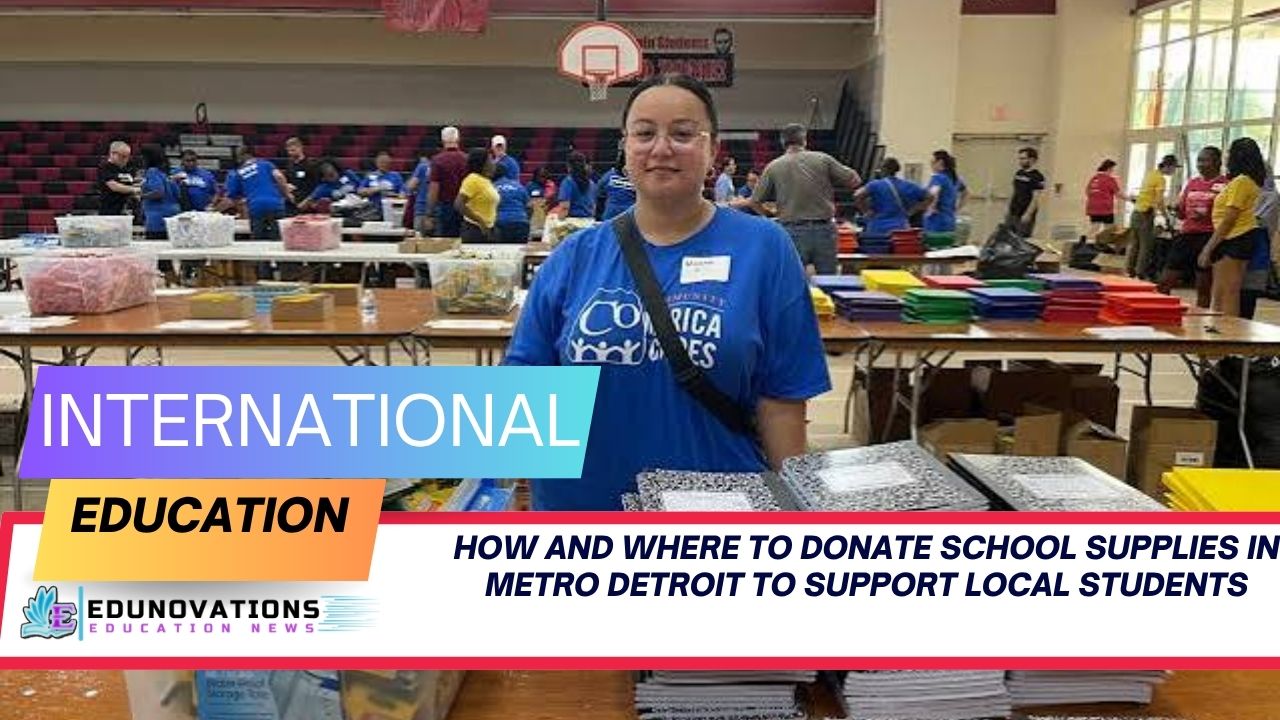
As the crisp autumn air begins to approach and summer vacation winds down, families across Michigan are preparing for a massive shift in their daily routines.
As the crisp autumn air begins to approach and summer vacation winds down, families across Michigan are preparing for a massive shift in their daily routines. While many children look forward to seeing old friends, picking out new outfits, and participating in extracurricular activities, the transition can be deeply stressful for households facing financial hardship. The mounting costs of notebooks, pencils, backpacks, and tech accessories often put a heavy burden on working-class parents. Fortunately, grassroots community initiatives are stepping up to bridge this gap. If you have been wondering where to donate school supplies metro detroit, a powerful local network is mobilizing community members to ensure that no student starts the academic year empty-handed.
The Rising Financial Burden of the Back-to-School Season
Every single year, the back-to-school season triggers significant financial anxiety for millions of families nationwide. According to recent data compiled by the National Retail Federation (NRF), American families with children in elementary through high school spend hundreds of dollars per child solely on supplies, clothing, and electronics. For low-income households, single-parent families, and those experiencing sudden job losses or housing instability, covering these basic educational tools can feel entirely out of reach.
When children lack fundamental necessities like pens, notebooks, and binders, their classroom experience changes dramatically. It can lead to feelings of social isolation, reduced academic engagement, and lower self-esteem. Educational equity starts long before a child walks through the school doors; it begins with equal access to the very tools required to learn. This exact reality is what inspired community-driven distribution models to expand rapidly throughout urban and suburban neighborhoods.
The Rise of Grassroots Mutual Aid and Community Closets
Traditional charitable drives often involve large, centralized donation hubs that require complex logistics, specific operating hours, and bureaucratic intake processes. While these traditional food banks and clothing closets play a vital role, neighborhood mutual aid projects have revolutionized how assistance is delivered.
Grassroots networks rely heavily on proximity, anonymity, and trust. By placing small, weather-resistant sharing boxes and permanent physical distribution cabinets directly in public corridors, neighborhoods are creating a continuous safety net. This decentralized approach means that a family in need can access essential items discretely without facing social stigma or jumping through administrative hoops.
Why Neighborhood Networks Succeed Where Traditional Drives Fall Short
- Accessibility: Stations are open 24 hours a day, 7 days a week, making it easy for busy working parents or guardians to grab essentials on their own schedule.
- Proximity: Placing boxes within walking distance of residential areas eliminates transportation barriers.
- Community Ownership: Local residents take pride in stocking and maintaining their neighborhood boxes, fostering a deep sense of shared responsibility.
Spotlight on Local Grassroots Action: The Little Free Closets Movement
In the heart of Southeast Michigan, grassroots networks like the Little Free Closets initiative have transformed how communities handle local charity. Spearheaded by dedicated community organizers—including organizers like Sarah Bedigian, who has frequently championed neighborhood-level mutual aid—these small outdoor cabinets act as micro-pantries for non-food items, ranging from hygiene products to critical educational tools.
As the new academic calendar draws near, organizers have shifted their primary focus toward gathering notebooks, folders, colored pencils, safety scissors, and backpacks. Community members who want to support this mission frequently search for terms like little free closets detroit school supplies drop off to figure out how they can contribute physical items directly to these neighborhood hubs.
Because these micro-pantries rely entirely on grassroots generosity, community engagement is the single determining factor in whether a cabinet stays stocked or sits empty. Local educators and community advocates note that even a small contribution—a pack of pencils or a box of crayons—can completely transform a child’s first week of school.
Expert Insights and Community Leadership
Educational experts and child welfare advocates consistently emphasize that community involvement is essential for bridging educational inequality gaps. Dr. James Carter, a renowned sociologist specializing in urban education reform, notes: “When communities take direct, localized responsibility for providing baseline school supplies, it builds an ecosystem of collective care that institutional systems alone simply cannot replicate. It tells every child that their neighborhood believes in their potential.”
Furthermore, local civic leaders often collaborate with neighborhood groups to raise awareness about supply drives. For structured educational support, professional development, and comprehensive learning frameworks, students and educators can explore resources available at NCERT Courses or access structured study tools through Notes. Keeping updated with civic milestones and local changes is also crucial, which you can track via Current Affairs.
To build robust educational ecosystems, schools and community centers often partner with specialized digital infrastructure providers. For organizations looking to upgrade their digital footprint, consulting agencies like Mart Ind Infotech offer specialized technical guidance for schools and non-profit institutions looking to streamline their outreach operations.
How You Can Help: Actionable Steps for Donors
If you are inspired by the resilience of Metro Detroit families and want to make a tangible difference this August, there are numerous practical ways to get involved beyond a simple monetary donation.
1. Organize a Neighborhood Supply Drive
Gather your coworkers, neighborhood association, or faith-based group to collect targeted items. Focus on high-demand essentials such as:
- Wide-ruled and college-ruled notebooks
- Durable backpacks (free of corporate logos or worn-out zippers)
- Scientific and basic calculators
- Dry erase markers and colored pencils
- Hand sanitizers and facial tissues for shared classroom use
2. Monitor and Stock Local Cabinets Safely
If you live near a neighborhood sharing box, check its contents weekly. Ensure that items are weather-wrapped in plastic bags if they are placed in outdoor wooden cabinets prone to morning condensation. If you are wondering how to donate to little free closets network detroit, the best approach is to reach out via local community Facebook groups or neighborhood association pages to find the exact coordinates of active micro-cabinets currently facing shortages.
3. Support Digital and Academic Equity Tools
Beyond physical notebooks and pencils, modern classrooms require digital literacy. Students looking for practice materials can utilize online testing hubs like MCQ’s or view instructional tutorials via Videos. Additionally, understanding curriculum expectations is vital; educators frequently consult the official Syllabus to align community drives with actual classroom demands. For supplementary reading materials and educational guides, parents and teachers can access Downloads of Free NCERT PDFs and visual learning aids through NCERT Mind Maps.
Overcoming Barriers for Families in Need
For families who are actively searching for physical support, navigating community assistance can sometimes feel overwhelming. Organizations working on the ground emphasize that finding free school supply distribution locations metro detroit requires checking localized community boards, public libraries, and recreation centers.
Many local churches, community centers, and neighborhood coalitions host single-day back-to-school bashes where backpacks packed with supplies are handed out directly to children. Combining these large-scale community events with the year-round availability of micro-sharing closets ensures that no family falls through the cracks due to timing or lack of transportation.
Toppers Use Mind Maps to score more than 95%
NCERT Class 11th Commerce Mind Maps
Add to cartOriginal price was: ₹999.00.₹199.00Current price is: ₹199.00.NCERT Class 12th Chemistry Mind Maps
Add to cartOriginal price was: ₹199.00.₹75.00Current price is: ₹75.00.NCERT Class 12th Commerce Mind Maps
Add to cartOriginal price was: ₹999.00.₹199.00Current price is: ₹199.00.NCERT Class 12th Science Mind Maps
Add to cartOriginal price was: ₹999.00.₹199.00Current price is: ₹199.00.NCERT Mind Maps For Class 10th
Add to cartOriginal price was: ₹999.00.₹199.00Current price is: ₹199.00.





Purchase Today
Frequently Asked Questions
1. Where can I find the nearest drop-off locations for school supplies in Metro Detroit?
You can find drop-off locations by checking local community center bulletin boards, public library announcements, or neighborhood mutual aid group pages online. Many local organizations map out active collection barrels across Wayne, Oakland, and Macomb counties.
2. What are the most urgently needed items during back-to-school drives?
The most frequently requested items include sturdy backpacks, wide-ruled notebooks, pocket folders, colored pencils, glue sticks, pink wedge erasers, and basic scientific calculators. Hygiene items like pocket-sized hand sanitizer and tissues are also in high demand.
3. How do Little Free Closets differ from traditional food banks?
Little Free Closets operate on a decentralized, mutual-aid model. They are small outdoor cabinets placed directly in neighborhoods that operate 24/7 on an honor system, allowing people to take what they need and leave what they can without filling out applications or adhering to strict operating hours.
4. Can I donate used or gently used school supplies?
While brand-new supplies are always preferred for hygiene and motivational reasons, gently used items—such as lightly used binders, clean colored pencil sets, and unblemished rulers—are often accepted by local micro-pantries as long as they are fully functional.
5. How can I help families who need assistance beyond physical school supplies?
You can support local families by contributing to community food pantries, volunteering as a peer tutor, or helping fund digital learning resources and connectivity programs that ensure students have reliable internet access at home.
6. Are there specific guidelines for packing backpacks for donation drives?
Yes, many drives ask that backpacks be filled with a balanced assortment of core supplies (notebooks, pencils, folders, and a pencil case) so that a single child receives a complete, ready-to-use kit rather than mismatched individual items.
7. How do neighborhood sharing boxes stay protected against weather damage?
Organizers typically build or coat these cabinets using weather-resistant wood, waterproof sealant, and tight seals. Donors are also encouraged to place paper items inside Ziploc bags to prevent moisture damage during humid or rainy late-summer days.
8. What is the best way to start a new Little Free Closet in my neighborhood?
Starting a neighborhood closet involves securing permission if placing it on public property, building a secure, weather-proof wooden cabinet, and partnering with local residents to establish a routine monitoring and stocking schedule.
9. How does community-led supply distribution impact student academic success?
Providing students with the necessary tools right at the start of the year reduces anxiety, boosts classroom confidence, ensures active participation in daily lessons, and removes the visible socioeconomic divides that can hinder a child’s social experience.
10. Where can teachers find supplemental educational resources for their classrooms?
Teachers can access a wide array of structured study notes, practice questions, and curriculum maps through specialized educational portals like Edunovations and its affiliated digital learning repositories.