Discovering the rich socio-cultural landscape of India has never been more accessible for young minds. Under the visionary aegis of the Government of India
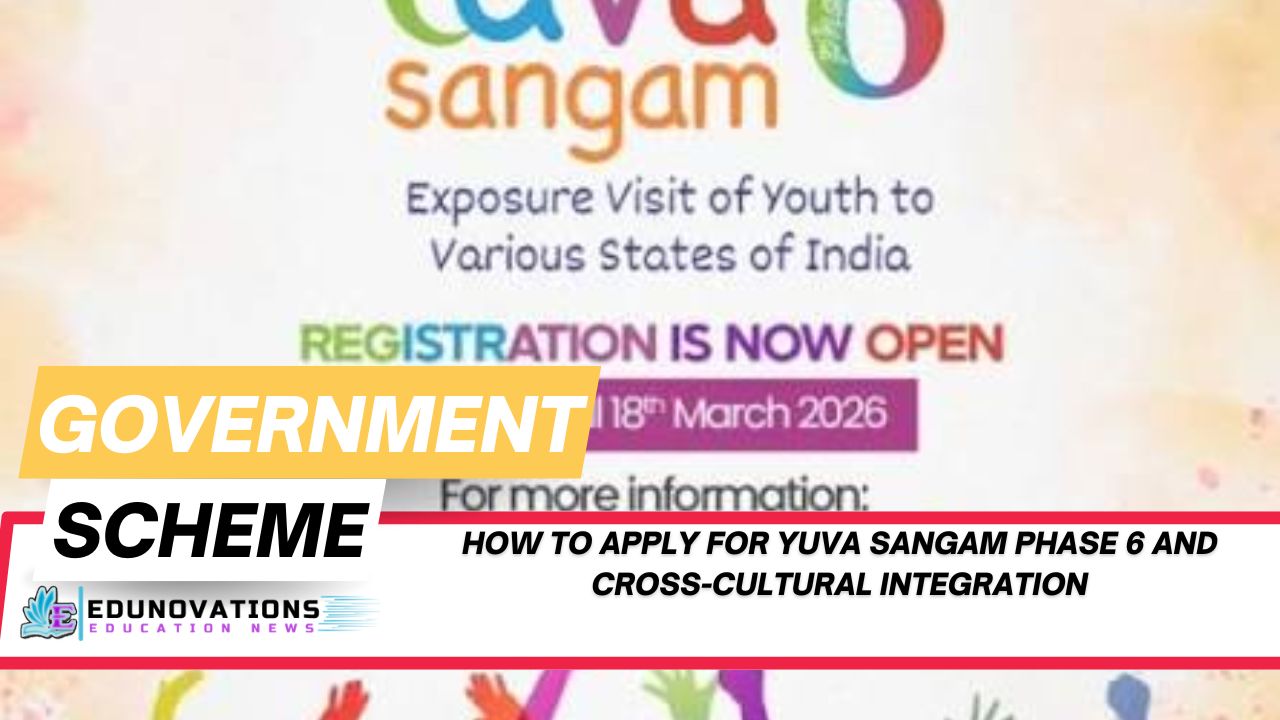
Discovering the rich socio-cultural landscape of India has never been more accessible for young minds. Under the visionary aegis of the Government of India, the Ek Bharat Shreshtha Bharat initiative continues to bridge geographical and cultural divides through immersive youth exchange programs. In a recent and spectacular display of national integration, the Indian Institute of Management Ahmedabad (IIMA) successfully facilitated an expansive youth exchange program under the ongoing sixth phase of this national flagship scheme.
The initiative explicitly targets young college students and off-campus youth, providing them with life-altering exposure to different states. As educational landscapes evolve, staying updated with competitive examinations and core academic requirements remains vital. Students preparing for civil services and state examinations can easily supplement their foundational learning by accessing comprehensive Notes online. Similarly, keeping up with these national developments is streamlined through dedicated Current Affairs trackers that analyze major governmental policies.
National Integration Through Experiential Learning
The recent cross-cultural exchange program executed by IIMA brought together vibrant youth cohorts from western and eastern India. Serving as the nodal institution for Gujarat, IIMA welcomed a carefully selected cohort of 41 energetic participants from various districts and elite educational institutions of Odisha. This group, consisting of 29 male and 12 female youth, arrived at the iconic Ahmedabad campus to begin a multi-day journey designed to unravel the historical, cultural, industrial, and technological advancements of Gujarat.
Simultaneously, the program executed a perfectly mirrored exchange. A week prior, IIMA flagged off a enthusiastic cohort of 39 participants from Gujarat, comprising 27 male and 12 female students, who journeyed across the country to Odisha. During their stay in the eastern coastal state, they were graciously hosted by the National Institute of Technology (NIT) Rourkela. This structured dual-cohort system underscores the core philosophy of the program: breaking down regional stereotypes by fostering deep, individual human connections.
The Immersive Itinerary: Exploring Identity and Innovation
The educational journey designed for the visiting youth goes far beyond ordinary tourism. It is built strictly around five core structural pillars: Paryatan (Tourism), Parampara (Traditions), Pragati (Development), Paraspar Sampark (People-to-people connect), and Prodyogiki (Technology).
During their stay in Gujarat, the youth from Odisha followed a meticulous schedule. Their exploration included visits to the historic Gandhi Ashram on the banks of the Sabarmati River and the intricate architectural marvel of the Adalaj Stepwell. To gain a deep understanding of modern infrastructure, they toured Gujarat International Finance Tec-City (GIFT City), the highly automated Amul chocolate and milk production factory in Anand, and the state-of-the-art facilities at Science City.
In addition to cultural sightseeing, the participants engaged in high-level intellectual interactions. The cohort visited the Honourable Governor of Gujarat, Shri Acharya Devvrat, at the Raj Bhavan. During this meeting, they discussed local governance models, sustainable agricultural practices, and natural farming methodologies. To complement their field observations, students looking to solidify their analytical abilities can practice complex analytical questions using structured MCQ’s designed for national-level general studies preparation.
Academic Leadership on Cross-Border Exchange
Welcoming the delegation at the IIMA campus, Professor Bharat Bhasker, the Director of IIM Ahmedabad, shared insightful perspectives on the profound impact of experiential learning. Addressing the gathered youth, Professor Bhasker remarked:
“In a country like India, which is not only one of the world’s oldest civilizations but also a birthplace of numerous dialects, food habits, and cultural practices, which change every few hundred kilometers, it would take a lifetime to explore the entire country. And yet, there is a common thread that binds us all together. The youth exchange acts as a bridge that fosters experiential and deeper understanding about our rich socio-cultural and developmental aspects among the youth of the country.”
Professor Bhasker further emphasized that the participants are not mere tourists but observant leaders. Armed with fresh perspectives, they are expected to identify unique regional strengths and apply that knowledge to catalyze future development across India. The administrative execution of this tour was overseen by Col. (Dr.) Jagdish C. Joshi (Retd.), Chief Administrative Officer and Nodal Officer at IIMA, alongside Brig. Dinesh Sharma (Retd.), Advisor – IFM, ensuring a secure and seamless learning environment.
Strategic Educational Linkages and Career Guidance
For students participating in these national programs, understanding India’s administrative and geographical framework forms a major part of general education. Schools looking to showcase such national achievements and establish their digital infrastructure can smoothly upgrade their web portals; if you need website for schools contact Mart Ind Infotech to build optimized, modern educational platforms.
Furthermore, integrating this experiential knowledge with systemic school education is essential for long-term academic excellence. Students can seamlessly align their real-world understanding of Indian geography and culture with the official curriculum by enrolling in standard NCERT Courses. For self-study and structured review, access to comprehensive curriculum materials via the Syllabus section ensures that students remain fully aligned with national learning standards.
To further simplify competitive exam preparation, candidates can access visual aids such as NCERT Mind Maps to retain complex historical timelines. Additionally, students can take advantage of the seamless Downloads of Free NCERT PDFs to maintain an offline repository of core textbooks, while interactive Videos offer engaging, multi-sensory explanations of intricate cultural and scientific phenomena.
Step-by-Step Registration Guide
Navigating the official registration process requires a clear understanding of the digital portal layout. Interested applicants must follow a systematic path to ensure their application is successfully reviewed by the nodal screening committees.
- Access the Official Portal: Navigate to the dedicated national portal of Ek Bharat Shreshtha Bharat and select the youth exchange registration tab.
- Basic Profile Creation: Input your full legal name, date of birth, permanent address, and active contact information.
- Academic Documentation: Upload valid scanned copies of your college identity card, recent semester mark sheets, or institutional bona fide certificates.
- Socio-Cultural Justification: Write a brief statement of purpose detailing how you plan to contribute to national integration and what elements of the host state’s traditions you wish to study.
- Final Verification and Submission: Review all entered data against your official government identification cards to avoid disqualification during the initial screening phase.
By meticulously following these operational steps, eligible candidates can significantly increase their chances of selection. The selection committees look favorably upon candidates who demonstrate a clear commitment to community service, local leadership, and cross-cultural learning.
Comprehensive Statistics on the Yuva Sangam Initiative
The scale of the youth exchange program highlights its critical role in modern Indian educational policy. Data collected over the past consecutive phases demonstrates a steady upward trend in rural youth participation and women’s representation in national exchange cohorts.
| Program Phase | Total National Participants | Average Female Representation (%) | Nodal Institutions Involved |
| Phase I & II | 2,400 | 38% | 45 |
| Phase III | 3,100 | 41% | 52 |
| Phase IV | 3,800 | 44% | 60 |
| Phase V | 4,300 | 46% | 68 |
| Phase VI (Current) | 5,000+ | 48% | 74 |
The statistical breakdown confirms that institutions like IIM Ahmedabad and NIT Rourkela are vital to expanding the program’s reach. By providing world-class infrastructure and academic mentoring, these premier institutes elevate a simple travel exchange into a rigorous, life-changing academic and cultural internship.
Toppers Use Mind Maps to score more than 95%
NCERT Class 11th Commerce Mind Maps
Add to cartOriginal price was: ₹999.00.₹199.00Current price is: ₹199.00.NCERT Class 12th Chemistry Mind Maps
Add to cartOriginal price was: ₹199.00.₹75.00Current price is: ₹75.00.NCERT Class 12th Commerce Mind Maps
Add to cartOriginal price was: ₹999.00.₹199.00Current price is: ₹199.00.NCERT Class 12th Science Mind Maps
Add to cartOriginal price was: ₹999.00.₹199.00Current price is: ₹199.00.NCERT Mind Maps For Class 10th
Add to cartOriginal price was: ₹999.00.₹199.00Current price is: ₹199.00.


Purchase Today
Frequently Asked Questions
Q1: Can an off-campus youth learn how to apply for yuva sangam phase 6 online?
Yes, the official online portal allows both regular college students and off-campus youth aged 18–30 to register. The step-by-step application instructions are clearly laid out on the portal to help candidates complete their profiles successfully.
Q2: What specific routes are detailed in the yuva sangam odisha to gujarat cohort tour itinerary?
The itinerary highlights key cultural and industrial landmarks. Participants travel from Odisha to IIM Ahmedabad, exploring the Sabarmati Gandhi Ashram, the Adalaj Stepwell, Science City, GIFT City, and the automated Amul manufacturing plant in Anand.
Q3: When and where can applicants access the official yuva sangam phase vi selection list?
The selection lists are published dynamically on the official Ek Bharat Shreshtha Bharat portal. They are categorized by state and processing nodal institution once the regional screening committees finish evaluating the statements of purpose.
Q4: What is the official ek bharat shreshtha bharat yuva sangam age limit for applicants?
The program is strictly designed for youth between the ages of 18 and 30. Applicants must meet this age criterion on the day they submit their application to be considered by the selection committee.
Q5: What are the primary benefits of participating in yuva sangam program for college students?
Participants gain fully funded, high-exposure travel experiences, interact with top-tier academic faculty, meet state governors and industry leaders, receive an official certificate from the Government of India, and build lifelong cross-cultural networks.
Q6: Do I need to pay any fees when discovering how to apply for yuva sangam phase 6?
No, the application process is completely free. The entire cost of travel, accommodation, food, and site entry during the tour is fully funded by the Ministry of Education.
Q7: What documents are required to confirm eligibility regarding the ek bharat shreshtha bharat yuva sangam age limit?
Applicants must upload a valid government-issued age proof, such as an Aadhaar Card, Passport, Voter ID, or Class 10 Matriculation Certificate, to verify their birthdate during the registration process.
Q8: How long does the journey last according to the yuva sangam odisha to gujarat cohort tour itinerary?
The immersive tour lasts for six full days, excluding travel time between the home state and the host state. Every day is divided into distinct cultural, industrial, and community interaction sessions.
Q9: What criteria are used if my name is not appearing on the yuva sangam phase vi selection list?
Selections are based on academic performance, active participation in extra-curricular activities (like NSS or NCC), and the depth of the applicant’s statement of purpose. If you are not selected, it is usually because other candidates demonstrated a stronger alignment with the program’s core pillars.
Q10: Are there any specific academic benefits of participating in yuva sangam program for competitive exam aspirants?
Yes, firsthand exposure to India’s diverse traditions, governance models, and major industrial hubs provides excellent contextual knowledge. This practical insight helps students write richer, more nuanced answers in civil services and general studies examinations.