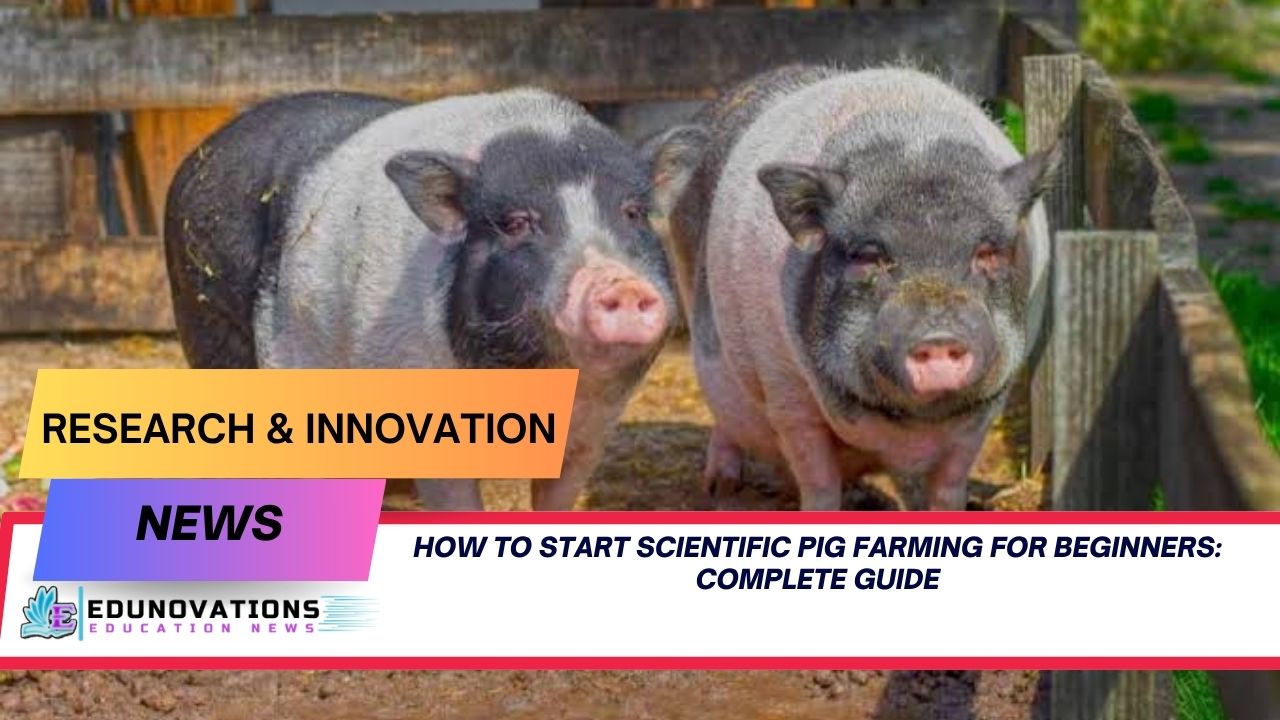
Discover how to start scientific pig farming for beginners. Learn expert housing, feeding, biosecurity, and breeding strategies to maximize profits.
In recent years, modern animal husbandry has undergone a massive transformation, shifting away from traditional backyard setups toward structured, science-backed enterprises. Among various livestock sectors, swine production has emerged as one of the most lucrative and fastest-returning ventures for rural and semi-urban entrepreneurs. However, success in this domain is rarely accidental. It requires meticulous planning, strict adherence to disease control, and a thorough understanding of animal biology.
To bridge the gap between traditional practices and modern profitability, leading agricultural institutions have ramped up specialized training initiatives. A prime example is the intensive capacity-building framework established by the ICAR-Indian Veterinary Research Institute (IVRI), Bareilly, in collaboration with regional Krishi Vigyan Kendras (KVKs). These programs demonstrate that when farmers adopt modern management models, rural economies thrive, mortality rates plummet, and income multiples significantly.
For aspiring entrepreneurs and smallholder farmers stepping into this sector, learning how to start scientific pig farming for beginners is the ultimate first step toward sustainable commercial success. This comprehensive guide breaks down the essential pillars of modern swine production, drawing insights from institutional training frameworks, veterinary science, and industry best practices.
Understanding the Economics and Potential of Modern Swine Production
Pork is one of the most widely consumed meats globally, and the demand for high-quality, disease-free pork continues to outstrip supply in many regions. Unlike other large ruminants, pigs have a high feed conversion efficiency, rapid growth rate, and high prolificacy—meaning a single sow can farrow multiple times a year and produce large litters.
Despite these innate advantages, many small-scale farmers fail to turn a profit due to high piglet mortality, poor feed management, and disease outbreaks. Institutional training programs, such as those organized by ICAR-IVRI in regions like Phek, Nagaland, focus heavily on shifting farmers’ mindsets from subsistence raising to commercial entrepreneurship.
Experts emphasize that modern swine husbandry is an absolute science. From the moment an animal is conceived to the day it reaches market weight, every single variable—temperature, nutrition, vaccination timing, and housing ventilation—directly impacts the profit margin.
1. Choosing the Right Foundation: Breed Selection and Stocking
The cornerstone of any profitable swine enterprise is selecting the correct genetic stock. Attempting to run a commercial farm with uncertified, unmanaged local breeds often results in slow growth rates and poor carcass quality.
When planning your livestock setup, you must choose between indigenous breeds, exotic breeds (such as Large White Yorkshire, Landrace, and Hampshire), or well-adapted crossbreeds. Crossbreeding typically offers the best of both worlds: the resilience and disease resistance of local lines combined with the rapid growth and superior meat yield of exotic strains.
Key Factors in Breed Selection
- Growth Rate: Look for breeds that reach market weight (usually 90–100 kg) within 6 to 8 months.
- Mothering Ability: Sows with high milk production and calm temperaments reduce piglet crushing and starvation.
- Market Demand: Understand whether your local market prefers lean meat or fatty cuts, and select your breeding stock accordingly.
Students and educators looking to deepen their foundational knowledge of agricultural sciences and animal physiology can explore structured learning materials through NCERT Courses and download free study modules via NCERT PDFs. Furthermore, visual learners can utilize NCERT Mind Maps to map out biological systems and livestock management frameworks efficiently.
2. Infrastructure and Environmental Control
One of the most critical aspects taught in institutional training programs is scientific housing and feeding management for pigs. Poor housing design leads to dampness, accumulation of toxic ammonia gases, and extreme thermal stress, all of which compromise the immune system of the animals.
Designing an Optimal Pigsty
A well-constructed farm layout must prioritize ventilation, drainage, and ease of cleaning.
- Flooring: Concrete floors with a gentle slope (about 1:25) are essential for easy washing and waste runoff. However, resting areas should feature wooden planks or rubber mats to prevent joint injuries and chilling.
- Space Requirements: Overcrowding leads to tail-biting, stress, and rapid disease transmission. A finishing pig requires approximately 10 to 12 square feet of floor space, while a pregnant sow requires significantly more room.
- Thermal Regulation: Pigs lack functional sweat glands, making them highly susceptible to heat stress above 30°C. Adequate roof height, insulation, and cross-ventilation or cooling systems (misters/sprinklers) during summer months are non-negotiable.
For institutions, training centers, and agricultural schools looking to digitize their operations or build robust e-learning portals, partnering with a professional technology provider like Mart Ind Infotech ensures seamless software infrastructure and web development support.
3. Nutrition: The Core Driver of Profitability
Feed accounts for roughly 60% to 70% of the total operational cost in pig farming. Therefore, optimizing feeding strategies without compromising nutritional integrity is vital.
Pigs are monogastric animals (single-chambered stomachs), meaning they cannot digest high levels of crude fiber efficiently like ruminants. Their diet must be carefully balanced with proteins, carbohydrates, vitamins, and minerals.
Tailored Feeding Stages
- Creep Feed (Piglets): High-protein, highly digestible feed introduced during the first few weeks of life to stimulate rumen/gut development and ease weaning stress.
- Grower Feed: Formulated for pigs weighing between 20 kg and 50 kg, focusing on muscle development and skeletal growth.
- Finisher Feed: High-energy diet designed to maximize fat and meat deposition before slaughter.
- Breeder Feed: Specialized rations for pregnant and lactating sows to ensure fetal development and robust milk production.
To stay updated on national agricultural policies, subsidies, and livestock schemes, candidates can regularly read Current Affairs and practice targeted MCQ’s to test their knowledge retention.
4. Disease Prevention, Hygiene, and Health Protocols
Biosecurity is the first line of defense on any modern farm. Disease outbreaks—such as Classical Swine Fever (CSF) or African Swine Fever (ASF)—can wipe out an entire herd within days, resulting in catastrophic financial losses.
Maintaining a strict pig farm biosecurity and vaccination schedule guide is mandatory for long-term sustainability. Dr. Ajay Kumar Yadav, a prominent scientist from the Division of Microbiology at ICAR-IVRI, frequently emphasizes that farm hygiene and prophylactic care are far cheaper than disease treatment.
Essential Biosecurity Measures
- Perimeter Fencing: Restrict entry of stray animals, rodents, and unauthorized visitors who might carry pathogens on their boots or equipment.
- Footbaths and Disinfection: Install functional disinfectant dips at the entrance of every shed.
- Quarantine Protocols: Isolate newly purchased stock for at least 21 to 30 days before integrating them into the main herd.
- Timely Vaccination: Follow a strict immunization calendar against major viral and bacterial threats, particularly Classical Swine Fever and Foot-and-Mouth Disease (where applicable).
For comprehensive revision and exam preparation in veterinary or agricultural competitive exams, aspirants can access curated Notes and explanatory Videos.
5. Maximizing Output: Breeding and Piglet Care
The profitability of a commercial enterprise is directly tied to reproductive efficiency. Selecting the best pig breeds for profitable commercial pig farming is only half the battle; managing the breeding cycle determines your production volume.
Best Practices in Reproduction
- Age of First Mating: Gilts should generally be bred when they reach 8 to 9 months of age and weigh around 110–120 kg, provided they have experienced at least their second estrus cycle.
- Farrowing Management: During farrowing, the sow must be kept in a clean, sanitized farrowing crate or pen to prevent her from accidentally crushing newborn piglets.
- Colostrum Intake: Ensuring that every newborn piglet receives maternal colostrum within the first 6 hours of life is vital for passive immunity acquisition.
6. Mitigating Mortality: The Art of Piglet Management
Pre-weaning mortality is one of the biggest profit-killers in swine production. Factors such as chilling, crushing by the sow, anemia, and neonatal scours can wipe out 20% to 30% of a litter if preventative measures are absent.
Implementing rigorous scientific piglet management to reduce mortality rate involves several critical interventions:
- Temperature Control: Newborn piglets require ambient temperatures around 30°C to 35°C. Using heat lamps or brooders in a designated corner of the farrowing pen prevents huddling and chilling.
- Iron Supplementation: Piglets born in confinement are prone to nutritional anemia because concrete flooring deprives them of rooting in soil. Administering an injectable iron supplement around 3 to 4 days of age resolves this issue.
- Navel Care: Disinfecting the umbilical cord immediately after birth with iodine tincture prevents secondary bacterial infections and joint-ill.
To evaluate detailed academic structures and credit requirements for agricultural and veterinary streams, check out the comprehensive Syllabus portal.
Expert Insights and Industry Perspectives
Dr. Sanjeev Kumar Singh, Senior Scientist and Head at ICAR-KVK Phek, notes that empowering rural communities through structured livestock training transforms local economies. When farmers move from unscientific rearing to organized production units, household incomes rise significantly, creating sustainable livelihoods across hilly and remote terrains.
Similarly, Dr. M. H. Khan, Principal Scientist and Head of Animal Reproduction at ICAR-IVRI, stresses that value addition and strategic marketing are just as important as production. Farmers must learn to analyze market trends, connect with institutional buyers, and process pork products hygienically to command premium pricing.
Conclusion
Starting a swine enterprise requires more than just acquiring animals; it demands a disciplined commitment to modern science, animal welfare, and operational efficiency. By mastering the fundamentals of breed selection, environmental control, nutrition, biosecurity, and piglet care, new entrepreneurs can overcome traditional hurdles and build highly resilient, profitable businesses. Whether you are managing a small backyard unit or expanding into a commercial farm, adhering to institutional guidelines and continuous learning remains your greatest asset.
Toppers Use Mind Maps to score more than 95%
NCERT Class 11th Commerce Mind Maps
Add to cartOriginal price was: ₹999.00.₹199.00Current price is: ₹199.00.NCERT Class 12th Chemistry Mind Maps
Add to cartOriginal price was: ₹199.00.₹75.00Current price is: ₹75.00.NCERT Class 12th Commerce Mind Maps
Add to cartOriginal price was: ₹999.00.₹199.00Current price is: ₹199.00.NCERT Class 12th Science Mind Maps
Add to cartOriginal price was: ₹999.00.₹199.00Current price is: ₹199.00.NCERT Mind Maps For Class 10th
Add to cartOriginal price was: ₹999.00.₹199.00Current price is: ₹199.00.





Purchase Today
Frequently Asked Questions
1. How to start scientific pig farming for beginners with a low budget?
Beginners can start small by acquiring 2 to 3 healthy crossbred piglets, constructing low-cost housing using locally available sustainable materials, and utilizing kitchen wastes supplemented with balanced commercial feeds to reduce initial capital expenditure.
2. What are the key elements of scientific housing and feeding management for pigs?
Key elements include maintaining dry, well-ventilated concrete-sloped flooring, ensuring adequate floor space per animal, protecting pigs from extreme heat stress, and feeding age-specific balanced rations containing appropriate proteins, vitamins, and minerals.
3. Why is a pig farm biosecurity and vaccination schedule guide important?
A strict biosecurity and vaccination schedule prevents catastrophic disease outbreaks like Classical Swine Fever and African Swine Fever, minimizing herd mortality, reducing veterinary treatment costs, and ensuring safe farm operations.
4. Which are the best pig breeds for profitable commercial pig farming?
Exotic breeds like Large White Yorkshire, Landrace, and Hampshire, along with their well-managed local crossbreeds, are ideal due to their superior growth rates, high prolificacy, and excellent carcass quality.
5. How does scientific piglet management to reduce mortality rate work?
It involves maintaining warm brooding temperatures (30°C–35°C), ensuring immediate colostrum intake, administering iron injections to prevent anemia, and using farrowing crates to prevent the sow from crushing newborns.
6. What is the ideal market age and weight for finishing pigs?
Commercial finishing pigs are typically ready for market when they reach 6 to 8 months of age, attaining an optimal live body weight of approximately 90 kg to 100 kg.
7. How can farmers minimize feed costs without affecting pig growth?
Farmers can reduce feed costs by formulating balanced rations using local agro-industrial byproducts (such as rice bran and broken grains) while ensuring essential amino acid and protein requirements are met through supplements.
8. What is the gestation period of a breeding sow?
The average gestation period for a breeding sow is approximately 3 months, 3 weeks, and 3 days, which totals roughly 114 days.
9. Why is colostrum critical for newborn piglets?
Colostrum provides newborn piglets with essential antibodies (passive immunity), energy, and laxative properties necessary to clear their digestive tracts and protect them against early infections.
10. How can smallholder farmers access expert training on pig production?
Farmers can connect with local agricultural research institutions, State Veterinary Departments, and regional Krishi Vigyan Kendras (KVKs) to enroll in capacity-building and skill-development workshops.