The landscape of agricultural research and higher education in Eastern India is undergoing a monumental transformation. In a landmark development for the agricultural sector
The landscape of agricultural research and higher education in Eastern India is undergoing a monumental transformation. In a landmark development for the agricultural sector, the official reports highlight that the ICAR IARI Jharkhand new research building foundation stone 2026 has been formally laid, marking a pivotal leap forward for institutional growth and regional farming advancement. This major administrative and developmental milestone reflects India’s ongoing commitment to modernizing agricultural infrastructure, empowering rural communities, and bridging the gap between cutting-edge laboratory science and grassroots farming applications.
Educational aspirants, researchers, and agriculture students tracking national academic developments can explore comprehensive study materials, structured curricula, and exam guides through specialized portals such as NCERT Courses. Staying updated with such structural evolution requires robust foundational knowledge, making resources like daily Current Affairs indispensable for competitive exam candidates.
A Visionary Leadership Visit to ICAR-IARI Jharkhand
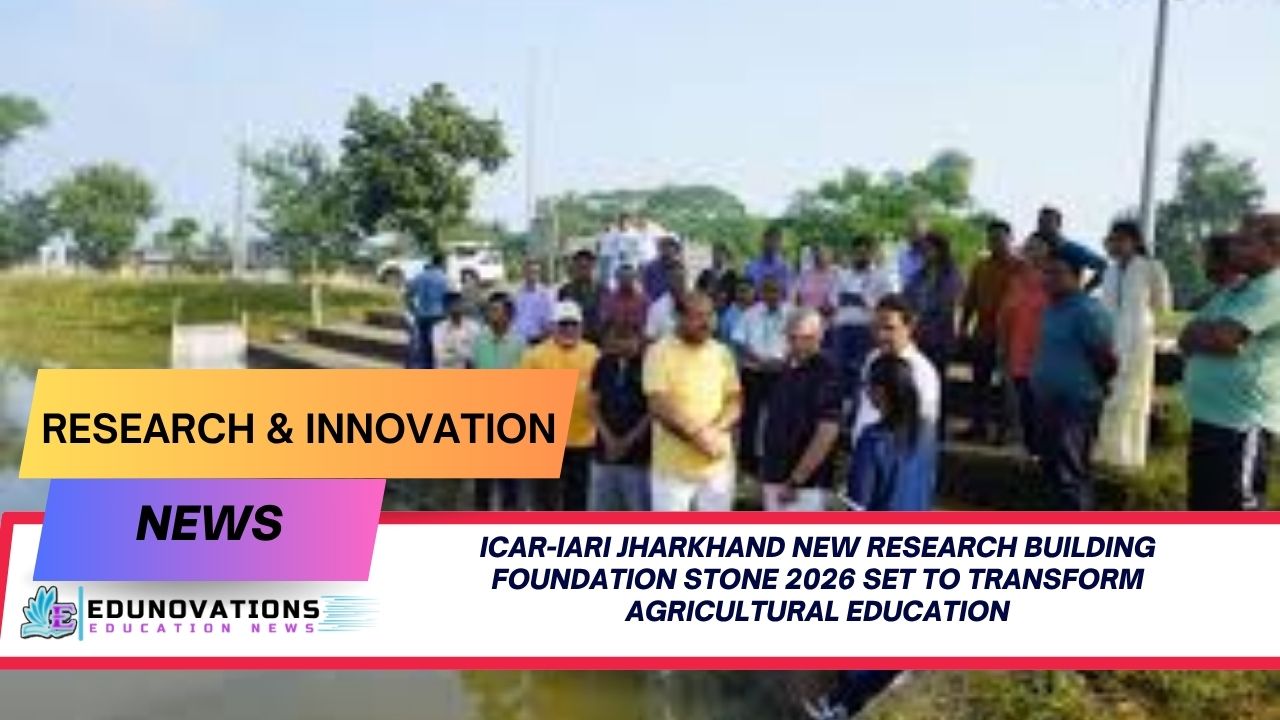
The impetus for this massive infrastructure upgrade stems from a high-level official visit conducted by top agricultural administrators. The Hon’ble Secretary, DARE and Director General, ICAR, Dr. M.L. Jat, undertook a comprehensive two-day visit to the ICAR-IARI campus in Jharkhand alongside Dr. D.K. Yadav, Deputy Director General (Crop Science).
During the visit, campus interactions emphasized that higher education institutions must function as active incubators of change rather than isolated academic centers. Prime attention was dedicated to evaluating current academic priorities, student welfare, and hostel infrastructure. Students seeking structured revision materials can utilize comprehensive academic Notes to align their preparation with contemporary national educational standards.
+-------------------------------------------------------------------+
|               Key Infrastructure Investments (Jharkhand)          |
+-------------------------+-----------------------------------------+
| Project Component       | Estimated Financial Allocation          |
+-------------------------+-----------------------------------------+
| Research School Building| Rs. 21.0 Crores                         |
| Modern Auditorium       | Rs. 24.7 Crores                         |
| Farm Development Works  | Rs. 13.5 Crores                         |
| Total Project Scale     | Rs. 59.2 Crores                         |
+-------------------------+-----------------------------------------+
Detailed Breakdown of the Rs. 59.2 Crore Infrastructure Project
The foundational ceremony witnessed the official commencement of two major architectural and academic marvels. With an estimated construction cost of Rs. 21 crores, the new Research School Building is designed to host state-of-the-art laboratories, specialized seminar halls, and collaborative workspaces for post-graduate and doctoral scholars. Concurrently, the new multi-purpose Auditorium, valued at Rs. 24.7 crores, will serve as the cultural and academic epicentre for hosting national conferences, symposia, and student interactions.
Furthermore, an allocation of Rs. 13.5 crores has been earmarked exclusively for comprehensive farm development initiatives. These investments aim to modernize field operations, automate irrigation networks, and establish robust trial plots for advanced crop science research.
Students and academic researchers preparing for competitive examinations can test their conceptual clarity by solving targeted practice questions available via MCQ’s, ensuring thorough preparation across complex scientific topics.
Strategic Agricultural Priorities and Sustainable Growth
The leadership dialogue at the campus highlighted several critical research priorities aimed at transforming Eastern India into a self-sustainable model farming zone. Key focus areas identified during the institutional review include:
- Acid Soil Management: Formulating targeted soil amendment strategies to neutralize highly acidic tracts prevalent in the region, thereby restoring long-term agronomic productivity.
- Tribal Livelihood Enhancement: Introducing climate-resilient crop varieties and low-cost farm mechanization tools tailored specifically for smallholder and tribal farmers.
- Nano-Based Fertilizers: Conducting extensive field trials on nutrient-efficient nano-fertilizers to minimize chemical runoffs and maximize crop yield per unit area.
- Water Resource Conservation: Implementing landscape-based rainwater harvesting systems, lift irrigation networks, and solar-powered drip irrigation units.
For visual learners and students seeking conceptual clarity on institutional frameworks, interactive educational modules and explanatory Videos provide an engaging alternative. Furthermore, candidates can review official academic guidelines and structural breakdowns via the detailed institutional Syllabus.
Expert Insights and Quantitative Impact on National Agriculture
Agricultural economists and academic experts have widely lauded the expansion of specialized research nodes outside traditional metropolitan hubs. According to recent agricultural census data, decentralized institutional research increases regional adoption rates of certified seeds by up to 34% within three years of launch.
“Investing in regional research infrastructure such as the newly initiated school building and auditorium at IARI-Jharkhand bridges the historical deficit in Eastern Indian agricultural extension. It converts remote campuses into vibrant hubs of technology transfer.” — Dr. Rameshwar Prasad, Senior Agronomist and Agricultural Policy Analyst
Institutions and organizations seeking to build robust digital platforms, learning management systems, or institutional websites to disseminate such crucial educational and research updates can collaborate with professional technology partners like Mart India Infotech for reliable web solutions.
Strengthening Student Engagement and Self-Sustainable Model Farms
Beyond brick-and-mortar investments, the administration placed heavy emphasis on transforming the campus into a self-sustainable ecosystem. Key operational milestones achieved during the visit included:
- Carp Fingerling Release: Releasing high-yield carp fingerlings into the Bahadur Dam located within the research farm to promote integrated aquaculture.
- Plantation Drives: Spearheading extensive campus greening initiatives involving native forestry and fruit-bearing tree saplings.
- Fodder Production Innovations: Introducing advanced forage processing technologies to solve local dairy feed deficits.
Students looking for deep-dive reference materials can explore Downloads of Free NCERT PDFs to strengthen their foundational knowledge base. Additionally, visual learners can utilize structured NCERT Mind Maps to simplify complex interdisciplinary scientific concepts.
Toppers Use Mind Maps to score more than 95%
NCERT Class 11th Commerce Mind Maps
Add to cartOriginal price was: ₹999.00.₹199.00Current price is: ₹199.00.NCERT Class 12th Chemistry Mind Maps
Add to cartOriginal price was: ₹199.00.₹75.00Current price is: ₹75.00.NCERT Class 12th Commerce Mind Maps
Add to cartOriginal price was: ₹999.00.₹199.00Current price is: ₹199.00.NCERT Class 12th Science Mind Maps
Add to cartOriginal price was: ₹999.00.₹199.00Current price is: ₹199.00.NCERT Mind Maps For Class 10th
Add to cartOriginal price was: ₹999.00.₹199.00Current price is: ₹199.00.





Purchase Today
Frequently Asked Questions (FAQs)
1. What is the significance of the ICAR IARI Jharkhand new research building foundation stone 2026? The foundation stone marks the formal establishment of a Rs. 21 crore Research School Building and a Rs. 24.7 crore Auditorium at ICAR-IARI Jharkhand, significantly boosting higher agricultural education and research infrastructure in Eastern India.
2. Who laid the foundation stone for the research school building at IARI-Jharkhand? The foundation stone was laid by the Hon’ble Secretary, DARE and Director General, ICAR, Dr. M.L. Jat, alongside other senior agricultural scientists and officials.
3. What is the total financial outlay for the newly announced infrastructure projects at IARI-Jharkhand? The projects comprise a Rs. 21 crore Research School Building, a Rs. 24.7 crore Auditorium, and Rs. 13.5 crores dedicated to farm development, totaling over Rs. 59 crores.
4. How does the Dr M.L. Jat ICAR DG visit IARI Jharkhand updates impact local farmers? The visit focused on distributing agricultural inputs, launching solar-powered irrigation trials, promoting nano-fertilizers, and advancing tribal livelihood enhancement programs.
5. What are the key research priorities highlighted for ICAR-IARI Jharkhand? Major priorities include acid soil management, landscape-based water conservation, long-term soil fertility studies, innovative fodder production, and efficient crop residue recycling.
6. How does this development help agricultural students and researchers? It provides state-of-the-art laboratory spaces, enhanced hostel and academic amenities, and collaborative interdisciplinary networks connecting agriculture, livestock, and fisheries.
7. Where can students find supplementary study resources for agricultural and general competitive exams? Students can access structured learning materials, practice modules, and academic guidelines through dedicated educational portals like Edunovations.
8. What role do digital technology partners play in disseminating agricultural news? Professional web development agencies like Mart India Infotech assist educational institutions and news portals in publishing timely academic updates reliably.
9. Are there initiatives for sustainable farming discussed during the leadership visit? Yes, the emphasis was laid on developing the campus as a self-sustainable model farm featuring rainwater harvesting, lift irrigation, and organic residue recycling.
10. How can educators stay informed about ongoing institutional changes in India’s agricultural sector? Educators and aspirants can track official announcements, policy shifts, and daily educational news through specialized current affairs and institutional curriculum trackers.