The landscape of higher education in India is undergoing a transformative shift, moving firmly toward multi-disciplinary learning, critical analysis
The landscape of higher education in India is undergoing a transformative shift, moving firmly toward multi-disciplinary learning, critical analysis, and flexible academic pathways. At the forefront of this educational evolution is the prestigious National Law School of India University (NLSIU), Bengaluru, which has expanded its intellectual horizons beyond legal education to introduce a flagship liberal arts initiative. Recently, academic leaders and institutional heads organized an exclusive live information session titled “Inside the NLS BA (Hons): The Programme and Pathways” to guide students, parents, and educators through the intricacies of the curriculum, subject combinations, and institutional objectives.
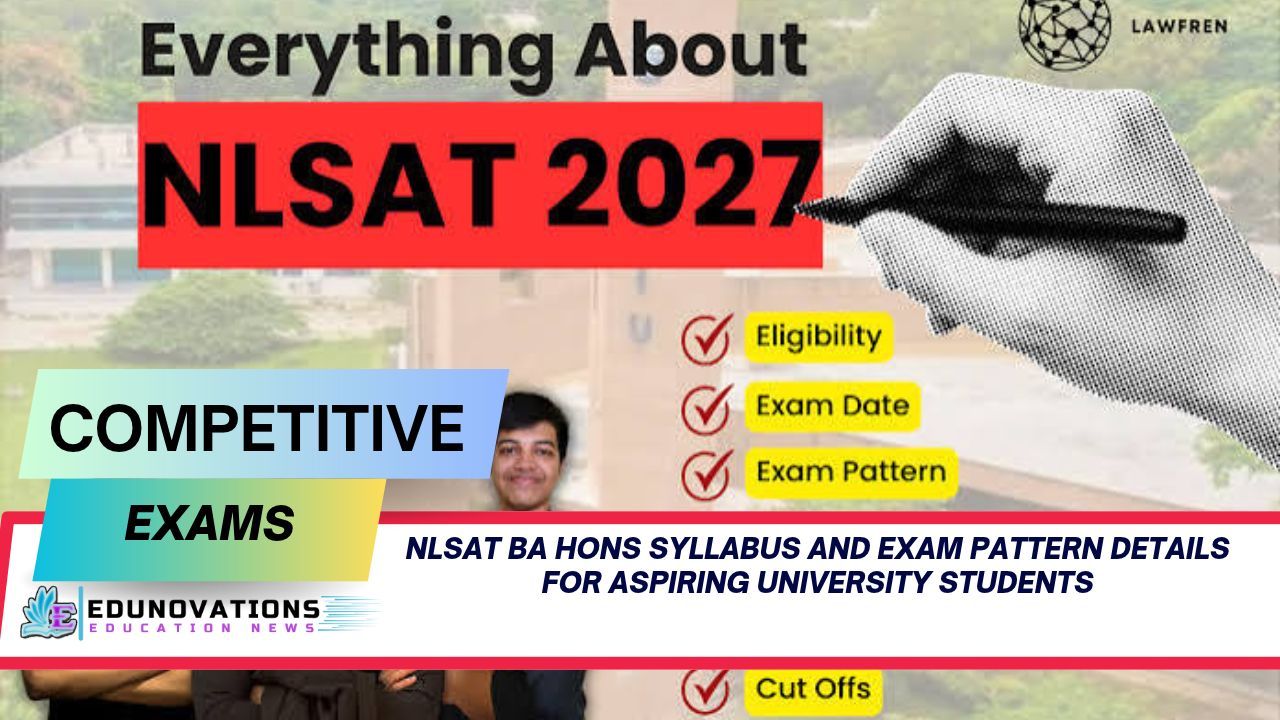
For young scholars aiming to transition from secondary school to a world-class university environment, mastering the nlsat ba hons syllabus and exam pattern details is the definitive first step toward securing admission. This comprehensive guide breaks down the curriculum, explores the core academic tracks, offers strategic preparation insights, and integrates essential academic resources to help you excel.
The Evolution of Liberal Arts Education at NLSIU
For over three decades, the National Law School of India University has stood as an unmatched bastion of legal education in South Asia, famously pioneering the integrated five-year BA LLB (Hons) program. Building upon 35 years of rigorous academic tradition, pedagogical excellence, and critical jurisprudential inquiry, NLSIU has organically transitioned into a comprehensive multi-disciplinary university. This expansion aligns seamlessly with modern national educational reforms, recognizing that contemporary societal challenges—ranging from economic inequality and digital governance to historical shifts and environmental crises—cannot be understood through a single lens.
Dr. Sudhir Krishnaswamy, the Vice-Chancellor of NLSIU, has frequently emphasized that modern legal, political, and economic frameworks require flexible thinkers who can synthesize insights across diverse humanities and social science disciplines. The introduction of the three-year Bachelor of Arts (Honours) degree—with an optional fourth year for advanced research or specialized honors—embodies this vision. By drawing upon world-class faculty members, rigorous assessment methodologies, and immersive practical learning, the institution ensures that students receive an education grounded in analytical depth and real-world applicability.
Deconstructing the Academic Structure: Major-Minor Tracks and Core Courses
One of the most striking features of the undergraduate curriculum is its structural flexibility. Rather than locking students into a rigid, singular field of study from day one, the program is carefully designed around a combination of Common Core Foundational Courses, interdisciplinary electives, rigorous language training, and practical professional exposure.
Every student enrolled in the program navigates a carefully curated academic journey divided into distinct components:
- Common Core Foundational Courses: Designed to build essential skills in critical thinking, quantitative reasoning, academic writing, constitutional principles, and philosophical inquiry.
- Major and Minor Combinations: Students can choose specialized tracks across four foundational disciplines: History, Sociology & Anthropology, Economics, and Politics.
- Open Electives: Opportunities to explore subjects outside one’s primary domain, fostering holistic intellectual growth.
- Practice Courses and Internships: Immersive institutional placements ensuring that theoretical concepts are tested in real-world professional environments.
To master these complex topics, students often require structured supplementary support. For foundational reading materials, learners can explore free resources available through NCERT Courses and download Free NCERT PDFs to build a solid academic base. Furthermore, visual learners can benefit greatly from organizing their study notes using structured NCERT Mind Maps alongside comprehensive Study Notes to retain complex historical and economic timelines.
Faculty Insights and Multidisciplinary Career Pathways
During the recent webinar panel, prominent institutional leaders provided deep clarity on what prospective candidates can expect. The session featured distinguished academics, including Dr. Atreyee Majumder (Dean of Academics, Co-Chair of the BA Hons Programme, and Associate Professor of Social Sciences), Dr. T. S. Somashekar (Co-Chair of the BA Hons Programme and Professor of Economics), and Dr. Anindita Adhikari (Vice-Chair of the BA Hons Programme and Assistant Professor of Social Sciences).
Dr. Majumder highlighted that the curriculum is intentionally crafted to cultivate independent thought, archival research skills, and ethnographic sensibilities. Meanwhile, Dr. Somashekar emphasized that the integration of economic theory with political science and sociology equips graduates with a rare analytical toolkit highly sought after in public policy think-tanks, international organizations, corporate research cells, journalism, and civil services.
To stay ahead of competitive examinations and institutional developments, aspirants must stay updated on national developments. Keeping track of Current Affairs is essential for cracking the analytical reasoning sections of university entrance assessments. Additionally, students can test their conceptual clarity by practicing regular MCQs and reviewing curated educational Videos. For a structured overview of academic milestones, students can refer to detailed Syllabus guidelines.
Institutional Infrastructure and Digital Transformation for Educational Excellence
As universities expand their academic offerings, secondary institutions and coaching academies across the country are also upgrading their digital infrastructure to guide students effectively. High-performing schools and educational portals frequently partner with technology experts to build robust web portals, secure learning management systems, and streamlined admission inquiry desks. For educational institutions looking to modernize their online presence and digital reach, professional web development and infrastructure support can be explored via Mart Ind Infotech.
Toppers Use Mind Maps to score more than 95%
-
NCERT Class 11th Commerce Mind Maps
Add to cartOriginal price was: ₹999.00.₹199.00Current price is: ₹199.00. -
NCERT Class 12th Chemistry Mind Maps
Add to cartOriginal price was: ₹199.00.₹75.00Current price is: ₹75.00. -
NCERT Class 12th Commerce Mind Maps
Add to cartOriginal price was: ₹999.00.₹199.00Current price is: ₹199.00. -
NCERT Class 12th Science Mind Maps
Add to cartOriginal price was: ₹999.00.₹199.00Current price is: ₹199.00. -
NCERT Mind Maps For Class 10th
Add to cartOriginal price was: ₹999.00.₹199.00Current price is: ₹199.00.





Purchase Today
Frequently Asked Questions
- What is the overall duration of the undergraduate liberal arts program? The program is structured as a 3-year undergraduate degree with an optional 4th year dedicated to advanced research and honors specializations.
- How are students selected for admission into this undergraduate course? Admission is determined entirely through an all-India entrance examination known as the National Law School Admission Test for BA (NLSAT-BA).
- What specific subject disciplines are available for majors and minors? Students can select combinations across four core academic disciplines: History, Sociology & Anthropology, Economics, and Politics.
- Who were the key academic speakers at the recent institutional webinar? The session was led by prominent faculty members Dr. Atreyee Majumder, Dr. T. S. Somashekar, and Dr. Anindita Adhikari.
- Is the information session open to school counselors and parents? Yes, the webinar is designed specifically for higher secondary students, parents, guardians, and educators seeking comprehensive guidance.
- What role do internships play in the curriculum? Practical courses and mandatory internships are integrated directly into the academic structure to provide hands-er professional experience.
- How can candidates prepare for the analytical and reasoning sections of the exam? Candidates should focus on critical reading, logical reasoning, core social science concepts, and keeping abreast of current affairs.
- Are foundational textbooks necessary for building conceptual clarity? Yes, reviewing foundational textbooks and standard curriculum guides helps establish a strong baseline for higher-order academic analysis.
- Where can educators find official guidelines and updates regarding the entrance test? Official circulars, eligibility criteria, and notification schedules are regularly updated on the main university portal.
- What career paths open up after completing this multidisciplinary degree? Graduates find rewarding pathways in public policy, research fellowships, journalism, corporate governance, civil services, and higher academia.