Empowering women in the agricultural and livestock sectors is no longer just a developmental goal; it is an absolute economic necessity.
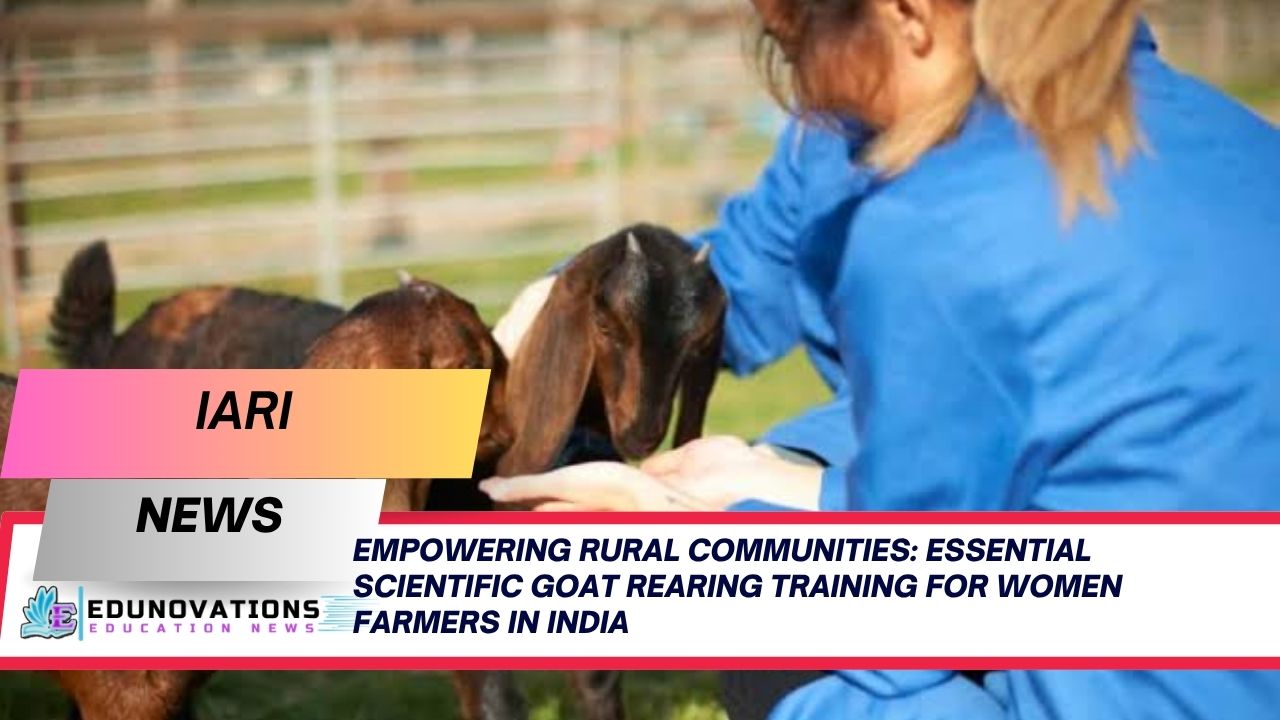
Empowering women in the agricultural and livestock sectors is no longer just a developmental goal; it is an absolute economic necessity. Across rural landscapes, women form the backbone of household food security, yet their contributions have historically been underrecognized. To bridge this gap, modern institutional frameworks and agricultural scientists are stepping up to revolutionize grassroots livestock management. A prime example of this transformative wave is the recent initiative launched by the ICAR-Indian Veterinary Research Institute (ICAR-IVRI), Izatnagar. By conducting targeted awareness camps and farmer-scientist interaction programs across Uttarakhand and Uttar Pradesh on Mahila Kisan Diwas, institutions are laying the groundwork for sustainable rural development.
For new websites and niche blogs looking to carve out authority in the agriculture sector, covering these specialized developmental initiatives provides a massive SEO opportunity. By focusing on niche topics like scientific goat rearing training for women farmers in india, low-domain-authority websites can successfully outrank legacy domains by answering hyper-specific user intents. This article delves deep into the mechanisms of women-led livestock entrepreneurship, exploring how scientific methodologies, collective group management, and backyard poultry integration are rewriting the rules of rural prosperity.
Bridging the Knowledge Gap in Rural Animal Husbandry
Traditional farming practices passed down through generations often lack the technical precision required to maximize productivity and minimize financial losses. In many rural households, livestock management is treated as a secondary chore rather than a formal enterprise. However, recent scientific interventions highlight that incorporating modern veterinary practices can exponentially increase household income.
When organizations like ICAR-IVRI organize outreach camps—such as those held in Kumrahiya village (Khatima block, Udham Singh Nagar district, Uttarakhand) and Mohanpuria village (Bhithari Chainpur block, Bareilly district, Uttar Pradesh)—they introduce rural women to critical life-cycle management protocols for livestock. These programs do not merely lecture participants; they provide actionable blueprints on animal health, balanced nutrition, and structured disease prevention.
To understand how structured educational frameworks transform traditional sectors, students and educators frequently look toward standardized study material. Accessing structured learning modules via NCERT Courses helps build a strong foundational understanding of environmental science and rural economics. Furthermore, keeping abreast of policy changes through daily Current Affairs ensures that aspiring agripreneurs remain aligned with national developmental schemes.
The Core Pillars of Modern Livestock Entrepreneurship
Transitioning from subsistence farming to commercial enterprise requires mastering three core pillars: nutrition, healthcare, and financial efficiency. In the context of small ruminant farming, these elements dictate the margin between profit and loss.
1. Advanced Nutritional Management and Health Protocols
Livestock productivity is directly proportional to feed quality and timely veterinary care. In traditional setups, animals are often grazed indiscriminately without accounting for seasonal nutritional deficiencies. Scientific training emphasizes the formulation of balanced rations rich in proteins, minerals, and vitamins, particularly for pregnant animals and growing kids.
Moreover, timely vaccination and parasitic control drastically reduce mortality rates. Diseases that previously wiped out significant portions of backyard herds can now be prevented through scheduled veterinary interventions. For comprehensive academic reading and revision materials to support scientific literacy in rural areas, learners can explore structured Notes and test their understanding using interactive MCQ’s.
2. Operational Efficiency Through Group Dynamics
One of the most innovative aspects highlighted in recent institutional outreach programs is the concept of group-based management. Operating individual small-scale animal farms often exposes rural women to high input costs. Purchasing feed, medicines, and mineral mixtures in small quantities eliminates bulk discounts and eats into profit margins.
By forming informal Self-Help Groups (SHGs) or cooperative pools, women farmers can collectively purchase high-quality inputs at wholesale rates. This collaborative strategy significantly drives down overhead costs. Additionally, adopting a rotational schedule for grazing and daily barn management ensures that no single individual is overburdened. Members can alternate duties—some managing the herd on specific days while others attend to domestic or secondary income-generation tasks. This division of labor optimizes time management and unlocks new avenues for household economic stability.
Expanding Horizons: Backyard Poultry Farming and Market Linkages
While small ruminants form a vital part of the rural economy, backyard poultry farming offers another highly lucrative, low-barrier entry point for women entrepreneurs. Poultry units require minimal land space and have rapid turnover cycles, making them ideal for supplementing daily household cash flow.
However, production is only half the battle; market linkage dictates long-term viability. Many rural producers struggle because they sell their poultry and eggs locally at distressed prices due to a lack of direct market access. Bridging the gap between rural production hubs and urban commercial centers is essential. For instance, women producers in regions surrounding Bareilly can leverage proximity to urban markets to fetch better margins for their produce.
To visualize complex production cycles and supply chain logistics, visual learners benefit greatly from multimedia resources. Educational platforms offer extensive video libraries; you can watch detailed tutorials and explanatory content via Videos and reference structured academic blueprints through the official Syllabus.
Expert Insights and Economic Impact
Agricultural economists and veterinary experts consistently emphasize that women are the driving force behind India’s rural transformation. Dr. Madhan Singh, Senior Scientist, notes that empowering women with scientific livestock skills fundamentally shifts their status from silent laborers to active decision-makers and entrepreneurs.
Prominent agricultural policy experts and economists have frequently commented on this paradigm shift. Dr. M.S. Swaminathan, the legendary agricultural scientist and pioneer of India’s Green Revolution, frequently highlighted the pivotal role of women in sustainable agriculture, noting:
“The empowerment of rural women through scientific training, technological access, and cooperative market integration is the single most powerful catalyst for eradicating rural poverty and achieving true food sovereignty in developing nations.”
This perspective underscores why institutional outreach by bodies like ICAR-IVRI is so vital. When women are equipped with the knowledge of scientific feeding, collective bargaining, and systematic marketing, entire community structures experience financial upliftment.
For students, researchers, and agri-enthusiasts looking to dive deeper into agricultural science without incurring heavy costs, downloadable reference materials are invaluable. You can access free foundational study assets by visiting Downloads of Free NCERT PDFs. To simplify complex ecological and economic relationships into digestible visual frameworks, explore specialized NCERT Mind Maps.
Furthermore, as digital infrastructure expands into rural pockets, modernizing institutional and educational administration becomes paramount. Schools and training centers looking to integrate advanced digital systems can reach out to industry leaders like Mart Ind Infotech for comprehensive technology solutions.
Toppers Use Mind Maps to score more than 95%
NCERT Class 11th Commerce Mind Maps
Add to cartOriginal price was: ₹999.00.₹199.00Current price is: ₹199.00.NCERT Class 12th Chemistry Mind Maps
Add to cartOriginal price was: ₹199.00.₹75.00Current price is: ₹75.00.NCERT Class 12th Commerce Mind Maps
Add to cartOriginal price was: ₹999.00.₹199.00Current price is: ₹199.00.NCERT Class 12th Science Mind Maps
Add to cartOriginal price was: ₹999.00.₹199.00Current price is: ₹199.00.NCERT Mind Maps For Class 10th
Add to cartOriginal price was: ₹999.00.₹199.00Current price is: ₹199.00.





Purchase Today
Frequently Asked Questions
1. What is the primary objective of scientific goat rearing training for women farmers in india?
The primary objective is to enhance rural women’s knowledge of modern animal health, balanced nutrition, and cost-effective management techniques to increase productivity and household income.
2. How does group-based purchasing help women livestock farmers?
Forming informal groups allows women to buy essential inputs like feed, fodder, and medicines in bulk at wholesale prices, significantly reducing production costs and strengthening collective bargaining power.
3. Why is backyard poultry farming recommended for rural women?
Backyard poultry requires minimal initial investment, takes up very little space, has a fast growth cycle, and provides a steady source of supplemental daily income and household nutrition.
4. What role do institutions like ICAR-IVRI play in rural development?
ICAR-IVRI conducts grassroots awareness camps, farmer-scientist interactions, and distributes technical literature to bridge the gap between laboratory research and field-level implementation.
5. How can rotational management reduce the workload of women farmers?
By taking turns grazing and managing livestock on different days, group members share the daily workload, freeing up time for domestic duties and other income-generating activities.
6. What are the key components of scientific goat nutrition?
Scientific goat nutrition involves providing balanced rations containing appropriate proportions of green fodder, dry roughage, energy concentrates, and essential mineral mixtures.
7. How do urban market linkages benefit rural poultry producers?
Connecting rural production units directly to nearby urban consumer markets ensures that farmers receive fair, competitive prices rather than selling to middlemen at distressed rates.
8. What makes small ruminant farming ideal for women-led enterprises?
Small ruminants are manageable in terms of physical handling, have shorter gestation periods compared to large cattle, and yield regular returns through milk, meat, and fiber.
9. How do educational and training resources support rural entrepreneurship?
Access to structured study materials, video tutorials, and technical notes helps aspiring entrepreneurs understand market dynamics, financial planning, and disease control protocols.
10. Why is women’s participation in livestock decision-making crucial?
Involving women as active decision-makers ensures better resource allocation, improved animal welfare, and greater financial resilience for the entire rural household.