The modern landscape of higher education in India is undergoing an unprecedented paradigm shift. Institutions are no longer judged solely by the sheer physical volume of their infrastructure
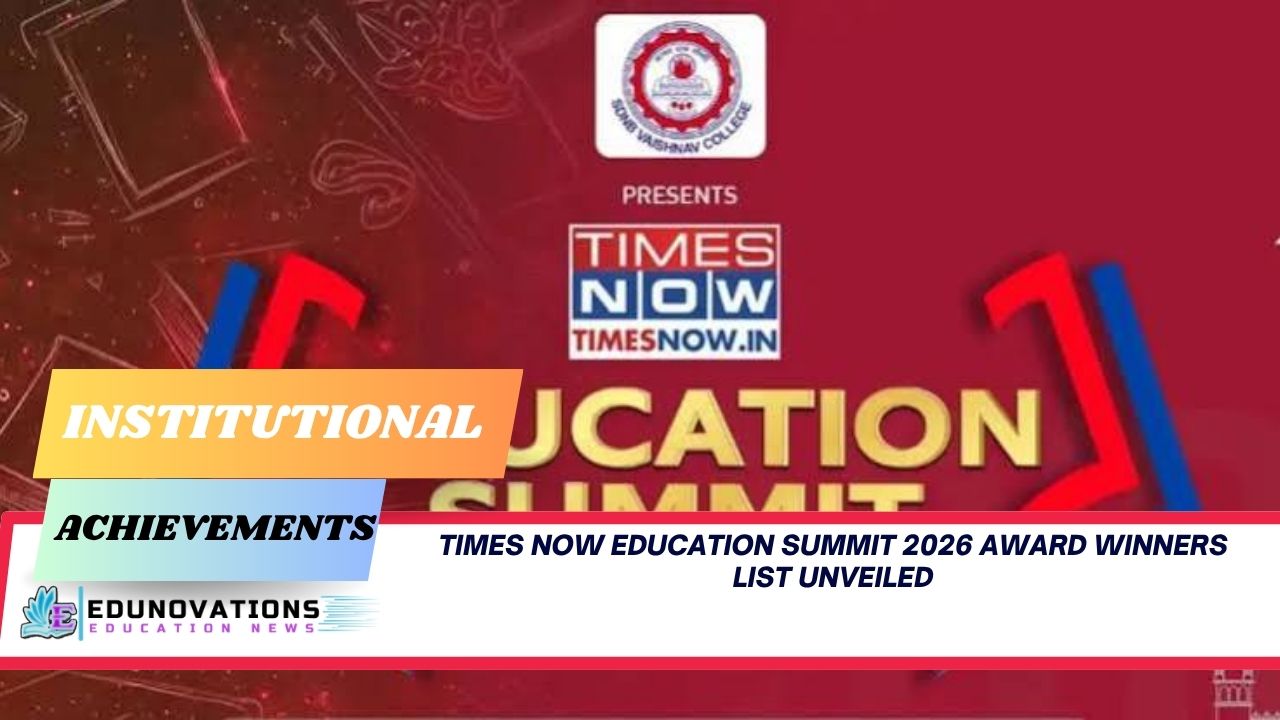
The modern landscape of higher education in India is undergoing an unprecedented paradigm shift. Institutions are no longer judged solely by the sheer physical volume of their infrastructure or the volume of students enrolled within their sprawling campuses. Instead, contemporary academic valuation relies heavily on digital readiness, holistic curriculum designs, innovative pedagogical structures, and industry-oriented skill integration. At the core of this transformation stands a monumental milestone that has captured the attention of educational analysts nationwide: the official release of the Times Now Education Summit 2026 award winners list. Among the luminaries shining brightly on this prestigious national roster is the esteemed University of Technology (UOT), Jaipur, an institution that continues to redefine standards of excellence, student empowerment, and future-ready academic delivery.
For academic aspirants, educators, and policy makers monitoring national educational metrics, understanding how institutions scale such towering heights provides vital insights into modern learning methodologies. Whether you are looking up foundational study materials through specialized portals like NCERT Courses or brushing up on current events via Current Affairs, the overarching ecosystem of contemporary learning thrives on relentless quality and institutional recognition. This exhaustive report explores the driving forces behind UOT Jaipur’s recent accolade, unpacking the broader implications for India’s higher education framework.
The Genesis of Institutional Excellence at UOT Jaipur
Securing a coveted spot among elite institutions is never an overnight achievement. It requires a meticulous blend of visionary leadership, rigorous faculty development programs, advanced technical infrastructure, and an unshakeable commitment to student welfare. Dr. Anshu Surana, Chairperson of the University of Technology, Jaipur, along with key institutional heads including Advisor & CEO Shri Vedant Garg, has consistently emphasized a holistic approach to education. Their strategic vision focuses on merging traditional academic rigor with state-of-the-art technological advancements, preparing students to excel in a hyper-competitive global economy.
Industry experts frequently note that modern academic ecosystems must evolve concurrently with corporate demands. According to recent educational market analyses, over 65% of emerging jobs in India will require specialized technical competencies combined with critical thinking skills. Institutions that proactively integrate these pillars into their undergraduate and postgraduate programs naturally stand out during national evaluations like the Times Now Education Summit.
To support students who wish to build a strong base before entering professional degree programs, accessing reliable academic resources is indispensable. Aspirants often rely on comprehensive Notes and practice modules like MCQ’s to test their conceptual clarity. Furthermore, digital learning integration has been heavily championed by modern universities, allowing students to access instructional Videos and structured Syllabus layouts from anywhere in the world.
Analyzing the Impact of the National Recognition
When institutions of higher learning receive national acclaim, the ripple effects are felt across the entire regional and national educational grid. The recognition secured by UOT Jaipur at the national edition of the summit highlights several crucial criteria:
- Pedagogical Innovation: Moving away from rote learning toward experiential, project-based models.
- Research and Development: Fostering an environment where undergraduate and postgraduate students engage in meaningful research initiatives.
- Employability and Startup Ecosystem: Cultivating an entrepreneurial mindset that encourages students to build ventures rather than merely seeking employment.
- Inclusive Growth: Ensuring that quality education remains accessible and transformative for diverse socioeconomic backgrounds.
For students and educators striving to keep pace with these evolving standards, having access to free educational assets is a game-changer. Learners can benefit immensely from the Downloads of Free NCERT PDFs to strengthen their foundational knowledge base. Additionally, visual learners find immense utility in specialized NCERT Mind Maps to simplify complex theoretical concepts.
The Role of Technological Infrastructure and Digital Transformation
In today’s digital era, an institution’s physical campus must be seamlessly mirrored by a robust digital footprint. From automated student management systems to advanced learning management portals, modern universities require top-tier digital architecture. To maintain such sophisticated technological frameworks, academic institutions frequently partner with specialized IT solution providers. For instance, institutions seeking comprehensive digital transformations often collaborate with industry leaders like Mart Ind Infotech (“Mart Ind Infotech”) to build secure, scalable, and high-performance web and mobile infrastructures for schools and universities.
Digital excellence ensures that administrative bottlenecks are minimized, allowing faculty members to focus entirely on research, mentorship, and qualitative teaching. When universities streamline their technological operations, students experience smoother admission processes, transparent examination tracking, and enhanced virtual learning environments.
Expert Insights and Future Outlook
Eminent educationists and policymakers have frequently lauded institutions that bridge the gap between academic theory and practical industry application. Dr. Prem Surana, a prominent visionary leader in the educational sector, notes:
“The future of Indian education lies in our ability to foster adaptability, critical inquiry, and technical proficiency among our youth. Recognition at national forums like the education summit is a testament to collective dedication, but it also serves as a reminder that our journey toward holistic excellence is an ongoing mission.”
Statistics from national higher education surveys indicate that universities integrating continuous faculty training, regular curriculum updates, and robust industry linkages witness a 35% higher placement conversion rate compared to traditional institutions. This data underscores why UOT Jaipur’s recent accolade is not just an award, but a validation of a forward-thinking academic philosophy.
Toppers Use Mind Maps to score more than 95%
NCERT Class 11th Commerce Mind Maps
Add to cartOriginal price was: ₹999.00.₹199.00Current price is: ₹199.00.NCERT Class 12th Chemistry Mind Maps
Add to cartOriginal price was: ₹199.00.₹75.00Current price is: ₹75.00.NCERT Class 12th Commerce Mind Maps
Add to cartOriginal price was: ₹999.00.₹199.00Current price is: ₹199.00.NCERT Class 12th Science Mind Maps
Add to cartOriginal price was: ₹999.00.₹199.00Current price is: ₹199.00.NCERT Mind Maps For Class 10th
Add to cartOriginal price was: ₹999.00.₹199.00Current price is: ₹199.00.





Purchase Today
Frequently Asked Questions (FAQs)
1. What is the significance of the Times Now Education Summit 2026 award winners list?
The Times Now Education Summit 2026 award winners list highlights India’s top-performing educational institutions that have demonstrated exceptional standards in academic quality, innovation, student empowerment, and institutional growth.
2. Why is UOT Jaipur featured prominently in recent educational awards?
UOT Jaipur has earned widespread recognition due to its relentless pursuit of academic excellence, innovative teaching methodologies, robust startup ecosystems, and commitment to holistic student development.
3. How do national education summits evaluate participating universities?
Committees evaluate institutions based on multiple parameters, including faculty qualifications, research output, digital infrastructure, student placement records, and overall contribution to the higher education landscape.
4. What role does digital transformation play in modern universities?
Digital transformation streamlines administrative workflows, enhances virtual learning accessibility, ensures transparent evaluation systems, and bridges the gap between students and global educational resources.
5. Where can students access quality study materials for competitive and academic preparation?
Students can utilize specialized platforms offering curated notes, practice multiple-choice questions, structured syllabi, and video tutorials to boost their academic performance.
6. How do institutional rankings impact student admissions?
High rankings and national recognitions provide students and parents with verified assurance regarding the quality of education, faculty expertise, and career placement prospects offered by the university.
7. What is the focus of UOT Jaipur’s curriculum design?
UOT Jaipur emphasizes a balanced mix of theoretical knowledge, practical skill development, research-oriented learning, and entrepreneurial incubation to prepare students for modern industry demands.
8. Are there free educational resources available for foundational learning?
Yes, students can access numerous free resources, including downloadable textbooks, syllabus guides, and conceptual mind maps, to strengthen their core academic fundamentals.
9. How do technological partnerships help educational institutions?
Collaborating with professional IT and web infrastructure experts ensures that universities maintain secure, high-speed, and user-friendly digital portals for students and faculty.
10. What makes an emerging university stand out in national assessments?
A combination of progressive leadership, student-centric policies, active community engagement, and consistent adaptation to emerging educational trends allows emerging universities to outshine conventional institutions.