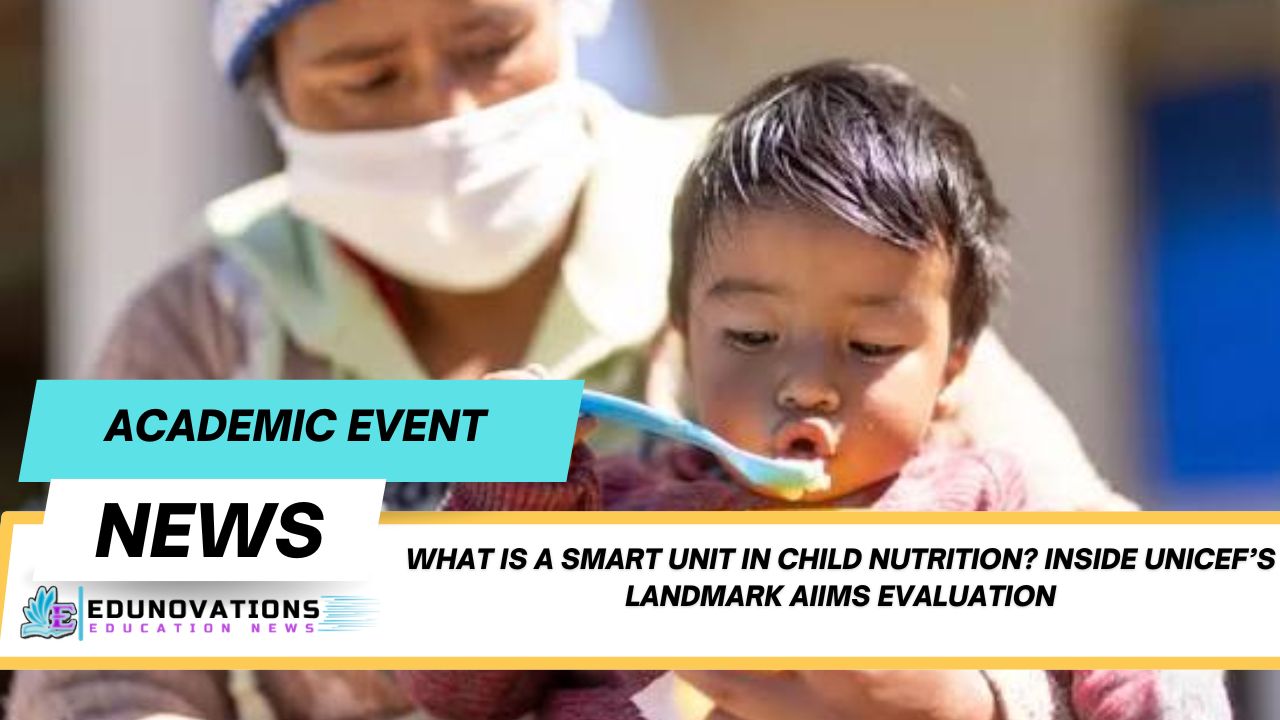
Discover what is a SMART unit in child nutrition and how it transforms pediatric care, highlighted during a major UNICEF review of AIIMS Raipur’s critical healthcare interventions.
The global fight against childhood wasting and infant mortality recently reached a significant milestone in India. A high-level international delegation from UNICEF conducted a comprehensive review visit to the State Centre of Excellence for Nutrition Interventions (SCoE4N) at the All India Institute of Medical Sciences (AIIMS), Raipur, Chhattisgarh. Coordinated under the Department of Pediatrics, the evaluation highlights the escalating need for structured clinical facilities to treat public health crises. However, for many outside the specialized medical community, this landmark visit prompts a fundamental question: what is a SMART unit in child nutrition, and how does it alter the trajectory of a community’s public health?
Understanding the architecture of severe wasting interventions requires exploring the technical frameworks validated by global health experts during this visit. By examining facility-based infrastructure alongside localized field studies, healthcare systems are designing blueprints capable of scaling across developing nations.
The Strategic Mission: UNICEF Evaluates SCoE4N Raipur
The high-level evaluation at AIIMS Raipur was led by prominent global health figures, including Christiane Rudert, Senior Nutrition Advisor for UNICEF East Asia and Pacific (Bangkok), and Marie Claude Desilets, Chief of Nutrition for UNICEF India. The international panel collaborated directly with Prof. (Dr.) Anil Kumar Goel, Programme Director of SCoE4N and Head of the Department of Pediatrics at AIIMS Raipur.
The review focused on evaluating evidence-based practices designed to lower infant mortality and curb severe malnutrition across rural and tribal belts. Following the field assessments, executive members emphasized that the structural lessons compiled here must serve as an adaptable baseline for health networks nationwide.
Defining the Core Infrastructure: What is a SMART Unit in Child Nutrition?
At the center of facility-based critical care within the SCoE4N model sits the Severe Acute Malnutrition Referral and Advance Treatment (SMART) Unit. To answer what is a SMART unit in child nutrition, one must look beyond standard pediatric wards. A SMART unit is a highly specialized, clinical facility located within a tertiary hospital that provides advanced medical and metabolic stabilization for children suffering from Severe Acute Malnutrition (SAM) with life-threatening medical complications.
+-----------------------------------------------------------------------+
|                       THE CLINICAL SMART UNIT                         |
|  Advanced Stabilization Facility for Complicated SAM Cases           |
+-----------------------------------------------------------------------+
|                                                                       |
|  [Phase 1: Resuscitation]    -->  [Phase 2: Stabilization]            |
|  • Treat Shock & Hypothermia      • Rehydration via Low-Sodium Fluids |
|  • Correct Severe Hypoglycemia    • F-75 Therapeutic Milk Feeding     |
|                                                                       |
|                                  |                                    |
|                                  v                                    |
|                                                                       |
|  [Phase 4: Discharge Plan]   <--  [Phase 3: Rehabilitation]           |
|  • Handover to Anganwadis         • F-100 Transition Feeding          |
|  • Continuous Field Tracking      • Sensorimotor & Emotional Support  |
|                                                                       |
+-----------------------------------------------------------------------+
When a child presents with SAM alongside issues like hypothermia, severe infection, intractable vomiting, or massive edema, standard feeding protocols fail. The child’s metabolic system is fragile. To support these vulnerable patients, a SMART unit functions via a strict, multi-phase stabilization protocol:
- Phase 1: Immediate Resuscitation: Treating severe hypoglycemia, hypothermia, and electrolyte imbalances.
- Phase 2: Stabilization Feeding: Introducing F-75 formula (a low-protein, low-sodium therapeutic milk) to prevent refeeding syndrome.
- Phase 3: Pathological Control: Administering targeted antibiotics to combat underlying systemic infections without overtaxing the kidneys or liver.
A medical facility cannot fully address systemic wasting without standardizing what is a SMART unit in child nutrition. These units bridge the gap between acute emergency triage and long-term community recovery.
Expanding Care: How Kangaroo Mother Care Helps Malnourished Babies
While the SMART unit handles initial metabolic stabilization, true physiological rehabilitation requires complementary thermal and developmental care. During their tour, the UNICEF delegation evaluated the dedicated Kangaroo Mother Care (KMC) Centre to observe how kangaroo mother care helps malnourished babies.
KMC involves continuous, prolonged skin-to-skin contact between a mother and her infant, combined with exclusive breastfeeding. Originally designed for premature newborns, modern pediatric research reveals that understanding how kangaroo mother care helps malnourished babies is equally vital for saving infants suffering from severe wasting.
Key Physiological Benefits of KMC:
- Thermal Regulation: Malnourished infants lack adequate subcutaneous fat, leaving them vulnerable to fatal hypothermia. The mother’s body acts as a natural incubator, maintaining the baby’s core temperature.
- Cardiorespiratory Stability: Skin-to-skin contact stabilizes the infant’s heart rate and breathing patterns, reducing physiological stress.
- Enhanced Lactation: Continuous contact stimulates maternal oxytocin, promoting successful breastfeeding to supply essential immunoglobulins and nutrients.
Regional Context: Maternal and Child Nutrition Initiatives in Chhattisgarh
The success of tertiary units like those at AIIMS Raipur depends entirely on their integration with broader regional frameworks. SCoE4N acts as the technical anchor for various maternal and child nutrition initiatives in chhattisgarh, working in tandem with the Department of Women and Child Development (DWCD) and the National Health Mission (NHM).
Historically, the state has battled geographic and socio-economic hurdles that contribute to high rates of childhood stunting and wasting. To combat this, current state programs prioritize a continuous loop of care. Anganwadi workers utilize digital tools like the Poshan Tracker to monitor growth metrics in remote villages.
When a child triggers a critical alert, they are referred up the healthcare chain to a local Nutrition Rehabilitation Centre (NRC). If severe clinical complications arise, the child is transferred directly to the tertiary SMART unit at AIIMS Raipur. This seamless integration ensures that localized maternal and child nutrition initiatives in chhattisgarh provide a reliable safety net for vulnerable families.
The Institutional Engine: What is State Centre of Excellence for Nutrition?
A sustainable public health strategy requires a dedicated hub for research, capacity building, and policy formulation. For those analyzing the structural setup of this program, it is essential to define what is state centre of excellence for nutrition (SCoE4N) and its specific mandate.
An SCoE4N is a specialized academic and clinical hub established within a premier medical institution to provide technical guidance, train healthcare professionals, and monitor public health programs. At AIIMS Raipur, the center acts as a centralized repository for data analytics and standardized training modules.
Instead of operating solely as a passive hospital ward, the center actively mentors medical officers, refines nutritional formulations, and conducts tele-monitoring across over 100 rural NRCs. Defining what is state centre of excellence for nutrition reveals that its primary value lies in translating complex clinical research into practical, field-level interventions.
Global Frameworks: Role of UNICEF in Reducing Severe Acute Malnutrition
The high-level visit underlines the broader role of unicef in reducing severe acute malnutrition through strategic international partnerships. UNICEF provides the technical specifications, therapeutic food supplies (such as Ready-to-Use Therapeutic Food), and funding models required to convert academic knowledge into scalable public health campaigns.
Examining the role of unicef in reducing severe acute malnutrition shows that the organization focuses heavily on building self-sustaining local systems. By auditing the clinical pipelines at AIIMS Raipur, UNICEF ensures that local interventions meet international quality standards, paving the way to replicate this comprehensive care model across other developing nations.
Structural Summary of the Intervention Framework
To understand how these separate healthcare components integrate into a unified system, review the operational breakdown below:
| Healthcare Component | Primary Responsibility | Target Demographic | Core Metric of Success |
| SCoE4N Central Hub | Technical oversight, training, policy design, and tele-monitoring. | State-level healthcare functionaries and medical officers. | Policy implementation and training coverage. |
| Clinical SMART Unit | Advanced metabolic stabilization, intensive nursing, and triage. | Complicated SAM cases (infants and children under 5). | Reduction in facility-based mortality rates. |
| KMC Centre | Skin-to-skin thermal regulation and lactation support. | Low birth weight, premature, and severely wasted infants. | Accelerated daily weight gain. |
| Anganwadi Network | Community screening, tracking, and localized supplementation. | Rural mothers, pregnant women, and young children. | Early detection and prevention of wasting. |
Strategic Academic & Operational Links
For students and professionals seeking to expand their understanding of public health frameworks, pediatric medical guidelines, or related competitive examination topics, access these comprehensive open-access educational resources:
- For foundational learning and core medical entrance topics, explore the curated repository for NCERT Courses.
- Stay updated on international health policies and national public health campaigns by reading Current Affairs.
- Access highly structured summaries and medical review documentation through our specialized Notes.
- Test your diagnostic and public health knowledge using targeted MCQ’s.
- Watch visual breakdowns of complex metabolic processes and clinical workflows via Videos.
- Review comprehensive training rubrics and academic requirements within the formal Syllabus.
- Download essential healthcare reference materials and textbook modules directly from the portal for Downloads of Free NCERT PDFs.
- Utilize structured visual learning frameworks by accessing NCERT Mind Maps.
Note for Educational Institutions: If your school or medical coaching center requires a robust, custom-built digital portal to host training materials, secure portal access, and track student analytics, contact the digital infrastructure team at Mart Ind Infotech.
Toppers Use Mind Maps to score more than 95%
NCERT Class 11th Commerce Mind Maps
Add to cartOriginal price was: ₹999.00.₹199.00Current price is: ₹199.00.NCERT Class 12th Chemistry Mind Maps
Add to cartOriginal price was: ₹199.00.₹75.00Current price is: ₹75.00.NCERT Class 12th Commerce Mind Maps
Add to cartOriginal price was: ₹999.00.₹199.00Current price is: ₹199.00.NCERT Class 12th Science Mind Maps
Add to cartOriginal price was: ₹999.00.₹199.00Current price is: ₹199.00.NCERT Mind Maps For Class 10th
Add to cartOriginal price was: ₹999.00.₹199.00Current price is: ₹199.00.



Purchase Today
Frequently Asked Questions (FAQs)
1. What is a SMART unit in child nutrition compared to a standard pediatric ward?
A standard pediatric ward handles routine childhood illnesses. In contrast, a specialized SMART unit focuses entirely on the critical stabilization phase of children with Severe Acute Malnutrition (SAM) who suffer from secondary life-threatening medical complications.
2. How kangaroo mother care helps malnourished babies during their recovery phase?
KMC provides direct skin-to-skin thermal regulation which prevents hypothermia, reduces physiological cortisol stress, stabilizes heart and respiratory rhythms, and encourages frequent breastfeeding, which is vital for rebuilding a weak immune system.
3. What are the primary objectives of maternal and child nutrition initiatives in chhattisgarh?
These regional programs aim to build an end-to-end framework that links remote community tracking via the Poshan Tracker to facility-based treatment centers, directly lowering regional infant mortality, stunting, and severe childhood wasting.
4. What is state centre of excellence for nutrition and its institutional purpose?
An SCoE4N is an institutional hub within a premier medical college designed to provide technical support, conduct data-driven clinical research, train healthcare workers, and monitor local nutrition rehabilitation centers to ensure uniform standards of care.
5. What is the role of unicef in reducing severe acute malnutrition during health partnerships?
UNICEF acts as a global technical and administrative partner. The organization sets international operational guidelines, supplies specialized therapeutic resources, and audits clinical facilities to ensure local systems can sustainably manage nutritional crises.
6. Who is eligible for admission into a clinical SMART unit?
Children under five years of age diagnosed with Severe Acute Malnutrition (SAM) who also show severe medical complications—such as persistent high fever, severe dehydration, intractable vomiting, systemic infections, or advanced edema—are eligible for immediate admission.
7. Why is standard therapeutic milk introduced in distinct phases within a SMART unit?
Feeding a severely malnourished child too quickly can trigger refeeding syndrome, a fatal shift in fluids and electrolytes. Units use lower-calorie F-75 milk during initial stabilization before transitioning to higher-calorie F-100 milk during rehabilitation.
8. How long does a typical stabilization and rehabilitation cycle last for an infant?
The acute clinical stabilization phase inside a specialized unit usually lasts between 3 to 7 days. Once stable, the child transitions to a localized rehabilitation program or an NRC for an additional 2 to 3 weeks.
9. How do community health workers support hospital nutrition interventions?
Community functionaries perform early screening via mid-upper arm circumference (MUAC) measurements and weight-for-height tracking, ensuring that vulnerable infants are identified and treated before irreversible metabolic decline occurs.
10. Can Kangaroo Mother Care be administered by family members other than the mother?
Yes. While the biological mother is the primary provider of KMC due to lactation, skin-to-skin thermal support can be shared by fathers, grandmothers, or other adult caretakers to ensure continuous care.