In the rapidly evolving landscape of modern medicine, scientists are constantly seeking ways to enhance the effectiveness of our primary defense systems.
In the rapidly evolving landscape of modern medicine, scientists are constantly seeking ways to enhance the effectiveness of our primary defense systems. A groundbreaking discovery from the Indian Institute of Technology (IIT) Kanpur has recently captured global attention, offering a new path forward for immunology. By decoding the intricate mechanisms of the human immune system, researchers have identified a way to “switch on” immune cells more efficiently using an experimental molecule, potentially ushering in a new era of safer, more potent immunization strategies.
The study, led by Professor Arun K. Shukla and his esteemed team, focuses on the delicate balance of our body’s inflammatory response. While our immune system is designed to combat invading pathogens, an overactive response—often characterized by excessive inflammation—can lead to tissue damage. This discovery, centered on a molecule known as EP67, provides a sophisticated solution to this age-old biological hurdle.
Understanding the Need for Advanced Adjuvants
To grasp the magnitude of this research, one must first understand what an adjuvant is. In the field of immunology, an adjuvant is an ingredient added to a vaccine to boost the body’s immune response to the antigen. Without them, many modern vaccines would be far less effective, especially in vulnerable populations.
However, the industry has long faced a challenge: how to increase potency without causing unnecessary, harmful inflammation. The research from IIT Kanpur highlights how an experimental molecule called EP67 acts as a precise tool to prime the immune system. By targeting specific receptors, it avoids the “collateral damage” typically associated with older, more blunt-force adjuvant technologies.
For students and professionals looking to deepen their foundational knowledge, it is vital to keep up with these advancements. Whether you are preparing for competitive exams or studying for advanced degrees, accessing NCERT Courses can provide the essential biological context needed to understand such complex topics.
The Science of EP67 and Receptor Activation
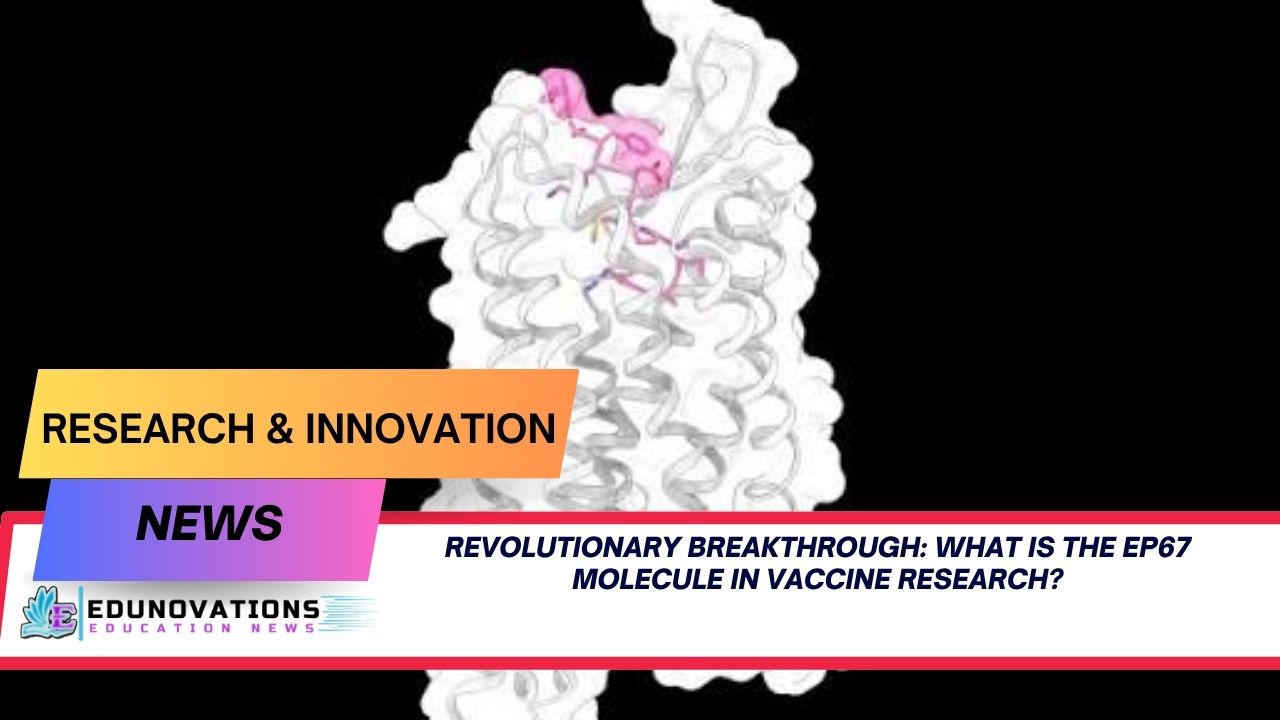
The research team at IIT Kanpur, including noted contributors like Annu Dalal and Manish Yadav, utilized state-of-the-art cryo-electron microscopy to visualize the interaction between EP67 and the C5aR1 receptor. This receptor is part of a large family known as G protein-coupled receptors (GPCRs), which are involved in a vast array of physiological processes and represent a significant portion of drug targets in the human body.
How the Mechanism Works
When a virus or bacteria invades, the body releases a protein called C5a. While C5a is effective at signaling the immune system to fight back, its prolonged presence triggers excessive inflammation. EP67 is a cleverly engineered, stripped-down version of C5a—a chain of just ten amino acids.
Key characteristics of this mechanism include:
- Targeted Activation: EP67 selectively activates dendritic cells and macrophages, which are essential for building long-term immunity.
- Inflammation Control: Unlike natural C5a, EP67 barely affects neutrophils, the cells primarily responsible for damaging inflammation.
- Structural Precision: The molecule adopts a “hook shape” that fits perfectly into the center of the C5aR1 receptor, turning it on just enough to trigger a positive response without the negative side effects.
Staying informed about these scientific breakthroughs is crucial. You can keep track of recent developments through regular updates on Current Affairs.
Expert Insights and Future Implications
While the research is currently in the pre-clinical phase, it has generated significant excitement in the scientific community. Dr. Jerome H. Kim, Director General of the International Vaccine Institute, recently noted that 2026 is a pivotal year for vaccine technology. Convergence of new molecular platforms and stronger ecosystem support is expected to drive a more resilient landscape for immunization.
The IIT Kanpur study provides a clear “blueprint” for future drug design. By knowing the exact atomic details of how EP67 engages with its target, researchers can now refine its formulation for even greater efficacy. This level of precision is exactly what is required for the next generation of vaccines, particularly for challenging pathogens that have developed resistance to common antibiotics.
If you are a student or a researcher, supplementing your studies with structured Notes or detailed MCQs can help solidify your understanding of these biological processes. For those looking to dive deeper into the academic requirements, ensure your Syllabus and study materials are up to date.
The Role of Cryo-Electron Microscopy
The use of cryo-electron microscopy in this study at the National cryo-EM Facility at IIT Kanpur highlights India’s growing prowess in high-end scientific research. By flash-freezing molecules, scientists are able to view biological structures in near-atomic detail. This technology is no longer just for basic research; it is becoming a cornerstone for pharmaceutical innovation.
Institutions looking to implement similar research infrastructures or seeking specialized IT solutions for laboratory data management often turn to partners like Mart India Infotech to streamline their digital and technical workflows.
Toppers Use Mind Maps to score more than 95%
NCERT Class 11th Commerce Mind Maps
Add to cartOriginal price was: ₹999.00.₹199.00Current price is: ₹199.00.NCERT Class 12th Chemistry Mind Maps
Add to cartOriginal price was: ₹199.00.₹75.00Current price is: ₹75.00.NCERT Class 12th Commerce Mind Maps
Add to cartOriginal price was: ₹999.00.₹199.00Current price is: ₹199.00.NCERT Class 12th Science Mind Maps
Add to cartOriginal price was: ₹999.00.₹199.00Current price is: ₹199.00.NCERT Mind Maps For Class 10th
Add to cartOriginal price was: ₹999.00.₹199.00Current price is: ₹199.00.





Purchase Today
Frequently Asked Questions
- What is the EP67 molecule in vaccine research? EP67 is an experimental, synthetic molecule—a short chain of ten amino acids—designed to act as a safer, more effective adjuvant that boosts immune response while minimizing harmful inflammation.
- How do vaccine adjuvants boost immune response? Adjuvants work by priming the immune system to recognize antigens more effectively, triggering a stronger and more durable response from cells like dendritic cells and macrophages.
- Benefits of EP67 for vaccine inflammation reduction? Unlike natural proteins that trigger widespread inflammation, EP67 is “stripped-down” to target only the helpful cells, leaving inflammation-causing neutrophils largely unaffected.
- Role of C5aR1 receptors in immune-based treatments? C5aR1 is a G protein-coupled receptor (GPCR) that acts as a signal relay. By understanding how to activate it precisely, scientists can develop safer treatments for infections and immune disorders.
- New developments in safer vaccine booster technology? Recent innovations like EP67 demonstrate a shift toward “targeted signaling,” where molecules are engineered to wake up immune defenses with high precision to prevent side effects.
- Why is the “hook shape” of EP67 important? The hook shape allows the molecule to slot accurately into the C5aR1 receptor, providing a stable “lock and key” mechanism that activates the immune response safely.
- Is the EP67 research available for human use yet? No, the research is currently in the pre-clinical phase, involving refined dosing and formulation tests to ensure safety and efficacy before moving toward clinical trials.
- How does the C5a protein usually affect the body? C5a is a natural protein that primes the immune system during infection, but its presence for too long leads to tissue-damaging inflammation.
- What are G protein-coupled receptors (GPCRs)? GPCRs are a large family of receptors that sit on cell membranes and relay signals inward; they are the target for about one in three of all prescription medicines.
- Where can I find more resources on these biological discoveries? You can explore educational platforms like Edunovations for resources, mind maps, and Free NCERT PDFs to understand the underlying science.