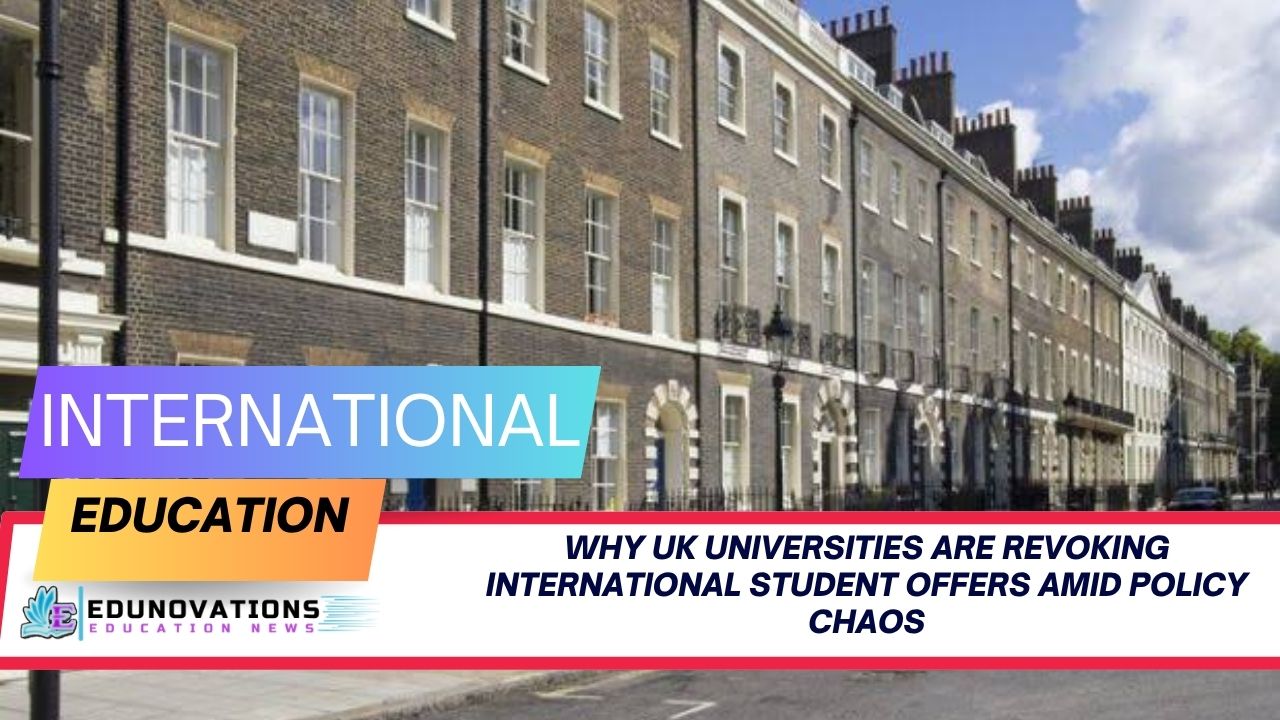
Discover why UK universities are revoking international student offers as stricter immigration caps and financial pressures reshape higher education.
Introduction: The Shifting Landscape of British Higher Education
The higher education landscape in the United Kingdom is experiencing a profound transformation, one driven by tightening immigration policies, financial restructuring, and regulatory scrutiny. For decades, British universities relied heavily on international student enrollment as a primary revenue stream to offset domestic tuition fee caps and government funding cuts. However, recent regulatory changes and shifting government stances on net migration have created an environment of uncertainty.
At the center of this turbulence is a growing trend: institutions proactively withdrawing admission offers to international applicants. While this may seem counterintuitive given the financial reliance on overseas tuition, universities are taking these drastic steps to protect their institutional standing and avoid severe penalties from regulatory bodies like the Home Office.
The Underlying Pressures Driving Offer Withdrawals
To understand why universities are making the difficult decision to turn away tuition-paying students, one must look closely at the administrative and legal pressures facing institutional leadership.
1. The Threat of Sponsor License Revocation
Under UK immigration rules, universities act as licensed sponsors for international students under the Student Route visa. To maintain this license, institutions must demonstrate high compliance rates, including low visa refusal rates and high enrollment fulfillment. If a significant percentage of admitted students fail to secure visas or drop out early, the institution’s compliance rating plummets. Losing a sponsor license would mean an immediate halt to accepting any overseas students, a catastrophe for university budgets. Consequently, admissions teams are heavily vetting applicants and preemptively canceling offers where visa approval looks uncertain.
2. Financial Strain and Structural Budget Deficits
While international fees subsidize domestic operations, the rising cost of supporting international students—including specialized English language support, pastoral care, and compliance administration—has stretched university budgets thin. Compounded by inflation and frozen domestic undergraduate tuition fees, institutions are re-evaluating their growth models. Many are shifting away from rapid, unmanaged expansion toward smaller, more sustainable cohort sizes.
Expert Perspectives on Higher Education Policy
Prominent figures in education policy and immigration law have weighed heavily on the unfolding situation. Colin Yeo, a prominent UK immigration barrister and legal commentator known for his extensive work on immigration law through Free Movement, noted in recent public commentary:
“The immense pressure placed on universities to act as de facto border agents creates an adversarial relationship between educational institutions and international scholars. When compliance penalties threaten the very existence of a university, risk aversion becomes the default policy, often at the expense of genuine applicants.”
Furthermore, leaders from bodies like Universities UK (UUK) have repeatedly warned that treating higher education primarily as an immigration statistic rather than an economic and cultural asset risks damaging the global reputation of British academia.
Broader Impacts on Global Mobility and Student Aspirations
The sudden shift in institutional posture has created widespread anxiety among students worldwide. For many prospective scholars, gaining admission to a British university represents years of academic preparation and significant financial investment. When offers are rescinded late in the admissions cycle, students are left with few alternatives for the upcoming academic term.
This volatility also impacts nations that rely on UK study pathways for professional development. Students seeking rigorous academic frameworks often look toward comprehensive study tools, structured syllabi, and foundational resources to prepare for higher education demands. For those preparing for rigorous academic curricula, utilizing structured Syllabus guides and comprehensive Notes can streamline academic preparation. Furthermore, engaging with specialized MCQ’s and interactive Videos helps learners build critical problem-solving skills necessary for global academic success.
Students aiming for competitive academic tracks can also benefit from structured learning modules and foundational guides available through dedicated educational platforms. For broader academic reference materials, exploring curated NCERT Courses and downloading free learning resources from NCERT PDFs can support early educational milestones. Visual learners can also leverage concept-driven NCERT Mind Maps to enhance conceptual clarity. For educators and institutions looking to scale digital infrastructure, professional technology solutions provided by Mart Ind Infotech offer tailored digital transformation services for schools and colleges.
To stay updated on changing global education policies, scholarship opportunities, and regulatory shifts, professionals and students frequently consult dedicated portals like Current Affairs.
Strategic Outlook: What Lies Ahead for Applicants
As universities adapt to these regulatory realities, prospective international applicants must navigate a more selective and cautious admissions environment. Transparency, early application submissions, and clear financial documentation are more critical than ever. While the short-term adjustment phase brings friction, institutions hope to stabilize their enrollment metrics and secure long-term compliance under evolving governmental frameworks.
Toppers Use Mind Maps to score more than 95%
NCERT Class 11th Commerce Mind Maps
Add to cartOriginal price was: ₹999.00.₹199.00Current price is: ₹199.00.NCERT Class 12th Chemistry Mind Maps
Add to cartOriginal price was: ₹199.00.₹75.00Current price is: ₹75.00.NCERT Class 12th Commerce Mind Maps
Add to cartOriginal price was: ₹999.00.₹199.00Current price is: ₹199.00.NCERT Class 12th Science Mind Maps
Add to cartOriginal price was: ₹999.00.₹199.00Current price is: ₹199.00.NCERT Mind Maps For Class 10th
Add to cartOriginal price was: ₹999.00.₹199.00Current price is: ₹199.00.




Purchase Today
Frequently Asked Questions (FAQs)
- Why uk universities are revoking international student offers? Universities are revoking offers to manage compliance risks, avoid high visa refusal rates, and protect their Home Office sponsor licenses from suspension.
- What role does the UK Home Office play in university admissions? The Home Office regulates student sponsor licenses, holding universities accountable for international student enrollment, attendance, and visa approval success.
- How do international student fees impact UK higher education? International tuition fees serve as a crucial financial subsidy that helps offset frozen domestic tuition fees and government funding deficits.
- What are the consequences of a university losing its sponsor license? Losing a sponsor license prevents an institution from recruiting or enrolling new international students, leading to severe financial consequences.
- How can international students protect their university offers? Students can protect their offers by submitting complete financial documentation, applying early, and ensuring all visa requirements are meticulously met.
- Are specific university courses more affected than others? Courses with high international applicant volume and stringent compliance requirements often experience tighter vetting and offer reviews.
- How does immigration policy affect the global reputation of UK universities? Frequent policy shifts and perceived hostility toward international migration can deter top global talent from choosing the UK for higher education.
- What support do universities provide for international compliance? Universities maintain international student support teams to guide applicants through visa processes, document verification, and compliance obligations.
- Where can students find reliable updates on higher education policies? Students can track policy changes through educational news portals, university advisories, and official government immigration updates.
- What alternative options do students have if their offer is revoked? Students can explore alternative study destinations, defer admission, or reapply for subsequent academic intakes with enhanced preparation.