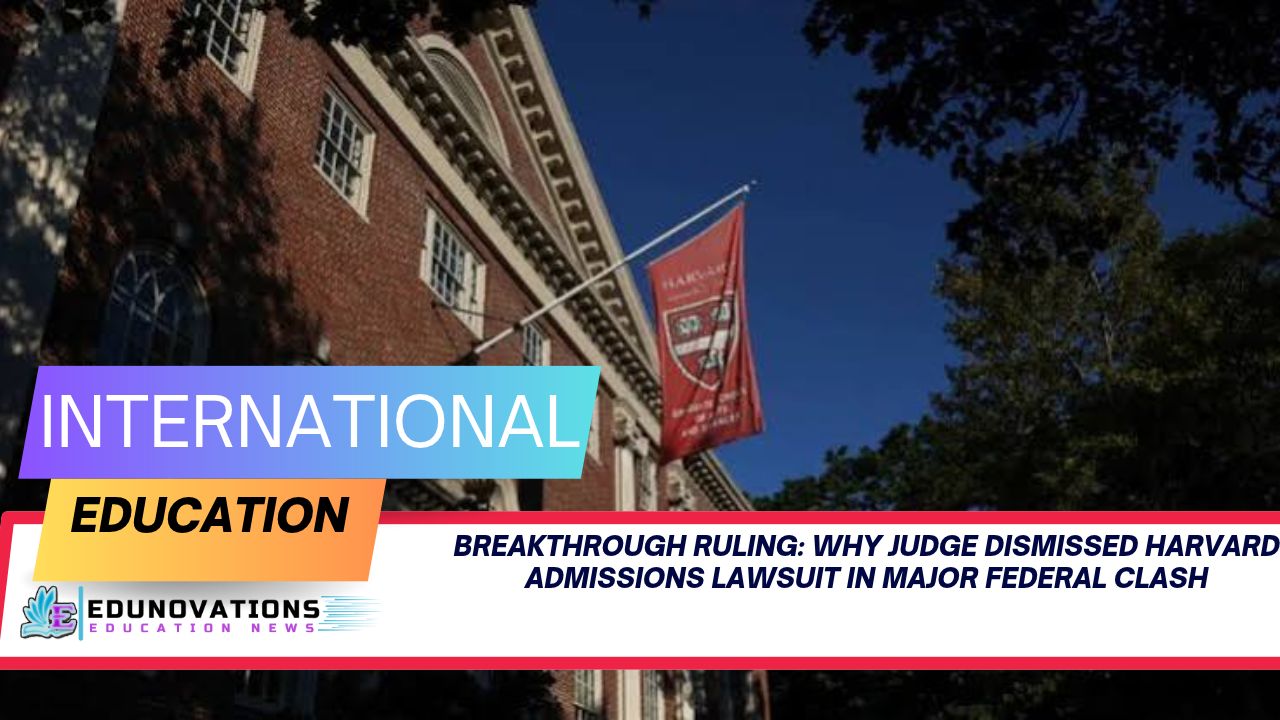
The intersection of higher education policy and executive enforcement faced a dramatic pivot when a federal court stepped into a high-stakes standoff.
The intersection of higher education policy and executive enforcement faced a dramatic pivot when a federal court stepped into a high-stakes standoff. In a decision that highlights the strict procedural boundaries required of government bodies, legal frameworks were tested to their limits. For students, educators, and legal scholars keeping track of changing academic mandates—much like those tracking updates through resources like Current Affairs—the ongoing tensions between federal oversight and institutional autonomy continue to shape the modern educational landscape. Understanding these administrative nuances is essential, especially for academic aspirants who rely on structured study aids, comprehensive Notes, and targeted NCERT Courses to navigate the shifting standards of institutional compliance and student evaluation.
Understanding the Legal Battleground
The conflict centers on sweeping federal investigations launched to scrutinize whether premier institutions are fully adhering to post-affirmative-action mandates. Following landmark judicial limitations on race-conscious admissions, federal oversight bodies have stepped up efforts to inspect compliance data across elite universities. Central to this ongoing investigation is the demand for comprehensive applicant metrics, spanning academic scoring details, biographical factors, and internal evaluation documents.
Supporters of the federal oversight argue that transparent access to applicant metrics is critical to ensuring equity and merit-based evaluation in higher learning. Conversely, institutional defenders view these aggressive data demands as politically motivated pressure campaigns designed to upend traditional university administration, governance, and institutional independence. This friction has rippled across various educational sectors, prompting educators and students alike to consult updated Syllabus guidelines and practice materials like MCQ’s to understand how broader legal rulings translate into practical academic criteria.
The Core of the Court’s Decision
The legal momentum shifted when U.S. District Judge Myong J. Joun delivered a decisive 10-page opinion in Boston, addressing the federal government’s attempt to compel compliance. Rather than ruling directly on the substantive merits of whether the institution maintained discriminatory practices, the court focused entirely on a procedural technicality: whether the Department of Justice (DOJ) and the Department of Education had properly exhausted statutory prerequisites before rushing to file a lawsuit.
Judge Joun concluded that the government failed to adequately demonstrate that it had officially notified the university of specific compliance failures and formally warned of impending enforcement action prior to initiating judicial proceedings. Under established administrative guidelines, federal agencies are legally bound to pursue voluntary compliance measures first. Because the administration failed to properly substantiate these necessary steps, the court granted the defense’s motion, delivering a temporary procedural victory to the university.
Key Takeaways from the Federal Ruling
- Procedural Missteps: The court found that issuing a deadline and a threat to sue does not substitute for the required regulatory voluntary-compliance framework.
- Dismissed Without Prejudice: Because the case was dismissed on procedural grounds rather than on its merits, the federal government retains the legal right to correct its course and refile.
- Unresolved Core Questions: The ruling explicitly leaves open whether the institution ultimately must surrender the requested applicant data or whether the government’s broad demands are lawful.
Broader Implications for Higher Education
The federal clash is part of a much larger, multifaceted struggle involving federal funding, international student policies, and campus regulatory oversight. As institutions adapt to a transforming regulatory environment, educational leaders are carefully reviewing compliance protocols. For students preparing for competitive academic examinations, staying informed via dedicated instructional channels, video tutorials found on Videos, and downloadable curriculum guides such as Downloads of Free NCERT PDFs provides a stable foundation amidst shifting national policies.
Moreover, educational experts emphasize that transparency and adherence to statutory protocol remain paramount for both government agencies and academic institutions. As institutional governance evolves, leveraging specialized study tools like NCERT Mind Maps helps learners visualize complex legal and historical developments clearly and effectively. For educational institutions seeking structural guidance and technological infrastructure modernization, consulting with specialized enterprise partners like Mart Ind Infotech offers reliable pathways for digital adaptation.
Expert Perspectives and Future Outlook
Legal scholars note that while the recent judicial setback slows down the administration’s immediate data collection efforts, it is unlikely to end the broader campaign. Department of Education spokesperson Ellen Keast sharply criticized the outcome, stating: “Students should be judged on their merit and accomplishments, not the color of their skin, and the Trump Administration will work tirelessly to ensure Harvard abides by obligations to uphold the law.”
Simultaneously, DOJ representatives indicated firm intentions to address the procedural gaps identified by the court and amend their complaint. Legal analysts predict that once the administrative prerequisites are meticulously satisfied, the battle over applicant-level data access will return to the federal docket, establishing a major precedent for how federal oversight bodies interact with autonomous universities moving forward.
Toppers Use Mind Maps to score more than 95%
-
NCERT Class 11th Commerce Mind Maps
Add to cartOriginal price was: ₹999.00.₹199.00Current price is: ₹199.00. -
NCERT Class 12th Chemistry Mind Maps
Add to cartOriginal price was: ₹199.00.₹75.00Current price is: ₹75.00. -
NCERT Class 12th Commerce Mind Maps
Add to cartOriginal price was: ₹999.00.₹199.00Current price is: ₹199.00. -
NCERT Class 12th Science Mind Maps
Add to cartOriginal price was: ₹999.00.₹199.00Current price is: ₹199.00. -
NCERT Mind Maps For Class 10th
Add to cartOriginal price was: ₹999.00.₹199.00Current price is: ₹199.00.



Purchase Today
Frequently Asked Questions
1. Why judge dismissed harvard admissions lawsuit?
Judge Myong J. Joun dismissed the lawsuit because the federal government failed to follow mandatory procedural steps—such as adequately notifying the university of specific compliance failures and exhausting efforts to secure voluntary compliance—before filing for judicial enforcement.
2. What was the main reason for the trump harvard admissions lawsuit dismissed without prejudice?
The lawsuit was dismissed without prejudice because of procedural shortcomings by the DOJ and Department of Education, meaning the government can legally refile the case after correcting its administrative missteps.
3. What specific documents did the doj request for harvard student application records?
The federal government requested comprehensive, applicant-level data including academic transcripts, standardized testing information, applicant essays, race and ethnicity data, and final admissions decisions.
4. What does legal analysis of harvard affirmative action lawsuit suggest about future rulings?
Legal experts suggest that the recent decision focuses purely on administrative technicalities rather than the merits of affirmative action, leaving the core constitutional and statutory questions open for future litigation.
5. How does federal compliance review harvard admissions data impact university autonomy?
Federal compliance reviews spark intense debate over institutional independence, with the government arguing that oversight is necessary to prevent discrimination, while universities view aggressive data demands as government overreach.
6. Who is the federal judge presiding over the harvard admissions case?
U.S. District Judge Myong J. Joun of the District of Massachusetts presided over the case and authored the 10-page opinion dismissing the complaint.
7. What laws govern federal investigations into university admissions practices?
These investigations are primarily governed by Title VI of the Civil Rights Act of 1964, which prohibits discrimination based on race, color, or national origin in programs receiving federal financial assistance.
8. Will the Trump administration refile the lawsuit against Harvard?
Yes, spokespersons for the Department of Justice have publicly stated that the agency plans to address the procedural deficiencies and file an amended complaint.
9. Did the court rule on whether Harvard engaged in racial discrimination?
No, Judge Joun explicitly noted that the ruling did not determine whether Harvard discriminated against applicants or whether the government’s ultimate demand for applicant-level data is lawful.
10. How does this ruling affect students applying to Ivy League universities?
The ruling has no immediate impact on current admissions procedures, but it keeps the broader legal battle alive regarding how federal oversight bodies monitor compliance with post-affirmative-action standards.