The education landscape in India’s most populous state has been buzzing with anxiety, political friction, and policy debates. Recently, heavy concerns gripped parents
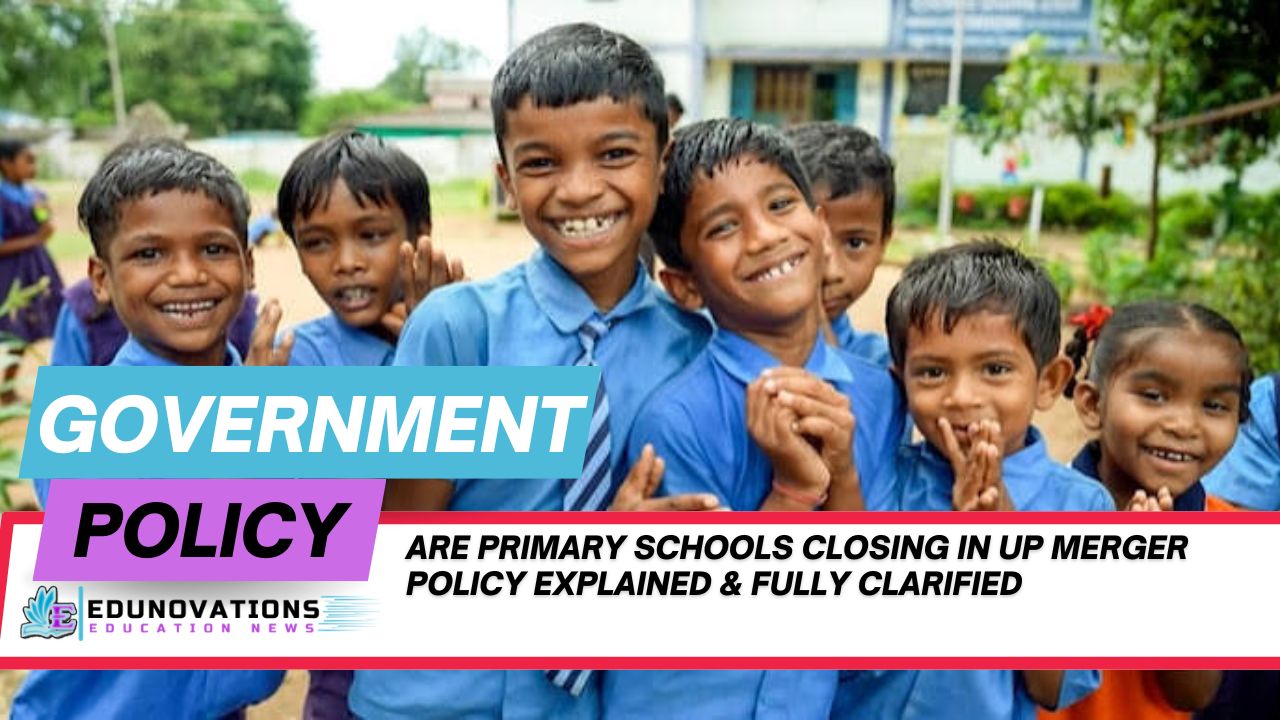
The education landscape in India’s most populous state has been buzzing with anxiety, political friction, and policy debates. Recently, heavy concerns gripped parents, teachers, and student groups following claims that thousands of government-run institutions were shutting down permanently. To address these widespread rumors, the Uttar Pradesh government officially stepped forward to clear the air, confirming the actual administrative changes taking place across rural and urban districts. If you have been wondering are primary schools closing in up merger policy explained, official clarifications confirm that educational institutions are not shutting down; rather, they are undergoing a massive administrative consolidation and restructuring process.
For students and educators striving to stay ahead, exploring structured learning materials such as NCERT Courses and practicing through MCQ’s can help bridge any academic gaps. Furthermore, staying updated with structural policy transformations requires keeping a close eye on daily developments. You can track regular policy updates via Current Affairs and review updated academic frameworks using the official Syllabus.
Understanding the Controversy: What Triggered the Closure Rumors?
The debate reached its peak during the parliamentary proceedings when political figures raised serious questions concerning the future of foundational learning infrastructure. Opposition leaders claimed that thousands of state-run institutions were being phased out, severely hurting rural education access.
Specifically, claims were made that Uttar Pradesh had witnessed the highest number of government primary school closures nationwide, impacting tens of thousands of educational centers. These panic-inducing claims spread rapidly across social media platforms, creating immense confusion among parents who rely entirely on public education infrastructure for their children’s upbringing.
To gain a holistic perspective on educational reforms and instructional strategies, students can utilize comprehensive Notes and visual learning tools like NCERT Mind Maps. Additionally, institutions looking to upgrade their digital tracking and administrative frameworks can explore customized technical solutions offered by Mart Indi Infotech.
Official Stance: The Reality of Educational Mergers
Addressing these allegations directly, the state administration firmly rejected the closure narratives. Basic Education State Minister (Independent Charge) Sandeep Singh came forward to provide an exhaustive breakdown of the state’s ongoing administrative strategy.
Minister Sandeep Singh emphasized that not a single functional school is being locked up or permanently shuttered. Instead, the government is executing a systematic consolidation plan focusing on up low enrollment primary school merger news 2026 updates. Under this policy, institutions suffering from extremely low student enrollments are being merged with nearby, fully functional campuses.
By pooling resources, the state aims to build larger, better-equipped educational hubs where students receive standardized instruction, access to sports facilities, and robust digital classrooms. For candidates preparing for competitive exams or teaching certifications, comprehensive study packages and Downloads of Free NCERT PDFs serve as essential resources for academic success.
Key Highlights of the Administrative Restructuring
To understand why this administrative shift is occurring, it is essential to look at the broader picture of infrastructural development in Uttar Pradesh. The government has heavily defended its fiscal commitment to basic education over the past several years.
- Massive Budget Expansion: The annual education budget, which stood at roughly ₹28,000 crore under previous regimes, has skyrocketed to over ₹1.13 lakh crore in recent fiscal terms.
- Enrollment Surge: Government school enrollments have climbed significantly from 1.34 crore to nearly 1.90 crore students.
- Drop-out Reduction: The overall student drop-out rate has sharply dropped from 19 percent down to a remarkable 3 percent.
- Operation Kayakalp Impact: Basic infrastructure standards across council-run schools have jumped from a dismal 36 percent to an impressive 97 percent across 19 critical operational parameters.
To visually analyze these developmental shifts and educational metrics, students and researchers can explore interactive learning modules available through Videos.
Detailed Breakdown of the Policy Shifts
Why Merge Low-Enrollment Campuses?
In many remote rural pockets, demographic shifts have caused student numbers in certain primary schools to drop into single digits. Operating isolated classrooms with one or two students severely strains state resources and limits peer interaction, which is vital for a child’s social development.
Through the ongoing restructuring, these scattered students are shifted to a nearby core school where dedicated teachers, proper laboratory facilities, and playground equipment are readily available. This answers the core inquiry: are primary schools closing in up merger policy explained by highlighting that consolidation aims to optimize quality, not reduce access.
Introduction of Pre-Primary Education
One of the most exciting developments accompanying this restructuring is the launch of formal pre-primary schooling across Uttar Pradesh. Vacant or underutilized school spaces are being repurposed to house early childhood care and education units. This structural shift ensures that toddlers from economically weaker sections receive foundational early learning support, setting them up for long-term academic excellence.
Expert Insights and Political Perspectives
The friction between political leaders has brought deep-seated attention to the state of public schooling. While political critics like Samajwadi Party Chief Akhilesh Yadav argued that systemic reductions in school counts hurt marginalized communities, ruling party representatives countered that modernization requires tough operational decisions.
Educational analysts point out that administrative consolidation is a globally recognized practice used to enhance educational efficiency. When sparse resources are concentrated into well-funded cluster schools, the quality of teaching, mid-day meal implementation, and sanitation standards invariably improve.
Toppers Use Mind Maps to score more than 95%
NCERT Class 11th Commerce Mind Maps
Add to cartOriginal price was: ₹999.00.₹199.00Current price is: ₹199.00.NCERT Class 12th Chemistry Mind Maps
Add to cartOriginal price was: ₹199.00.₹75.00Current price is: ₹75.00.NCERT Class 12th Commerce Mind Maps
Add to cartOriginal price was: ₹999.00.₹199.00Current price is: ₹199.00.NCERT Class 12th Science Mind Maps
Add to cartOriginal price was: ₹999.00.₹199.00Current price is: ₹199.00.NCERT Mind Maps For Class 10th
Add to cartOriginal price was: ₹999.00.₹199.00Current price is: ₹199.00.





Purchase Today
Frequently Asked Questions (FAQs)
1. Are primary schools closing in up merger policy explained officially?
No, primary schools are not closing down. The state government has clarified that institutions with low student enrollment are being merged with nearby schools to improve resource utilization and education quality.
2. What is the main objective behind up low enrollment primary school merger news 2026 updates?
The primary goal is to pool educational resources, enhance student-teacher ratios, provide better infrastructure, and create well-equipped cluster schools for rural children.
3. What was the statement given by sandeep singh statement on up government primary schools?
Basic Education Minister Sandeep Singh clarified that no schools are being shut down permanently and announced the launch of pre-primary classes in unused school spaces.
4. What was the core argument raised by akhilesh yadav allegation on up primary schools closed?
Opposition leader Akhilesh Yadav claimed in Parliament that Uttar Pradesh has seen a massive reduction in operational government primary schools, negatively impacting rural students.
5. How does the pre primary classes starting in up government schools initiative help children?
It introduces formal early childhood education for young children in state-run setups for the first time, ensuring stronger foundational learning before they enter primary grades.
6. What improvements have been made under Operation Kayakalp in Uttar Pradesh?
Operation Kayakalp has successfully upgraded basic infrastructural parameters across council schools from 36 percent to 97 percent, covering safety, sanitation, and learning aids.
7. How has the education budget changed in Uttar Pradesh over the years?
The state’s education budget has experienced massive growth, rising from around ₹28,000 crore under previous administrations to over ₹1.13 lakh crore currently.
8. What is happening to the empty buildings of merged schools?
Empty or underutilized school spaces resulting from mergers are being repurposed to host new pre-primary education classes for small children.
9. Has the student dropout rate improved in Uttar Pradesh government schools?
Yes, official statistics indicate that the student dropout rate in state-run primary institutions has decreased significantly from 19 percent down to 3 percent.
10. Where can students find supplementary learning materials for school subjects?
Students can access structured academic modules, practice sets, and reference materials through dedicated educational portals and online coaching resources.