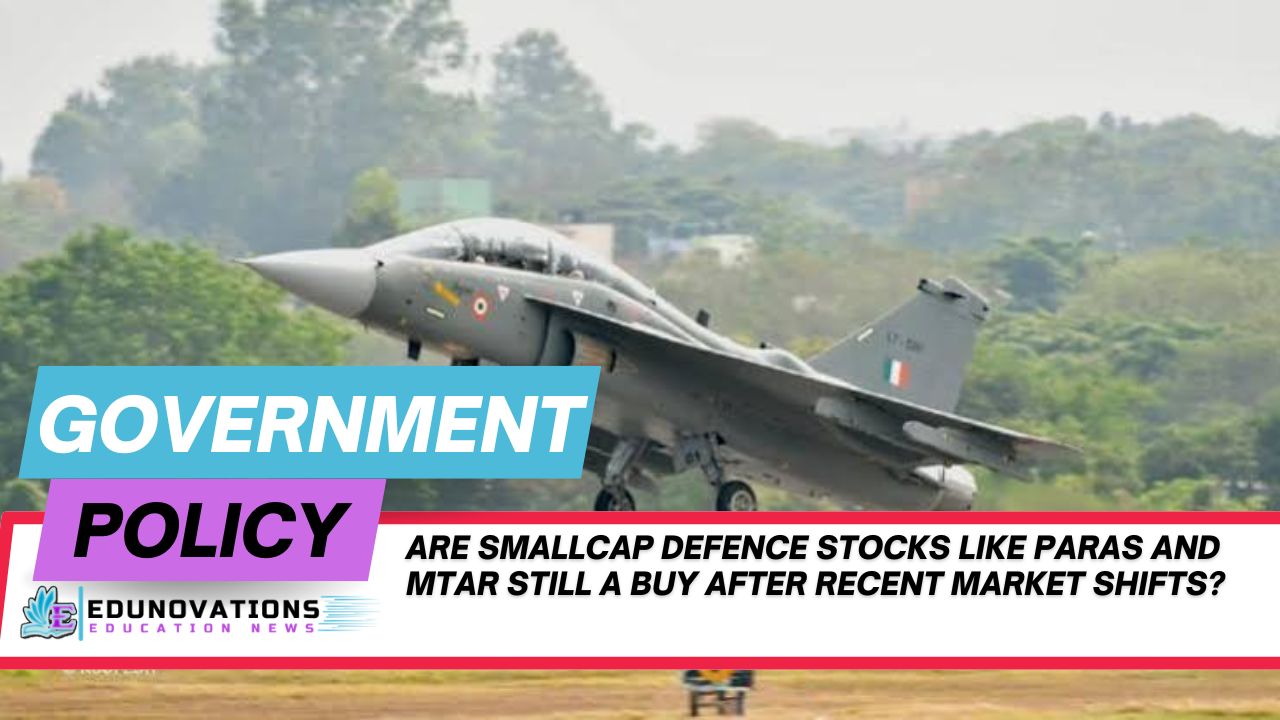
The Indian defence sector has transformed into one of the most dynamic segments of the domestic capital markets.
The Indian defence sector has transformed into one of the most dynamic segments of the domestic capital markets. Driven by massive government pushes for self-reliance, massive export orders, and continuous positive indigenisation lists, defence stocks have captured the imagination of retail and institutional investors alike. High-profile giants like Hindustan Aeronautics Limited (HAL) alongside specialized mid and small-cap players like Paras Defence and Space Technologies and MTAR Technologies have seen meteoric rises. However, after recent market fluctuations, investors are asking a critical question: Are smallcap defence stocks like Paras and MTAR still a buy? Market analysts are closely evaluating whether these counters can deliver explosive returns or if a period of consolidation is inevitable.
The Strategic Growth Drivers of India’s Defence Sector
India’s aggressive push towards defense manufacturing independence has redefined long-term corporate outlooks. Government policies mandating domestic sourcing have created a steady, predictable pipeline of order books for companies across the ecosystem.
- Indigenisation Lists: Successive negative import lists have forced domestic armed forces to procure equipment locally, directly benefiting indigenous original equipment manufacturers (OEMs) and subsystem suppliers.
- Export Ambitions: Indian defense firms are no longer catering solely to domestic requirements. Strategic partnerships and international outreach have opened doors to global supply chains.
- Technological Upgradation: Investments in aerospace, precision engineering, space components, and radar systems have elevated the technological prowess of domestic players.
While aspirants preparing for competitive examinations or seeking structured knowledge often explore dedicated learning resources, keeping track of macroeconomic policy shifts is essential for any modern investor. For structured study materials, candidates often review resources like NCERT Courses or check Current Affairs updates to understand how government budget allocations directly filter down to industrial growth.
Deconstructing the Market Position of Key Defence Players
To understand whether defence counters remain viable investments, financial experts look closely at order book visibility, execution capabilities, and margin sustainability.
Hindustan Aeronautics Limited (HAL)
As a titan in aerospace and aircraft manufacturing, HAL commands immense trust. Its massive order book, spanning light combat aircraft, helicopters, and engine overhauls, provides revenue visibility stretching across years. Analysts often point to HAL as a stable anchor within the defence portfolio, providing steady compounding alongside strategic growth.
Paras Defence and Space Technologies
Specializing in optics, defense electronics, and heavy engineering, Paras Defence operates in niche segments with high entry barriers. Its involvement in space research and specialized defense optics gives it a unique competitive edge.
MTAR Technologies
MTAR plays a vital role in precision engineering, catering to clean energy, nuclear, and aerospace sectors alongside core defense segments. Its high-precision machining capabilities make it an irreplaceable vendor for complex technological assemblies.
Expert Insights and Valuation Concerns
Despite strong fundamentals, market analysts caution that valuations in the defense sector remain elevated. Following a phase of explosive multibagger rallies, price-to-earnings (P/E) multiples for many defense stocks have expanded significantly.
Renowned market strategist and veteran investor Porinju Veliyath has frequently commented on the broader dynamics of the Indian manufacturing and small-cap segments. While noting the structural long-term tailwinds supporting domestic companies, Veliyath often emphasizes that “investors must look beyond short-term hype and carefully evaluate execution timelines, balance sheet strength, and real earnings growth before chasing high valuations in niche manufacturing counters.” His perspective underscores the necessity of disciplined stock selection rather than blind momentum chasing.
When analyzing complex industrial data or studying corporate balance sheets, students and market researchers often utilize analytical tools, practice modules like MCQ’s, or reference materials available via Notes to sharpen their financial literacy. Furthermore, institutional frameworks and educational roadmaps can be explored through structured Videos and the official Syllabus guides. Those seeking deeper academic or foundational texts can find resources for Downloads of Free NCERT PDFs and visual learning aids like NCERT Mind Maps.
Beyond financial metrics, the physical infrastructure supporting India’s educational and corporate institutions continues to evolve rapidly. For instance, institutions looking to upgrade their digital and administrative infrastructure frequently collaborate with specialized technology providers like Mart Infotech to streamline their digital presence and operational workflows.
Evaluating Growth Potential and Risk Factors
While the long-term structural narrative remains robust, market participants must weigh potential headwinds:
- Valuation Stretching: High expectations are already priced into many counters, leaving little room for operational disappointments or execution delays.
- Execution Risks: Defence manufacturing involves long gestation periods and stringent quality testing. Any delay in component delivery can impact quarterly earnings.
- Regulatory and Budgetary Shifts: Government policy continuity and defense budget allocations remain the primary oxygen supply for these companies.
Strategic Takeaways for Retail Investors
Rather than deploying capital lump-sum into volatile mid and small-cap defense counters, financial planners often recommend a systematic investment approach (SIP). Accumulating quality assets during market corrections allows investors to build positions safely while mitigating near-term volatility.
Toppers Use Mind Maps to score more than 95%
NCERT Class 11th Commerce Mind Maps
Add to cartOriginal price was: ₹999.00.₹199.00Current price is: ₹199.00.NCERT Class 12th Chemistry Mind Maps
Add to cartOriginal price was: ₹199.00.₹75.00Current price is: ₹75.00.NCERT Class 12th Commerce Mind Maps
Add to cartOriginal price was: ₹999.00.₹199.00Current price is: ₹199.00.NCERT Class 12th Science Mind Maps
Add to cartOriginal price was: ₹999.00.₹199.00Current price is: ₹199.00.NCERT Mind Maps For Class 10th
Add to cartOriginal price was: ₹999.00.₹199.00Current price is: ₹199.00.





Purchase Today
Frequently Asked Questions
- Are smallcap defence stocks like Paras and MTAR still a buy? Yes, they remain attractive for long-term investors due to niche technological capabilities, but current valuations require careful entry strategies and patience during market consolidations.
- What are analyst views on HAL and Paras Defence explosive return potential? Analysts maintain a positive long-term outlook citing strong order books and indigenisation policies, though they advise tempering near-term return expectations due to rich valuations.
- Do indigenisation list reforms make defence stocks good long term? Positive indigenisation lists legally mandate local sourcing by armed forces, providing a secure, long-term revenue moat for domestic defense manufacturers.
- Will MTAR Tech and HAL deliver high returns after market correction? Market corrections help rationalize stretched valuations, making fundamentally sound companies like HAL and MTAR healthier accumulation candidates for future growth.
- What makes Paras Defence unique in the Indian market? Paras Defence specializes in high-barrier segments including defense optics, electromagnetic pulse protection solutions, and space research components.
- How does MTAR Technologies contribute to the defense sector? MTAR provides high-precision engineering assemblies, ball screws, and critical components utilized in aerospace, defense, and nuclear sectors.
- Why are defense stock valuations considered high? Rapid multi-year rallies driven by high investor enthusiasm and strong future growth projections have pushed price-to-earnings ratios well above historical market averages.
- What role do government budgets play in defense stock performance? Annual defense allocations and capital expenditure outlays directly dictate the procurement volume and order inflow potential for domestic manufacturing firms.
- Is it better to invest in large-cap or small-cap defense stocks? Large-caps like HAL offer stability and consistent execution, whereas small-caps like Paras and MTAR offer higher growth potential coupled with increased volatility.
- How can retail investors safely invest in defense equities? Investors can mitigate volatility by adopting a phased accumulation strategy, focusing on companies with clean balance sheets and robust order books.