In an era defined by rapid technological disruptions, traditional arts and crafts face an existential threat from mass-produced counterfeit items.
Introduction to the Digital Transformation in Traditional Craftsmanship
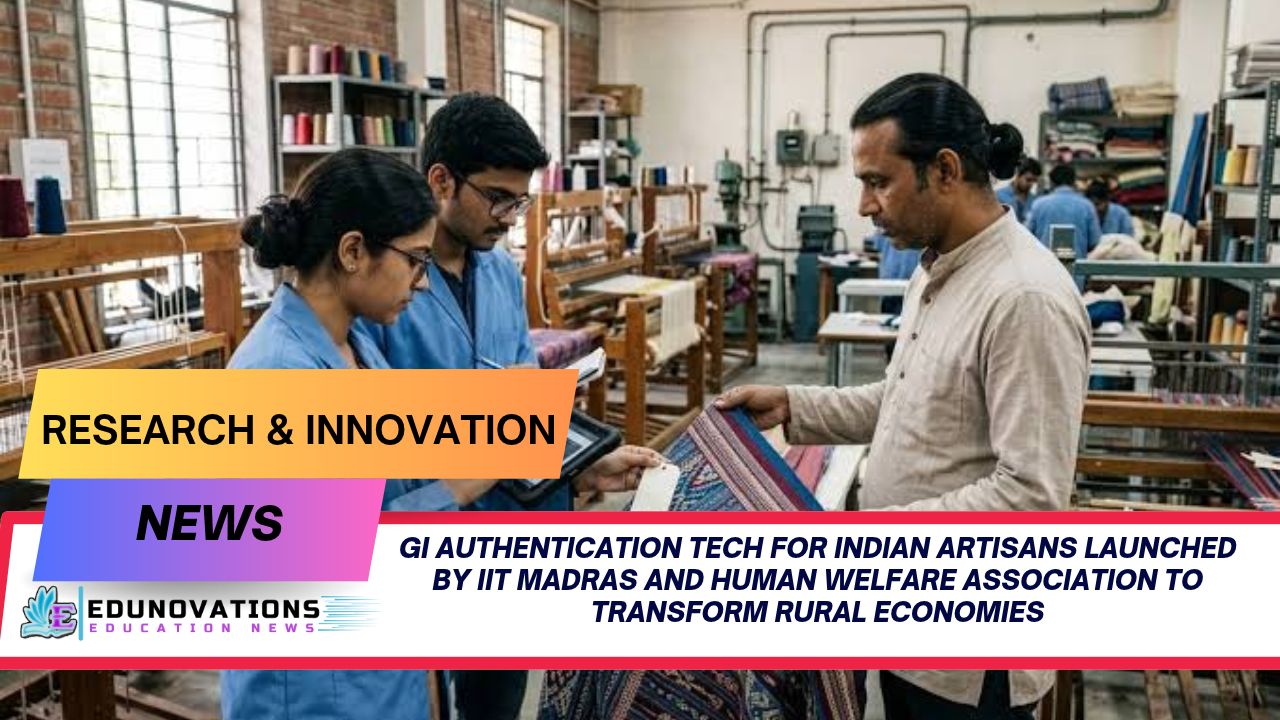
In an era defined by rapid technological disruptions, traditional arts and crafts face an existential threat from mass-produced counterfeit items. To combat this crisis, the Indian Institute of Technology Madras (IIT Madras) has joined hands with the Human Welfare Association (HWA) to roll out a pioneering digital initiative. By deploying cutting-edge GI authentication tech for Indian artisans, this strategic partnership seeks to safeguard geographical indication (GI) tags, ensure absolute supply chain visibility, and secure the financial futures of millions of traditional craftspeople across the country.
As modern educational paradigms shift to integrate digital literacy with vocational heritage, students and researchers exploring these nationwide systemic changes frequently rely on foundational references such as NCERT Courses to build structural academic models. Understanding how deep-tech engineering interventions support micro-economies requires a closer look at the memorandum of understanding (MoU) signed by institutional leaders, the technological mechanics of product traceability, and the socioeconomic ripple effects expected across rural sectors.
The Visionary Collaboration Behind the Initiative
The official partnership was formally sealed through a Memorandum of Understanding (MoU) signed by key figures from both collaborating organizations. The agreement was executed by Dr. Rajni Kant, General Secretary of the Human Welfare Association—widely celebrated across administrative circles for his relentless grassroots advocacy in securing GI registrations—and Prof. Manu Santhanam, Dean of Corporate Stakeholder Relations (CSR) at IIT Madras.
The high-profile signing ceremony took place under the esteemed guidance and presence of Prof. V. Kamakoti, Director of IIT Madras, alongside project coordinators Prof. M. Manivannan and Prof. John Augustine. This coalition merges premier academic research with deep-rooted community-level mobilization.
Reflecting on the broader vision of a self-reliant economy, institutional leaders emphasized that modern engineering must solve localized socio-economic bottlenecks. For educational administrators, school planners, and digital infrastructure seekers looking to scale institutional tech frameworks, specialized developmental partners like Mart Ind Infotech offer comprehensive web architecture solutions.
Bridging the Trust Deficit in Traditional Markets
For decades, traditional weavers, handicraft makers, and rural creators have suffered from rampant market exploitation. Unscrupulous middlemen often flood domestic and international markets with cheap duplicate items masquerading as authentic regional crafts. This not only erodes consumer confidence but also deprives original creators of rightful financial compensation.
The integration of advanced digital tools addresses this trust deficit head-on. By establishing tamper-proof digital identities for regional specialties, consumers can instantly verify the authenticity of a product before making a purchase. This transparency encourages conscious consumerism, ensuring that premium pricing directly benefits the artisan rather than exploitative supply chain intermediaries.
+-----------------------------------------------------------------+
|               Traditional Artisan Supply Chain Flow             |
+-----------------------------------------------------------------+
  [ Raw Material Procurement ] ---> [ Handcrafting by Artisan ]
                 |
                 v
  [ Digital GI Authentication & Traceability Tagging ]
                 |
                 v
  [ Consumer Verification via Mobile / Blockchain Interface ]
                 |
                 v
  [ Direct Market Access & Fair Compensation ]
+-----------------------------------------------------------------+
Students tracking these evolving industry standards can review structured Current Affairs updates to stay aligned with national policy frameworks affecting rural micro-enterprises.
Key Pillars of the Artisan Empowerment Framework
The collaborative framework relies on several multi-disciplinary pillars designed to scale effortlessly across diverse geographical clusters:
- Digital Provenance and Traceability: Utilizing cryptographic tagging and decentralized ledger concepts to map every step of a product’s journey from rural looms to urban storefronts.
- Capacity Building and Digital Literacy: Training local artisan communities to interact seamlessly with mobile-based verification interfaces.
- Market Access Expansion: Connecting remote craft clusters directly with global e-commerce channels through verified digital badges.
- Intellectual Property Protection: Safeguarding localized geographical indications against international misappropriation and unauthorized mass duplication.
For deeper analytical breakdowns of how data structures manage logistical records, learners can access curated Notes designed for technical and vocational study programs.
Expert Perspectives on Technology and Cultural Heritage
The urgency and potential scale of this project have drawn widespread acclaim from leading academic and social authorities across India. Prof. M. Manivannan from the Department of Applied Mechanics and Biomedical Engineering at IIT Madras highlighted the massive demographic weight of the sector during the launch deliberations.
“Artisans form India’s second-largest population; empowering them with technology can drive transformative impact. At IIT Madras, we are committed to advancing this vision of a Viksit Bharat by the use of technology.”
Echoing these sentiments, Dr. Rajni Kant, General Secretary of the Human Welfare Association, noted that bridging rural manufacturing with high-tech verification will revitalize fading art forms. Scholars and researchers looking to test their comprehension of these technological integrations can evaluate concept-based MCQ’s covering digital governance and social engineering.
Driving Socio-Economic Growth and Global Reach
The introduction of verifiable traceability mechanisms unlocks unprecedented economic advantages for rural cooperatives:
- Fair Compensation: Transparency guarantees that skilled labor commands premium market rates.
- Heritage Preservation: Protecting regional designs against unauthorized international copycats ensures centuries-old cultural knowledge survives.
- Intergenerational Continuity: Sustainable livelihood opportunities encourage younger generations to continue traditional family crafts rather than migrating to congested urban centers for low-wage labor.
Visual learners and academic faculties examining the structural hierarchies of national development can explore detailed NCERT Mind Maps for conceptual clarity. Furthermore, comprehensive audio-visual explainers are available via Videos to help students map industrial evolution.
Overcoming Implementation Challenges in Rural Sectors
Despite its massive potential, deploying high-tech authentication across remote artisan clusters presents logistical hurdles. Low digital literacy rates, erratic internet connectivity in remote villages, and initial resistance to software-based tracking systems require patient, community-centric deployment strategies.
The Artisan Empowerment Lab at IIT Madras is actively designing low-bandwidth, user-friendly mobile applications tailored specifically to the unique constraints of rural manufacturing belts. By prioritizing simplicity and offline verification capabilities, the initiative ensures that elderly or non-tech-savvy artisans can participate effortlessly without depending heavily on third-party digital intermediaries.
Future Outlook: Scaling the Model Nationwide
As the pilot phases roll out across selected clusters, the long-term objective remains national scaling. Government bodies, industry chambers, and social-development organizations are closely monitoring the project’s trajectory. If successful, this framework could serve as a national blueprint for safeguarding traditional manufacturing sectors, aligning perfectly with India’s broader push toward digital self-reliance and inclusive economic growth.
For educators and curriculum developers seeking official academic guidelines, comprehensive Syllabus documentation outlines how technical skill integration fits into modern educational frameworks. Additionally, educators can access Free NCERT PDFs for foundational reading materials.
Toppers Use Mind Maps to score more than 95%
-
NCERT Class 11th Commerce Mind Maps
Add to cartOriginal price was: ₹999.00.₹199.00Current price is: ₹199.00. -
NCERT Class 12th Chemistry Mind Maps
Add to cartOriginal price was: ₹199.00.₹75.00Current price is: ₹75.00. -
NCERT Class 12th Commerce Mind Maps
Add to cartOriginal price was: ₹999.00.₹199.00Current price is: ₹199.00. -
NCERT Class 12th Science Mind Maps
Add to cartOriginal price was: ₹999.00.₹199.00Current price is: ₹199.00. -
NCERT Mind Maps For Class 10th
Add to cartOriginal price was: ₹999.00.₹199.00Current price is: ₹199.00.





Purchase Today
Frequently Asked Questions (FAQs)
- What is the primary objective of the IIT Madras GI tagged products authentication technology initiative? The primary objective is to empower traditional artisans by deploying digital traceability and GI authentication tools to prevent counterfeiting, build consumer trust, and ensure fair compensation.
- Which organizations signed the MoU for this artisan empowerment project?The collaboration was established through an MoU signed between the Indian Institute of Technology Madras (IIT Madras) and the Human Welfare Association (HWA).
- Who signed the agreement on behalf of the Human Welfare Association? The agreement was signed by Dr. Rajni Kant, General Secretary of the Human Welfare Association.
- Who witnessed and represented the partnership from IIT Madras? The MoU was signed by Prof. Manu Santhanam, Dean (CSR), in the presence of Prof. V. Kamakoti, Director, IIT Madras, along with project coordinators Prof. M. Manivannan and Prof. John Augustine.
- Which department at IIT Madras is leading the technical execution of this project?The initiative is spearheaded by faculty members from the Department of Applied Mechanics and Biomedical Engineering at IIT Madras.
- How does GI authentication help traditional Indian artisans? It allows consumers to verify product origins instantly, protecting genuine hand-woven and handcrafted goods from cheap imitation copycats in the market.
- What role does digital traceability play in craft supply chains? Digital traceability maps every stage of production from raw materials to final retail, eliminating unauthorized middlemen and protecting artisan profit margins.
- How does this initiative support the vision of a Viksit Bharat?By uplifting India’s second-largest demographic sector—artisans—through scalable deep-tech innovations, the project fosters inclusive and sustainable rural economic growth.
- Where can researchers find educational resources regarding technological social impact? Researchers can utilize structured academic portals and curriculum archives to study the intersection of digital transformation and community development.
- What future steps are anticipated for this collaboration? Future steps involve deploying pilot verification systems across artisan clusters, scaling mobile-friendly interfaces, and integrating multi-stakeholder government support.