Discover how EP67 molecule works as a safer vaccine adjuvant in a groundbreaking study from IIT Kanpur revealing novel immune activation techniques.
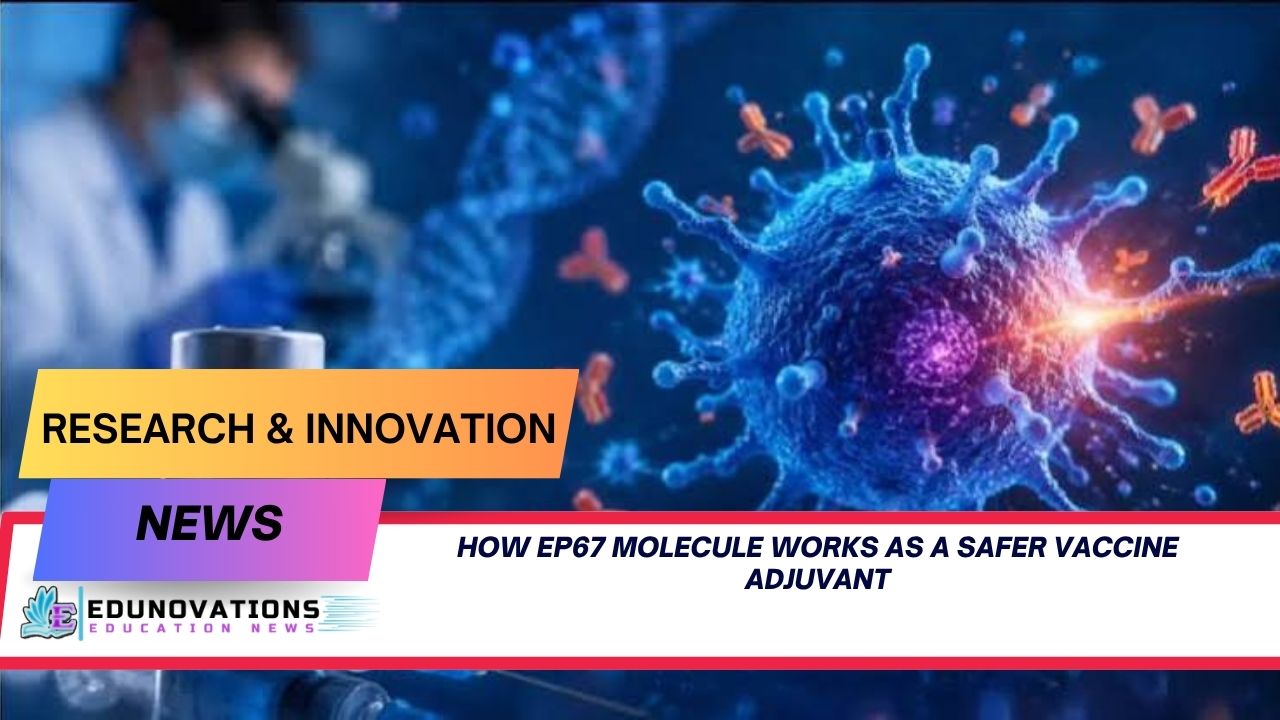
The landscape of modern immunology and vaccination science has reached a monumental milestone. Researchers have long grappled with a delicate balance in medical formulations: how to trigger a potent, long-lasting defense against bacterial and viral infections without setting off a cascade of destructive, collateral inflammation in healthy human tissue. A revolutionary study has now cracked open this biological puzzle. Spearheaded by a dedicated team of scientists, this breakthrough centers entirely on understanding how EP67 molecule works as a safer vaccine adjuvant to revolutionize the future of immunization and prophylactic treatments worldwide.
Understanding the Mechanics of Modern Adjuvants
When human beings encounter foreign pathogens, our biological defense systems naturally release specific signaling proteins. Among these, a small protein known as C5a acts as an initial alarm, priming the biological architecture to fight back. However, prolonged or excessive presence of C5a induces severe inflammation, which frequently damages healthy host tissues.
To circumvent this hurdle, pharmaceutical and academic researchers focus on designing advanced vaccine additives. An adjuvant is essentially a substance formulated into a vaccine to enhance the recipient’s immune response. Traditional options often stimulate aggressive systemic reactions, making the hunt for targeted, gentle alternatives an urgent priority.
Detailed scientific investigations have consistently shown that targeted molecular manipulation can drastically reduce adverse side effects. Students and aspirants preparing for competitive examinations or advanced biological sciences can explore structured study modules by checking out NCERT Courses or reviewing comprehensive topics via Current Affairs. Grasping these foundational concepts is crucial for understanding modern pharmacology.
The Genesis of EP67: A Precision-Engineered Peptide
To resolve the inflammatory dilemma, scientists looked directly to natural human safety mechanisms. They engineered a stripped-down, synthetic mimic of the C5a protein—a short chain consisting of merely ten amino acids, formally designated as EP67.
Unlike the full-length protein, EP67 selectively retains the beneficial immunostimulatory properties of C5a while discarding the aggressive inflammatory pathways. When introduced, it gently wakes up critical defensive cells—specifically dendritic cells and macrophages—which orchestrate long-term bodily protection. Simultaneously, it exerts virtually zero stimulation on neutrophils, the primary drivers of unwanted tissue damage.
For students aiming to reinforce their preparation, reviewing structured Notes or testing knowledge through interactive MCQs can provide deep clarity on cellular immunology. Furthermore, visual learners can benefit greatly from watching explanatory academic Videos to map out complex receptor interactions.
Cellular Targets: What is C5aR1 Receptor in Immune Cells
To fully appreciate the significance of this milestone, one must examine the specific binding sites on cellular membranes. A frequent question among scholars is what is C5aR1 receptor in immune cells and why it holds such immense pharmacological value.
The C5aR1 receptor belongs to a massive superfamily known as G protein-coupled receptors (GPCRs). These specialized receptors are embedded directly within the outer lipid membrane of cells, acting as crucial relay stations that transmit extracellular signals into intracellular responses. In fact, approximately one in every three prescription medicines currently available on the global market targets a GPCR.
EP67 binds directly to and activates C5aR1, though in a much milder, controlled fashion compared to the native C5a protein. Utilizing advanced laboratory techniques, including cryo-electron microscopy—which flash-freezes molecules to capture them in near-atomic resolution—researchers successfully mapped how EP67 folds into a distinct hook shape. This unique structural configuration allows it to neatly slot into the center of the receptor and switch it on with pinpoint precision.
To keep pace with the rapidly evolving academic landscape, candidates can track exam patterns and prerequisites by reviewing the updated Syllabus. Additionally, those seeking offline study materials can access free resources for Downloads of Free NCERT PDFs and visual learning aids through NCERT Mind Maps.
The Crucial Role of Dendritic Cells and Macrophages
The efficacy of any modern prophylactic treatment relies heavily on its capacity to engage specific professional antigen-presenting cells. The role of dendritic cells and macrophages in vaccines cannot be overstated, as these cellular sentinels bridge innate and adaptive immunity.
Dendritic cells capture foreign antigens, process them, and present them to T-cells, initiating a tailored immunological memory. Meanwhile, macrophages engulf cellular debris and pathogens while releasing chemical signals that coordinate the broader defensive network. Because EP67 selectively awakens these two populations while sparing inflammatory neutrophils, it establishes an environment conducive to robust protection without clinical toxicity.
Prominent scientific voices have underscored the importance of this discovery. Professor Arun K. Shukla, a leading structural biologist whose laboratory spearheaded the research at the Indian Institute of Technology (IIT) Kanpur, noted: “Knowing the precise structural blueprint of how EP67 fits its target receptor gives us an unprecedented molecular toolkit. We can now rationally redesign and optimize vaccine formulations with surgical precision.”
Adding global perspective to the implications of this study, Dr. Anthony Fauci, renowned immunologist and former director of the U.S. National Institute of Allergy and Infectious Diseases (NIAID), has frequently commented on the future of vaccination technology: “The next frontier in immunology lies in precision engineering—moving away from broad, sledgehammer immune stimulation toward targeted molecular choreography that maximizes efficacy while completely eliminating systemic toxicity.” EP67 represents a monumental stride directly toward that vision.
Advanced Imaging and Pre-Clinical Milestones
The successful visualization of EP67 locked onto C5aR1 was made possible by high-resolution cryo-electron microscopy facilities. Prior to this structural revelation, scientists lacked the exact spatial blueprints needed to systematically improve the molecule for human clinical trials.
Pre-clinical evaluations conducted in animal models have yielded encouraging outcomes. When EP67 was integrated into experimental formulations targeting various viral strains—including the virus responsible for COVID-19—test subjects generated a substantially more robust immune defense and recovered significantly faster than those receiving the baseline vaccine alone. Furthermore, the molecule demonstrated remarkable efficacy against bacterial challenges, including methicillin-resistant Staphylococcus aureus (MRSA), a notorious strain known for resisting multiple common antibiotics.
As research institutions expand their digital and physical infrastructure to support advanced scientific learning and administrative coordination, modern establishments benefit immensely from specialized tech integrations. For academic institutions and digital platforms seeking robust technical execution and web optimization, partnering with expert digital solution providers such as Mart Ind Infotech ensures seamless scalability and digital presence.
Conclusion
The revelation of how EP67 interacts with the C5aR1 receptor marks a turning point in translational immunology. By merging structural biology, cryo-electron microscopy, and rational drug design, scientists have unlocked a pathway toward safer, more effective immunizations. As pre-clinical formulations advance toward clinical validation, this breakthrough promises to reshape global public health standards, offering powerful protection against both viral pandemics and antibiotic-resistant bacterial threats.
Toppers Use Mind Maps to score more than 95%
NCERT Class 11th Commerce Mind Maps
Add to cartOriginal price was: ₹999.00.₹199.00Current price is: ₹199.00.NCERT Class 12th Chemistry Mind Maps
Add to cartOriginal price was: ₹199.00.₹75.00Current price is: ₹75.00.NCERT Class 12th Commerce Mind Maps
Add to cartOriginal price was: ₹999.00.₹199.00Current price is: ₹199.00.NCERT Class 12th Science Mind Maps
Add to cartOriginal price was: ₹999.00.₹199.00Current price is: ₹199.00.NCERT Mind Maps For Class 10th
Add to cartOriginal price was: ₹999.00.₹199.00Current price is: ₹199.00.





Purchase Today
Frequently Asked Questions (FAQs)
- How does EP67 molecule work as a safer vaccine adjuvant?EP67 acts as a synthetic, stripped-down mimic of the C5a protein that selectively stimulates dendritic cells and macrophages while avoiding inflammatory neutrophils, ensuring robust immunity without tissue damage.
- What is C5aR1 receptor in immune cells and why is it important?C5aR1 is a G protein-coupled receptor (GPCR) located on cell membranes that relays external immune signals inward, serving as a primary target for modulating inflammation and vaccine responses.
- What is the role of dendritic cells and macrophages in vaccines?They act as key antigen-presenting and coordinating cells that process foreign threats and build lasting immunological memory when activated by targeted adjuvants.
- How does cryo-electron microscopy help in designing better vaccine boosters?It flash-freezes molecules in near-atomic resolution, allowing researchers to capture precise structural images of molecules like EP67 locked onto their target receptors.
- Why do traditional vaccine adjuvants cause tissue inflammation?Traditional adjuvants often over-stimulate neutrophils and trigger excessive C5a protein activity, leading to prolonged inflammation and collateral damage to healthy cells.
- Can EP67 help fight antibiotic-resistant bacterial infections?Yes, pre-clinical studies have shown that EP67 exhibits a surprising capacity to assist the body in fighting bacterial threats, including drug-resistant strains like MRSA.
- Which research institution led the breakthrough study on EP67?The study was led by the laboratory of Professor Arun K. Shukla in the Department of Biological Sciences and Bioengineering at the Indian Institute of Technology (IIT) Kanpur.
- In which scientific journal was the EP67 research published?The findings were officially published in the prestigious journal Proceedings of the National Academy of Sciences (PNAS).
- How does EP67 differ from the natural C5a protein?While natural C5a can cause harmful, prolonged inflammation in high amounts, EP67 is a shortened, ten-amino-acid peptide designed to work in a much gentler and controlled manner.
- What are the next steps for EP67 following the structural discovery?The subsequent phases involve further refining the chemical formulation, optimizing molecular sturdiness, and advancing through pre-clinical dosing and clinical trials.