Discover the profound sarvepalli radhakrishnan aim of education quote meaning, exploring how true learning builds wisdom, character, and democracy beyond facts.
Every year on September 5th, India observes Teachers’ Day to honor the legacy of Dr. Sarvepalli Radhakrishnan—a visionary statesman, distinguished philosopher, and India’s second President. Among his most influential intellectual contributions is his definition of pedagogy, which challenges the modern obsession with rote memorization and mechanical testing. Unpacking the sarvepalli radhakrishnan aim of education quote meaning reveals a timeless framework designed to transform students from passive recipients of facts into active, ethical, and democratic thinkers.
In an age dominated by artificial intelligence, automated content generation, and rapid information streams, understanding the sarvepalli radhakrishnan aim of education quote meaning has never been more vital. His classic observation reminds educators and students alike that school is not merely a factory for degrees, but a sanctuary for intellectual and moral transformation.
The Master Quote: Information versus Wisdom
To grasp the deeper context, one must examine the original statement delivered by Dr. Radhakrishnan:
“The aim of education is not the acquisition of information, although important, or acquisition of technical skills, though essential in modern society, but the development of that bent of mind, that attitude of reason, that spirit of democracy which will make us responsible citizens.”
When analyzing the sarvepalli radhakrishnan aim of education quote meaning, three distinct tiers of human development emerge:
- Information Gathering: Storing raw facts, dates, definitions, and equations.
- Technical Mastery: Acquiring vocational tools, programming languages, and procedural skills required for employment.
- Intellectual & Ethical Orientation: Cultivating critical thinking, moral responsibility, and democratic engagement.
While modern educational institutions heavily emphasize the first two layers, Dr. Radhakrishnan argued that true learning begins only when we venture into the third. A comprehensive understanding of the sarvepalli radhakrishnan aim of education quote meaning demands that we recognize information as a tool, not the ultimate destination.
Historical Context: The Philosopher-President
Born on September 5, 1888, in Tirutani, Madras Presidency, Dr. Sarvepalli Radhakrishnan earned his academic renown through his mastery of comparative philosophy and Eastern religion. Having served as a professor at the University of Mysore, University of Calcutta, and as the Spalding Professor of Eastern Religions and Ethics at the University of Oxford, his views were forged in world-class academic institutions.
When students and colleagues approached him in 1962 to request permission to celebrate his birthday, Dr. Radhakrishnan famously replied: “Instead of celebrating my birthday, it would be my proud privilege if September 5th is observed as Teachers’ Day.”
Key Milestones in Dr. Radhakrishnan’s Career
- 1931: Knighted for his services to education and philosophy.
- 1939–1948: Served as Vice-Chancellor of Banaras Hindu University (BHU).
- 1949–1952: Served as India’s Ambassador to the Soviet Union.
- 1952–1962: Served as the first Vice-President of India.
- 1962–1967: Served as the second President of India.
- 1954: Awarded the Bharat Ratna, India’s highest civilian honor.
Deconstructing the Three Pillars of Educational Philosophy
To fully unpack the sarvepalli radhakrishnan aim of education quote meaning, we must break down its three primary core pillars:
1. Developing a “Bent of Mind”
Information can be retrieved instantly on a smartphone, but a “bent of mind” refers to how a person processes that information. It represents a disposition toward curiosity, open-mindedness, and intellectual humility. Someone with a developed bent of mind does not accept claims blindly; rather, they analyze evidence, recognize biases, and remain willing to revise their positions when presented with truth.
2. Cultivating an “Attitude of Reason”
An attitude of reason guards against dogma, superstition, and fanatical thinking. In Dr. Radhakrishnan’s worldview, reason acts as a filter that separates productive dialogue from toxic hostility. For students preparing for competitive exams, developing this analytical mind is essential. You can enhance your problem-solving capabilities with curated NCERT Courses and test your knowledge through comprehensive MCQ’s.
3. Fostering a “Spirit of Democracy”
Democracy is more than a system of government; it is a way of living together. A spirit of democracy requires empathy, respect for opposing viewpoints, and a sense of shared responsibility for the public good. Exploring the sarvepalli radhakrishnan aim of education quote meaning shows that education must prepare individuals to participate constructively in civic life. Staying informed on current events through reliable Current Affairs resources is a key part of becoming an engaged citizen.
Global Perspectives and Expert Insights
Modern educational reform movements across the globe reflect Dr. Radhakrishnan’s mid-20th-century foresight. Prominent contemporary figures continue to echo his sentiments regarding holistic development over mechanical learning.
Dr. A.P.J. Abdul Kalam, former President of India and renowned scientist, frequently emphasized a similar sentiment:
“Real education enhances the dignity of a human being and increases his or her self-respect. If only the real sense of education could be realized by each individual, the world would be a much better place.”
Furthermore, UNESCO’s International Commission on Education highlighted four pillars of learning in its seminal report:
- Learning to know: Acquiring the instruments of understanding.
- Learning to do: Being able to act creatively on one’s environment.
- Learning to live together: Participating and cooperating with others in all human activities.
- Learning to be: Developing one’s personality and being able to act with autonomy, judgment, and personal responsibility.
These four international pillars directly align with the core message embedded within the sarvepalli radhakrishnan aim of education quote meaning.
The Modern Relevance: AI, Data Overload, and Character Building
In today’s digital age, information is ubiquitous. Search engines and artificial intelligence models can answer factual queries in milliseconds. Yet, the presence of vast information has not automatically created a wiser or more harmonious society.
Why Radhakrishnan’s Vision Matters Today
- Information Inflation: When facts are freely available, the market value of pure memorization drops to zero. What increases in value is critical evaluation, ethical reasoning, and synthesis.
- Civic Polarization: Social media algorithms frequently encourage echo chambers and emotional outrage. An “attitude of reason” serves as a crucial antidote to online misinformation.
- Digital Literacy: True education equips students to discern credible evidence from noise. Learners seeking structured study materials can access well-organized Notes and explore complete Syllabus outlines to streamline their academic preparation.
School administrators looking to upgrade their institutional platforms and digital infrastructure can explore custom web solutions from Mart Ind Infotech.
Comparative Analysis: Information vs. Knowledge vs. Wisdom
Understanding the sarvepalli radhakrishnan aim of education quote meaning requires a clear differentiation between cognitive stages:
| Attribute | Information | Technical Skill | Wisdom (Radhakrishnan’s Ideal) |
| Primary Focus | Facts, data, and definitions | Procedural ability and coding | Critical judgment, ethics, and reason |
| Acquisition Method | Reading, searching, listening | Practice, repetition, and training | Reflection, dialogue, and self-analysis |
| Primary Goal | Knowledge storage | Career competence | Civic responsibility and inner harmony |
| Modern Risk | Information overload | Skill obsolescence due to automation | None; timeless human capacity |
To support structured learning across these levels, students can download free educational resources, including Free NCERT PDFs and visual learning tools like NCERT Mind Maps. To reinforce complex concepts through visual media, explore targeted educational content via structured Videos.
Practical Applications for Educators and Institutions
Translating the sarvepalli radhakrishnan aim of education quote meaning into classroom practice requires structural shifts in pedagogy:
1. Shift from Lecture to Socratic Dialogue
Instead of delivering non-stop lectures, teachers should ask probing questions that challenge students to evaluate assumptions, justify opinions, and analyze ethical dilemmas.
2. Emphasize Interdisciplinary Studies
Connecting science, literature, ethics, and history helps students recognize that technical knowledge operates within social and moral contexts.
3. Encourage Community Engagement
Civic responsibility cannot be learned solely from textbooks. Integrating community service and peer collaboration embeds the democratic spirit directly into daily learning.
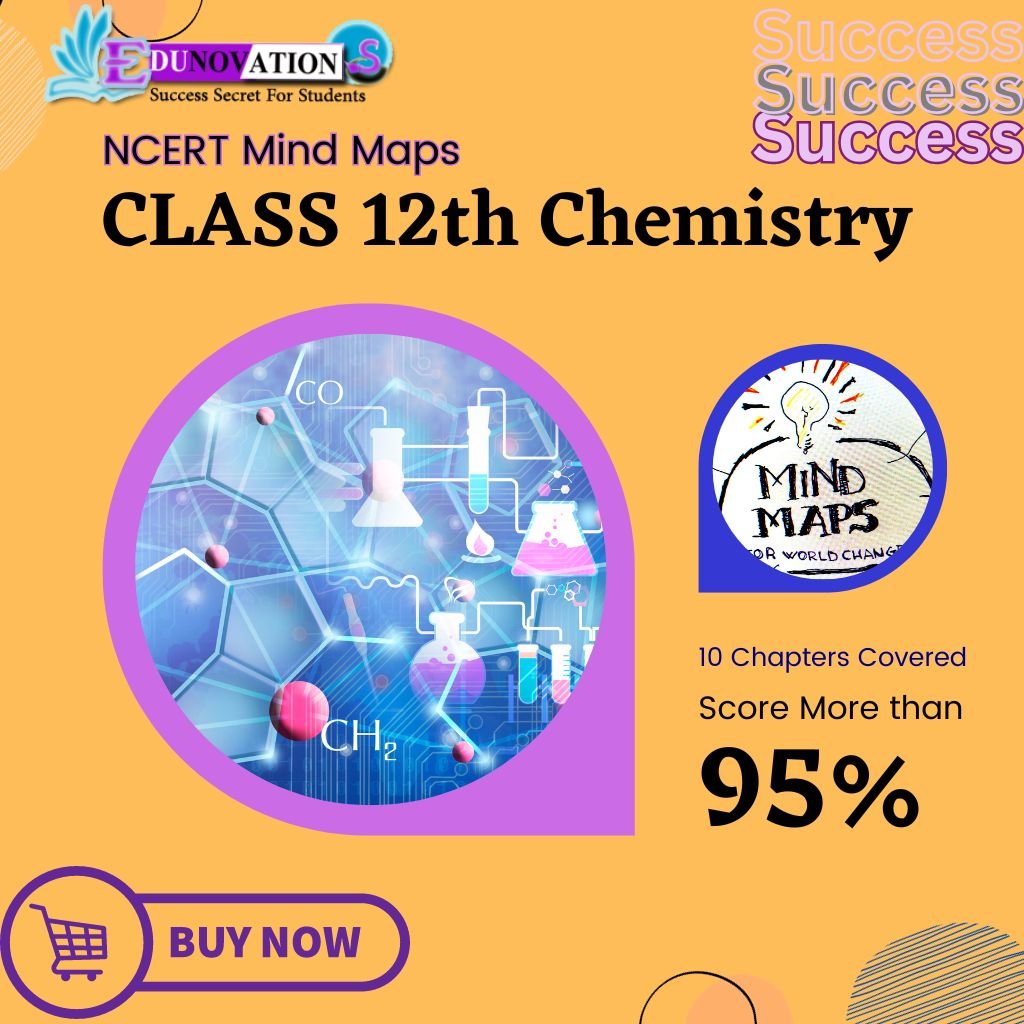
Toppers Use Mind Maps to score more than 95%
NCERT Class 11th Commerce Mind Maps
Add to cartOriginal price was: ₹999.00.₹199.00Current price is: ₹199.00.NCERT Class 12th Chemistry Mind Maps
Add to cartOriginal price was: ₹199.00.₹75.00Current price is: ₹75.00.NCERT Class 12th Commerce Mind Maps
Add to cartOriginal price was: ₹999.00.₹199.00Current price is: ₹199.00.NCERT Class 12th Science Mind Maps
Add to cartOriginal price was: ₹999.00.₹199.00Current price is: ₹199.00.NCERT Mind Maps For Class 10th
Add to cartOriginal price was: ₹999.00.₹199.00Current price is: ₹199.00.


Purchase Today
Frequently Asked Questions (FAQs)
1. What is the core message of the sarvepalli radhakrishnan aim of education quote meaning?
The core message is that true education extends far beyond memorizing facts or learning job skills. It focuses on developing critical reasoning, moral judgment, and a democratic spirit to turn students into responsible citizens.
2. How can teachers apply dr radhakrishnan quotes on education for teachers day in the classroom?
Teachers can use these quotes to launch classroom discussions about ethics, critical thinking, and civic duty, helping students see beyond grades and competitive testing.
3. What is the real aim of education according to radhakrishnan when compared to modern schooling?
While modern schooling often prioritizes standardized test scores and immediate job readiness, Dr. Radhakrishnan argued that the real aim is character building, rational inquiry, and cultivating a mind capable of democratic participation.
4. What was the radhakrishnan view on modern education system vs information overload?
Dr. Radhakrishnan recognized that accumulating information is only a basic step. Without the ability to convert information into wisdom through reason, data overload leads to confusion rather than enlightenment.
5. How radhakrishnan defined democratic aim of education in his speeches?
He defined the democratic aim as instilling mutual respect, open-mindedness, tolerance for differing views, and a sense of moral obligation toward society.
6. Why is Teachers’ Day celebrated on Dr. Radhakrishnan’s birthday?
When his students asked to celebrate his birthday on September 5, 1962, he requested that the day instead be dedicated to honoring the contributions of all teachers across India.
7. How does the philosophy of Dr. Radhakrishnan align with the National Education Policy (NEP)?
The National Education Policy emphasizes critical thinking, conceptual understanding, and ethical values over rote learning, aligning directly with Dr. Radhakrishnan’s vision.
8. What is the difference between technical skills and true education according to Dr. Radhakrishnan?
Technical skills enable an individual to perform specific tasks for employment, whereas true education shapes their character, reasoning capacity, and social accountability.
9. Why is an “attitude of reason” critical for students today?
An attitude of reason enables students to evaluate news critically, resist misinformation, avoid dogmatism, and make decisions based on logic and ethics.
10. Where can students find supplementary study resources aligned with holistic learning?
Students can access structured educational aids, practice tests, and syllabus updates through dedicated academic portals to complement their school curriculum.