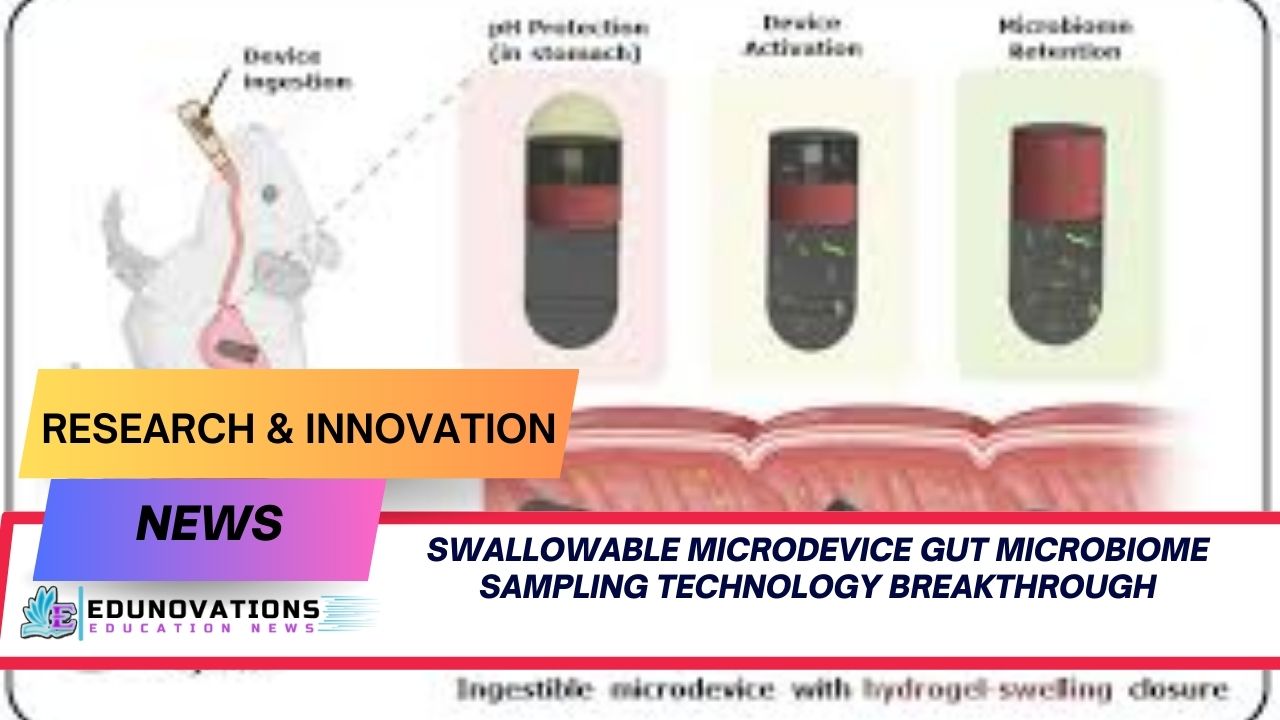
Swallowable microdevice gut microbiome sampling technology developed by IIT Delhi and AIIMS enables non-invasive intestinal health research and early disease detection.
Introduction
The human gut has long been recognized as a complex ecosystem that plays a crucial role in digestion, immunity, metabolism, and even mental health. Yet, studying the small intestine—the most critical region for nutrient absorption—has remained a major scientific challenge. In a landmark achievement, Indian researchers have now introduced swallowable microdevice gut microbiome sampling technology, a pioneering solution that promises to redefine how intestinal health is studied.
Developed through a collaborative effort between the Indian Institute of Technology (IIT) Delhi and the All India Institute of Medical Sciences (AIIMS), this ingestible device allows researchers and clinicians to collect microbial samples directly from the small intestine without invasive procedures. Experts believe that swallowable microdevice gut microbiome sampling technology could accelerate breakthroughs in disease diagnosis, personalized medicine, and preventive healthcare.
This innovation places India at the forefront of biomedical engineering while opening new possibilities for non-invasive gut research worldwide.
Why Studying the Gut Microbiome Matters
The gut microbiome consists of trillions of microorganisms that influence nearly every system in the human body. Scientific studies increasingly link gut health to conditions such as:
- Inflammatory bowel disease (IBD)
- Diabetes and obesity
- Autoimmune disorders
- Neurological conditions
- Cardiovascular diseases
Despite its importance, accessing microbial data from the small intestine has remained difficult. Traditional stool sample analysis mostly reflects the colon, offering limited insight into the small intestine where digestion begins. This gap is where swallowable microdevice gut microbiome sampling technology becomes transformative.
Limitations of Existing Gut Sampling Methods
Before this innovation, doctors relied on methods that were either invasive or imprecise:
- Endoscopy: Requires hospital infrastructure and patient sedation
- Biopsy procedures: Invasive, uncomfortable, and costly
- Stool sample analysis: Does not accurately represent the small intestine
Because of these limitations, large-scale population studies on gut health were difficult to conduct. Researchers emphasize that swallowable microdevice gut microbiome sampling technology addresses these gaps with minimal discomfort and maximum data accuracy.
How the Swallowable Microdevice Works
The ingestible microdevice is designed as a capsule-sized system that patients can swallow easily. Once inside the gastrointestinal tract, it travels naturally through the digestive system.
Key features include:
- A micro-sampling mechanism that activates in the small intestine
- Protective design to prevent contamination from other gut regions
- Safe materials approved for biomedical use
- Natural excretion after sample collection
According to biomedical engineers involved in the project, swallowable microdevice gut microbiome sampling technology enables targeted microbial collection while preserving sample integrity—something earlier technologies struggled to achieve.
Engineering Excellence Behind the Innovation
The device represents a fusion of mechanical engineering, material science, and clinical medicine. Researchers from IIT Delhi designed the micro-engineering framework, while AIIMS scientists validated its clinical feasibility.
Experts note that swallowable microdevice gut microbiome sampling technology reflects years of interdisciplinary collaboration. The innovation also demonstrates how academic institutions can convert laboratory research into practical healthcare tools.
Expert Insights on the Breakthrough
Leading gastroenterologists have welcomed the development. According to senior clinicians, non-invasive access to the small intestine could revolutionize diagnosis and treatment planning.
One prominent medical researcher remarked that swallowable microdevice gut microbiome sampling technology could enable earlier detection of gut-related diseases, reducing dependency on complex hospital procedures. Biomedical experts also highlight its potential role in precision medicine.
Implications for Early Disease Detection
Early detection remains the cornerstone of effective treatment. With swallowable microdevice gut microbiome sampling technology, clinicians may soon identify microbial imbalances linked to disease long before symptoms appear.
Potential diagnostic applications include:
- Early markers of gastrointestinal disorders
- Monitoring post-surgery gut recovery
- Tracking treatment response in chronic illnesses
- Studying antibiotic resistance patterns
Researchers emphasize that such insights were previously inaccessible on a large scale.
Impact on Personalized Medicine
Personalized medicine aims to tailor treatments based on individual biological data. Since gut microbiota varies widely among individuals, swallowable microdevice gut microbiome sampling technology could play a pivotal role in customizing dietary plans, probiotic therapies, and drug dosages.
Medical researchers believe this innovation will bridge the gap between laboratory research and real-world clinical practice.
Global Relevance of the Technology
Although developed in India, the relevance of swallowable microdevice gut microbiome sampling technology is global. Countries facing rising cases of lifestyle diseases could benefit significantly from scalable gut health screening.
International research communities have already expressed interest in collaborating with Indian institutions to expand clinical trials and explore commercialization pathways.
Strengthening India’s Research Ecosystem
This achievement further strengthens India’s reputation in health technology innovation. By combining engineering excellence with clinical expertise, Indian institutions are delivering solutions that match global standards.
Students preparing for competitive exams can explore similar innovations through structured learning resources such as NCERT Courses, Current Affairs updates, Notes, MCQs, Videos, Syllabus guidance, free NCERT PDF downloads, and NCERT Mind Maps available on trusted educational platforms.
Role of Education and Skill Development
Experts argue that innovations like swallowable microdevice gut microbiome sampling technology highlight the importance of interdisciplinary education. Training students in biomedical engineering, data science, and clinical research will be crucial for sustaining such advancements.
Educational platforms offering structured learning and exam-oriented resources help build awareness among future scientists and healthcare professionals.
Technology, Industry, and Commercial Potential
Beyond research, this innovation has strong commercialization prospects. Health-tech startups and medical device manufacturers may adapt swallowable microdevice gut microbiome sampling technology for mass production, reducing costs and expanding accessibility.
For schools and institutions looking to integrate technology-driven learning infrastructure, professional solutions from trusted IT service providers such as Mart Ind Infotech can support digital transformation initiatives.
Ethical and Safety Considerations
Safety remains paramount in biomedical innovation. Researchers confirm that swallowable microdevice gut microbiome sampling technology complies with medical safety standards and undergoes rigorous testing before clinical deployment.
Ethical committees have also emphasized patient consent, data privacy, and transparent clinical protocols to ensure responsible usage.
Future Research Directions
Looking ahead, scientists aim to enhance the device’s capabilities. Possible upgrades include:
- Real-time data transmission
- Integration with AI-driven analytics
- Multi-region sampling within the gut
- Pediatric-friendly designs
As research expands, swallowable microdevice gut microbiome sampling technology could become a standard tool in hospitals and diagnostic centers.
Why This Innovation Matters for Public Health
Public health experts believe scalable gut microbiome studies could influence national healthcare policies. Insights generated using swallowable microdevice gut microbiome sampling technology may guide nutritional guidelines, preventive care strategies, and disease management programs.
This aligns with global efforts to shift healthcare from reactive treatment to proactive prevention.
Conclusion
The development of swallowable microdevice gut microbiome sampling technology marks a defining moment in biomedical research. By enabling non-invasive, accurate, and scalable sampling of the small intestine, this innovation addresses a long-standing challenge in medical science.
As clinical trials expand and industry partnerships emerge, experts predict this technology will reshape how gut health is understood and managed. With strong academic foundations, ethical oversight, and global relevance, India’s contribution through this breakthrough stands as a powerful example of innovation driven by collaboration and scientific excellence.
Toppers Use Mind Maps to score more than 95%
NCERT Class 11th Commerce Mind Maps
Add to cartOriginal price was: ₹999.00.₹199.00Current price is: ₹199.00.NCERT Class 12th Chemistry Mind Maps
Add to cartOriginal price was: ₹199.00.₹75.00Current price is: ₹75.00.NCERT Class 12th Commerce Mind Maps
Add to cartOriginal price was: ₹999.00.₹199.00Current price is: ₹199.00.NCERT Class 12th Science Mind Maps
Add to cartOriginal price was: ₹999.00.₹199.00Current price is: ₹199.00.NCERT Mind Maps For Class 10th
Add to cartOriginal price was: ₹999.00.₹199.00Current price is: ₹199.00.





Purchase Today
Frequently Asked Questions (FAQs)
1. What is swallowable microdevice gut microbiome sampling technology?
It is an ingestible medical device that collects microbial samples from the small intestine non-invasively.
2. Who developed this gut sampling technology?
Researchers from IIT Delhi and AIIMS jointly developed the technology.
3. Why is small intestine microbiome sampling important?
The small intestine plays a key role in digestion and immunity, yet it is difficult to study using traditional methods.
4. Is the device safe for human use?
Yes, swallowable microdevice gut microbiome sampling technology follows biomedical safety standards.
5. How does this technology help in early disease detection?
It allows direct analysis of microbial imbalances linked to diseases before symptoms appear.
6. Can this technology support personalized medicine?
Yes, it enables tailored treatments based on individual gut microbiome profiles.
7. Is the device invasive like endoscopy?
No, it is completely non-invasive and requires no surgical procedures.
8. What diseases can benefit from this technology?
Digestive disorders, metabolic diseases, autoimmune conditions, and more.
9. Can this technology be used for large-scale studies?
Yes, its non-invasive nature makes population-level research feasible.
10. What is the future of swallowable microdevice gut microbiome sampling technology?
Experts expect wider clinical adoption, AI integration, and global research collaboration.