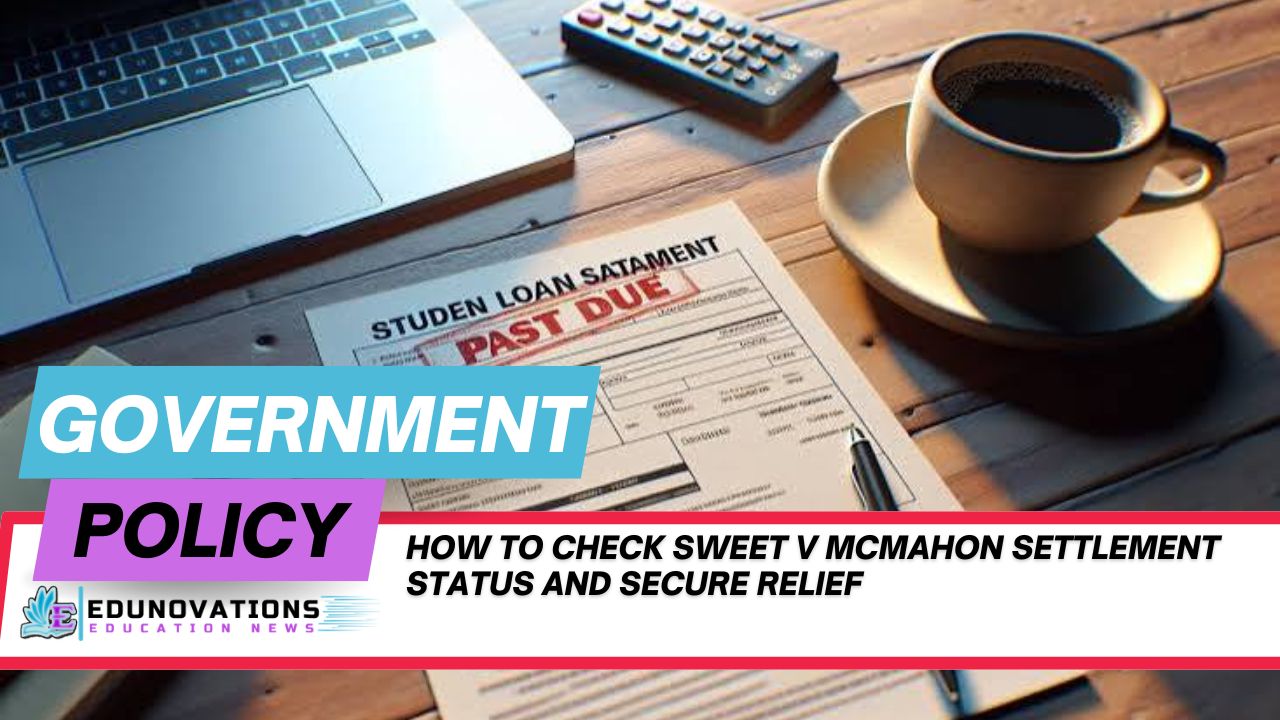
The landscape of higher education and federal student financing underwent a monumental shift as legal protections for consumers reached an unprecedented milestone.
The landscape of higher education and federal student financing underwent a monumental shift as legal protections for consumers reached an unprecedented milestone. For millions of Americans burdened by predatory for-profit institutions, navigating the complexities of federal policy has long been an uphill battle. Whether you are mapping out your future educational goals using structured resources like NCERT Courses or keeping a close eye on administrative policy shifts through Current Affairs, understanding your rights as a borrower has never been more critical.
A landmark legal development has fundamentally altered the trajectory of federal debt relief, offering a definitive safety net for over 170,000 defrauded students. As educational technology and institutional accountability continue to evolve—often aided by implementation partners like Mart Ind Infotech—this comprehensive guide explores the structural mechanics of the historic $23 billion settlement, examining what it means for affected borrowers, how administrative frameworks operate, and what steps you can take to safeguard your financial future.
The Evolution of Borrower Accountability and Legal Precedent
To fully grasp the magnitude of the recent legal updates, one must look back at the systemic issues plaguing the vocational and for-profit college sectors over the past decade. For years, institutions marketed high-paying vocational training, state-of-the-art facilities, and guaranteed career placements to vulnerable students. Instead of delivering on these bold promises, many of these entities left enrollees with overwhelming debt, damaged credit histories, and credits that failed to transfer to accredited public or private universities.
In response, the borrower defense to repayment rule was established under federal law, allowing students to seek federal loan cancellation if their school utilized fraudulent recruitment tactics or violated state laws. However, massive administrative backlogs stalled hundreds of thousands of applications, leaving applicants in indefinite limbo.
This frustration catalyzed the landmark class-action lawsuit originally known as Sweet v. Cardona (later transitioning to Sweet v. McMahon), spearheaded by the Project on Predatory Student Lending (PPSL). Eileen Connor, president and executive director of the PPSL, noted during the proceedings:
“Once again, the courts have rejected the Department’s attempts to evade its obligations to borrowers who have waited far too long for the relief they are owed.”
Her sentiment echoes the exhaustion of applicants who spent years studying core subjects using foundational Notes and analytical MCQ’s, only to find their professional entry blocked by unmanageable debt profiles tied to defunct vocational schools.
Understanding the Mechanics of the $23 Billion Settlement
The core of the recent judicial ruling centers on a unanimous decision by the U.S. Court of Appeals for the Ninth Circuit, which firmly rejected the U.S. Department of Education’s attempts to delay relief deadlines. Federal judges Kim McLane Wardlaw, John B. Owens, and Daniel A. Bress authored a clear memorandum highlighting that the Department of Education was fully aware of the scale of post-class applications when it entered into the settlement agreement.
Key Financial and Administrative Milestones
- Total Relief Valuation: The settlement has expanded to a staggering $23 billion, making it one of the largest government and class-action settlements in U.S. history.
- Affected Population: More than 500,000 total borrowers benefit across various tiers, with the recent ruling unlocking automatic relief for an additional 170,000 post-class applicants.
- Designated Schools: The action heavily impacts former students of notorious institutions such as ITT Technical Institute, Corinthian Colleges, DeVry University, and the Art Institutes.
As students navigate academic standards, whether by reviewing structured Syllabus layouts or utilizing visual NCERT Mind Maps for conceptual clarity, transparency in institutional offerings remains paramount. The fallout from predatory systems serves as a stark reminder of why rigorous quality control in education is vital. For those looking for supplementary study materials without financial strain, accessing Downloads of Free NCERT PDFs provides a safe, reliable baseline for academic progression.
Judicial Rejection of Administrative Delays
The Department of Education had previously argued that an unexpectedly high volume of post-class applications constituted “changed circumstances,” warranting an extension of decision deadlines. The federal appellate panel firmly dismissed this justification, citing established legal standards that prevent agencies from invoking anticipated events to modify a binding judicial decree.
The court noted that the agency knew the precise scale of the post-class pool during initial district court approvals. Because the statutory deadlines passed without timely administrative determinations, the agreement’s fail-safe provisions were triggered automatically. This forces the federal government to grant full debt cancellation and refunds to qualifying individuals without further administrative gatekeeping.
For educators, curriculum designers, and institutional leaders, staying updated via multimedia lectures and Videos on administrative law offers vital context into how federal oversight directly shapes consumer trust.
Expert Insights and Strategic Implications for Borrowers
Legal analysts emphasize that this ruling sets a formidable precedent for future federal accountability cases. When government agencies enter into binding class-action agreements, judicial oversight ensures that administrative foot-dragging cannot override relief for harmed citizens.
Experts recommend that anyone who attended a mismanaged vocational or for-profit institution check their status immediately, rather than assuming relief will automatically appear without communication from loan servicers. Temporary fluctuations or balance adjustments during the discharge window are normal as servicers process complex account wind-downs. However, keeping meticulous records of all correspondence with the Department of Education remains essential.
Toppers Use Mind Maps to score more than 95%
NCERT Class 11th Commerce Mind Maps
Add to cartOriginal price was: ₹999.00.₹199.00Current price is: ₹199.00.NCERT Class 12th Chemistry Mind Maps
Add to cartOriginal price was: ₹199.00.₹75.00Current price is: ₹75.00.NCERT Class 12th Commerce Mind Maps
Add to cartOriginal price was: ₹999.00.₹199.00Current price is: ₹199.00.NCERT Class 12th Science Mind Maps
Add to cartOriginal price was: ₹999.00.₹199.00Current price is: ₹199.00.NCERT Mind Maps For Class 10th
Add to cartOriginal price was: ₹999.00.₹199.00Current price is: ₹199.00.



Purchase Today
Frequently Asked Questions
1. How to check sweet v mcmahon settlement status?
You can check your status by visiting the official Project on Predatory Student Lending (PPSL) website or logging into your Federal Student Aid (FSA) account to review notices regarding your borrower defense application progress.
2. What schools qualifying for borrower defense settlement list are included?
The settlement features an extensive roster of predatory for-profit institutions, most notably ITT Technical Institute, Corinthian Colleges, the Art Institutes, and select programs at DeVry University.
3. Did my for profit college qualify for loan forgiveness?
To determine if your specific institution qualifies, you must verify whether it appears on the official Exhibit C list or designated school tables associated with the settlement terms maintained by federal oversight bodies.
4. What are the core details of the sweet v mcmahon 11 billion student loan settlement?
The landmark agreement and its subsequent expansions total over $23 billion in federal student loan relief, automatically discharging debt and clearing credit histories for hundreds of thousands of defrauded applicants.
5. Is there automatic student loan discharge for defrauded borrowers?
Yes, under specific class definitions and missed administrative decision deadlines within the settlement agreement, relief is triggered automatically without requiring an additional application.
6. What defines a post-class applicant under this lawsuit?
Post-class applicants are individuals who submitted their borrower defense applications between the execution date of the settlement in June 2022 and its final court approval in November 2022.
7. What happens if the Department of Education misses a decision deadline?
Under the court-enforced terms of the settlement, missing the mandated decision window results in automatic full settlement relief, meaning complete loan cancellation and refund of past payments.
8. Do I need to keep paying my loans while waiting for a discharge?
Generally, class members entitled to automatic relief or awaiting overdue decisions are placed in administrative forbearance, pausing payments while the Department of Education processes account adjustments.
9. Where can I find official forms if I need to revise and resubmit?
If you received a “revise and resubmit” notice from the Department of Education, you must complete the designated updated form through the official Federal Student Aid portal referencing your original application number.
10. How long does the actual loan discharge process take?
While individual timelines vary based on loan servicer workloads, official guidelines indicate that full processing and balance zeroing generally occur within the timeline specified in individual notices of relief.