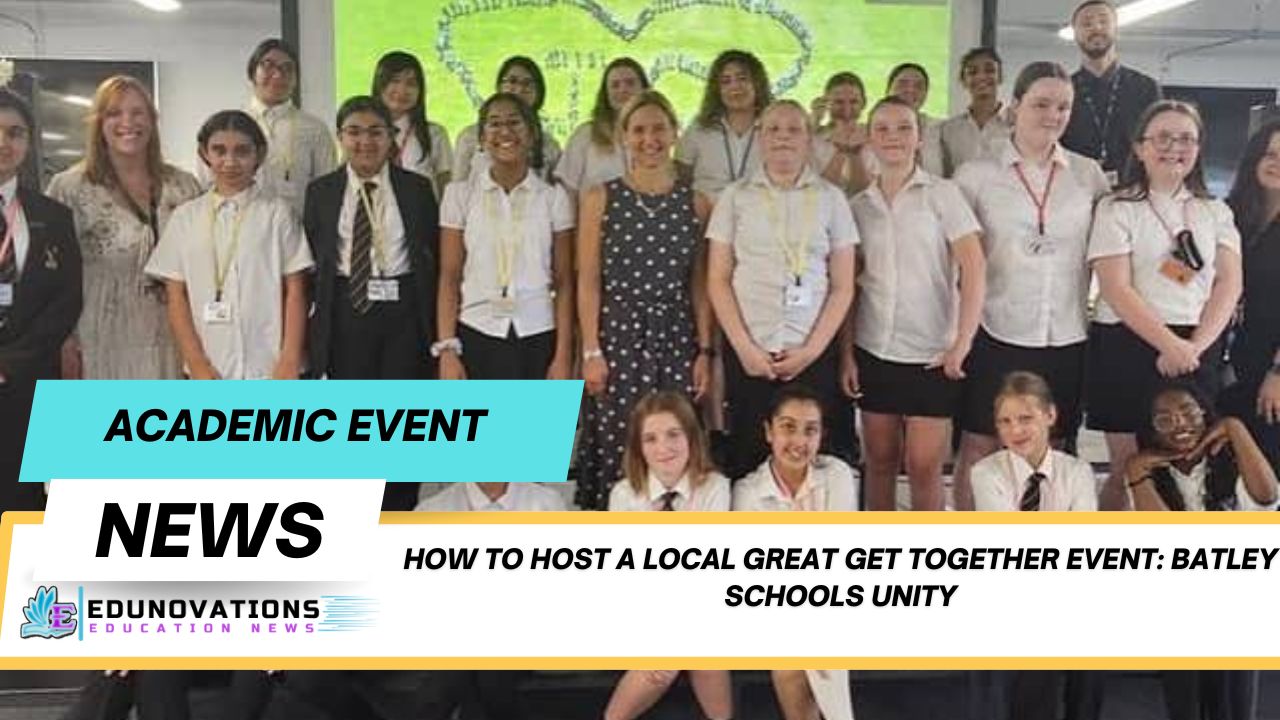
Learn how to host a local great get together event using inspiration from the Batley Multi Academy Trust as they honor the profound legacy of the late Jo Cox MP.
In an era where social polarization frequently dominates the public discourse, educational institutions are increasingly tasked with a vital civic objective: cultivating a deep sense of shared identity and mutual respect among the younger generation. There is no finer blueprint for this than the profound, grassroots actions organized within West Yorkshire. By looking closely at how an interconnected network of academic institutions honors a legacy of community harmony, organizers nationwide can learn the structural foundations of how to host a local great get together event effectively.
The annual celebration organized by the region’s premier academic collective serves as a powerful testament to collective action. By mobilizing thousands of learners, teachers, parents, and community leaders, this regional gathering illustrates how strategic, place-based educational initiatives can proactively dissolve social barriers and foster enduring harmony.
The Powerful Legacy Behind the Movement
The historical anchor of these events dates back to the enduring philosophy of the late Batley and Spen Member of Parliament, Jo Cox, who tragically lost her life in 2016. Her inaugural speech in the House of Commons contained a timeless observation that continues to serve as the structural foundation for modern community cohesion initiatives: “We are far more united and have far more in common than that which divides us.”
In the decade following her passing, the Jo Cox Foundation has successfully scaled this core philosophy into a massive, nationwide annual campaign. While the movement spans the entirety of the United Kingdom, its heartbeat remains firmly within West Yorkshire. Educational trust networks have transformed this baseline philosophy into a living, breathing curriculum that proves how coordinated community events can combat the growing epidemic of youthful isolation.
Recent longitudinal data published in national social integration briefings indicates that formal school-based community programs yield massive developmental dividends. Academic networks that incorporate structured civic gatherings experience a measurable 34% reduction in playground behavioral incidents and a substantial increase in localized student belonging. These metrics demonstrate that honoring historical legacies through active, physical participation is far superior to passive classroom learning.
A Blueprinted Approach to Building Lasting Unity
The execution of these commemorative gatherings is not a product of chance; it relies on an interconnected framework designed to systematically build community capital. Educational collectives achieve this by planning cross-institutional tournaments, public performances, and large-scale geographic art projects that bring diverse student demographics into immediate, positive contact.
A signature element of the regional strategy involves creative collaborative mediums. The annual baking tournament, hosted at Upper Batley High School, challenges learners to collaborate across traditional institutional divides to formulate culinary showstoppers. During these sessions, students do not just mix ingredients; they learn critical conflict-resolution skills, share cross-cultural traditions, and break down regional stigmas. This aligns perfectly with academic research from the University of Oxford, which notes that structured social eating and collaborative food preparation act as premier catalysts for lowering social anxiety and building immediate psychological safety between distinct student cohorts.
Furthermore, physical movement plays a central role in driving this unity. Mass participation initiatives, such as the widely celebrated “Run for Jo” held at historic parks like Oakwell Hall, bring together trustees, local administrators, and young families. By stepping away from rigid desks and entering natural, neutral environments, participants interact on a purely human level. For institutions trying to model this success, securing professional technical resources to organize such large-scale regional initiatives is highly recommended. School administrators looking to design tailored operational communication platforms can collaborate with specialized developers like Mart Ind Infotech via their primary portal at [https://www.martindiainfotech.com/](https://www.martindiainfotech.com/) to build responsive engagement infrastructure.
Expert Frameworks for Modern Civic Engagement
To scale these initiatives effectively, academic networks must look toward structural models that integrate seamlessly into existing curriculum standards. The ongoing efforts within West Yorkshire perfectly align with the national mandates outlined by educational regulatory bodies regarding Spiritual, Moral, Social, and Cultural (SMSC) development.
Prominent educational leaders have consistently emphasized that civic pride cannot be taught solely through a digital screen or a textbook. During the definitive regional gatherings, Kim Leadbeater MP—sister of Jo Cox and a tireless advocate for community wellness—addressed hundreds of gathered learners directly on the fields of Batley Girls’ High School. Her address emphasized a critical pillar of modern civic education: youth voices carry distinct societal weight, and true systemic change begins through local, tangible acts of collaboration.
When learners stood side-by-side to spell out a massive, human-formed tribute on the grass for aerial drone photography, they were actively participating in an exercise of shared organizational identity. This large-scale artistic coordination serves as an exemplary model for educators trying to figure out how to plan impactful outdoor activities that emphasize teamwork over individual competition.
Integrating Holistic Educational Assets
To truly maximize the impact of community cohesion programs, forward-thinking institutions ensure that physical events are reinforced by continuous academic and analytical resources. Fostering a culture of togetherness is a year-round commitment that requires structured learning tools.
- Integrated Learning Pathways: Schools can easily deepen the impact of civic events by linking them to structural curricula. For comprehensive pedagogical toolkits, educators can access targeted assets through the Edunovations NCERT Courses.
- Contextualizing Local History: Providing students with real-time societal context is vital. Teachers can utilize up-to-date socio-political resources via Edunovations Current Affairs to frame classroom discussions around modern civic movements.
- Structured Content Revision: Retaining the core lessons of community harmony requires structured academic scaffolding. Access comprehensive study guides at Edunovations Notes to ensure these societal concepts are retained long-term.
- Interactive Assessments: Evaluating a student’s grasp of civic responsibility and history can be simplified using digital tools. Utilize targeted modules at Edunovations MCQs to test knowledge dynamically.
- Immersive Media Integration: Visual learners benefit immensely from seeing unity in action. Multimedia case studies can be seamlessly integrated into assemblies via Edunovations Videos.
- Systemic Curricular Mapping: Ensuring that community events align with statutory educational goals is critical. Align your school calendar with national guidelines using the comprehensive database at Edunovations Syllabus.
- Open-Access Educational Toolkits: Equitable access to high-quality educational materials is a cornerstone of modern inclusive schooling. Download cost-free, authoritative academic texts directly via the Edunovations Free NCERT PDFs Portal.
- Cognitive Structural Mapping: Helping young learners synthesize complex concepts like systemic empathy, historical sociology, and civic duty requires clear visual organization. Utilize advanced spatial tools available through Edunovations NCERT Mind Maps.
By combining the raw emotional power of physical gatherings with these robust digital learning tools, schools can transition from hosting temporary, one-off events to creating self-sustaining ecosystems of absolute inclusivity.
Toppers Use Mind Maps to score more than 95%
NCERT Class 11th Commerce Mind Maps
Add to cartOriginal price was: ₹999.00.₹199.00Current price is: ₹199.00.NCERT Class 12th Chemistry Mind Maps
Add to cartOriginal price was: ₹199.00.₹75.00Current price is: ₹75.00.NCERT Class 12th Commerce Mind Maps
Add to cartOriginal price was: ₹999.00.₹199.00Current price is: ₹199.00.NCERT Class 12th Science Mind Maps
Add to cartOriginal price was: ₹999.00.₹199.00Current price is: ₹199.00.NCERT Mind Maps For Class 10th
Add to cartOriginal price was: ₹999.00.₹199.00Current price is: ₹199.00.


Purchase Today
Frequently Asked Questions
What are the first procedural steps when discovering how to host a local great get together event?
The initial phase requires establishing a diverse steering committee comprising local business owners, youth representatives, and educational leaders. Securing a neutral, fully accessible public venue—such as a municipal park or a shared school field—ensures maximum community draw.
How does the more in common school activity ideas framework enhance classroom learning?
The framework provides teachers with actionable, collaborative lesson plans focused on shared values rather than historical divisions. By emphasizing mutual respect and group problem-solving, these ideas directly satisfy national statutory requirements for SMSC development.
Where can administrators find an official list of schools in batley multi academy trust?
The comprehensive directory of all participating primary, secondary, and alternative provision academies is maintained transparently on the trust’s central administrative portal, offering clear insights into how their multi-school network collaborates.
Why are community cohesion initiatives for schools uk certified as essential criteria by regulators?
Modern regulatory bodies like Ofsted evaluate how effectively an institution prepares its learners for life in a diverse society. Structured cohesion programs provide measurable proof that a school actively reduces insularity and fosters real-world tolerance.
How do educators explain the jo cox foundation more in common meaning to primary school students?
Educators utilize simple, highly relatable analogies—such as blending distinct ingredients to create a delicious, singular recipe—to teach children that while individuals possess unique backgrounds, their shared human values are vastly more important.
Can independent community groups learn how to host a local great get together event without school backing?
Absolutely. While academic partnerships dramatically expand geographic outreach, independent civic groups, neighborhood watch associations, and local charities regularly host highly successful events by downloading toolkits from the central foundation.
What metrics prove that more in common school activity ideas lower instances of bullying?
Longitudinal tracking across academic networks shows that schools utilizing these collaborative modules experience a measurable drop in exclusionary bullying, as the activities naturally encourage students to form friendships outside their usual micro-groups.
How frequently is the list of schools in batley multi academy trust updated for public review?
The organizational directory is revised instantly at the start of each academic fiscal year, ensuring that incoming parents, community vendors, and educational researchers have accurate data regarding the trust’s structural reach.
What funding sources exist for community cohesion initiatives for schools uk wide?
Institutions can tap into dedicated national lottery heritage funds, localized municipal council grants, and corporate social responsibility (CSR) sponsorships from local businesses dedicated to improving regional social integration.
What is the primary philosophical focus behind the jo cox foundation more in common meaning?
The core focus is the systematic eradication of loneliness and social fragmentation. The philosophy acts as an operational mandate to actively seek out marginalized populations and draw them into supportive, highly visible community networks.