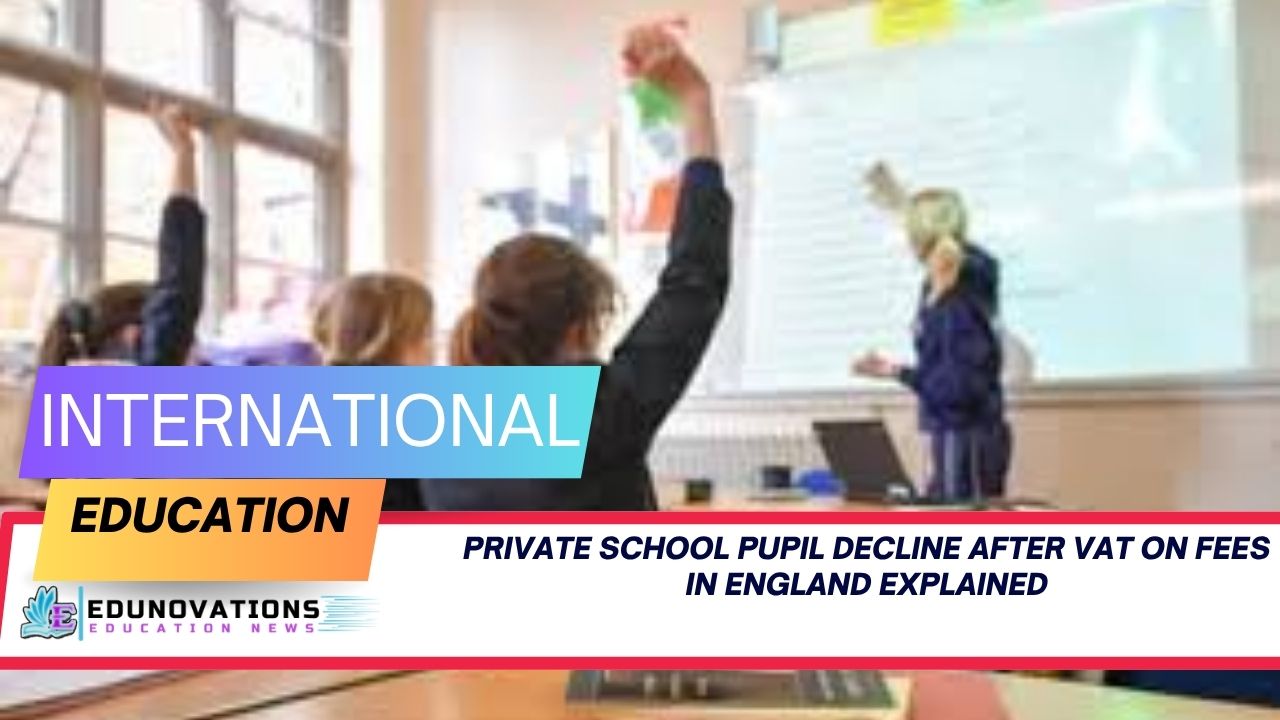
Private school pupil decline after VAT on fees in England has become a major education issue as thousands of students leave independent schools amid rising costs and policy changes.
Private School Pupil Decline After VAT on Fees in England Raises Fresh Questions About Education Policy
The debate surrounding the private school pupil decline after VAT on fees in England has intensified following new data showing a significant reduction in enrolment across the independent education sector. The decline comes after the implementation of Value Added Tax (VAT) on private school fees, a policy designed to generate additional revenue for public education while addressing concerns about fairness within the education system.
Education experts, school leaders, parents, and policymakers are now examining the long-term consequences of the measure. While supporters argue that the policy will help improve funding for state schools, critics contend that it has increased financial pressure on families and contributed to a noticeable shift in student enrolment patterns.
The discussion surrounding the private school pupil decline after VAT on fees in England is not merely about numbers. It reflects broader questions about affordability, educational choice, social mobility, and the future structure of England’s education system.
Understanding the VAT Policy on Private School Fees
For decades, private schools in England benefited from exemptions that kept tuition costs relatively lower than they otherwise would have been. The introduction of VAT on school fees changed this arrangement significantly.
Under the new framework, many independent schools have had to pass additional costs on to parents through higher tuition fees. While some institutions attempted to absorb part of the increase, rising operational expenses and inflation made it difficult for many schools to do so.
As a result, families already struggling with the cost-of-living crisis faced substantial increases in annual education expenses. This has become one of the key drivers behind the private school pupil decline after VAT on fees in England.
Why Parents Are Reconsidering Private Education
The decision to send a child to a private school often involves significant financial planning. Many families make sacrifices over several years to afford independent education.
Several factors have influenced parental decisions since the VAT policy was introduced:
- Increased annual tuition fees.
- Higher transportation and boarding costs.
- Economic uncertainty affecting household budgets.
- Availability of improved state school alternatives.
- Concerns about long-term affordability.
For middle-income households, even a modest percentage increase in fees can represent thousands of pounds in additional annual expenses. Consequently, some parents have chosen to transfer their children to state-funded schools.
This trend is a major contributor to the private school pupil decline after VAT on fees in England observed during the first full year of implementation.
Impact on Independent Schools
Independent schools vary considerably in size, financial resources, and student demographics. Prestigious institutions with substantial endowments may be better positioned to withstand enrolment fluctuations. Smaller schools, however, face greater challenges.
Many school administrators report concerns about:
- Reduced admissions inquiries.
- Lower student retention rates.
- Increased demand for scholarships and bursaries.
- Budget pressures caused by declining enrolment.
- Long-term sustainability challenges.
Some schools have expanded financial aid programs to support existing families, while others have launched fundraising initiatives to offset rising costs.
The private school pupil decline after VAT on fees in England has therefore become both a financial and operational concern for independent school leaders.
What the Numbers Suggest
Education analysts indicate that enrolment losses are concentrated among families most sensitive to price increases. High-income households may be less affected, while middle-income families face difficult decisions regarding educational expenditure.
The reported loss of approximately 20,000 pupils highlights a measurable shift within the sector. While this represents a relatively small proportion of the total school-age population, it is significant within the independent school market.
Several analysts believe that future enrolment trends will depend on:
- Economic growth.
- Household income levels.
- Inflation trends.
- Government education policies.
- State school capacity and performance.
These variables will shape whether the private school pupil decline after VAT on fees in England continues in the coming years.
Effects on State Schools
One argument supporting the VAT policy is that additional government revenue can strengthen public education. If managed effectively, these funds could be directed toward:
- Recruiting more teachers.
- Improving school infrastructure.
- Expanding educational resources.
- Supporting disadvantaged students.
- Enhancing special education services.
However, increased migration from private schools to state schools may also create challenges.
Potential issues include:
- Higher classroom sizes.
- Increased demand for school places.
- Additional administrative pressures.
- Resource allocation concerns.
The balance between new funding and increased demand will be a critical factor in evaluating the policy’s success.
Expert Perspectives on the Debate
Education economists often emphasize that policy outcomes should be measured over multiple years rather than a single academic cycle.
Some experts argue that the private school pupil decline after VAT on fees in England was predictable because price increases typically reduce demand. Others believe the effect may stabilize as families adjust to the new financial environment.
Researchers also note that educational decisions involve more than cost alone. Academic performance, school culture, extracurricular opportunities, and university preparation continue to influence parental choices.
As a result, independent schools may retain a strong appeal despite higher fees.
Broader Economic Context
The decline in private school enrolment cannot be viewed in isolation. England, like many countries, has experienced broader economic pressures in recent years.
Key influences include:
- Inflation affecting household spending.
- Rising mortgage payments.
- Increased energy costs.
- Wage growth lagging behind living expenses.
- General economic uncertainty.
These factors amplify the impact of tuition fee increases and contribute to the ongoing private school pupil decline after VAT on fees in England.
Future Outlook for Independent Education
The independent education sector has historically demonstrated resilience during periods of economic and regulatory change.
Schools are responding through various strategies:
- Expanding bursary programs.
- Introducing flexible payment plans.
- Investing in digital learning.
- Enhancing academic offerings.
- Strengthening international recruitment efforts.
Many institutions hope these measures will mitigate enrolment declines and maintain educational quality.
Whether these strategies succeed will largely determine how the private school pupil decline after VAT on fees in England evolves over the next several years.
Implications for Parents
Families considering private education now face a more complex financial landscape. Parents are increasingly evaluating:
- Total educational costs.
- Long-term affordability.
- Academic outcomes.
- Alternative schooling options.
- Future economic conditions.
The VAT policy has encouraged many households to reassess educational priorities and compare private and state school offerings more carefully than before.
Policy Debate Continues
Supporters of the VAT measure argue that it promotes fairness by ensuring private education contributes more directly to public finances. They believe the additional revenue can strengthen educational opportunities for a larger number of students.
Opponents contend that the policy reduces educational choice and disproportionately affects families that are not wealthy but still prioritize private education.
The ongoing private school pupil decline after VAT on fees in England remains central to this debate and is likely to influence future education policy discussions.
Conclusion
The private school pupil decline after VAT on fees in England represents one of the most significant developments in the country’s education landscape in recent years. While supporters view the policy as a means of generating resources for public education, critics highlight its impact on affordability and parental choice.
As policymakers, educators, and families continue to assess the consequences, the coming years will reveal whether the decline represents a temporary adjustment or a long-term transformation of England’s independent school sector.
Regardless of one’s position in the debate, the issue underscores the complex relationship between taxation, educational access, and public policy. The decisions made today will shape the educational experiences of thousands of students across England for years to come.
Toppers Use Mind Maps to score more than 95%
NCERT Class 11th Commerce Mind Maps
Add to cartOriginal price was: ₹999.00.₹199.00Current price is: ₹199.00.NCERT Class 12th Chemistry Mind Maps
Add to cartOriginal price was: ₹199.00.₹75.00Current price is: ₹75.00.NCERT Class 12th Commerce Mind Maps
Add to cartOriginal price was: ₹999.00.₹199.00Current price is: ₹199.00.NCERT Class 12th Science Mind Maps
Add to cartOriginal price was: ₹999.00.₹199.00Current price is: ₹199.00.NCERT Mind Maps For Class 10th
Add to cartOriginal price was: ₹999.00.₹199.00Current price is: ₹199.00.





Purchase Today
FAQs
1. What is the private school pupil decline after VAT on fees in England?
It refers to the reduction in student enrolment at independent schools following the introduction of VAT on private school fees.
2. Why did private school enrolment fall in England?
Higher school fees resulting from VAT increased costs for families, leading some to move their children to state schools.
3. How much has enrolment declined?
Recent reports indicate that approximately 20,000 pupils left the private school sector during the first full year of the policy.
4. How does VAT affect private school fees?
Schools may pass the VAT charge on to parents, increasing overall tuition costs.
5. What is the impact of VAT on private school enrolment in England 2026?
The policy has contributed to reduced enrolment and increased financial pressure on some independent schools.
6. How VAT on school fees affects UK independent schools?
Schools face challenges including lower admissions, greater demand for bursaries, and financial uncertainty.
7. What is the private education affordability crisis in England schools?
It refers to growing concerns that rising education costs are making private schooling less accessible.
8. Are state schools receiving more students because of the policy?
Some families have transferred children to state schools, increasing demand in certain areas.
9. Will private school admissions continue to fall?
Future trends will depend on economic conditions, family incomes, and policy developments.
10. What does the future hold for independent schools in England?
Schools are adapting through scholarships, financial aid programs, and new educational strategies to remain competitive.