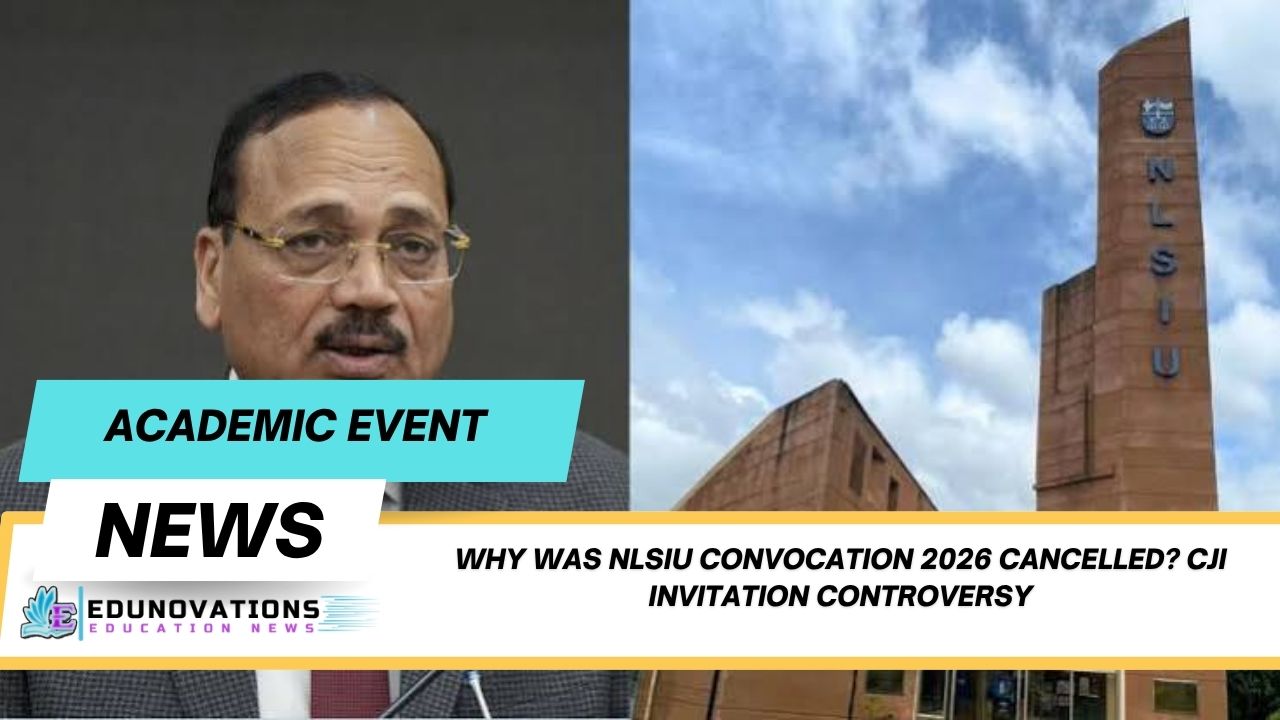
Discover why was NLSIU convocation 2026 cancelled after graduating students rejected a university mandate to publicly invite CJI Surya Kant to the event.
In an unprecedented development that has sent shockwaves through India’s legal education landscape, the National Law School of India University (NLSIU), Bengaluru, officially called off its 34th Annual Convocation ceremony originally scheduled for September 12, 2026. The institution issued an administrative circular to all graduating cohorts announcing that degrees would instead be conferred in absentia. The official communication cited vague “unavoidable circumstances,” but detailed investigative reports and internal timeline documents revealed a far deeper constitutional standoff.
The central catalyst behind this decision stems from a high-stakes standoff: students across multiple programmes rejected a sudden administrative precondition requiring them to issue a vetted, unanimous public statement inviting Chief Justice of India (CJI) Surya Kant to preside over the ceremony. This episode has ignited nationwide debates on student expression, institutional autonomy, administrative coercion, and the changing dynamics between the judicial establishment and premier legal academies.
The Genesis of the Controversy: Solidarity with NALSAR
To fully comprehend the events leading up to the abrupt cancellation, one must look at the broader wave of student activism across India’s National Law Universities (NLUs). The friction did not originate in isolation at Bengaluru; rather, it was sparked by a series of contentious regulatory actions involving the Bar Council of India (BCI) and NALSAR University of Law, Hyderabad.
On August 13, 2026, the BCI issued a controversial directive freezing the professional enrolment of NALSAR’s entire 2026 graduating batch. This drastic regulatory measure was taken after NALSAR students and faculty members raised formal objections regarding the proposed presence of CJI Surya Kant at their own convocation ceremony. While the BCI withdrew its enrolment ban within hours following widespread public outrage and judicial reprimands, the incident sent a chilling message across law campuses nationwide.
Demonstrating institutional solidarity, over 700 members of the NLSIU community—comprising 165 graduating students, 409 continuing undergraduates, and 128 alumni—signed an open declaration on August 15. The statement condemned the BCI’s action as an arbitrary abuse of power under the Advocates Act, 1961, and an infringement on fundamental rights guaranteed under Article 19(1)(a) of the Indian Constitution.
Crucially, the NLSIU cohort extended their protest to their own upcoming convocation. They expressed strong disapproval regarding the participation of BCI Chairman Manan Kumar Mishra without acknowledging institutional accountability, while also objecting to CJI Surya Kant presiding as the chief guest. In their joint declaration, the students noted that inviting dignitaries who had previously expressed condescension toward student grievances turned a celebratory academic milestone into an uncomfortable compromise.
Understanding the constitutional rights and legal frameworks behind such student actions requires a strong grounding in foundational civics. Students preparing for competitive legal exams can review foundational polity concepts through NCERT Courses and download study materials directly from Free NCERT PDFs.
Anatomy of a Standoff: A Detailed Timeline
To understand why was NLSIU convocation 2026 cancelled, it is necessary to examine the chronological progression of communications between administration officials, judicial representatives, and the graduating student body.
 August 3, 2026: Academic administration notifies graduating batches of the proposed convocation date (September 12, 2026).
 August 13, 2026: BCI temporarily freezes NALSAR enrolments over student objections to CJI attendance; decision rescinded hours later.
 August 15, 2026: 700+ NLSIU students and alumni sign a statement opposing CJI Surya Kant and BCI Chairman Manan Kumar Mishra at their convocation.
 August 17, 2026: Students are informed that CJI Surya Kant wishes to meet student representatives in New Delhi to discuss their concerns.
 August 23, 2026: NLSIU batches vote to attend the convocation without active disruption, accepting the CJI's presence to avoid cancellation.
 August 25, 2026: Administration introduces a new condition: students must issue a unanimous, vetted public statement inviting the CJI.
 August 27, 2026: B.A., LL.B. (Hons.) cohort rejects the public statement mandate. University officially cancels the convocation.
The New Delhi Delegation and Initial Compromise
Following the August 15 statement, administrative channels sought to mediate the situation. On August 17, graduating cohorts were informed that CJI Surya Kant, acting in his capacity as the Chancellor of NLSIU, wished to engage in a direct dialogue with student representatives.
A select group of graduating students was flown to New Delhi for a 90-minute closed-door meeting with the Chief Justice. According to internal reports, the CJI emphasized his desire to hear student perspectives directly, noting publicly in separate proceedings that institutional governance relies on active dialogue between judicial leadership and law scholars.
Following this high-level meeting, NLSIU administration presented the graduating class with a clear choice: vote on whether they would attend the September 12 ceremony peacefully, without overt protest or disruption, with the CJI present. Students were explicitly informed that holding the event without the Chancellor was off the table, but BCI Chairman Manan Kumar Mishra would not attend.
On August 23, the majority of the graduating cohort voted to accept this peaceful coexistence model. For many students—particularly first-generation law graduates whose families had already booked travel and accommodations—avoiding cancellation was the primary goal.
The Shift in Conditions: The Public Invite Requirement
However, the consensus collapsed on August 25, when university leadership introduced a fresh prerequisite that had never been raised during earlier negotiations.
The administration informed the graduating batches that accepting the CJI’s presence silently was no longer sufficient. To proceed with the convocation, the student body was required to draft, sign, and release a unanimous public statement explicitly inviting CJI Surya Kant to campus. Furthermore, this statement would be subject to prior administrative vetting and was strictly forbidden from mentioning that BCI Chairman Manan Kumar Mishra had been excluded from the guest list.
This sudden administrative demand created severe friction among the four graduating streams:
- B.A., LL.B. (Hons.)
- LL.M.
- Master of Public Policy (MPP)
- 3-Year LL.B. (Hons.)
Students expressed serious concerns that issuing a vetted public invitation would effectively force them to retract their previous statement of solidarity with NALSAR. When the B.A., LL.B. (Hons.) stream voted against issuing the mandated public invite, the requirement for complete multi-batch consensus failed. Consequently, on August 27, 2026, the registrar issued the final notice canceling the 34th Annual Convocation.
National Impact and Expert Perspectives
The cancellation of NLSIU’s convocation has ignited widespread debate within India’s legal community, drawing commentary from senior advocates, academics, and legal commentators.
Prominent Supreme Court advocate Bharat Chugh highlighted the distinction between formal ceremonial conferment and academic achievement, posting on social media:
“The degree belongs to the student, not to the dignitary conferring it. Convocation or no convocation, the NLSIU batch of 2026 should celebrate this ‘in-absentia’ granted degree with its head held high, mind without fear, and as a badge of honour.”
Similarly, legal commentators pointed out that university statutes generally provide flexibility regarding ceremonial duties. Historically, when a Chancellor is unavailable or unable to preside, senior Supreme Court judges or eminent jurists are routinely deputed to confer degrees, preserving the ceremonial experience for graduating students and their families.
For aspirants navigating complex legal updates, staying informed on constitutional developments is critical. You can access up-to-date analysis via Current Affairs, review structured Syllabus breakdowns, or test your knowledge using interactive MCQs.
Comparing Institutional Responses: NLSIU vs. NALSAR
The contrasting approaches taken by NALSAR Hyderabad and NLSIU Bengaluru highlight different institutional strategies when managing student dissent and judicial protocol.
| Operational Parameters | NALSAR University of Law (Hyderabad) | National Law School of India University (NLSIU, Bengaluru) |
| Initial Student Trigger | Objections raised against CJI and BCI leadership attendance. | Solidaritous statement opposing CJI and BCI chief attendance. |
| Regulatory Action | BCI temporarily froze 2026 graduate bar enrolments. | No direct enrolment freeze; administrative negotiation initiated. |
| Dialogue Mechanism | Judicial interventions led to quick withdrawal of BCI order. | Delegates flown to New Delhi for a 90-minute meeting with CJI. |
| Final Resolution | Enrolment restored; administrative dialogue continued. | Convocation cancelled; degrees conferred in absentia. |
| Primary Reason for Outcome | Resolution of regulatory overreach by statutory bodies. | Impasse over mandate for a vetted public student invitation. |
Broader Academic and Administrative Implications
Why was NLSIU convocation 2026 cancelled despite weeks of internal negotiations? The decision highlights underlying tensions in how modern higher education institutions navigate student expression alongside traditional protocol.
                    ┌──────────────────────────────────────────┐
                    │ Initial Student Solidarity Declaration   │
                    └────────────────────┬─────────────────────┘
                                         │
                                         ▼
                    ┌──────────────────────────────────────────┐
                    │ Delhi Dialogue: CJI Meets Student Batch  │
                    └────────────────────┬─────────────────────┘
                                         │
                                         ▼
                    ┌──────────────────────────────────────────┐
                    │ Internal Vote: Agreement to Attend       │
                    └────────────────────┬─────────────────────┘
                                         │
                                         ▼
                    ┌──────────────────────────────────────────┐
                    │ New Requirement: Mandated Public Invite  │
                    └────────────────────┬─────────────────────┘
                                         │
                                         ▼
                    ┌──────────────────────────────────────────┐
                    │ Cohort Rejection -> Cancellation Notice  │
                    └─────────────────────────────────────────┘
1. Financial and Emotional Strain on Families
The decision to cancel the convocation just two weeks before the event caused significant disruptions for graduating students and their families. Many parents, including those of first-generation graduates, had secured non-refundable travel arrangements to Bengaluru. The shift to conferring degrees in absentia meant students missed out on a long-anticipated academic tradition.
2. Institutional Autonomy vs. Ceremonial Protocol
The event has raised important questions about university governance. Law schools function as spaces for critical inquiry, constitutional analysis, and active debate. When ceremonial norms demand absolute consensus or public affirmations, institutions can face difficult trade-offs between administrative expectations and student expression.
3. The Role of Statutory Bodies in Legal Education
The controversy also reflects ongoing discussions around the jurisdiction of regulatory bodies like the Bar Council of India. The brief freeze on NALSAR enrolments drew scrutiny from legal scholars regarding the boundaries of statutory authority under the Advocates Act, 1961.
Students studying administrative law and professional ethics can examine these systemic topics through comprehensive study Notes, visual NCERT Mind Maps, and explanatory lecture series on Videos. For institutions looking to build robust digital infrastructure to handle administrative notices and student communications smoothly, custom web solutions are available through Mart India Infotech.
Key Takeaways from the 2026 NLSIU Convocation Standoff
- Unanimous Demand Failed: The refusal of the B.A., LL.B. (Hons.) batch to sign a vetted public invitation prevented full consensus, leading to the event’s cancellation.
- Degrees Granted In Absentia: Students can collect their physical degree certificates via courier or pick them up directly from the Nagarbhavi campus.
- Solidarity Across NLUs: The standoff demonstrated growing coordination between student bodies at top law institutions like NALSAR and NLSIU.
- Precedent for Campus Dialogue: The direct meeting between student representatives and the CJI established an important precedent for resolving academic disputes, even though ceremonial agreement was ultimately not reached.
Toppers Use Mind Maps to score more than 95%
NCERT Class 11th Commerce Mind Maps
Add to cartOriginal price was: ₹999.00.₹199.00Current price is: ₹199.00.NCERT Class 12th Chemistry Mind Maps
Add to cartOriginal price was: ₹199.00.₹75.00Current price is: ₹75.00.NCERT Class 12th Commerce Mind Maps
Add to cartOriginal price was: ₹999.00.₹199.00Current price is: ₹199.00.NCERT Class 12th Science Mind Maps
Add to cartOriginal price was: ₹999.00.₹199.00Current price is: ₹199.00.NCERT Mind Maps For Class 10th
Add to cartOriginal price was: ₹999.00.₹199.00Current price is: ₹199.00.




Purchase Today
Frequently Asked Questions (FAQs)
1. Why was NLSIU convocation 2026 cancelled by the university administration?
The university cancelled the ceremony after graduating cohorts failed to reach complete consensus on issuing a mandated, vetted public statement inviting CJI Surya Kant to campus as a prerequisite for holding the event.
2. What was the core trigger behind the NLSIU student protest?
The protest began as an act of solidarity with NALSAR students following an attempt by the Bar Council of India to temporarily freeze graduate bar enrolments over campus dissent.
3. How will the graduating batch of 2026 receive their law degrees now?
Graduating students will be conferred their degrees in absentia. The university administration has arranged for certificates to be delivered via courier or picked up in person from the campus.
4. Was there a direct meeting between NLSIU students and Chief Justice Surya Kant?
Yes, on August 17, 2026, a delegation of graduating students flew to New Delhi for a 90-minute meeting with CJI Surya Kant to discuss their concerns regarding campus events and convocation protocols.
5. Why did students object to signing the public invitation statement?
Students felt that issuing a pre-vetted public invitation would compromise their stance on student expression and effectively retract their earlier statement of solidarity with NALSAR graduates.
6. Did the Bar Council of India chairman attend the NLSIU convocation discussions?
During initial negotiations, the administration agreed that BCI Chairman Manan Kumar Mishra would not attend the convocation. However, students were later instructed not to mention his absence in any public statement.
7. What does receiving a degree in absentia mean for graduating lawyers?
Receiving a degree in absentia means the degree is officially conferred by the university governing body without requiring physical attendance at a formal convocation ceremony. It has no negative impact on the legal validity of the qualification.
8. Has an NLSIU convocation ceremony been cancelled before?
Outside of disruptions during the COVID-19 pandemic in 2020 and 2021, this marks a rare instance where an annual convocation was called off due to administrative and procedural standoffs.
9. What was the response of the legal community to the convocation cancellation?
Reactions were mixed. While many senior advocates emphasized that a degree’s value relies on academic merit rather than ceremonial conferment, others expressed regret over the loss of a traditional milestone for graduates and their families.
10. Can law graduates enroll with State Bar Councils without a physical convocation ceremony?
Yes. State Bar Councils accept provisional degree certificates and official degree documents conferred in absentia for professional enrolment under the Advocates Act, 1961.